
Minimalist bathroom decor works best when the things left on show earn their place. A clear stretch of counter, storage that fits the items you actually use, and a small number of repeated finishes can make a room feel settled without stripping away its character. Start with what the room needs to hold, then decide where color and decoration belong.
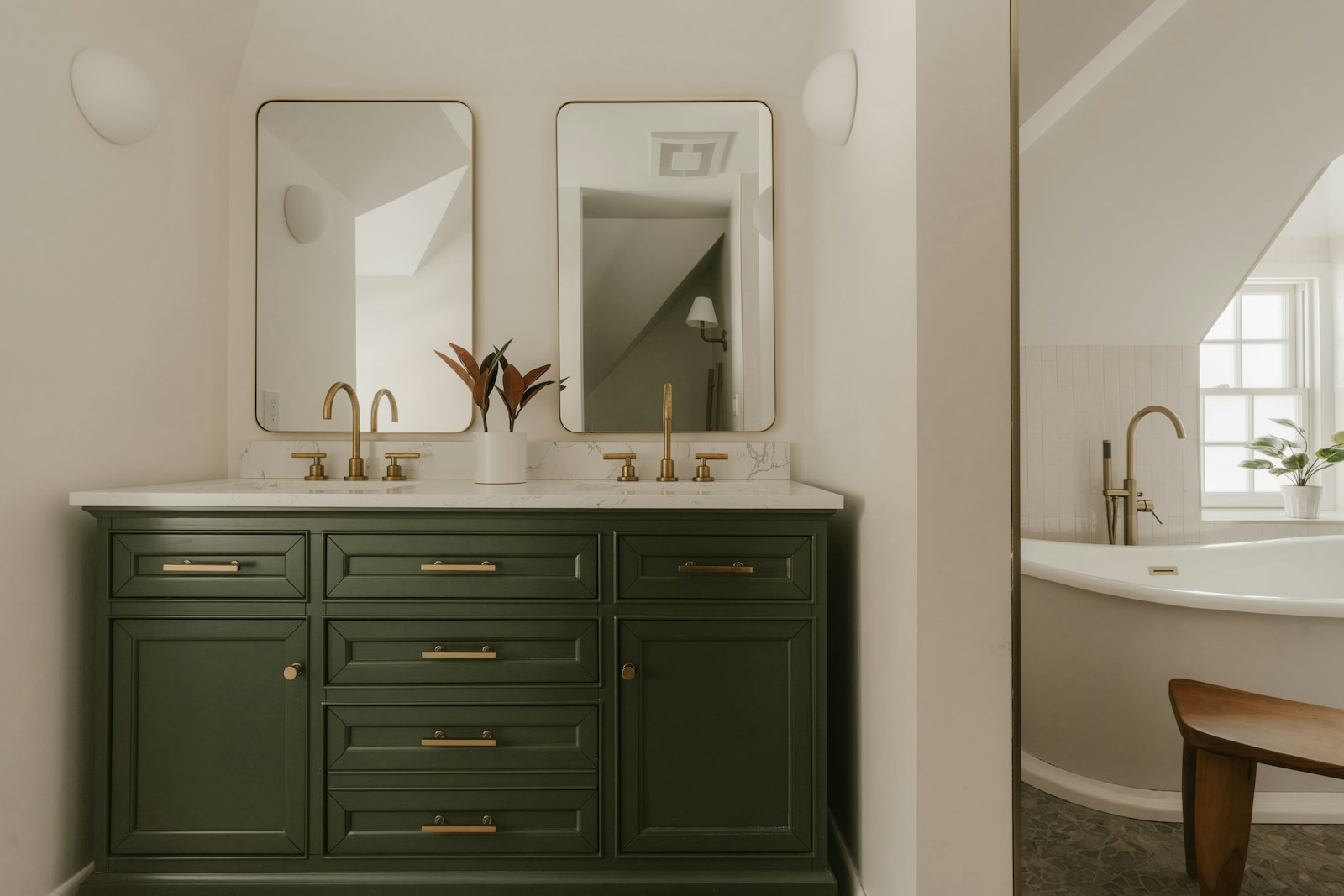
The green vanity above is a useful example. Cupboard doors and a central stack of drawers create a strong block of color; the pale counter and walls let it stand out. Warm metal tones repeat on the taps, handles and mirror frames. A single vase sits between the two basins. The effect comes from a few decisions repeated across the room, rather than from making every surface white.
Give everyday items a home before adding decoration
Make a short inventory at the basin: hand soap, toothbrushes, grooming items, towels and the spare supplies you need nearby. Separate what must stay within reach from what can go behind a door. A small bathroom used by several people may need more concealed storage than a lightly used guest room, even when both have the same visual style.
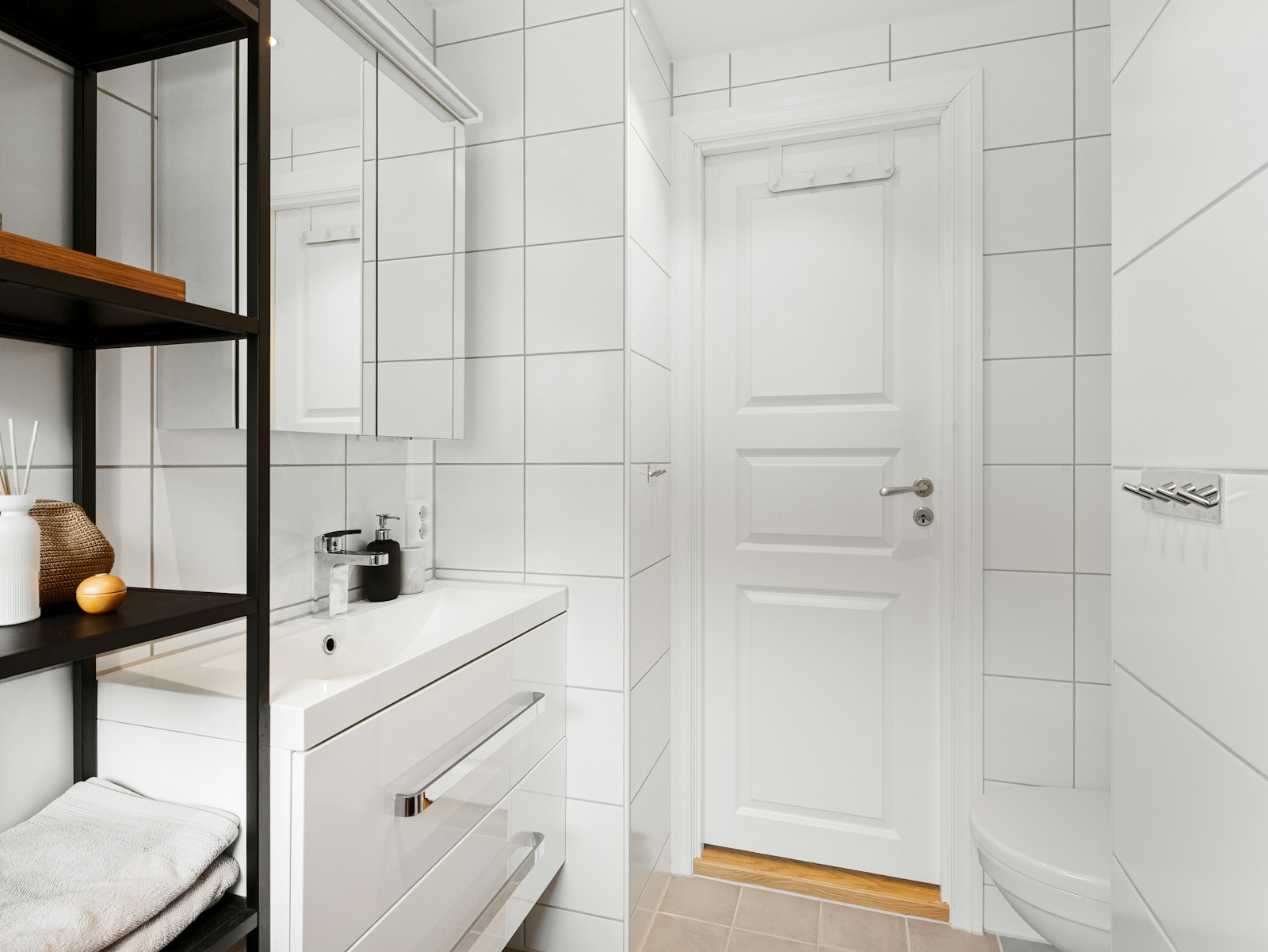
In this white bathroom, vanity drawers and mirrored cupboard doors sit alongside a black open shelving unit. Towels, a basket and a few accessories remain visible on the shelves, while the basin edge stays largely clear. The dark shelf provides contrast without introducing another wall color.
Use open shelves for items you are happy to keep looking orderly. Reserve closed storage for mixed packaging, spare toiletries and the less attractive things that still need a place. Before buying a shelf, check that its position leaves the actual cupboard doors and drawers usable. The photograph shows a storage arrangement; it does not establish the clearances in your room.
Choose one focal finish and repeat supporting colors
You do not need matching surfaces everywhere. Choose the part you want to notice first, such as a colored vanity, a veined counter or a mirror frame. Keep the neighboring finishes quieter, and repeat one or two existing tones in useful objects such as towel hooks, handles or a soap dispenser.
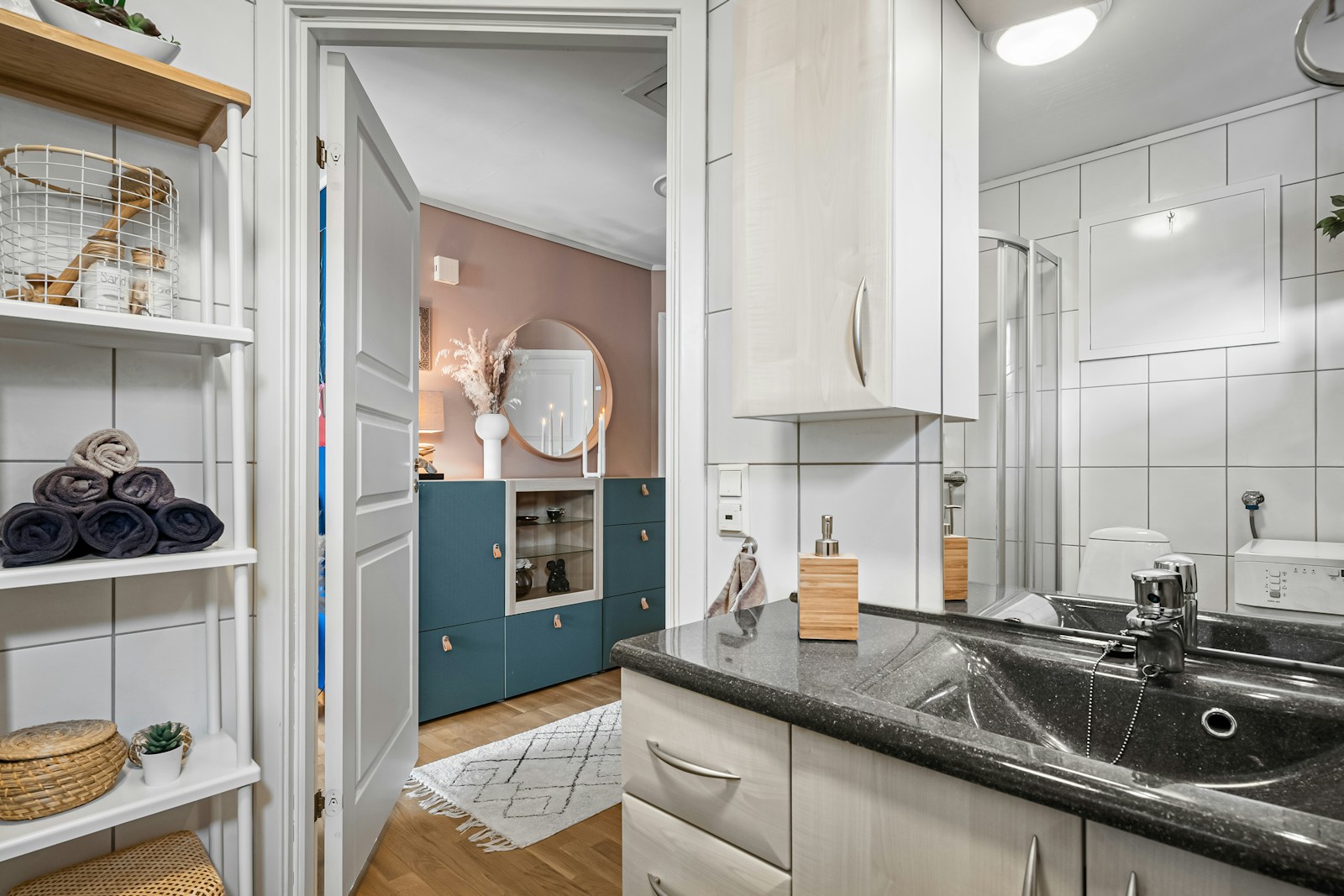
This bathroom combines a dark veined basin counter with white wall tiles, pale cupboard fronts and open towel storage. The counter already supplies a strong pattern, so adding another busy pattern at the basin would create a different, more layered effect. The blue cabinetry and pink wall seen through the doorway belong to the adjoining room; they are not additional finishes around this basin.
Compare that arrangement with the green vanity in the opening image. One uses cabinet color as its main feature; the other uses the counter and the contents of open shelving. Choose the approach that suits the elements you intend to keep. Replacing a serviceable counter just to copy a photograph is a larger decision than changing towels or editing what sits beside the tap.
Test the arrangement with what you already own
Clear the counter temporarily, then return only the things used there each day. Give spare items a specific drawer, cupboard or basket. Add decoration last, keeping it away from the space you need to wash, put down a grooming item or wipe around the basin.
- What keeps returning to the counter? That item may need a better storage position rather than another decorative container.
- Which surface draws your eye first? Use it to choose the supporting colors before introducing a second feature.
- What has to move during cleaning? A crowded tray can be as awkward as several loose objects. Keep a tray only if grouping those items helps your routine.
Try the edited arrangement through your normal morning and evening use before making a shopping list. If the problem is reaching a drawer, opening a door or moving between fixtures, revisit the bathroom layout and access choices; decor alone will not resolve it.
Check surface care before committing to a finish
A photograph can show color, pattern and the placement of objects. It cannot confirm a cabinet’s construction, a counter’s material, or how either performs when wet. Before purchasing, check the exact product’s suitability for its intended location and the manufacturer’s care instructions. Keep those practical requirements separate from the visual effect you want to borrow.
A restrained bathroom can still include green doors, dark shelving or a patterned counter. The useful test is whether the chosen finishes work together and the everyday items have somewhere to go. Keep the pieces that serve that plan, then add only the decoration you want to live with and maintain.