
A living-room plant display needs to work when someone opens the curtains, sits on the sofa or waters a pot. Start with those activities and the growing conditions you can provide, then choose the plant and container. A photograph can suggest an arrangement; it cannot establish whether the species will thrive in your room.
Match the plant to the position first
Record the light at the proposed position through the day, its distance from the window and any nearby heating or cooling outlet. A bright window and a shaded corner are different growing locations. The Royal Horticultural Society recommends matching plants to the light, temperature and humidity available; its houseplant selection guide is a starting reference. Read the requirements for the identified species rather than treating every green plant as interchangeable.
Use a sofa-side plant without losing the seat

This room places large pots beside the sectional sofa while keeping a small coffee table in the open area. The foliage has space above the seating, and the plants form a group rather than being distributed across every surface. Use the reference to compare the plant with the furniture that will remain.
Test the position with the seat in use. Include the reach needed to open a curtain, access a side table and carry the pot for watering. Record the likely mature spread as well as the size of the nursery plant; a small purchase may need a different position later.
Give a corner a defined role

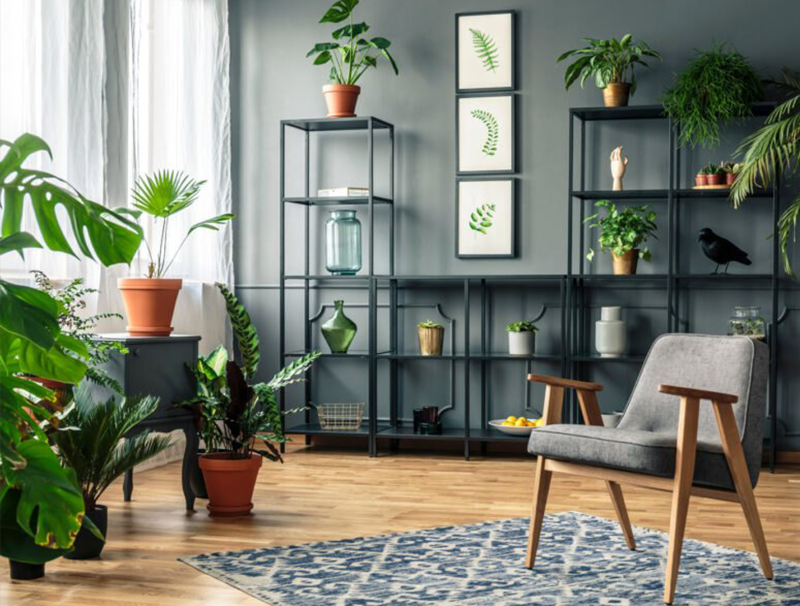
The second reference combines one tall plant, a chair and a small cabinet near the window. The plant provides height while leaving the chair as a separate usable place. Try a similar grouping on a floor sketch before buying a second stand or another large pot.
Decide which object belongs nearest the light and how each item will be reached for cleaning. If the plant would block the window or crowd the seat at its expected size, choose another location or a more suitable plant instead of squeezing the group into the photograph’s outline.
Keep stairs and everyday routes usable

The third image groups potted plants beside a staircase above a bed of decorative stones. The stones are a visible finish; they do not demonstrate how water is collected or discharged. A photograph also does not show the load, fixing or drainage details of the arrangement.
Keep pots and spreading foliage out of the walking route and away from operating doors. Plan how to reach the containers without standing on a stair or moving a heavy pot through a narrow gap. Use a freestanding stand or a hanging system only within its specified support and load requirements.
Separate drainage from decoration
Check how the growing pot and any outer decorative container work together. The RHS houseplant growing guide advises providing drainage and allowing watered pots to drain before emptying water-filled saucers. A cover pot can conceal a nursery container, but it also needs an accessible way to check for collected water. Decorative pebbles should not be described as absorbing excess water or replacing that check.
Protect the surface underneath and leave a practical route for taking smaller pots to a suitable watering position. Follow the care instructions for the actual plant and potting medium rather than adopting one watering interval for the whole display.
Check these details before buying
- Identify the plant and compare its requirements with the intended position.
- Record the pot dimensions, drainage arrangement and likely mature spread.
- Check how the floor, shelf or stand will be protected and cleaned.
- Confirm access for watering, inspection and moving the container.
- Choose the number of plants after testing the route and furniture in use.
When comparing plant pots online, including options from Trust Basket or another supplier, check the stated dimensions, material and drainage arrangement for each product. A decorative photograph or supplier description does not establish that a pot suits every indoor plant.
For a related furniture-planning exercise, compare compact room arrangements with defined storage and circulation. Choose the parts that fit your room rather than copying the entire scene.