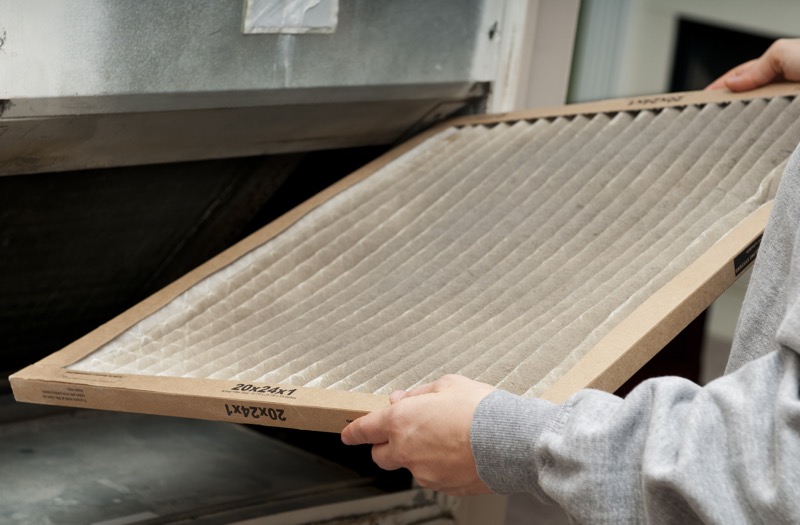
Duct cleaning can be appropriate for an identified contamination problem, but a furnace duct is not the only possible source of household particles or odours. Decide from an inspection and defined scope rather than a promise of universal health benefits.
Potential benefit: addressing a documented condition
Ask the contractor to show where the problem is and explain why cleaning is proposed. Distinguish a dirty filter, debris at a grille and a condition inside the ducts. The EPA’s duct-cleaning guide discusses situations worth investigation and explains the uncertainty around routine health benefits.
Important limit: cleaning does not remove every cause
Moisture, pest entry or damaged material may need separate work. Ask which repair addresses the cause, which part is cleaning and how recurring problems will be investigated. Do not accept an assurance that cleaning means the family will no longer have allergies, asthma or any other health problem.
Practical cost: access and disruption
Clarify which areas of the home need access, how furnishings will be protected, whether openings must be made and who makes good afterwards. Ask how the process suits the existing duct materials and equipment. These details affect both disruption and the true scope of the price.
Product questions: identify any proposed treatment
Request the name, intended use and instructions for any chemical or coating. Ask why it is necessary and whether it is suitable for the actual material. Do not infer suitability from the words “natural,” “sanitised” or “chemical-free.”
Contractor checks: compare what each quote covers
Check the qualifications, permissions and insurance relevant to the job. Compare inspection findings, included components, protection, waste/cleanup, proposed products, source repairs, exclusions and completion records. A quote for one visible section is not directly comparable with an agreed whole-system scope.
What to keep afterwards
Save the inspection and work records, note any unresolved conditions and continue the equipment’s specified filter and service routine. Revisit cleaning when the condition warrants it, rather than adopting an unsupported universal yearly or three-to-five-year interval.
This turns the pros and cons into a concrete decision: what condition exists, what work will address it, what the work will disrupt and how its completion will be demonstrated.
Photos