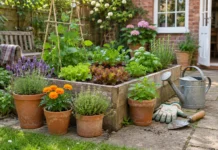


Patio cleaning should start with identification of the surface and its condition. Stone, concrete, timber, coatings, grout, and furniture finishes can require different methods. A cleaner or pressure setting suitable for one item may damage another.
Walk the area first
Look for loose paving, unstable furniture, sharp edges, damaged joints, and standing water. Keep a record of recurring wet spots. Cleaning may improve appearance, but it does not correct a drainage defect or make an unstable surface safe.
Clear loose debris
Move light items where they can be handled safely and remove loose dirt using a method permitted for the surface. Check beneath pots and furniture feet. Keep drains accessible without pushing debris into them.
Match the cleaning method
Read both the surface manufacturer’s care information and the cleaner label. Check dilution, permitted materials, contact time, and rinsing instructions. Do not mix cleaning products. Test a small inconspicuous area if the instructions permit it, and protect nearby materials and planting as directed.
Pressure washing is not suitable for every surface or joint. Check the permitted equipment and method rather than using maximum pressure as a default.
Inspect the furniture
Check fixings, feet, glass, cushions, and weather protection. Use care instructions for the actual finish. Do not keep using a table or chair with damaged load-bearing parts simply because it looks clean.
Set a practical maintenance routine
After cleaning, check whether water drains as expected and whether surfaces dry normally. Address repeated problems before adding more decorative objects. Leave walking routes and access clear, and choose outdoor accessories that suit their exposure and can be maintained.