

Gray and white bathroom ideas work through the relationship between surfaces. A pale gray wall behind a white basin produces a different effect from a dark counter against white tile. Decide where you want that contrast before selecting a second gray finish from a separate sample.
These photographs show different bathrooms and basin areas. Use them to compare the visible balance of light and dark, then build a palette around the surfaces and fittings that will remain in your own room.
Start with a feature you plan to keep
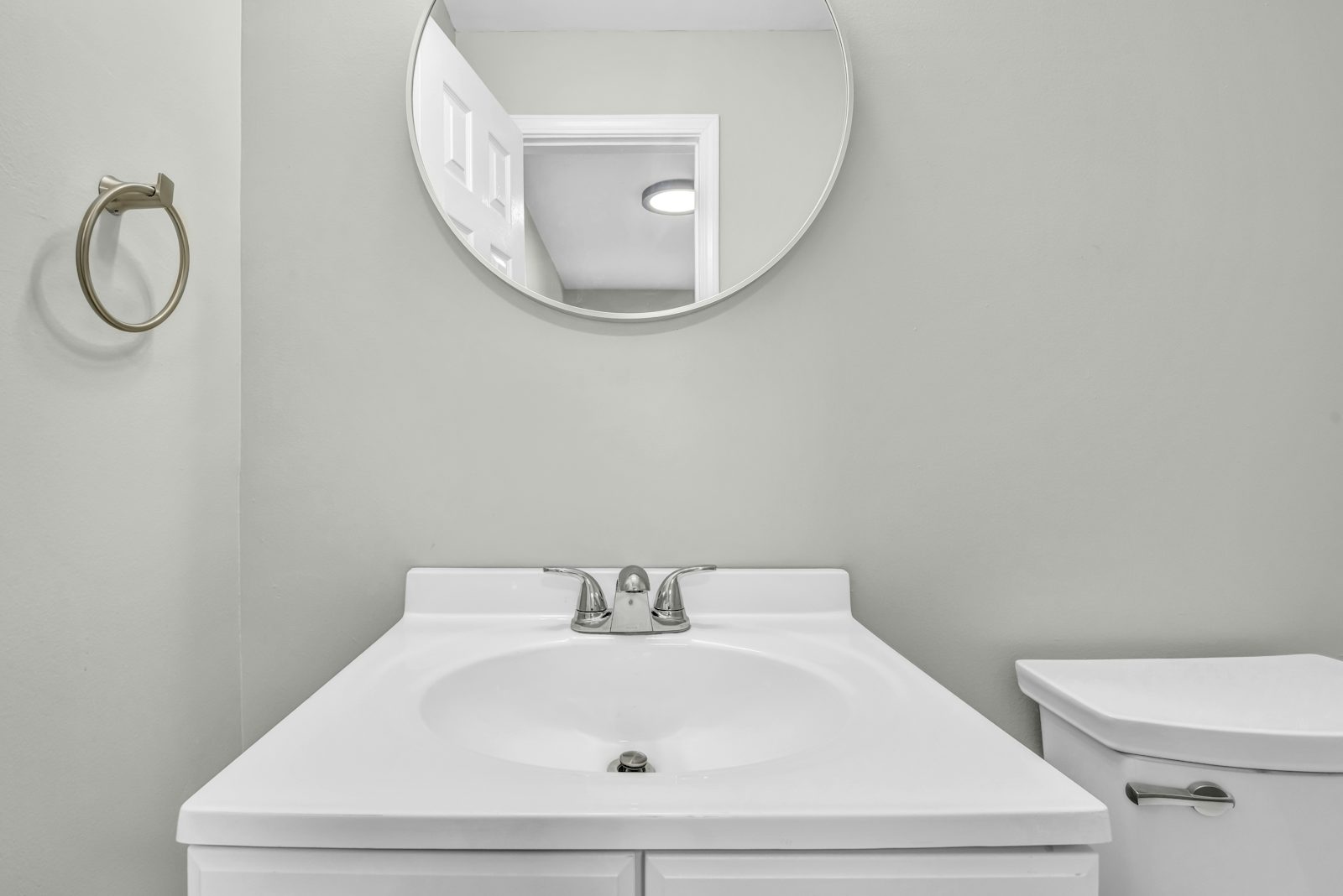
In the opening reference, a white basin stands against pale gray walls. The round mirror introduces a different outline above the rectangular basin, with a small warm-toned towel ring alongside it. The room’s interest comes from a few distinct shapes rather than several competing wall patterns.
Choose an existing item as the starting point: the basin, a cabinet front, the floor or a counter. Place prospective samples beside it rather than comparing each sample in isolation. If you plan to keep a white basin and a gray floor, for example, test the wall option with both. This avoids choosing three finishes that you like separately but have not yet seen together.
Keep a small set of labeled samples and view them in the room at the times you use it. Look again with the room’s existing lights on. This comparison helps you make a choice in its actual setting; a screen image is only a starting reference.
Use a darker surface to give the scheme an edge
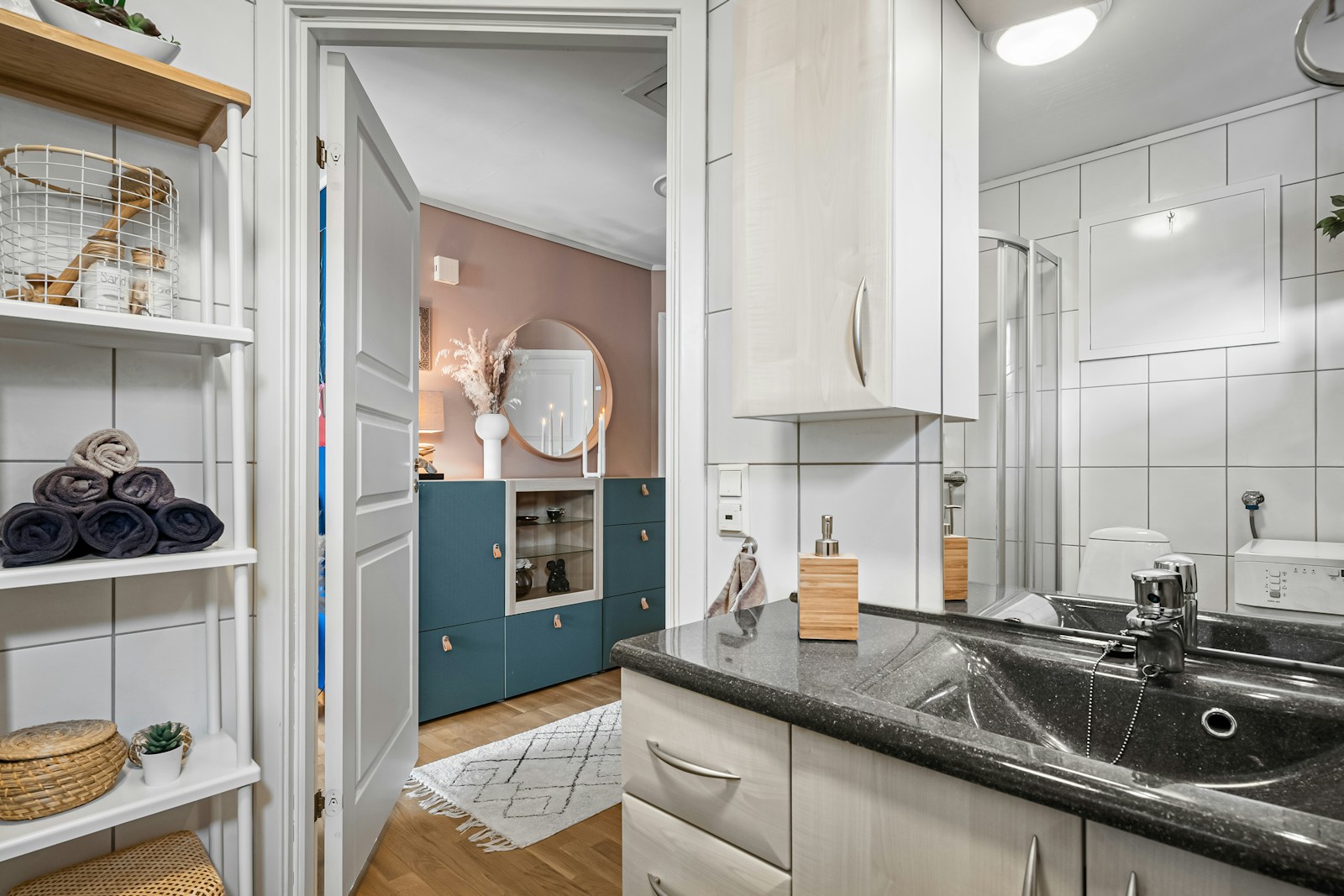
The dark counter in this separate bathroom makes a clear horizontal line beneath the mirror. White wall tiles and pale cupboard fronts surround it, and rolled gray towels repeat part of the palette on the shelves. The room beyond the doorway uses other colors, so the photograph also shows how a bathroom can sit beside a different scheme.
If a dark counter is already part of your room, compare a plain wall option before adding another strong pattern. If the counter is pale, a mirror frame or a small group of accessories may provide the contrast instead. Choose the location deliberately, rather than buying several dark details and hoping they will join up.
The joints between tiles contribute lines of their own. Our small bathroom tile comparison guide explains how to review the grid, grout color and cuts alongside the fixtures.
Let white surfaces show their different shapes
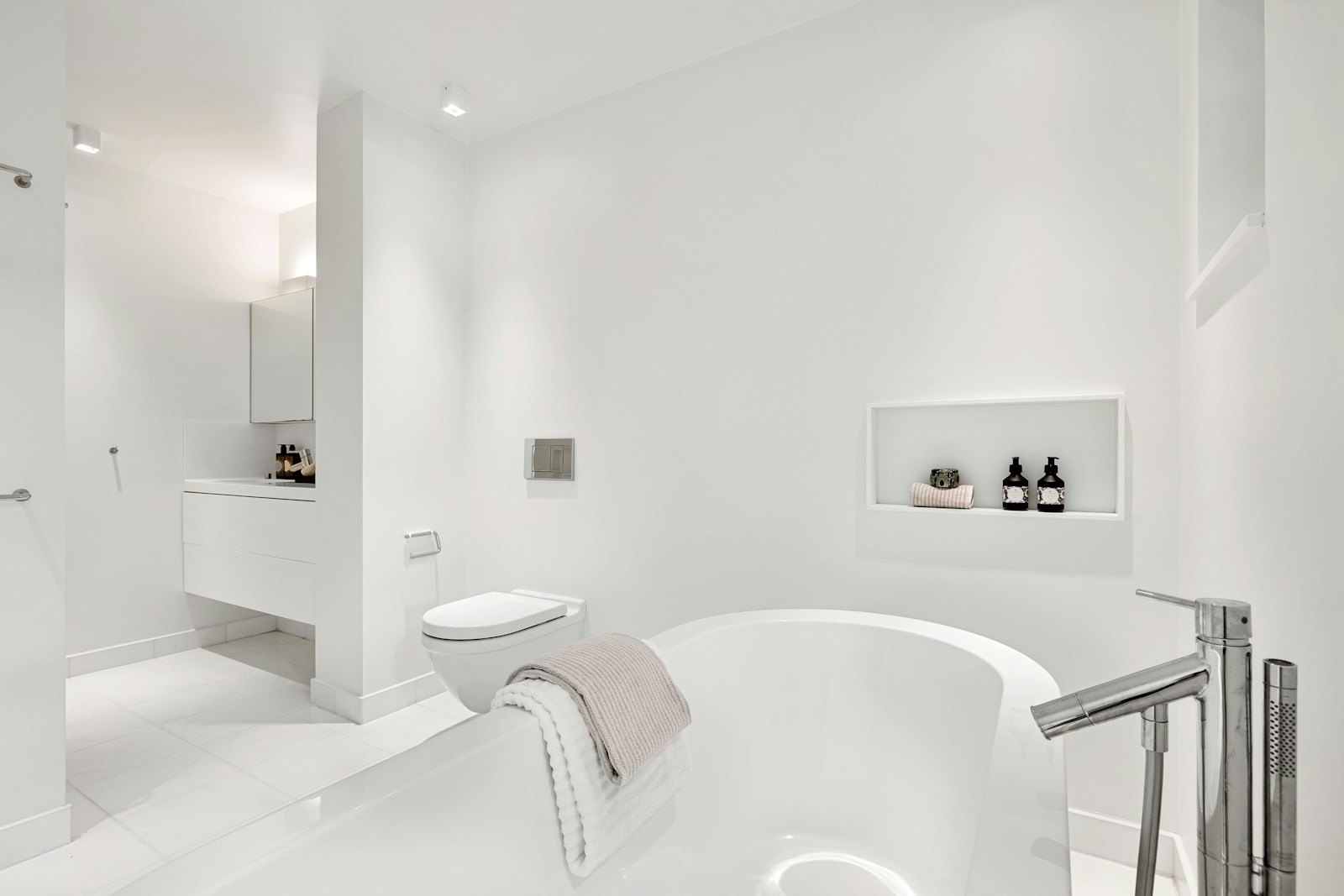
This white bathroom uses a curved bath, straight cabinet fronts and a recessed niche. The towel and the small objects in the niche add detail within the pale setting. You can study those relationships without assuming that the photograph identifies the materials or tells you the room’s dimensions.
Apply that idea by comparing form as well as color. A round mirror can sit above a rectilinear vanity; a folded towel can introduce texture beside a plain front. Make one change at a time in your sample arrangement. If the room already has a strong tile pattern, the most useful addition may be a simple textile or a clearer storage arrangement.
Make a palette that includes daily life
Include the items that will stay out: the soap dispenser, hand towel, laundry basket and anything used at the basin. A photograph may contain only a few carefully placed objects, while your bathroom serves several people. Decide which items need a place within reach and which can be stored behind a door.
IKEA’s bathroom planning guide includes storage, mirrors and lighting in the initial plan. Use the same broad review before treating wall color as the only decision. Our bathroom storage and color examples examine that connection in more detail.
| Element | Question to resolve |
|---|---|
| Existing finish | Which large surface will stay and provide the starting reference? |
| Contrast | Where will the strongest light-to-dark boundary sit? |
| Shape | Can a mirror, bath or textile add interest without another wall pattern? |
| Daily items | Which visible objects need to be included in the palette? |
A useful gray and white scheme is one you can explain with the samples and the room’s contents together. Keep that small collection as your reference when considering later purchases, so each new item has a clear place in the arrangement.