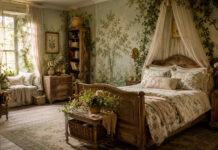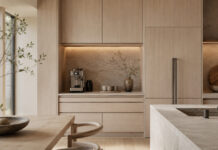


A bedroom can borrow the soft colours and low furniture seen in Korean-inspired interiors while still meeting your own needs for sleep, storage and privacy. These seven room references show different ways to organise those choices. None is a rule for every Korean home, and a photograph does not establish the dimensions of a layout.
Use separate light for separate activities

The first room combines a bedside light with a taller floor lamp and a small table. Rather than making the entire bedroom dim, decide where you need light for reading, dressing and moving around, then consider the atmosphere you want at bedtime.
Place portable lights where they can be operated without awkward reaching. Follow the product instructions and keep cables out of walking routes; changes to fixed wiring need the appropriate installer.
Limit a display to a defined area

The second room concentrates books, small pictures and colourful personal objects around shelves and the desk. The bedding and larger furniture remain comparatively quiet, so the display has a clear place rather than spreading across every surface.
Choose a shelf or board for the things you want to see each day. Keep work surfaces and the space needed to open drawers available. You do not need branded novelty items or a particular collection to achieve this balance.
Choose a bed position for the actual window

A bed placed close to a large window can share the room with a small sitting area, as this example shows. Check the window opening, coverings, heating or cooling arrangements, privacy and the way you enter the bed before copying the position.
The useful idea is the relationship between bed, daylight and seating. Putting a bed behind or beside a window is a choice to test, not a condition of a Korean-inspired room.
Give a full-length mirror a usable position

The mirror in this room is placed where it can show a full outfit and sit alongside a compact collection of plants. Test its view from the place where you will stand, and check that doors and curtains can still operate.
A mirror shown leaning in a photograph is not an installation instruction. Secure and support it using the product guidance, especially where it could be knocked or reached by a child.
Assess the whole bed frame, not only its height

This low timber frame creates a horizontal line that works with the pale cabinet and simple bedding. When considering a similar frame, include its outer dimensions, the mattress support requirements and the height that is comfortable for the person using it.
Keep the maintenance instructions and access for cleaning in mind. A low frame does not automatically make the room cheaper, healthier or more practical.
Store everyday objects beside the activity

The next view places a small cabinet and light near the bed, with only a limited number of decorative objects. This works as a prompt to list what belongs beside the bed and what can live elsewhere.
Choose usable storage before adding another decorative piece. A clear bedside surface and an accessible drawer may serve the room better than several small tables with the same purpose.
Treat decorative lighting as an optional layer

The last bedroom uses a string of lights as a visual accent above the low bed. Decorative lighting can be one layer of a scheme, but it should not replace lighting needed to read, dress or move around.
Check the rating, intended use and mounting instructions of the product. Keep the arrangement serviceable and choose a simpler alternative if it creates an awkward cable route.
For more room arrangements, compare low furniture and everyday storage in a compact studio. The studio planning guide shows how to prioritise furniture before adding accessories.