

Choose wall decoration by what the room needs, the condition of the wall and how the display will be supported. A useful starting point is one wall and one clear purpose: show artwork, introduce a pattern, reflect a view or add storage. Try the arrangement before buying a roomful of objects.
Check the wall and the room first
Record the wall’s dimensions, finish and any permission needed to alter it. Keep access to switches, doors, ventilation and frequently used furniture. Damp, loose finishes or unexplained cracks need attention before decoration; our home-maintenance checklist helps organise observations and follow-up work.
Use the item’s complete weight, dimensions and mounting instructions when planning support. The wall’s surface and underlying construction both matter. If you cannot establish a suitable fixing arrangement or locate services safely, arrange competent help rather than choosing a screw or adhesive by appearance.
Build an art arrangement on paper
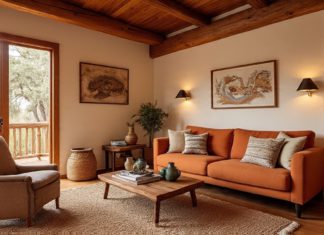
Choose prints, photographs or your own work that you want to see regularly. Check that you may reproduce an image before making a print. Compare the frames as a group: one repeated frame colour can connect different subjects, while a single larger piece may suit a wall better than many small ones.
Measure the complete framed pieces and try paper templates or a floor arrangement. Check their relationship to the furniture and the view from a normal seat. The purpose is to test spacing and scale in your room, not to follow a universal hanging height.
Adhesive products have specific limitations. For example, Command’s picture-hanging instructions exclude certain surfaces and items and warn that failing to follow the instructions may cause damage. Read the exact product’s permitted use, load, preparation and removal directions; an adhesive intended for a picture is not automatically suitable for a mirror or shelf.
Test removable wallpaper against the actual finish
Compare a sample with the existing furniture in daylight and artificial light. Check the wall dimensions, pattern repeat and coverage of the product you are considering before calculating quantities. A small feature area may supply enough pattern without covering every wall.
Read the manufacturer’s surface and paint-curing requirements. As one example, Tempaper’s installation guide specifies suitable smooth, prepared finishes and lists surfaces it does not recommend. Those instructions apply to that product; they do not establish that every removable wallpaper works on textured, damp or freshly painted walls.
Follow the exact product’s test and removal instructions. Check tenancy or building requirements where relevant. The word removable does not by itself guarantee that the existing paint will remain undamaged or that the paper will tolerate every household’s wear and cleaning routine.
Choose a plant display you can maintain
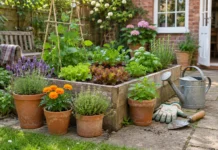
For a live plant, identify the species and match its light and care requirements to the location. Include the planted container and retained water when assessing the support. Keep the arrangement accessible for watering and inspection, and protect the wall and furniture from moisture.
An artificial plant is an option when live-plant care is impractical, but still needs a stable position and cleaning. Choose between them by the actual routine rather than assuming a short absence automatically requires an artificial plant. Our indoor-plant planning guide compares placement and care decisions without promising a medical or air-cleaning benefit.
Position a mirror for the view it reflects
Before choosing a mirror, check what will be reflected from the main seating position and whether a window or lamp causes glare. Compare the proposed outline with the furniture below it. A larger mirror or a greater number of mirrors is not automatically a better arrangement.
Confirm the mirror’s weight, supplied hardware, wall requirements and fitting instructions. Keep its position practical for household use and cleaning. Heavy or uncertain installations deserve assessment; do not assume picture-hanging adhesive is a universal mounting method.
Make shelves useful as well as decorative
List what the shelf will hold, including the shelf itself and any added accessories. Check the complete system’s permitted load, brackets and wall requirements. Leave room to lift items off and clean the surface without disturbing everything beside them.
Choose a small display that has a purpose in the room: books used nearby, a collection you want to see or a few everyday objects. If adding lighting, check the product’s suitability, cable route and instructions. Keep loose leads away from access routes and avoid treating an improvised shelf as a place for a heavy appliance or fixture.
Compare the options before buying
| Option | Try first | Resolve before installation |
|---|---|---|
| Art or photographs | Full-size paper outlines and a frame arrangement | Image permissions, complete weight and permitted mounting method |
| Removable wallpaper | A product sample on a permitted test area | Wall finish, paint cure, coverage and removal instructions |
| Mirror | The proposed outline and reflected view | Glare, weight, hardware and wall support |
| Shelf or plant display | A list of contents and accessible positions | Complete load, wall requirements, watering or cable access |
Keep the first arrangement manageable. Use it through ordinary household activity, then change what obstructs access, is difficult to maintain or does not suit the room. A considered display can begin with objects you already own.