

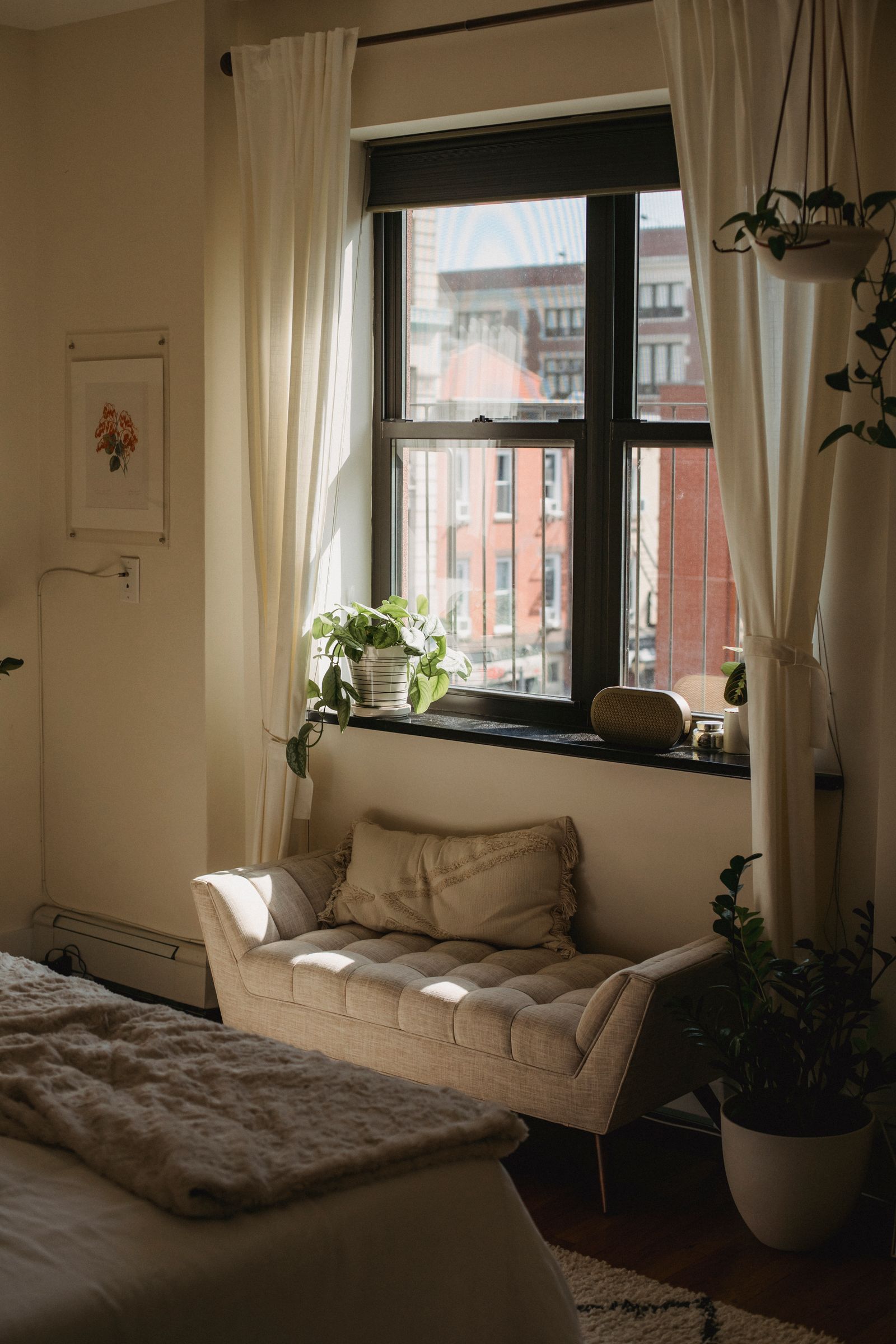
A large bedroom window can offer a view and useful daylight, but the benefit depends on where it faces, what is outside and how the room is used. Compare the window with the bed, curtains, heating or cooling needs and everyday access. Size alone does not establish that it will save money or make the room healthier.
Use daylight where you need it
Look at the place where you dress, read or use a screen as well as the bed. Observe it in the morning and later in the day. A window can illuminate one position while leaving another in shade, and direct sun may introduce glare. Try the intended curtain or blind positions while using the room, rather than judging only an empty room at midday.
In this photograph, the blind and curtains operate as separate layers. That is a useful starting point for comparing filtered light with stronger coverage. Check the actual product’s light transmission, coverage and operation; a sheer fabric should not be assumed to provide privacy in every lighting condition.
Separate the view from privacy
Identify the view you want from the bed or a chair, then check sightlines from neighbouring buildings and paths. A covering that works during the day may behave differently when the bedroom lights are on. Assess coverage after dark too. Keep any cords and the furniture around the opening appropriate for the people using the room.
The view is only one part of the decision. Compare these choices with the position and opening arrangements in our guide to large windows . A larger expanse of glass is not a substitute for a useful layout.
Plan the layers beside the bed
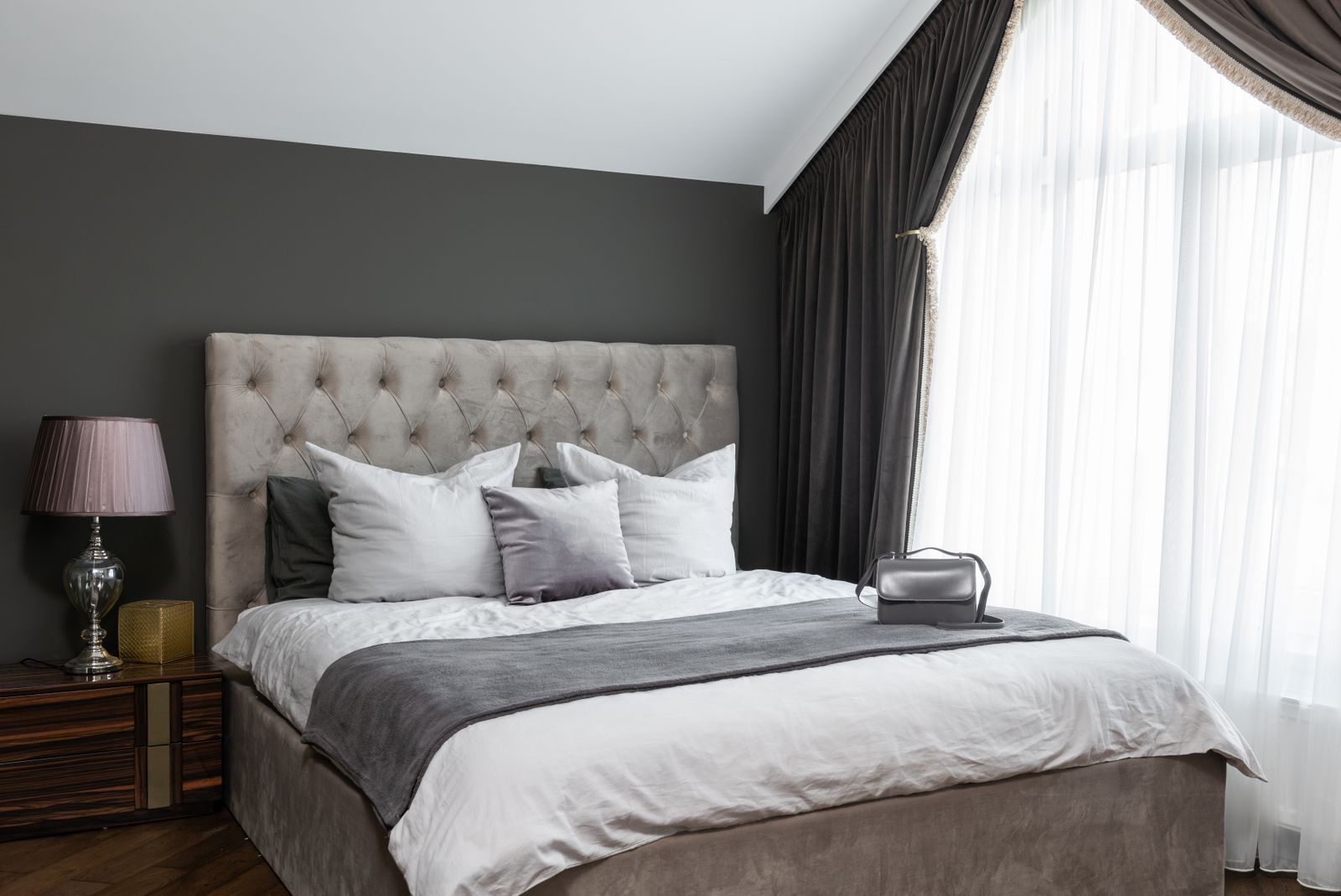
Allow room to operate the covering, open the window where intended and clean the glass. Include the curtain’s gathered depth and any furniture that moves. A bedside lamp should be reachable without its cord crossing the route. Keep the window’s required opening and access clear when choosing the bed position.
For a practical bedroom arrangement, compare our bedroom layout guide. Test these actions with the furniture in place: draw the curtains, reach the lamp, open storage and walk to the door. The most useful benefit may be an accessible window and a workable reading position rather than the biggest possible opening.
Evaluate energy use across the whole room
Daylight may let you turn off a lamp when it adequately lights the task. That does not establish a net saving on heating and cooling. The U.S. Department of Energy explains the role of climate and window performance in energy use. Its guidance distinguishes heat transfer, solar heat gain and visible light; they are different properties.
For a replacement or alteration, compare the existing window, the proposed product’s documented ratings, orientation, shading and installation. Ask for an estimate based on the actual home and local conditions. Do not infer an electricity saving from a photograph or from glass area alone.
Open a window only when the conditions suit
An opening can provide ventilation, but morning air is not automatically clean. Check outdoor conditions, weather and the household’s ventilation needs before opening it. EPA guidance on indoor air quality describes ventilation alongside source control and filtration, and cautions about outdoor pollution such as nearby smoke.
Make a short decision list before changing the window: useful daylight at the activities you do, privacy at different times, glare and heat control, safe access and a product suited to the building. A window works well when those requirements fit together; it does not need to be large simply because the room is a bedroom.