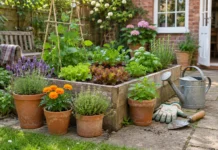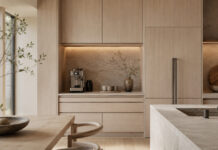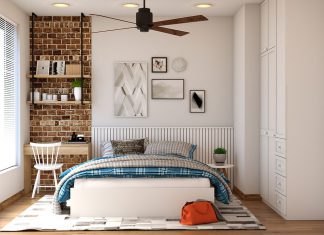


Houseplants can become part of a room’s design and daily routine. The most useful choice is one that suits the available light, space and care—not a promise of cleaner lungs, stronger immunity or faster learning. Here are six practical reasons to consider them, with a check for each.
1. Add colour without repainting
Foliage can provide a repeatable accent beside neutral walls or upholstery. Start with one position visible from the main seating area, then choose a plant whose light requirements fit that position. Do not move a light-demanding plant into a dark corner solely to complete a colour scheme.
2. Introduce a different shape
A trailing plant, upright specimen and low grouping create different outlines. Compare the mature size with the shelf, window and walking route. Check that the pot and support remain stable as the plant grows; a tall silhouette is useful only if it does not obstruct everyday use.
3. Make a small care task part of the week
Checking the soil and observing growth can be an enjoyable routine. Learn the identified species’ watering needs rather than watering every pot on the same fixed schedule. Use a suitable container and protect furniture from drainage and spills. The task should fit your household, including periods away from home.
4. Group objects into a deliberate display
Repeat one pot finish or group a few plants with compatible needs. Allow access to remove pots for care instead of packing a shelf so tightly that watering becomes awkward. Leave useful space for books, lamps or work materials; greenery does not need to cover every surface.
5. Create a shared, supervised project
Involve children in age-appropriate observation and care, with an adult responsible for safe placement, tools and plant choice. Verify the species’ suitability for children and pets before buying. Do not describe a plant as a treatment for a learning difficulty or make responsibility for its survival a pressure on a child.
6. Change the display gradually
Move a small pot within its suitable light conditions, rotate a display or choose a different container to refresh a room. Inspect plants before introducing them and respond to care problems rather than buying more to conceal them. A modest collection you can maintain is more useful than an overcrowded one.
Keep air-quality decisions separate
The EPA’s indoor-air guide explains the limits of applying plant experiments to ordinary rooms. Houseplants are not a substitute for controlling pollution sources, ventilation or appropriate equipment. Choose them for the display and care you enjoy, without assigning clinical or measured performance that has not been established for your home.