
In the vast landscape of business, where first impressions often dictate lasting relationships, the reception area serves as the stage for initial encounters. It’s the threshold where visitors step into the world of your brand, forming their initial perceptions. Among the elements that shape this pivotal moment, none holds as much symbolic weight as the reception desk. It’s not merely a functional piece of furniture; it’s a narrative canvas, a tangible expression of your brand’s ethos and identity. Crafting a reception desk that resonates with your brand’s story requires a delicate balance of aesthetics, functionality, and symbolism.
At its core, a reception desk is a practical fixture, facilitating smooth interactions between visitors and staff. However, it’s also an opportunity to infuse the space with your brand’s personality. The design should reflect your brand’s values, culture, and unique identity, setting the tone for the entire experience. Whether sleek and minimalist or bold and unconventional, the reception desk should embody the essence of your brand.
One approach to designing a reception desk that tells your brand’s story is to draw inspiration from your brand’s history and values. Consider incorporating elements that pay homage to your company’s origins or key milestones. For instance, if your brand has a rich heritage rooted in craftsmanship, opt for a reception desk crafted from natural materials like wood or stone, showcasing artisanal details that speak to your dedication to quality and tradition.
Another strategy is to leverage your brand’s visual identity to inform the design of the reception desk. Incorporate your brand’s color palette, typography, and logo in subtle yet impactful ways. Whether through custom signage, branded accents, or integrated lighting, these elements serve as familiar touchstones that reinforce brand recognition and leave a lasting impression on visitors.
Moreover, the layout and configuration of the reception desk can communicate important messages about your brand’s values and priorities. An open, inviting design conveys transparency and accessibility, signaling to visitors that your brand values openness and collaboration. On the other hand, a more structured layout with defined boundaries may project a sense of professionalism and efficiency, ideal for brands in industries like finance or law.
Beyond aesthetics, the functionality of the reception desk plays a crucial role in shaping the visitor experience. Consider the practical needs of both staff and visitors when designing the layout and features of the desk. Incorporating integrated technology, such as digital displays or interactive kiosks, can enhance efficiency and provide valuable information to visitors while reinforcing your brand’s commitment to innovation.
Furthermore, the reception desk serves as a focal point for brand storytelling, offering an opportunity to engage visitors on a deeper level. Consider incorporating multimedia elements, such as video screens or interactive exhibits, that showcase your brand’s history, values, and impact. These immersive experiences not only educate and entertain visitors but also foster emotional connections and leave a lasting impression.
In addition to visual and interactive elements, the reception desk can also engage other senses to create a memorable experience. Consider integrating ambient soundscapes, custom scents, or tactile materials that evoke your brand’s personality and enhance the overall sensory experience. By appealing to multiple senses, you create a multi-dimensional narrative that captivates visitors and leaves a lasting impression.
Moreover, the reception desk can serve as a dynamic canvas for seasonal or themed installations that reflect current events, cultural trends, or brand initiatives. Whether through seasonal decorations, rotating art installations, or collaborative projects with local artists, these ever-changing displays keep the reception area fresh and engaging, inviting visitors to return and experience something new with each visit.
Ultimately, the key to crafting a reception desk that tells your brand’s story lies in thoughtful integration of design, functionality, and storytelling. By aligning the aesthetic, practical, and narrative elements of the reception desk with your brand’s values and identity, you create a memorable entrance that leaves a lasting impression on visitors and sets the stage for meaningful interactions and relationships.
Choosing the best bidet toilet combo is not always easy, as you will need to first understand your demands and priorities. Nowadays, bidet toilets are becoming a staple in the modern bathroom, offering a blend of hygiene, comfort, and innovation that traditional toilets can’t compete with.
But among all these features, which do you value the most? And what are the best bidet toilet combos should you buy? Let’s explore the top contenders in the bidet toilet arena and uncover which one might be the ideal fit for your modern bathroom.
6 Best Bidet Toilet Combos of 2024
1) Best Bidet Toilet Combo for Beginners: HOROW Model T05
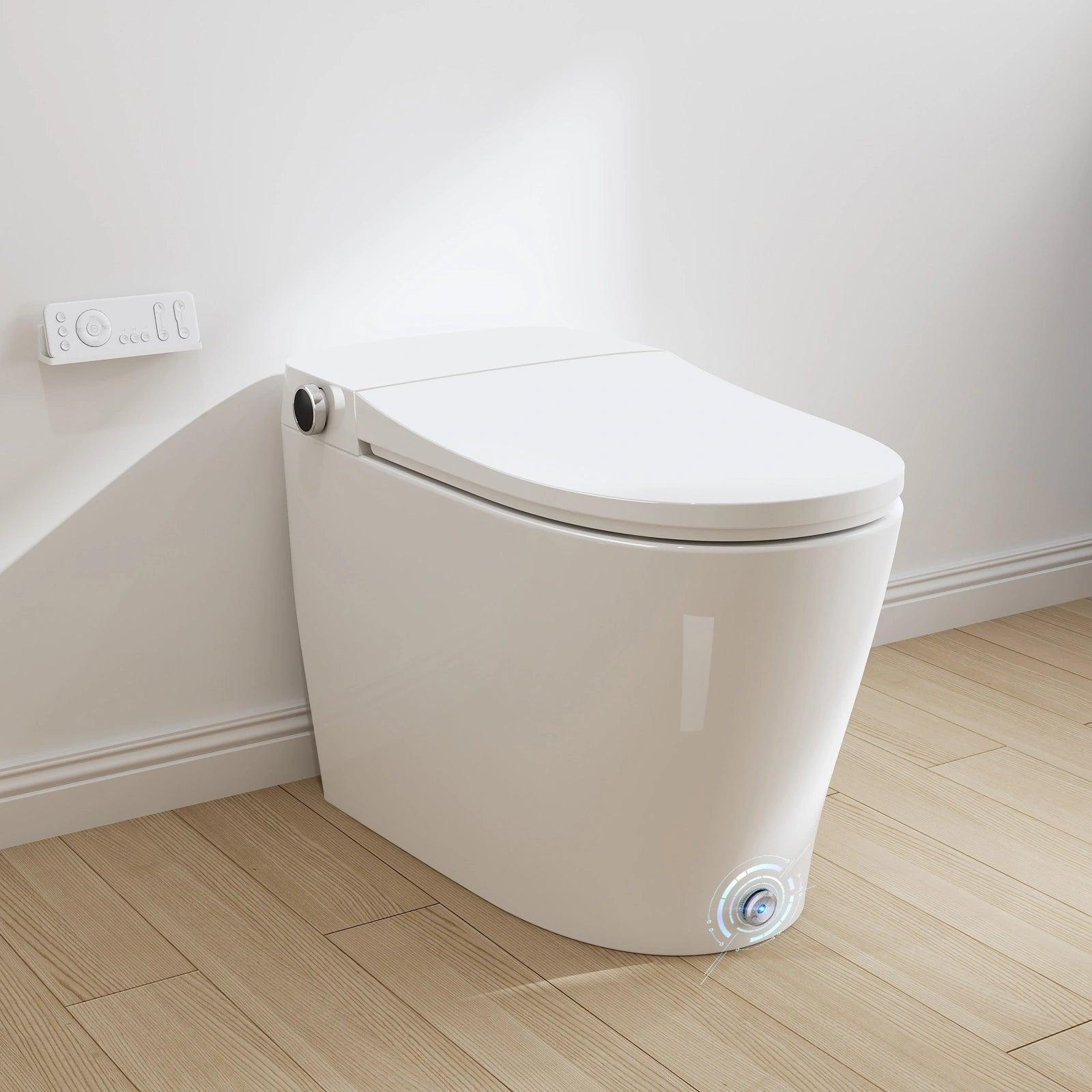
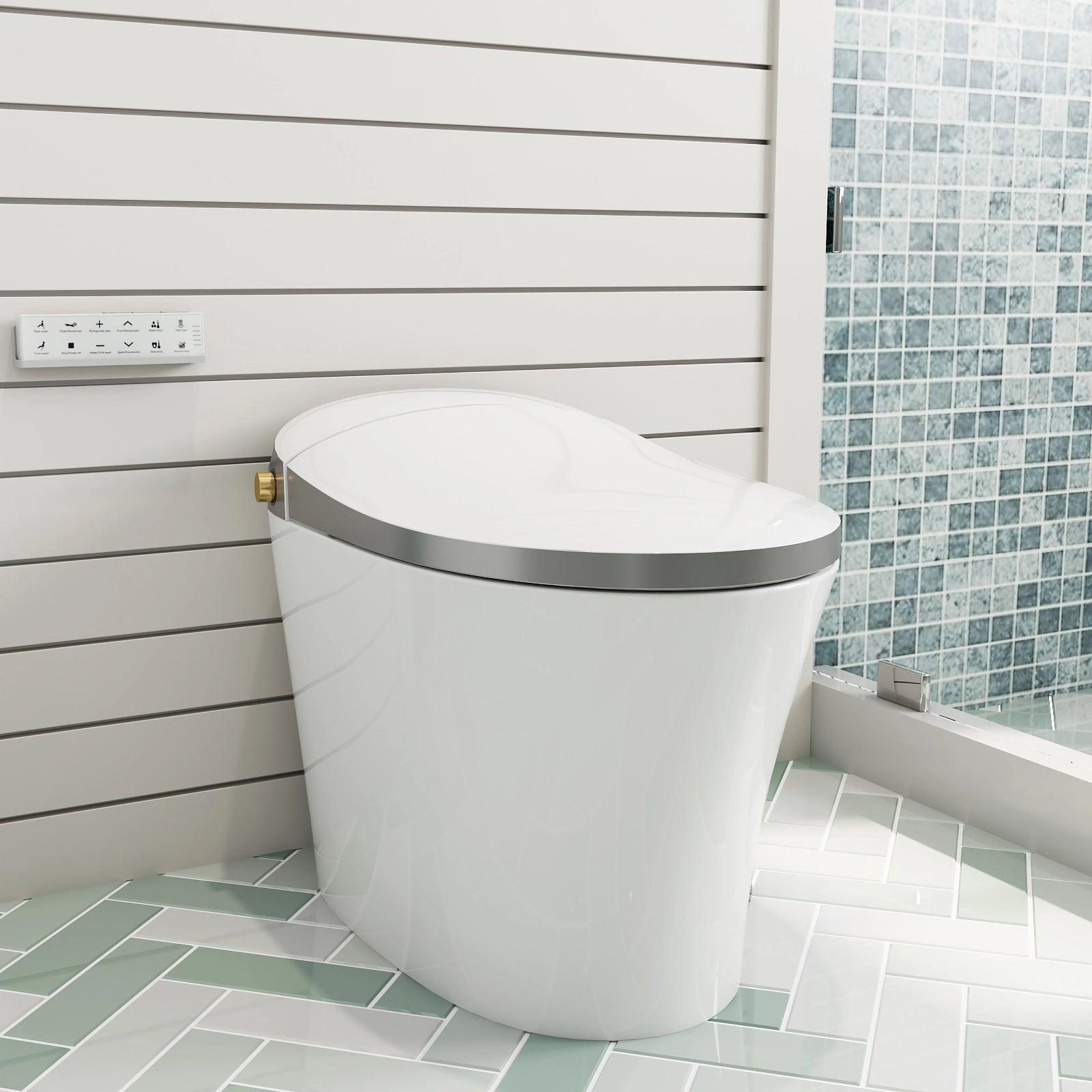
Let’s kick things off with the recommendation for beginners. The HOROW Best Bidet Toilet Combo Model T05 is an intelligent bidet toilet I would recommend for beginners to bidet toilets. The T05 model of the HOROW smart toilet series has the perfect combination of sleek design, simple installation, intuitive remote control, and high automation.
As you approach, the lid automatically opens, and you can feel the warmth of the instant heating seats the moment you sit down. And soon the auto-deodorizer kicks in and get the air purified in the bathroom.
For easy control of functions, pressure, or temperature on the T05 model, simply press the corresponding button on the remote. Its layout is easy to understand, and the buttons are clearly labeled. Once you have the settings to your liking, you don’t need to adjust them very much in later use, making things really easy for beginners.
Features:
All-in-one intelligent bidet toilet
Advanced bidet functionality with various wash options
Smart flushing convenience with 4-way control
Personalized comfort with an elongated bowl and adjustable settings
Hand-free operation with automatic lid opening/closing
Cons: Higher price point compared to basic toilets, limited color options.
2) Best Luxury Bidet Toilet Combo: TOTO Neorest NX1
The TOTO Neorest NX1 isn’t just a toilet; it’s a masterpiece of art. You are sure to be captivated by its elegant, organic silhouette, reminiscent of a hand-thrown earthen vase!
What sets NX1 as the best bidet toilet combo for luxury settings is its attention to detail. The Tornado Flush® System ensures efficient and effective waste removal with less water, while the CEFIONTECT® Ceramic Glaze maintains a pristine surface with ease. With Ewater+® electrolyzed water sanitization technology, it guarantees you a bidet experience that’s not just clean but clinically so.
Cons: High price tag, may require professional installation
3) Best Bidet Toilet Combo for Families: HOROW Model T20Y
Looking for the best bidet toilet combo for your big family? Look no further! With tankless dual flush technology, the HOROW T20Y smart bidet toilet is efficient and water-saving. Plus, it is ADA height compliant (over 17 inches high), making it more comfortable for users of all ages within your big family.
Keeping the toilet clean can be a headache. Don’t worry; this HOROW 20Y model includes low-maintenance hygiene features like automatic deodorization, self-cleaning nozzles, and disinfection lights, automatically ensuring a healthy bathroom environment for the whole family.
Features:
Chair height seat
Water-conserving dual flush system
Auto-deodorization, self-cleaning nozzles, and UV light sanitation
Automated lid opening/close
Personalized settings for different users
Pros: Family-friendly design, customizable settings, modern aesthetic
Cons: Some users in the family may find the remote control complex
4) Best Bidet Toilet for Seniors: Dignity Lifts Bidet Toilet Lift- WL1
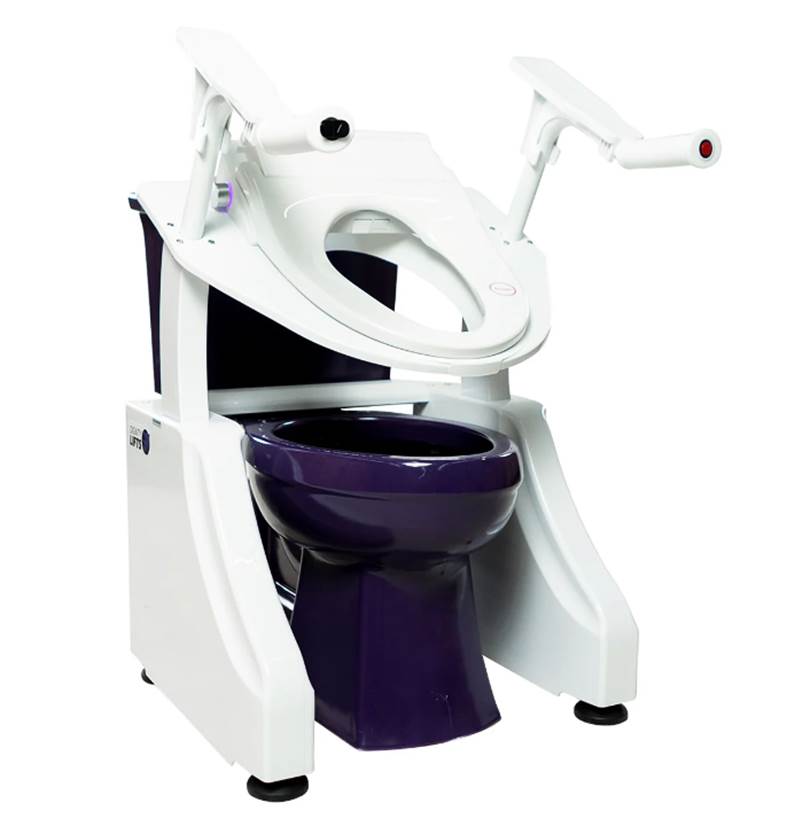
Dignity Lifts Bidet Toilet Lift- WL, as the best bidet toilet combination solution for seniors, sets itself apart from others by providing an innovative lift mechanism. This stable and secure lift controlled through the handle can assist seniors in lowering themselves and standing up with ease.
Moreover, the WL1 integrates a built-in bidet and blow dryer, ensuring thorough cleaning and drying after toileting. This feature reduces the risk of injury for seniors who may have difficulty reaching and twisting for manual wiping.
All in all, the WL1 Bidet Toilet Lift not only enhances comfort and independence but also promotes hygiene and dignity for senior users.
Features:
Safe and easy lift through handlebars with built-in warning alarm
Fully integrated bidet and blow dryer
Easy-to-use controls for customizing the functions
Heated seat and automatic deodorizing function
Designed for users up to 300 lbs
Pros: Enhanced accessibility for seniors, comprehensive hygiene features, sturdy and stable design.
Cons: High cost, complex installation
5) Best Bidet Toilet Combo for Small Bathrooms: HOROW Wall Hung Model G10
While the wall-hung toilet is inherently space-saving, the wall-hung toilet HOROW wall hung model G10 takes space efficiency to a newer level with its 23.3-inch length, 3 inches shorter than the one-piece design model. This helps to make your bathroom more open and airier.
What’s even greater is that it doesn’t sacrifice functionality for space. It features an instant heating seat, automatic opening, and closing lid, and adjustable bidet water temperature, pressure, and nozzle position.
Cons: Require additional structural support, higher price compared to standard toilets.
6) Best Budget Bidet Toilets Combo Solution: Bio Bidet BB-2000 Bliss Seat
The Bio Bidet BB-2000 Bliss is an affordable bidet toilet seat that offers a three-in-one bidet system, stainless steel nozzle, and adjustable water pressure. If you don’t want to replace the whole set and just want to add the bidet, then the seat is the best budget solution for you.
It comes with a warm air dryer, deodorizer, night light, and a slow-closing seat & lid, making it a feature-packed option for those on a budget. The BB-2000 Bliss is designed for easy DIY installation and is available for both elongated and round toilets, making it a versatile and cost-effective choice.
Features:
Three-in-one bidet system (rear, front, and turbo wash)
Stainless steel nozzle with adjustable water pressure
Warm air dryer and deodorizer
Heated seat with unlimited warm water
Night light and wireless remote for convenience
Pros: Affordable price point, comprehensive features, easy DIY installation.
Cons: compatibility issues concerning toilet shapes and sizes.
In conclusion, bidet toilet is a significant upgrade from traditional toilets, offering a range of benefits from improved hygiene to user comfort. There is no single best bidet toilet combo to suit every household’s needs and preferences. So, understand your needs before making purchases and set your priorities straight so you can find the one that best suits you!
Frequently Asked Questions About Bidet Toilet Combos Purchase
What features should the best bidet toilet combos have in 2024?
You should consider adjustable settings, hygiene features, water efficiency and energy-saving modes, and automated features. These are important factors contributing to personalized comfort, environmental preservation, and low-maintenance cleanliness.
What are the top brands for bidet toilet combos?
Toto, HOROW, Kohler, Bio Bidet, and Woodbridge are some of the best brands in the bidet toilet combo market, each offering a blend of advanced technology, comfort, and style. HOROW stands out with its dedication to customer-inspired innovation, offering high-quality, WaterSense-certified products that blend advanced technology with elegant design.
How do I choose the best bidet toilet combo for my home?
Are all-in-one bidet toilet combos easy to install?
Many combo units are designed for easy hookups, just as required for standard toilets. So, if you’re fairly handy, you may be able to install one of these combo units yourself. Test the water pressure and electrical requirements before installation and have all the tools and materials prepared. But special models like the wall-hung bidet toilet and bidet toilet lift may involve a more complex setup.
Approximately 75% of roofs in the United States currently utilize asphalt shingles. But what occurs when one or more of these shingles sustain damage due to weather or other causes? How can you repair them? We’ll demonstrate four straightforward methods to accomplish this task.Â
Step 1: Roof Inspection
Conducting a roof inspection is the crucial first step in maintaining a healthy shingle roof. This involves carefully examining the top of your house to detect any potential issues. Ideally, inspections should be performed twice a year to catch problems early before they escalate into costly repairs.
During the inspection, it’s important to focus on the shingles:
Check for missing shingles and inspect the roof for gaps.
Examine shingles for curling and address any curled shingles.
Look for cracks in the shingles to ensure they are intact.
Inspect the flashing around vents for signs of wear.
Clean gutters of debris to prevent water buildup and damage.
However, the inspection should extend beyond just the shingles. Assess the flashing around chimneys and vents for wear or damage. Additionally, check gutters for debris, as clogged gutters can lead to water pooling and potential roof damage.
Remember, a thorough roof inspection is akin to a health check for your home. It helps identify and address problems early, keeping the roof strong and reliable while protecting the house below. If you’re unsure where to start, don’t hesitate to contact us at MidSouth Construction, and we’ll conduct a comprehensive roof inspection for you.Â
Step 2: Gathering Materials and ToolsÂ
After completing the roof inspection, the next step is to prepare for the repair by gathering the necessary materials and tools. This careful preparation ensures a smoother and more efficient fixing process. Begin by assembling the required materials, including:
Replacement shingles
Roof nails
Roofing adhesive or putty
Ensure that the replacement shingles match the existing ones in color and style to maintain a uniform appearance. Here’s a checklist for gathering materials and tools for this task:
Gather replacement shingles to match existing roofing materials.
Collect roofing nails and a hammer to secure shingles.
Acquire roofing adhesive or sealant for permanent repairs.
Use a sturdy ladder for safe access to the roof.
Having all the necessary materials and tools ready allows you to start the repair process and complete the job quickly.
Step 3: Shingle Replacement and Repair Techniques
Replacing and repairing shingles involves several simple yet critical techniques to restore the integrity of the roof. Start by carefully removing damaged shingles using a pry bar or flat shovel, being cautious not to damage the surrounding shingles.
These repair methods aim to maintain the roof’s protective barrier and ensure a waterproof and weather-resistant surface. Properly executing these simple yet effective methods can prolong the life of your roof. Here’s a 5-step process for replacing and repairing shingles:
Carefully remove damaged shingles with a pry bar.
Align the new shingles smoothly with the existing ones for uniformity.
Secure the replacement shingles with roofing nails just below the others.
Use roofing adhesive to securely reattach curled shingles.
Repair cracked shingles with waterproof sealant for added durability.
After removing the damaged shingles, place the new ones in the vacant spots, ensuring they align smoothly with the existing ones. Secure the replacement shingles with roofing nails and a hammer, driving the nails just below the top of the shingles to prevent leaks.
However, if you’re too busy or prefer not to handle the technical aspects, don’t hesitate to contact us at MidSouth Construction. We’ll take care of the job for you, relieving you of the worry about these techniques.Â
Step 4: Preventative Maintenance
Preventive maintenance is the final step to ensure the long-term health of your shingle roof. Regularly check your roof for signs of wear and tear, particularly after extreme weather conditions. Clear debris from gutters to prevent water buildup and potential damage.
Here are some recommended actions:
Regularly inspect for wear and tear after rain, hail, snow, heat waves, etc.
Clear clogged gutters to prevent water buildup and potential water damage.
Trim overhanging branches to minimize the risk of falling debris.
Apply a coating to the roof to enhance durability and weather resistance.
By taking these proactive measures, homeowners can prolong the life of their roof and reduce the likelihood of major repairs in the future. Contact MidSouth Construction today so we can promptly address any small issues and implement proactive measures to safeguard your roof.
Conclusion
These methods offer effective solutions for addressing shingle problems or repairing damaged ones. Now, you can skip the hassle of DIY and entrust our experts at MidSouth Construction to handle it for you. Simply give us a call, and we’ll take care of everything on your behalf.
In the dynamic panorama of Philippine startups, where innovation meets opportunity, the quest for fee-effective workplace answers will become paramount. Establishing an effective workspace that aligns with budget constraints may be tough but not insurmountable. From co-running areas to virtual places of work, Filipino startups have an array of alternatives to optimize resources without compromising performance. Let’s discover a number of the maximum feasible answers tailor-made to the specific desires of startups in the Philippines.
Office Furniture
Co-running spaces have emerged as a popular preference for startups looking for a flexible and price-range-friendly workplace setup office furniture. These shared environments offer entry to vital facilities like high-paced internet, assembly rooms, and communal regions, all at a fraction of the cost of conventional workplace areas. In the Philippines, co-working areas are flourishing in most important cities like Metro Manila, Cebu, and Davao, imparting startups the opportunity to network and collaborate with like-minded specialists. By choosing a co-operating space, startups can enjoy the synergy of operating alongside other entrepreneurs, fostering creativity and innovation. Additionally, the pay-as-you-cross version permits scalability, allowing startups to regulate their space requirements in line with their evolving desires.
Virtual Offices: Flexibility Redefined
In a technology in which remote paintings are gaining traction, digital places of work provide startups with a flexible opportunity to standard brick-and-mortar setups. A virtual office gives crucial offerings along with a prestigious enterprise cope with, mail managing, and getting in touch with forwarding, without the overhead charges associated with leasing bodily space. For startups within the Philippines, digital offices offer the benefit of establishing a professional presence in key commercial enterprise districts, although the group broadly speaking operates remotely. This answer now not best saves on hire and utilities but additionally eliminates the need for commuting, permitting employees to attain better work-existence stability.
Office Table
Business incubators play a crucial role in supporting the increase and improvement of startups by supplying entry to mentorship, sources, and infrastructure office table. In the Philippines, several incubators and accelerators cater mainly to the needs of early-degree ventures, presenting low-cost workplace areas coupled with valuable steering from industry specialists. By joining enterprise incubator software, startups can benefit from sponsored workplace rents, shared services, and networking opportunities, accelerating their journey from ideation to marketplace access. Moreover, the collaborative surroundings foster know-how exchange and a feeling of network among entrepreneurs, improving the chance of achievement.
Serviced Offices: Convenience at Your Fingertips
Serviced places of work provide startups with a trouble-unfastened solution to their workplace area needs, providing fully furnished and equipped workspaces on bendy terms. In the Philippines, serviced workplace providers cater to startups of all sizes, presenting facilities together with reception offerings, IT aid, and entry to meeting centers. While serviced offices may also come at a slightly higher charge factor in comparison to different alternatives, they provide convenience and peace of mind, permitting startups to be aware of their middle enterprise activities without the distractions of workplace management. With customizable hire terms and scalable space alternatives, serviced workplaces offer startups the agility they want to evolve to convert market dynamics.
Office Table Price Philippines
With improvements in technology and connectivity, far-off work has emerged as a possible option for startups looking to limit overhead prices even as tapping into a global skills pool. By embracing far flung painting preparations, startups inside the Philippines can recruit top talent irrespective of geographical constraints, decreasing the need for high-priced office areas office table price philippines. Remote paintings now not handiest save on workplace rent but also reduce overhead charges related to utilities, upkeep, and workplace substances. Furthermore, it promotes a tradition of autonomy and flexibility, empowering personnel to manipulate their time and productiveness effectively. Platforms like Slack, Zoom, and Asana facilitate seamless communique and collaboration, allowing allotted teams to paint cohesively toward shared desires.
In conclusion
the hunt for powerful office answers provides both demanding situations and opportunities for startups inside the Philippines. By leveraging co-running spaces, digital workplaces, enterprise incubators, serviced places of work, and faraway painting preparations, startups can optimize sources while fostering innovation and boom. With the right combo of flexibility, affordability, and capability, Filipino startups can create conducive painting environments that propel them toward fulfillment inside the aggressive business landscape.
Infrared LED technology is shaping the future of household innovation, offering both functional and energy-efficient solutions across various applications. While often associated with remote controls and security systems, the scope of IR LED uses has expanded significantly, influencing how we manage and interact with our home environments. This article explores six transformative ways in which infrared technology is being integrated into everyday household functions, from enhancing security measures to revolutionizing home entertainment systems. As we delve into each application, it becomes evident that IR LEDs are not just peripheral components but central to creating smarter, safer, and more sustainable living spaces.
Enhancing Home Security Systems
Infrared LED technology is crucial in modern home security systems. These LEDs function as the eyes of the security cameras during the night, providing clear images in complete darkness. This capability is vital for capturing high-quality footage irrespective of the time, ensuring that all movements are monitored effectively. As a result, homeowners can enjoy peace of mind knowing their property is observed around the clock.
The use of IR LED in security devices allows cameras to detect warm bodies in their vicinity, which helps in distinguishing between a real threat and false alarms caused by small animals or other non-threatening movements. Recent surveys suggest that homes equipped with effective night-vision surveillance are less likely to be burglarized, deterring potential intruders who rely on the cover of darkness.
Improving Energy Efficiency in Heating Systems
Infrared heating technology uses IR LEDs to deliver heat directly to objects and people, rather than warming the air around them. This method is far more efficient than conventional heating systems, as it minimizes heat loss and focuses energy exactly where it’s needed. Homes with IR heating systems report up to a 50% reduction in energy consumption compared to those with standard electric or gas heaters.
Another advantage of infrared heating is its ability to provide immediate warmth, effectively reducing the time heaters need to run. This quick response not only conserves energy but also enhances comfort by rapidly eliminating cold spots within a room. These systems are particularly beneficial in large open spaces where traditional heating solutions may struggle to provide consistent warmth.
Assisting in Advanced Health Monitoring
Infrared LED technology is becoming a game-changer in home health monitoring systems. These devices use IR LEDs to non-invasively measure vital signs such as heart rate and blood oxygen levels. By simply placing a sensor equipped with IR LEDs on a fingertip or over the wrist, individuals can obtain health data that was once only available through more intrusive methods.
Current trends in health technology show a growing reliance on home monitoring systems, especially for the elderly or those with chronic conditions. The ability to track vital signs continuously can alert users and healthcare providers to potential health issues before they require urgent medical attention, thus saving lives and reducing hospital visits.
Streamlining Home Entertainment Systems
IR LED plays a pivotal role in the operation of remote controls for TVs, sound systems, and other home entertainment devices. They send signals that are invisible to the naked eye but can precisely control various functions from a distance. This use of infrared technology simplifies device interaction, making it effortless to manage entertainment settings across multiple platforms.
The reliability of IR remote controls stems from their ability to communicate directly with corresponding devices without interference from common household signals like Wi-Fi or Bluetooth. This specificity ensures that commands are executed without delay, enhancing the user experience by providing seamless control over all connected entertainment devices.
Enabling Smart Appliance Control
Many smart home appliances now incorporate IR technology to improve usability and efficiency. For example, smart ovens can use infrared sensors to accurately measure the internal temperature of food, adjusting cooking times and temperatures for optimal results. This precise control helps in reducing cooking time and energy use while improving food quality.
Similarly, smart air conditioners with IR sensors can detect the presence of people in a room and adjust settings accordingly to save energy while maintaining comfort. This responsive technology not only conserves energy but also extends the life of the appliance by preventing overuse.
Facilitating Nighttime Care and Monitoring
Infrared LEDs have become indispensable in the realm of nighttime monitoring. Devices equipped with these LEDs can illuminate a room with light that is invisible to the human eye, allowing for clear video feed without disturbing the sleep of those being monitored. This is crucial in settings like nurseries, where parents can keep an eye on their infants without disrupting their sleep. The video quality provided by IR LEDs ensures that even the slightest movements are captured, giving caregivers peace of mind.
Moreover, for elderly care, IR LED technology plays a vital role in fall prevention and immediate response strategies. Motion sensors that use infrared technology can detect any unusual activity or falls, instantly alerting caregivers. This application not only helps in providing quick assistance but also reduces the risk of severe injury due to delayed help.
Buying a new home is mostly exciting. You probably fell in love with the property and can’t wait to move in. Still, some parts of new homeownership can be less than thrilling. If it’s your first time buying a home, unexpected costs seem to come flying at you fast.
Even if you’ve bought property before, it can be hard to remember all the extra little costs that add up. Those extra expenses can make buying a home feel prohibitive. For this reason, it helps to expect the unexpected and be as prepared as possible.
1. Insurance
Insurance is easy to forget about as an expense because you don’t often think about it until you need it. And by the time you do need it, if you don’t have it, it’s too late. Fortunately, most banks will not let you borrow money to buy a house unless you have insurance. They don’t want to risk lending hundreds of thousands of dollars just to lose it during a bad storm or other destructive event.
Furthermore, while you’ll most certainly need basic homeowner’s insurance, you might need even more. In some areas, you may need supplemental insurance to cover fires, floods, or hurricanes. Make sure you get a homeowners insurance quote that covers everything specific to your region. Ask lots of questions and search around to ensure you get everything you need.
2. Property Taxes
Property taxes are an expense that seems to creep up on new homeowners. You calculate the monthly payment with your mortgage rate. You may even factor in insurance costs. However, different states and local governments charge different rates. If you’re moving from, say, Hawaii to New Jersey, you’re in for a rude awakening. Your property taxes will more than triple!
Property taxes are levied by local governments to cover public services like transportation and schools. Depending on the area, they can be quite costly, anywhere from .27% to upward of 2% of the value of your property. It pays to keep this expense in mind when shopping for a new home. Also remember that you can often have those fees taken out each month, or you can pay the bill quarterly or annually.
3. HOA Fees
Another unexpected cost for a new homeowner is the fee you may pay to a homeowner’s association. Quite often, you’ll get the price for a home and think it is quite reasonable. You might factor in the homeowner’s insurance and property taxes and think you’re even under budget. Then, you find out about HOA fees, and suddenly you can’t afford to buy the home!
Homeowners associations charge for services rendered in housing complexes and neighborhoods. Sometimes, those fees can be quite reasonable, as low as $50 per month. Other times, you might fight HOA fees as high as $1,000 a month. The more work an HOA does and the more amenities they provide — such as well-maintained landscaping, playground equipment, and community swimming pools — the more expensive the HOA fees may be.
These additional facilities contribute to the overall upkeep and enjoyment of the community, but they also come with a cost that homeowners should factor into their budgeting decisions. If you plan to move into a complex with a homeowner’s association, learn all you can. Specifically, ask about monthly fees, what’s covered, and how often those fees are raised.
4. Utilities
Like property taxes, the cost of your utilities can vary from region to region. A homeowner in an area like Northern California, with its temperate climate, may never need a heater or an air conditioner. In contrast, a home in South Dakota might require both heating and air conditioning for several months. Hot summers and freezing winters can add hundreds to your monthly utility bills.
Find out what the average cost of utilities is for each season in your new home. You’ll also want to factor in the size of the home, as large homes cost more to heat and cool. If the utility bill is exorbitant, you might consider switching out HVAC units for more efficient ones. You may even consider installing solar panels to cut costs. Either way, you’ll want to prepare yourself for the bills to come.
5. Furniture
Finally, many people figure they will move into their new homes and take their old furniture with them. There is of course nothing wrong with this approach to homeownership; it can save you a ton of money in the beginning. But, sooner or later, you will likely want new items in your new home. Once you see the older couches, tables, and chairs in a new place, you’ll likely want to upgrade them.
While you may not need new furniture right away, it’s a good idea to keep this expense in mind. A great couch can cost thousands of dollars, but you may keep it for years to come. A brand-new bed might make a dent in your wallet, but you may love it for a decade. As you prepare to buy a home, consider budgeting for at least a few new large items. It can make the move feel even more special.
Surprise costs can be a real bummer when it comes to buying a new home. You plan perfectly only to have a new expense jump out at you and potentially kill your joy. The best way to avoid having what should be a fun experience ruined is to prepare. Do your research, find out about all potential sneaky expenses, and budget accordingly. Then you really can sit back, relax, and bask in your new home.
Asphalt plays a critical role in infrastructure but poses environmental challenges.
Developments in recycling and renewable materials show promising pathways to reducing ecological impacts.
Innovative policies and industry best practices are essential to sustainable asphalt production and use.
Introduction to Asphalt
Asphalt is made by carefully blending bitumen, a sticky, black, and highly viscous liquid or semi-solid petroleum, with other ingredients. This composite material is mainly utilized in road building. The history of asphalt is a narrative of innovation and engineering brilliance, stretching back to its use in early civilizations such as Babylonia and the Indus Valley. The adaptability of asphalt is demonstrated by the fact that its applications have extended to include waterproofing, soundproofing, and even artistic functions. The selection of this widely used building material requires consideration of quality and sustainability, which makes it necessary to look for trustworthy asphalt suppliers near me who share these ideals.
Asphalt Production Process
Asphalt production is an intricately choreographed dance of high-temperature processing, precise mixing, and careful transportation. First, aggregate is dried and heated, then meticulously mixed with bitumen. The energy to fuel these processes is immense and primarily derived from nonrenewable resources. Concerns about greenhouse gas emissions are not unfounded, as the EPA acknowledges the impact of the construction industry on emissions. Optimizing this production process is paramount to enhance efficiency and drive down the environmental footprint attributed to this foundational industry.
Environmental Concerns
Beyond carbon emissions, asphalt manufacture has a negative environmental impact. It can take many forms, including particulate matter, volatile organic compounds (VOCs), and other harmful pollutants that disrupt the ecosystem and degrade air quality. The management of used asphalt is equally troubling. When removed, it must be disposed of correctly to prevent the leaching of pollutants into waterways, potentially disrupting ecosystems. In urban regions, vast expanses of asphalt can exacerbate heat retention, leading to the “heat island” effect and making densely populated areas significantly warmer than their rural surroundings.
Recycling and Reuse of Asphalt
Confronting the sustainability challenge, the industry now emphasizes recycling and reusing asphalt, known as reclaimed asphalt pavement (RAP). RAP repurposes old asphalt, which can be reprocessed and incorporated into new paving projects, a move cheered by environmental advocates. The benefits are substantial, from reducing the need for virgin materials to curbing landfill use. However, the challenges are evident. It requires careful balancing to ensure that recycled asphalt maintains ideal performance requirements, and technology is playing an increasingly important role in promoting this balance as innovations in this field flourish.
Advancements in Eco-Friendly Asphalt
As the dialogue around sustainable materials grows louder, so does the interest in eco-friendly asphalt. Researchers are exploring renewable resources, such as bio-based additives, to reduce dependence on petrochemicals. As documented in numerous studies and trials, breakthroughs in this domain have altered the landscape of possibilities. Successful case studies showcase how modifying the traditional asphalt formula can minimize environmental impacts without compromising the quality and durability that have made asphalt the backbone of modern infrastructure.
Industry Best Practices
Adopting best practices is the compass by which the asphalt industry navigates toward a more sustainable future. One of these strategies is promoting warm-mix asphalt, which is made at a lower temperature using less energy and emitting fewer pollutants. Additionally, lifecycle assessments and environmental product declarations provide transparency and accountability. At the same time, the collaboration between government bodies, academics, and industry leaders helps foster a culture of innovation and responsible resource management. The pathway to environmentally sound practices is continuous improvement and learning; setting benchmarks for others within the construction world.
For many people, buying a home is a major event. Possessing one’s own house is the clearest possible manifestation of individual success. It epitomizes years of labour and intelligent preparation, a symbol of financial success. Owning your own place means finally having a secure residence specifically set aside for you—where you are able to rest, expand, and decorate your home with your own experiences.
Nonetheless, despite the fascination of owning a home, many have fallen into irrecoverable mistakes and potholes that have made their life less bearable. Such that if one isn’t careful, one may run into serious problems. Fluctuating prices, lending limitations, and huge volumes of paperwork—are all part of the property course for first-time buyers. This is why we have created a DIY list for anyone who might want to go on this journey without a seasoned real estate professional. So… what are the common mistakes?
1.  Failing to Get Pre-Approved for a Mortgage
Receiving a pre-approval for a home loan has two important functions: getting a realistic sense of what you can spend and showing sellers that you are a committed buyer. Just visualize the disappointment you would feel if you were captivated by a house, only to realize later on that it was significantly over your budget. Not only can this be soul-destroying, but spending beyond your means could rapidly lead to financial difficulties in the subsequent years. The seller of a house is significantly more likely to consider your offer if it is supported by substantial monetary evidence.
A significant aspect examined by lenders when they appraise your mortgage application is your credit score. So, before jumping into submitting your requirements for a mortgage application, it’s best to check if your credit score is in tiptop condition. After all, having a higher credit score can elevate your chances of nailing that sweet deal. And oh, if you ever find out that your credit score isn’t as high as you thought it would be, stay calm. There’s a way to fix this. Start whittling down your debts in an effort to elevate your credit score, and while you’re at it, consult with your credit report. Double-checking for any inaccuracies and rectifying errors on it should be a top priority.
After making sure that your credit score’s healthy again, don’t haggle with the first lender that you run into. Minding due diligence is pivotal. Try reaching out to multiple lenders, compare rates, and explore loan terms from each of them. Be reminded that lenders put on the table diverse packages giving you a varied range of interest rates and fees. Shoving in the time and effort to comb through your options can save you a good deal of money in the long play.
2.  Disregarding Extra Expenses
A mistake often made by people purchasing their first homes is to concentrate exclusively on the down payment and mortgage with no consideration of the numerous costs associated with owning a home. Some of these ancillary costs may include closing costs, which can amount to 2%-5% of the purchase price, real estate taxes, homeowners’ association fees, house insurance, and repair/maintenance expenses. All may add significantly to the budget you have outlined for the purchase. Awareness of rather than surprise at these expenses will let you concentrate on the pleasures of homeownership rather than the surprises of home expenses.
3.  Disregarding the Necessity of a Home Inspection
Furthermore, a thorough home inspection will diagnose problems of the land itself, such as drainage headaches that will guarantee a moist basement or the terrifying nightmare of an entire restructuring of a rotten foundation. These concerns are not just pocketbook issues, they are also problems that dramatically influence the commodity of your life, your potential home. Identifying these problems before closing is critical. It gives you muscle at the negotiating table to ask for fixes on the seller’s dime or a lower purchase price to cover the financial fallout you inadvertently just inherited.
4. Allowing Your Decision To Be Influenced By Emotions
It is tempting to let emotions guide your property purchase, and when you find a house that you adore, it can be hard to think with your head rather than your heart. Nonetheless, it is vital to stay calm and consider a few things before purchasing the house.
One recommendation is to keep in mind your overhead costs. In other words, think about the true costs of owning a home and whether in the long run, it makes sense for you. Think about your options and how you want to finance the purchase of your home. Interest rates are projected to rise in the coming months and in today’s market, there are few homes available.
How you are financing your home could change the amount of the offer and or the type of offer you choose to make. If you decide on a conventional mortgage or FHA financing it would affect the offer differently. Choose what works for you. You may need to boost your offer price to compete among other potential buyers or have other contingencies return aside from the finances of your home. Declaring your offer is the next step. When someone else gets the house in a competing bid, it is common for the buyer who didn’t win the house to wish they had offered more. Before submitting an offer think of the sacrifices that are in place with offering too high or offering too low.
5. Not Taking Into Account What One Requires In The Future
In their quest to purchase the home of their dreams, first-time buyers are typically impulsive and overlook the possibility of substantial changes in their lives over the next 5 to 10 years. At some stage, most buyers go through a life-changing event. You might get married or start a family. You might get engaged in a serious relationship or a marriage dissolved. The kids you don’t have now will come then; a roommate you have now might leave. Jobs change, and work changes. You’ll end up working at home or working together. And your home and its location will affect it all.
Buying a home can be complicated, but with the right preparation and guidance, you can avoid many pitfalls. At Rivers Real Estate, Canada’s dominant real estate brokerage, we are dedicated to helping first-time homebuyers like you make informed decisions and find the right home that suits your needs and dreams.
With the wisdom and skill that comes from being established, we can lead you through every part of acquiring a house, including getting pre-approved for a mortgage, examining homes meticulously and getting the best deal. A first-time home buyer faces different dilemmas than someone who has gone through the process before. Our top real estate agents understand that, and we tailor our help and advice around each client and what they want to achieve through the process of buying a home.
When you choose to partner with Rivers Real Estate, you can have confidence knowing that we leave no stone unturned. Our agents are extremely knowledgeable about local dynamics, allowing them to offer you the critical perspectives necessary to make informed decisions on each specific area of the market. To find the right fit for you, Rivers Real Estate will provide advice on every type of purchase: from your dream’s first home to your ongoing investment property.
Common mistakes should not be allowed to get in the way of achieving the dream of being a homeowner. Rivers Real Estate can ensure that the journey to ownership is smooth and hassle-free. Their guidance can help first-time home buyers avoid the pitfalls and problems that often crop up. Interested? Speak to one of their real estate agents about that exciting first step.
Summer is a season of brightness and warmth, a perfect time to refresh your living room to reflect the lively atmosphere outside. Introducing summer-inspired color schemes into your living room not only transforms its appearance but also enhances the overall mood and ambiance. Light, cool colors can make the space feel more open and airy, ideal for creating a relaxing summer haven. This article explores various color schemes that infuse summer vibrancy into your living room, focusing on how these colors influence space perception and user mood.
The right choice of colors can drastically improve both the aesthetic appeal and the functional comfort of your living room during the hot months. Colors have the power to affect our mood, energy levels, and even temperature perception, making them crucial in interior design, especially during summer. By opting for colors that reflect more natural light, you can make your living room feel cooler and more spacious, providing a tranquil space where you can unwind or entertain guests throughout the season.
The Impact of Color on Mood and Space
Colors play a crucial role in design by setting a room’s mood and influencing how it is perceived. Light and airy colors make a room feel more spacious and serene, ideal for summer when you want to create a retreat from the heat. For example, soft blues remind us of the sky and the sea, promoting calmness and relaxation. On the other hand, vibrant yellows can bring sunshine indoors, offering a burst of energy and joy that enhances creative thinking and happiness.
In choosing a base color for your living room, consider how much natural light the room receives and the kind of atmosphere you want to create. Lighter shades like soft whites or pale greys can help amplify natural light, making the space feel larger and more open. These neutrals serve as a perfect backdrop, allowing you to layer colors through furniture and accessories without overwhelming the senses.
Summer Color Schemes to Transform Your Living Room
Coastal Breeze: Soft Blues and Sandy Beiges
This color scheme is inspired by the soft, mellow tones of the beach. Using soft blues on the walls or main furniture pieces sets a calm, serene backdrop reminiscent of the sea. Complement this with sandy beige accents in your rugs, curtains, and throw pillows to invoke the warmth of the beach sand, creating a balanced, relaxed atmosphere. For a subtle, enhancing touch, install a UV light strip beneath blue-tinted glass items or along the back of open shelving to softly amplify the cool tones of blue, mimicking the reflective nature of water.
Sunlit Citrus: Bright Yellows and Crisp Whites
Bright yellows paired with crisp whites can make your living room feel sunny and vibrant, perfect for summer. Consider painting an accent wall in a sunny yellow to bring in a burst of energy and warmth. Offset this vibrant wall with crisp white in the larger elements of the room, such as the ceiling, other walls, and large pieces of furniture. This not only helps keep the space light and airy but also allows the yellow to stand out without overwhelming the senses. Accessories like white ceramic vases or light-colored wood elements can tie the entire look together, enhancing the room’s fresh and cheerful vibe.
Garden Party: Vibrant Greens and Floral Accents
Emulate the lushness of a midsummer garden with vibrant greens complemented by a variety of floral patterns. Paint your walls in a refreshing shade of green to create a lively backdrop, then layer in floral accents through curtains, cushions, and artwork that include hints of pink, yellow, and blue. To subtly highlight these features and add depth to the green, consider installing a UV light strip in areas like under window sills or behind transparent floral prints. This not only emphasizes the colors but also brings a dynamic, vibrant quality to the space, reminiscent of a garden in bloom.
Serene Sky: Pale Blues and Silvery Grays
This color scheme is ideal for creating a tranquil retreat in your living room. Use pale blue as the primary color on your walls to establish a cool, open atmosphere. Complement this with accents in silvery gray through metal fixtures, picture frames, or fabric textures to add a modern touch. Using different textures such as a gray linen sofa throw or a metallic-finished lamp can bring this color scheme to life practically, providing a sophisticated yet calming environment that’s perfect for unwinding during hot summer days.
Final Thoughts
Your living room may be restored for the summer by switching up the color scheme, creating a cozy haven that is both aesthetically pleasing and calming in terms of functionality. You may adapt the space to your preferences and the needs of the summer by choosing a color scheme that offers a distinct vibe, which can range from lively and bright to peaceful and calming. You can bring these color schemes to life with well-considered accents like texture contrasts or UV light strips, making your living room fust eye-catching and inviting.
Some property owners in Australia regard trees on their property as a great benefit while others who move into the property are not happy at all. Treesafe Australia says a tree can provide you with some much-needed shade from the hot midday sun but it can also present a clear and present danger to not only your property but to the people who live within it if a storm brews up. The roots from trees can gradually make their way up into the foundations of your home and even through the floor and when this happens, you’re looking at a significant amount of money to get everything fixed.
Many property owners do not want to wait for this kind of situation to arise in the first place and so it is their goal to have any trees on the property removed as soon as possible. You may be tempted to do something like this by yourself in a futile attempt to save money but this would be a very big mistake. There is a lot more to cutting down a tree than many people realise and so this is why it makes sense to reach out to a professional arborist in Brisbane who knows exactly what they’re doing. They will have all of the necessary equipment and know-how to get the job done properly.
This is just one thing that you need to know when removing a tree from your Australian property and the following are some others.
You will need a permit – You might think that it sounds ridiculous that you have to get permission from the local authorities to remove a tree that is on your property and clearly belongs to you. This is the rule however and you kind of understand why it is in place because if people were allowed to cut down their own trees, they would damage their own properties as well as their neighbour’s properties as well. Without this permit in your hand, you can’t do anything and so you can leave it up to your local arborist to get the necessary permits.
Remove it in sections – If you are still daft enough to push ahead by yourself and try to take the tree down then you should know that it is incredibly dangerous to try to take it down in one go. The professional way of doing things is to take the tree down in sections that are more easily handled and it is a much safer procedure. You also need to know where exactly to cut the tree at any point and always be aware of overhead electrical and phone lines so that you don’t get electrocuted and you don’t pull down your neighbour’s Internet as well as your own.
The best advice that can be given is that you reach out to the professionals when it comes to moving something as complex as a tree. There is going to be a lot to clean up and then the stump has to go.