A useful basement mould-removal quotation begins with the moisture problem and the affected materials. A price without that scope can be misleading: surface cleaning, removal of damaged wallboard and repairing a continuing leak are different jobs. This guide explains the quote components; it does not provide a current local price range.
Record the problem without disturbing it
Note visible affected areas, recent leaks or flooding, persistent dampness and any musty smell. Photograph accessible areas without opening walls, spreading debris or operating equipment through a suspect area. Explain whether the basement is occupied and whether any household member has concerns that require individual professional advice.
The EPA’s household mould-cleanup guidance identifies the extent of the problem, water damage and other circumstances as factors in deciding who should handle the work. It also stresses addressing the moisture problem. Do not assume that a visible patch shows the entire affected area.
Separate investigation, removal and rebuilding
Ask the contractor to distinguish:
- Assessment: what will be examined and what remains inaccessible or uncertain.
- Moisture work: who repairs the leak or other source of dampness.
- Remediation: materials to be cleaned or removed and measures to control the work area.
- Disposal and drying: what is included and how completion will be assessed.
- Restoration: replacement finishes, insulation or joinery, if required.
These stages may involve different trades. A cleaning quote should not be mistaken for a promise to repair the underlying building defect.
Use the same comparison sheet for each provider
| Cost component | Ask the provider to specify |
|---|---|
| Extent | Areas included and assumptions about concealed damage |
| Access | Moving belongings, opening up and protecting other rooms |
| Materials | Items to retain, clean or remove |
| Work controls | Proposed method, occupant arrangements and disposal |
| Moisture correction | Included repairs or a clearly stated separate responsibility |
| Completion | Documentation, inspection and any testing actually justified |
| Reinstatement | Exactly which finishes will be restored |
Request a dated written quotation in the local currency and ask how a newly discovered problem will be priced and authorised. There is no need to invent a universal testing, permit or insurance requirement: ask the provider and local authority what applies to the actual job.
Avoid paying twice for the same unresolved problem
Painting over visible growth or paying for repeated surface treatment cannot establish that moisture has been corrected. Before authorising restoration, agree on how the relevant leak, dampness and damaged material will be addressed. Keep the assessment, scope, invoices and completion record so any recurrence can be investigated against a documented baseline.
Illustrations
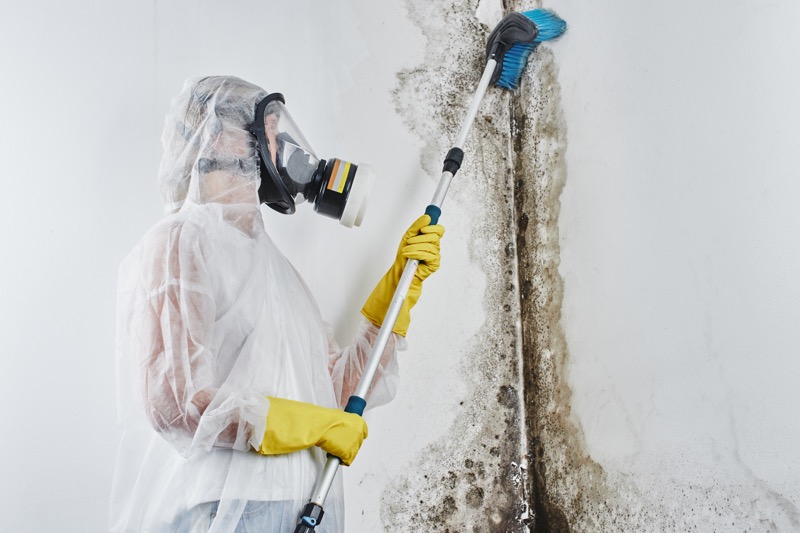
(A professional disinfector in overalls processes the walls from mold with a brush. Removal of black f