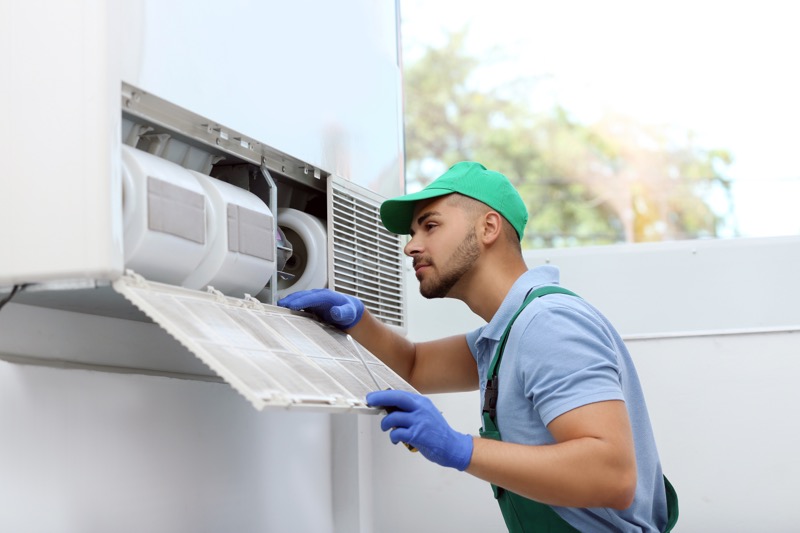


Heating and cooling equipment can present different problems depending on its design, fuel and condition. A useful assessment identifies the actual system rather than describing every refrigerant as the same chemical or every HVAC appliance as a combustion source.
Identify the equipment and refrigerant
Use accessible rating labels and service records to identify the model and refrigerant. Do not open the sealed system to investigate a suspected leak. A qualified provider should diagnose the fault and use a compatible repair procedure.
Refrigerants are not all CFCs or chlorine-containing substances. For example, Trane describes R-410A as an HFC blend without chlorine. That distinction does not establish that a leak is harmless or that other refrigerants have the same properties. Read the information applying to the actual substance and equipment.
Separate carbon monoxide from a refrigerant leak
Carbon monoxide is associated with fuel-burning equipment and other combustion sources. It should not be treated as another name for air-conditioning refrigerant. Keep appropriate CO alarms and fuel-burning appliances maintained according to their instructions and local requirements.
If a CO alarm activates or CO poisoning is suspected, move everyone to fresh air outside, contact local emergency assistance and do not re-enter until responders say it is safe. Do not remain indoors trying to locate or switch off the source. Health Canada’s CO guidance describes the alarm response, and the CDC CO guide explains the hazard.
Give the service provider observations
Record error messages, unusual operation, visible water, smells and when they occur without opening equipment. Do not repeatedly restart a system that appears unsafe. An odour is not a reliable test for the presence or absence of CO.
Keep maintenance specific
Ask which owner checks are permitted, what the technician found and which repairs remain outstanding. Retain the model information, service work and follow-up schedule. Avoid a universal claim that a single filter change or chemical treatment can solve every indoor-air or HVAC concern.
Illustrations