
If you’ve ever walked into a home and immediately noticed how much light and space a room seemed to have, there’s a good chance a bay or bow window was doing the work. These window styles are more than a curb-appeal upgrade. They reshape how a room functions, how furniture fits, and how much natural light pours in throughout the day.
What’s the Difference Between Bay and Bow Windows?
Both styles project outward from the exterior wall, but they’re built differently.
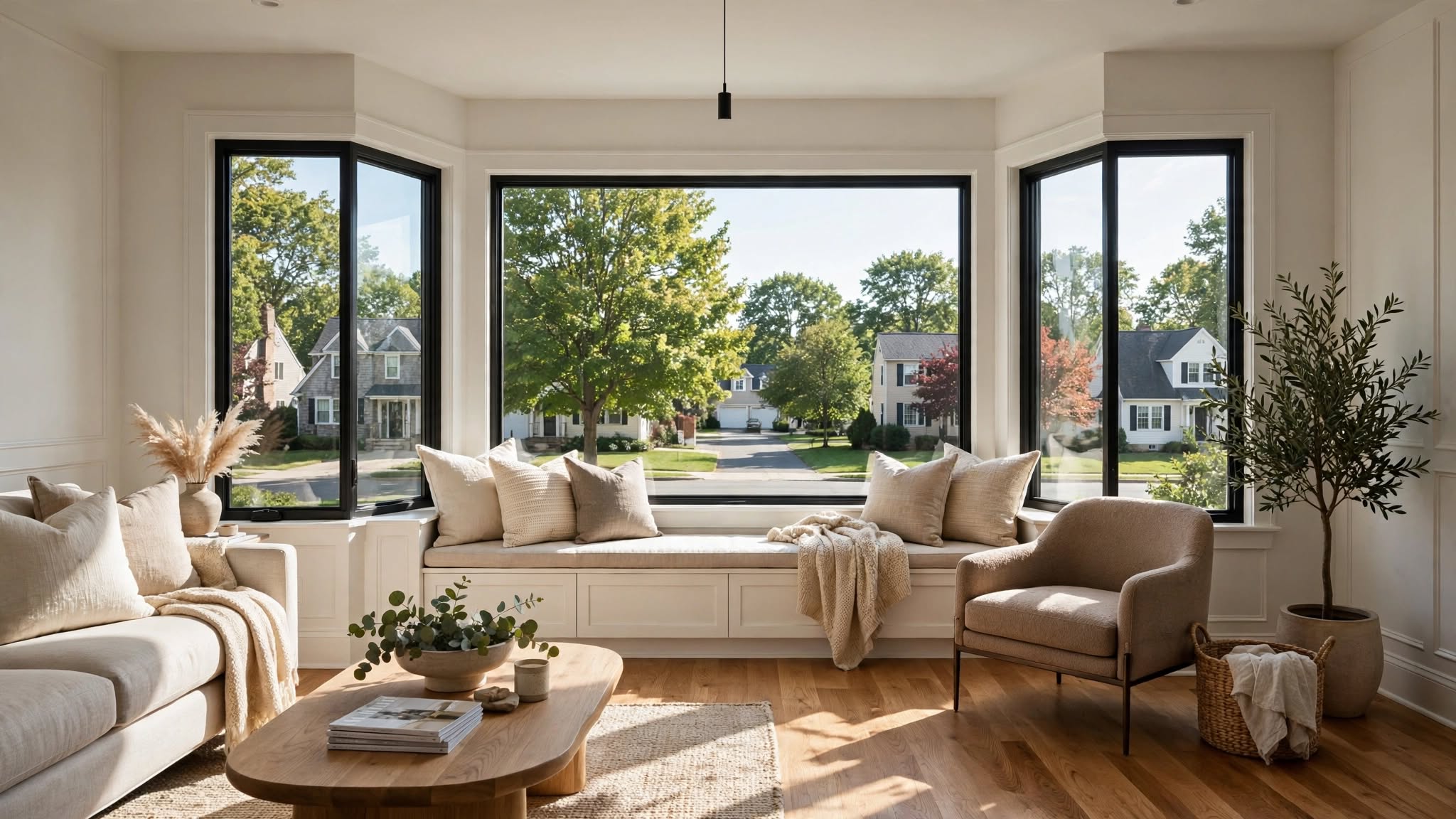
A bay window typically consists of three panels: a large fixed center window flanked by two smaller angled windows, usually set at 30 or 45 degree angles. This creates a pronounced nook, perfect for a window seat, reading corner, or extra display space.
A bow window uses four to six panels curved gently outward in a soft arc. The effect is more rounded and subtle than a bay window, and it tends to let in light from a wider range of angles throughout the day.
Neither is objectively “better.” The choice usually comes down to the architecture of the home and how the homeowner wants the room to feel.
Why Homeowners Choose Them
1. They add real usable space
Unlike a flat window, a bay or bow window extends the footprint of the room. That extra few feet is enough for a breakfast nook, a home office corner, or simply a place to sit with morning coffee.
2. They flood rooms with natural light
Because the panels face different directions, these windows catch sunlight for more hours of the day than a single flat window would. This is especially noticeable in living rooms and primary bedrooms.
3. They create a focal point, inside and out
From the street, a bay or bow window breaks up a flat facade and adds architectural interest. Inside, it naturally draws the eye and often becomes the anchor point for how a room is arranged.
4. They pair well with a range of home styles
Bow windows tend to suit Victorian, colonial, and traditional homes, while bay windows show up comfortably in everything from craftsman bungalows to modern builds, depending on the trim and framing details.
Design Tips for Working With a Bay or Bow Window
- Build a seat, not just a ledge. A window seat with storage underneath turns an underused nook into functional square footage.
- Keep window treatments simple. Because the panels are angled or curved, bulky curtains can look awkward. Roman shades or fitted blinds on each panel usually read cleaner.
- Use the extra wall space around it. The wall surrounding a bay window is a natural spot for built-in shelving or a reading lamp.
- Mind the furniture layout. These windows often become the visual center of a room, so orient your main seating toward them rather than away.
What to Consider Before Installing One
Bay and bow windows involve more structural work than a standard replacement window since they extend beyond the exterior wall line and typically need a supporting roof or header. Energy efficiency is also worth asking about directly, since more glass surface area means insulation and glazing quality matter more than they would with a single flat window.
For homeowners in the North Jersey area, bay and bow windows installers at Window Source work with Energy Star rated, NFRC certified vinyl windows, which helps offset the added glass surface with better insulation performance.
The Bottom Line
A bay or bow window is one of the few upgrades that changes both how a home looks from the street and how a room actually functions day to day. If your home has a room that feels flat or underlit, it’s worth having a contractor walk the space and talk through whether a bay or bow configuration would work with your home’s structure.