
The first time a loaded barbell hits the ground, you hear it through the whole house. Tiled floors crack, timber dents and even concrete chips along the edges, and the repair bill usually lands months after the damage began. Before you buy that rack, spend a minute thinking about what’s underneath it. The right gym floor tiles protect the building, take the edge off the noise and give your feet something steady to push against.
Where the Damage Really Comes From
It’s rarely just the big lifts. Dumbbells get set down hard, plates slide off the bar, and a bench leg shifts a few millimetres every single session. Those small movements scratch and gouge a surface far quicker than most people expect, especially on painted screed or soft timber. Rubber feet on gear help only a little.
Cardio gear causes trouble too, even though it looks gentle. A treadmill rests on small feet that concentrate its weight, and a rowing machine gets dragged out and pushed back again each week. Over a few months, the pressure points leave visible dents, and the marks are usually permanent once they set in. Protecting the floor costs far less than repairing a cracked slab or a dented timber deck.
Matching the Surface to Your Training Style
Tiles come in different materials, so think about your weekly routine first, including what days you lift heavy. Lifters who drop weights need something dense, and a heavy duty rubber mat under the platform area does that job well. Everyone else can often get away with a lighter option across the rest of the room.
A split setup works nicely. Put the thicker rubber where the barbell lands, then use tiles around it for the bench, cable machine and stretching space. You end up spending money only where the impact actually happens, which keeps the total far more reasonable for a family budget. Nobody wants to cover a spare room in heavy material they don’t need.
Grip, Noise and Joint Comfort
Sweat finds its way onto the floor mid-session, and chalk follows, so surface texture matters more than people assume. A slightly textured top keeps your shoes planted during squats and lunges, and you can concentrate on the movement rather than worrying about a sideways slip on a shiny surface. Confidence under the bar matters more than it sounds.
Noise travels, especially if bedrooms sit above or next door. Firm, dense flooring soaks up part of the thud, and your family will notice the difference. Your joints get a gentler landing during jumps and burpees as well, which adds up over a year of training. Neighbours in a townhouse complex will appreciate it too.
Fitting It and Looking After It
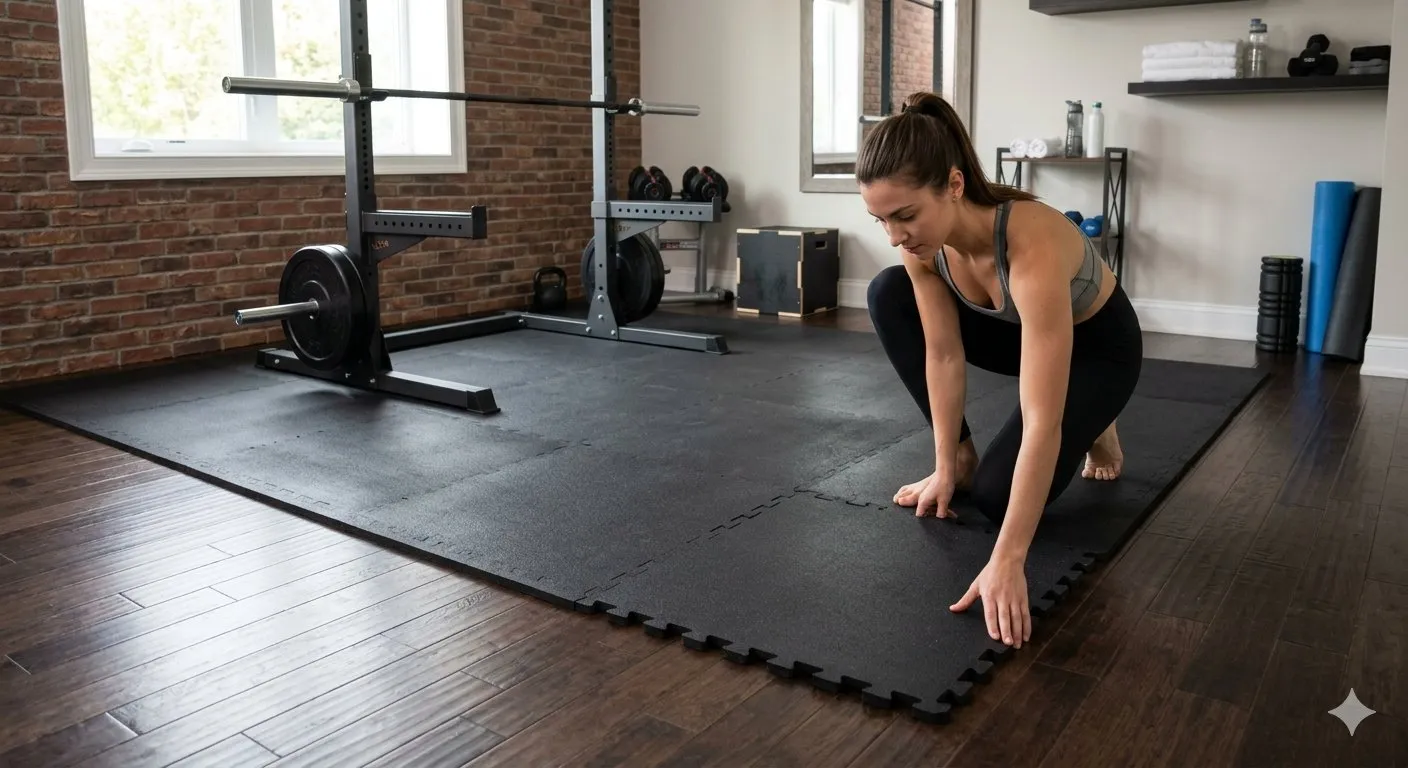
Interlocking systems keep installation simple. Clear the room, lay tiles outward from one wall and trim the final row to size with a sharp blade. Most rooms take an hour or two. No adhesive is needed, so you can lift the whole floor and take it along if you ever move house.
Care is minimal, which suits busy people. Sweep before you train, wipe sweat off with a damp cloth and keep loose chalk away from the surface where possible. Check the seams now and then, since gear dragged across them can nudge a tile slightly out of line and leave a gap. A quick press with your foot usually clicks it back.
What to Budget For
Count the full floor area, not just the spot under the rack. A common mistake is covering only the lifting zone and then discovering that the bench legs are still chewing up bare concrete a metre away. Measure twice and add a small allowance for cuts and trimming.
Thickness is the other line item on the list, and it deserves a proper think. Heavier equipment and dropped weights call for a sturdier product, while a room used for bodyweight work can get by with something lighter. Ask for samples, press your thumb into them and imagine a dumbbell landing there. Your gut feeling will tell you quickly which one holds up.
Conclusion: Train Hard, Protect the Room
A home gym is only as good as what lies beneath it. Spend a little time matching the tile type to your training, and the floor should outlast several equipment upgrades.
When you’re ready to price it up, head over to pvcfloortile.co.za and browse the sizes and finishes that suit your setup.