

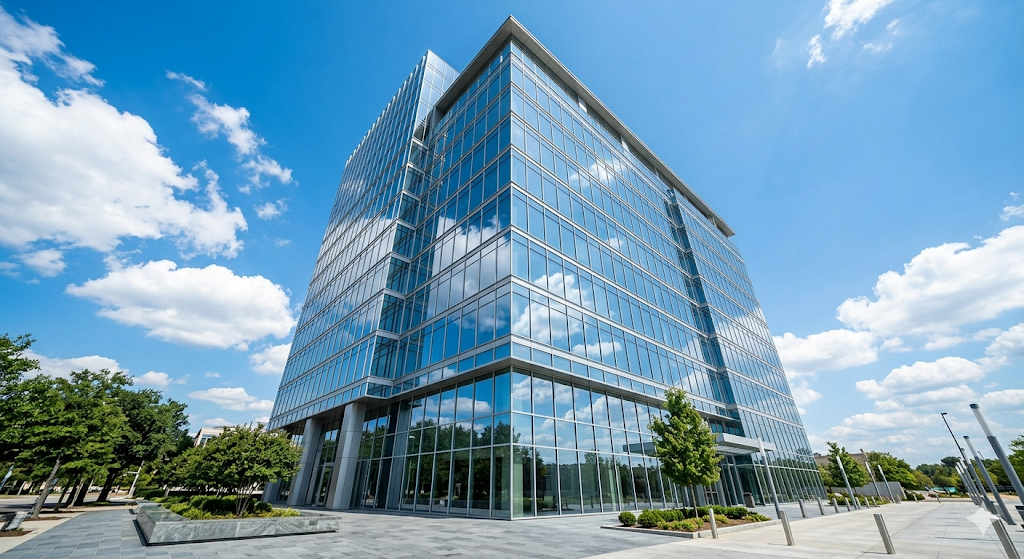
You form an opinion about a commercial building within seconds of seeing it. Before you clock the signage, the landscaping, or the lobby, your eyes register the most dominant feature of the facade — the glass. Clean windows tell you that someone cares about this building. Dirty ones tell you nobody does.
It sounds superficial, and to a degree it is. But first impressions drive decisions in commercial property, whether those decisions involve signing a lease, renewing a tenancy, or choosing which office to walk into for a meeting. And yet, window cleaning remains one of the most neglected aspects of building maintenance across the United Kingdom. Landlords happily invest in lift refurbishments, car park resurfacing, and reception redesigns while the single most visible surface of the entire structure gradually degrades.
The consequences reach far beyond kerb appeal.
Tenant Retention Starts at the Facade
For commercial landlords, void periods are expensive. Losing a tenant means months of zero income, remarketing costs, legal fees, and potentially expensive fit-out contributions to attract a replacement. Tenant retention is, by any measure, one of the most important financial metrics in commercial property management.
What gets less attention is how heavily retention is influenced by the perceived quality of building maintenance. Tenants rarely complain formally about dirty windows. Instead, they quietly note the declining standards, factor them into their overall impression of the landlord, and eventually decide not to renew. By the time the landlord realises the issue, the tenant is already signing elsewhere.
A law firm, an accountancy practice, or a design consultancy relies on its physical environment to reinforce its brand. When clients visit, the experience begins at the street. If the windows are streaked, stained, or visibly neglected, that sets a tone the reception area has to work overtime to correct. Most tenants would rather avoid the problem entirely by occupying a building where maintenance standards are self-evidently high.
Natural Light and Workplace Performance
The connection between natural light and productivity is well documented. Research from Cornell University found that workers positioned near optimised daylight reported an 84 percent reduction in eyestrain, headaches, and blurred vision symptoms. Separate studies have linked natural light exposure to improved mood, better sleep quality, and higher job satisfaction across a range of industries.
Dirty windows erode natural light gradually. A single month of urban grime may reduce glass transparency by only a few percentage points, but left unchecked over a quarter or a half-year, the cumulative effect becomes significant. Occupants may not consciously register the change, but they will notice its symptoms — desk lamps switched on earlier in the day, screen brightness cranked upward, and a general sense that the office feels darker and more enclosed than it used to.
Regular professional cleaning restores full light transmission and maintains the intended performance of the glazing. For buildings designed around natural light — open-plan offices with floor-to-ceiling glass, atria, and light wells — this is not a cosmetic issue. It is a fundamental part of the building’s functionality.
Energy Efficiency and Environmental Credentials
In an era of escalating energy costs and tightening environmental regulations, the thermal performance of a building envelope matters enormously. Glazing plays a central role in that performance, and its effectiveness is compromised when external surfaces are coated in pollutants, mineral deposits, and biological growth.
Dirty glass absorbs and retains more heat in summer, increasing cooling loads, and transmits less solar gain in winter, increasing heating demand. The margins may seem small on a per-window basis, but across a multi-storey commercial building with hundreds of panes, the aggregate impact on energy consumption is measurable.
For buildings pursuing or maintaining BREEAM ratings or working toward net-zero targets, a scheduled window maintenance programme is a low-cost intervention that supports broader sustainability goals. It will not transform an energy rating on its own, but it contributes to the overall picture in a way that is disproportionate to its cost.
Safety and Regulatory Compliance
Commercial window cleaning is governed by the Work at Height Regulations 2005 and overseen by the Health and Safety Executive. Building owners and managers have a legal duty to ensure that any work carried out at height on their premises is planned, supervised, and executed by competent persons using appropriate equipment.
This is not an area where cutting corners saves money. A single incident involving an unqualified operative working without proper safety measures can result in criminal prosecution, unlimited fines, and civil liability claims that dwarf the cost of professional cleaning ten times over.
The demand for commercial window cleaning in London has grown in tandem with increasingly rigorous enforcement of these regulations. Building managers who once relied on informal arrangements with general maintenance staff have largely moved toward specialist providers who carry appropriate insurance, hold relevant accreditations, and can demonstrate compliance at every level.
Frequency: How Often Should Commercial Windows Be Cleaned?
The answer depends on the building’s location, height, use, and the surrounding environment. A ground-floor retail unit on a busy high street will accumulate grime far faster than a sixth-floor office in a business park. Similarly, buildings near construction sites, railway lines, or heavy traffic corridors need more frequent attention.
As a general benchmark, most commercial properties in urban areas benefit from external cleaning on a monthly or bi-monthly cycle. Internal glass typically requires less frequent attention — quarterly is sufficient in most cases — but high-traffic areas such as entrance lobbies and ground-floor glazing may need monthly cleaning on both sides.
The most effective approach is a scheduled maintenance contract that adjusts frequency seasonally. Winter months bring more rain, road spray, and condensation. Spring brings pollen. Summer brings dust and insect residue. A good cleaning schedule anticipates these patterns rather than reacting to them.
Choosing the Right Provider
Not all window cleaning companies are equal, and the consequences of choosing the wrong one can extend well beyond streaky glass. At a minimum, any provider cleaning commercial windows should hold public liability insurance of at least five million pounds, employ operatives trained to IOSH or equivalent standards, and be able to provide method statements and risk assessments specific to your building.
Experienced commercial window cleaners London building managers rely on will typically carry CHAS, SafeContractor, or Constructionline accreditation, which provides an additional layer of verified competence. They will also be willing to conduct a site survey before quoting, rather than pricing sight unseen.
Ask for references from buildings of a similar size and type to your own. A company that excels at cleaning residential windows may not have the equipment, training, or insurance to operate safely on a twelve-storey office block. The skill sets, while related, are not interchangeable.
The Hidden Cost of Neglect
Glass that is not cleaned regularly does not just look worse — it physically deteriorates. Mineral deposits from hard water, acidic pollutants from traffic emissions, and biological growth such as algae and lichen can etch into the glass surface over time, causing permanent damage that no amount of subsequent cleaning will reverse. At that point, the only remedy is glass replacement, which is orders of magnitude more expensive than a regular cleaning programme would have been.
Sealants and frames also suffer when surrounding surfaces are neglected. Moisture retention around dirty seals accelerates degradation, leading to leaks, draughts, and eventual frame failure. A comprehensive window maintenance programme that includes inspection of seals, drainage channels, and hardware alongside the glass itself protects the entire fenestration system, not just the visible surface.
A Small Line Item With Outsized Returns
In the context of a commercial property’s total operating budget, window cleaning is a modest line item. It costs a fraction of what landlords spend on mechanical and electrical maintenance, security, or grounds upkeep. Yet its impact on tenant perception, energy performance, regulatory compliance, and long-term asset preservation is disproportionately large.
Buildings with clean, well-maintained facades command higher rents, attract better tenants, and retain them for longer. The glass is the most visible expression of how a building is managed. It deserves to be treated accordingly.