
Industrial interior design can bring strong outlines, visible texture and simple furniture into a home. The useful question is how those choices fit the room you already have. A brick-effect wall or metal lamp is a decorating choice; removing a ceiling, altering services or exposing masonry is a different project.
The photographs here are references for comparing finishes and arrangements, not a single project or a construction specification. A surface’s appearance does not establish its material, condition or suitability for your home.
Opening photograph: Max Vakhtbovych / Pexels, used under the Pexels License.
Choose what you want the style to do
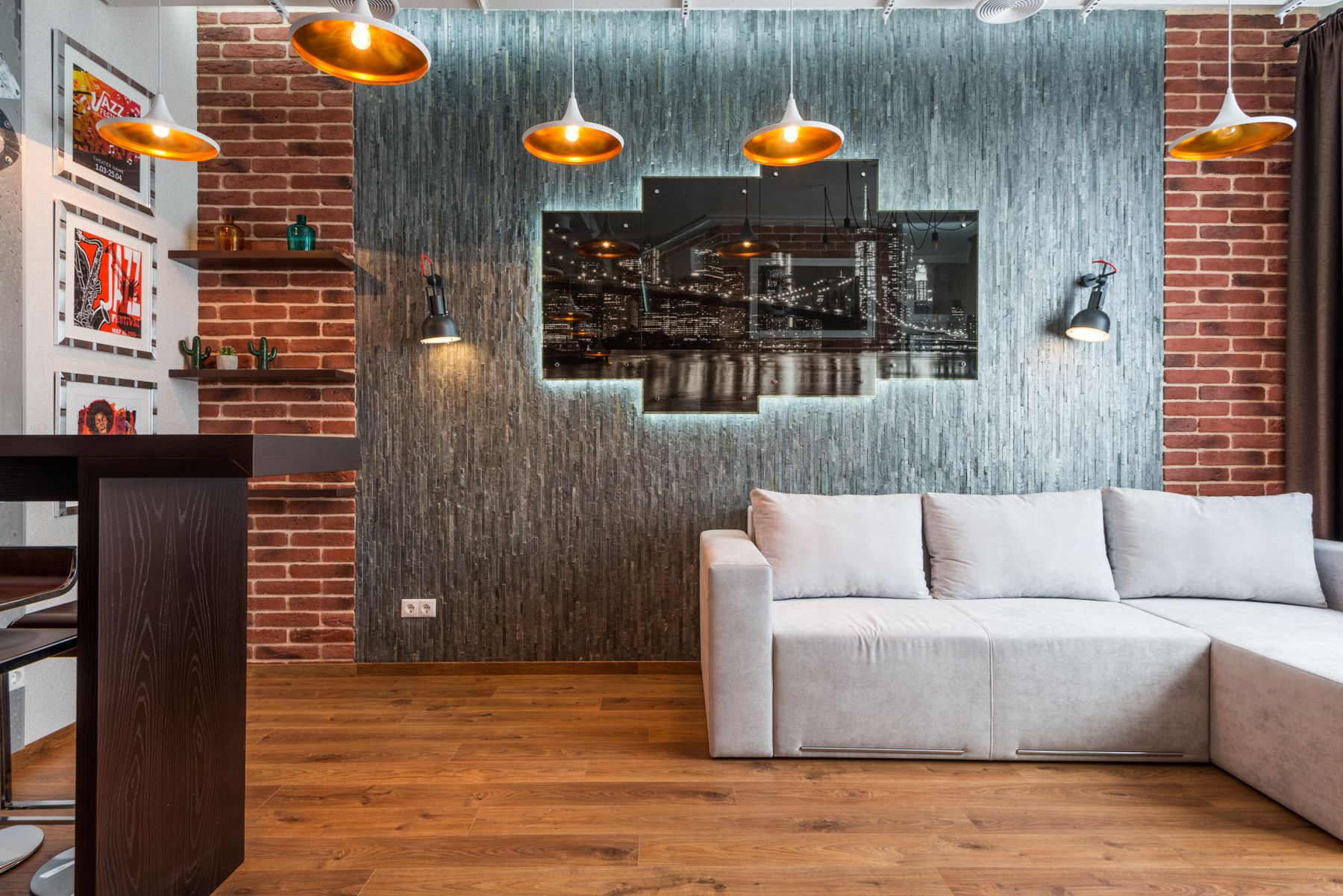
In the opening photograph, pale seating sits against a much more detailed backdrop: brick-patterned areas, a textured central wall, framed pictures and metal pendants. The room gets its contrast from those relationships. It does not depend on making every large surface dark.
Decide which relationship appeals to you before choosing products. You might want a plain sofa against a textured wall, a few dark furniture frames in a light room, or a wood-toned cabinet beside a cooler-looking finish. Keep that direction small enough to test against your actual floor, daylight and furniture.
Compare the benefit with the work it creates
| Choice | Why you might choose it | What to check |
|---|---|---|
| An existing textured wall | It can provide a focal point with few extra objects. | Its condition, care instructions and whether furniture or storage will obscure it. |
| Open shelving | It puts a selected group of belongings on view. | What will be displayed, what needs closed storage and how the shelf will be maintained. |
| Dark cabinets or furniture | They create a strong outline beside lighter finishes. | Samples beside the existing floor, lighting at the work area and the appearance of everyday marks. |
| Second-hand furniture | An existing piece may give the room a useful point of difference. | Condition, dimensions, delivery, repair and refinishing before comparing the total cost. |
| Visible architectural features | They can give an already suitable room much of its character. | Whether the feature actually exists and whether any proposed alteration needs professional assessment. |
Separate decorating costs from building work
Industrial style is not automatically a low-cost renovation. Keeping a sound finish or using furniture you already own is a different scope from removing finishes, repairing a surface or changing electrical work. List those jobs separately before comparing quotations.
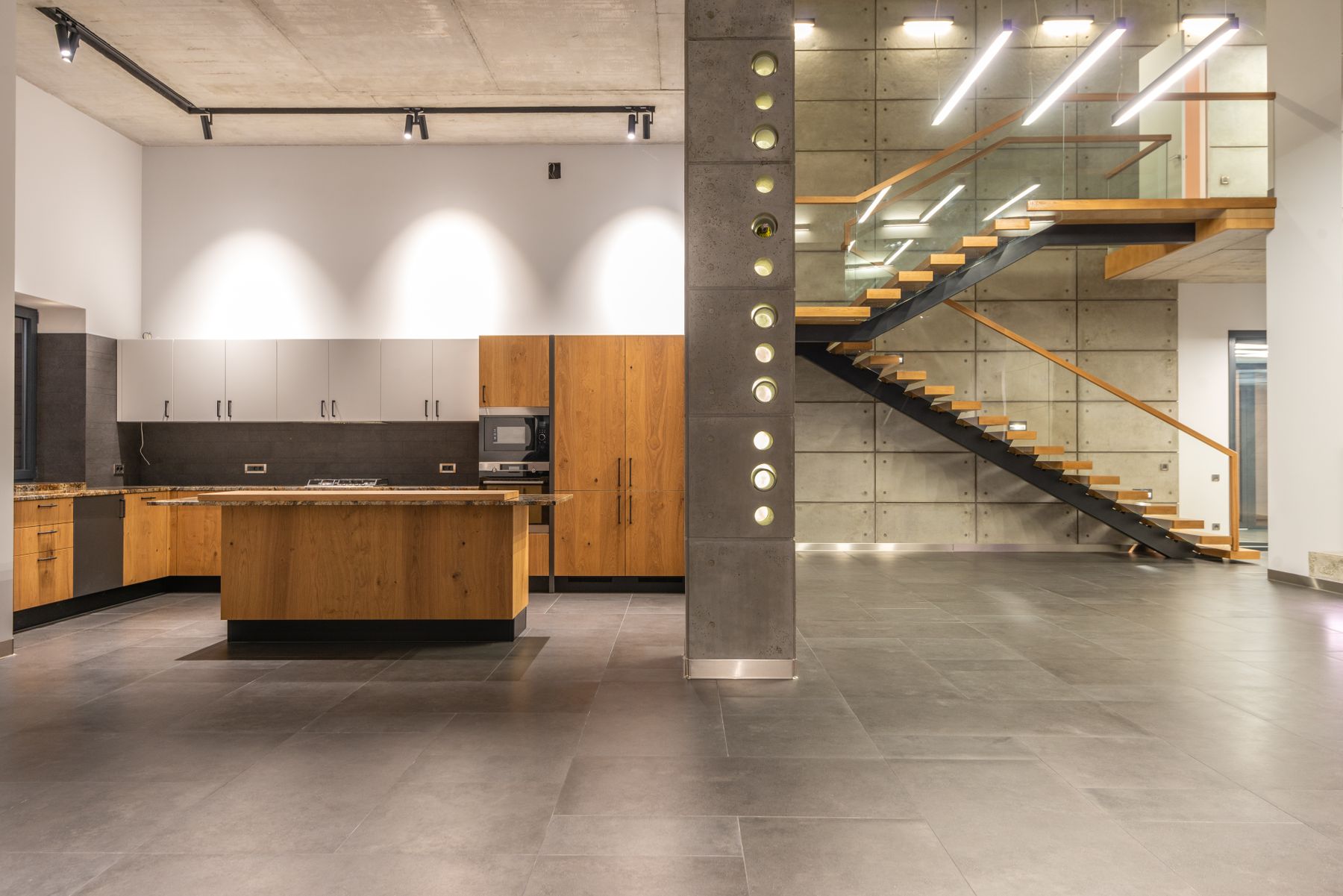
This reference combines a kitchen, a large column and a staircase. Its scale is part of the effect. A compact room might borrow the cabinet colour or a dark furniture frame, rather than trying to reproduce the architecture. The photograph does not establish how the column or stair was constructed.
For an apartment, confirm the limits on alterations before planning work to walls, ceilings or shared services. Do not remove finishes to create an industrial appearance without the appropriate assessment. A useful brief can instead begin with the layout and the surfaces that will stay.
Make room for comfort and ordinary belongings
Work out where you sit, read, eat and put things away. Upholstery, curtains and a rug can provide a softer visual balance against harder-looking finishes. Choose them for the activities and care requirements of the household, rather than assuming a sparse photograph supplies enough seating or storage.
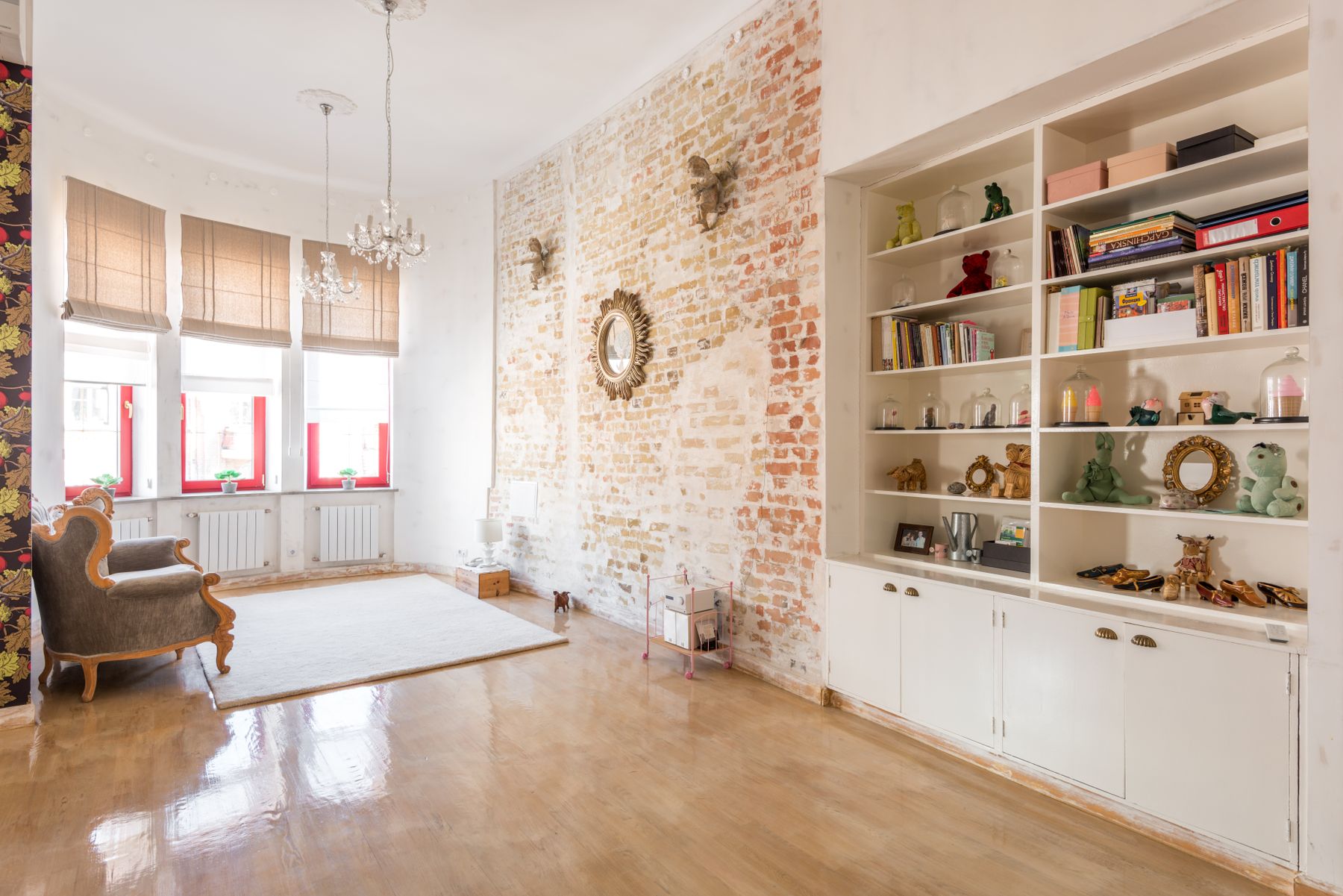
The shelving here has both display space and cupboards below. That is a useful distinction when choosing what belongs on view. Replacing every cupboard with an open rack can leave routine belongings without a convenient home.
Plan lighting for the activity
A striking pendant does not answer every lighting need. Check the place where you read, prepare food or work after daylight changes. Australia’s YourHome lighting guide distinguishes task lighting from general room lighting and recommends considering electric lighting alongside daylight.
Use an electrician for changes to fittings and wiring. An exposed-looking installation in a photograph is not a wiring method to copy.
Choose the next useful change
Try one change that answers a specific problem: a better-sized cabinet, a clearer furniture arrangement, a reading lamp or a finish sample. Check it in the room before buying a whole matching collection. Industrial style can use pale colours, softer furnishings and closed storage; it need not follow a fixed dark palette or a gender label.
For more specific arrangements, compare our industrial apartment references and industrial kitchen planning guide.