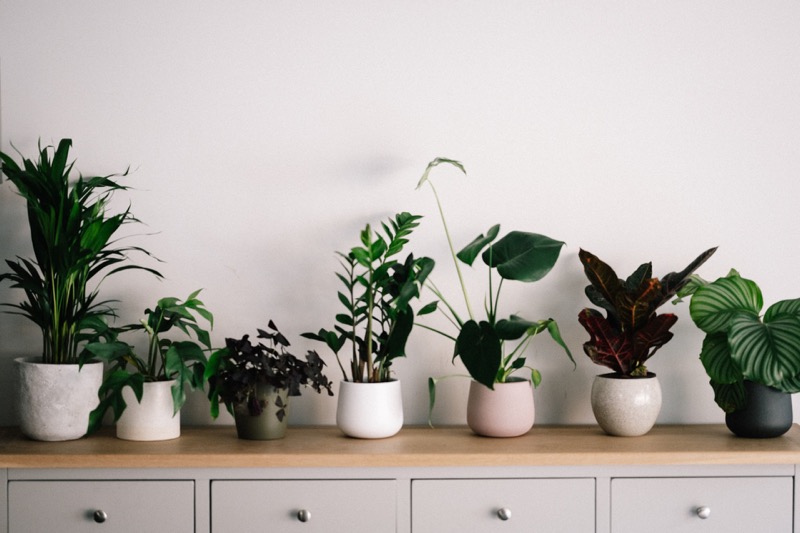
Lists of air-purifying plants often make a decorating choice sound like a room-filtration system. Choose a houseplant by its identity, care requirements and fit with the room. A laboratory finding alone does not establish meaningful pollution removal in a normal home.
The EPA indoor-air guide explains that a reasonable number of houseplants has not been shown to remove significant amounts of pollutants in homes or offices. Keep ventilation and pollutant-source control separate from the decorative role of plants.
1. Snake plant
Compare the particular plant’s light and watering requirements with the intended position. Leave room for the upright leaves and keep the container stable. Do not select it on an unsupported claim that it produces more oxygen than every other plant or treats respiratory illness.
2. Spider plant
Allow space for arching foliage and any trailing growth. Choose a container that can be watered and inspected without wetting the shelf below. Read the supplier’s care instructions for the plant and local conditions.
3. Pothos
Plan support and the eventual route of trailing stems. Keep the plant from obstructing switches, storage and walking space. Identify the species and check suitability where children or pets have access; a familiar common name is not a safety assessment.
4. Peace lily
Consider its mature size, the available light and how to maintain the container. A bathroom or bedroom is not automatically suitable just because the plant appears on an indoor list. Check the actual growing conditions and household access requirements.
A practical buying checklist
Before buying, record the botanical name, expected footprint, light needs and container arrangement. Ask how to judge watering for that plant rather than adopting one fixed weekly schedule for every species. Check the condition of the plant and whether you can inspect it routinely.
Choose greenery for its appearance and a manageable care routine. For an odour, dampness or air-quality concern, identify the source and use measures suitable for that problem instead of treating a plant purchase as a health intervention.