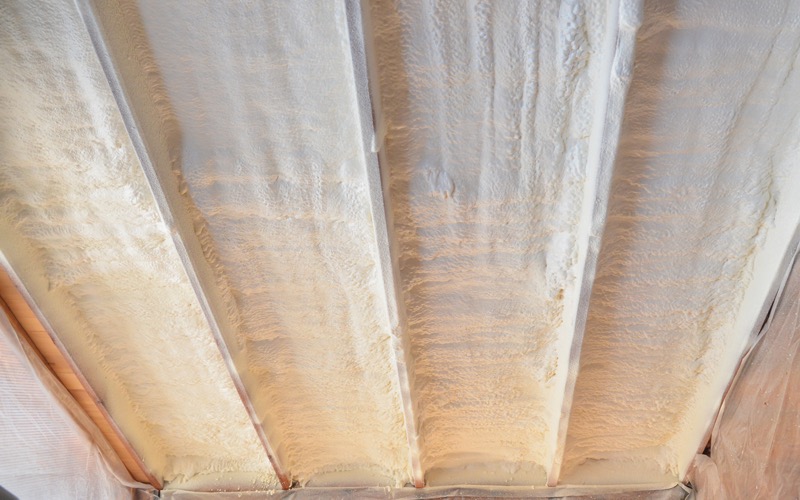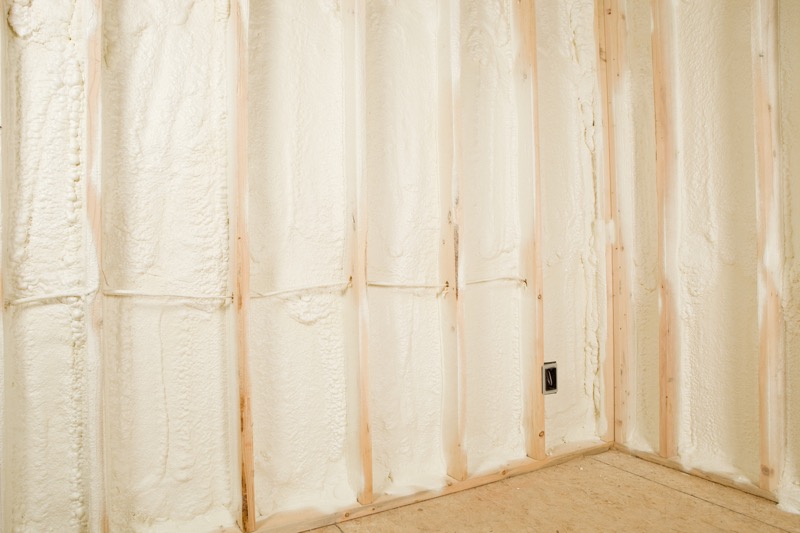
The amount of spray foam needed depends on the area being insulated and the specified installed thickness. A room’s floor area alone is not enough: the proposal must identify the walls, roof slopes, floor or other surfaces being treated. An installer also needs to assess the existing assembly, moisture conditions and access.
Begin with an area schedule
Measure each proposed surface separately. For a simple rectangular wall, area is width multiplied by height. Record openings and obstructions rather than quietly deducting them; the installer can confirm how they affect the measured scope. Do not enter a confined space or disturb suspect building materials to take measurements.
For example, a hypothetical unobstructed wall measuring 12 feet by 8 feet has an area of 96 square feet. If the agreed specification were 2 inches of installed foam, its geometric quantity would be 192 board feet. Here a board foot means one square foot of coverage at one inch thick. This illustrates the arithmetic, not a recommended thickness or a promise of kit yield.
Get the assembly and product specified
Ask the installer to identify the exact product, proposed thickness and required thermal performance. The Department of Energy’s insulation guidance explains that R-value depends on the insulation type and thickness. A product’s published performance and the actual building requirements matter more than a generic thickness from an article.
The quote should also explain preparation, treatment around penetrations, protection of adjacent areas, any required protective covering, and how the finished work will be inspected. A damp or leaking assembly needs investigation before it is concealed.
Separate calculated quantity from purchasing quantity
Theoretical volume is not the same as usable package yield. Irregular substrates, installation conditions and the product system affect the material needed. Ask what allowance the installer has included and how incomplete coverage or insufficient thickness will be corrected. Do not add an arbitrary percentage and assume the result is a safe installation plan.
Plan for chemical exposure and access restrictions
Spray polyurethane foam installation is not automatically harmless or suitable for an untrained homeowner. EPA’s SPF safety information describes exposure concerns involving installation chemicals. Obtain product-specific instructions for ventilation, isolation of the work area, protective measures and when occupants may return. Re-entry conditions must come from the product and competent installer, not a universal waiting time.
Compare the complete proposal
| Quote item | What should be written down |
|---|---|
| Area | Surfaces included, dimensions and exclusions |
| Product | Manufacturer and exact system |
| Thickness | Specified installed thickness and inspection method |
| Preparation | Moisture assessment, access and adjacent-surface protection |
| Occupancy | Isolation, ventilation and product-specific re-entry arrangements |
| Completion | Waste removal, required coverings and remedy for defects |
Use the same schedule for each quotation. A lower total may describe a smaller area, a different product or omitted preparation. Resolve those differences before comparing prices.
Illustrations