

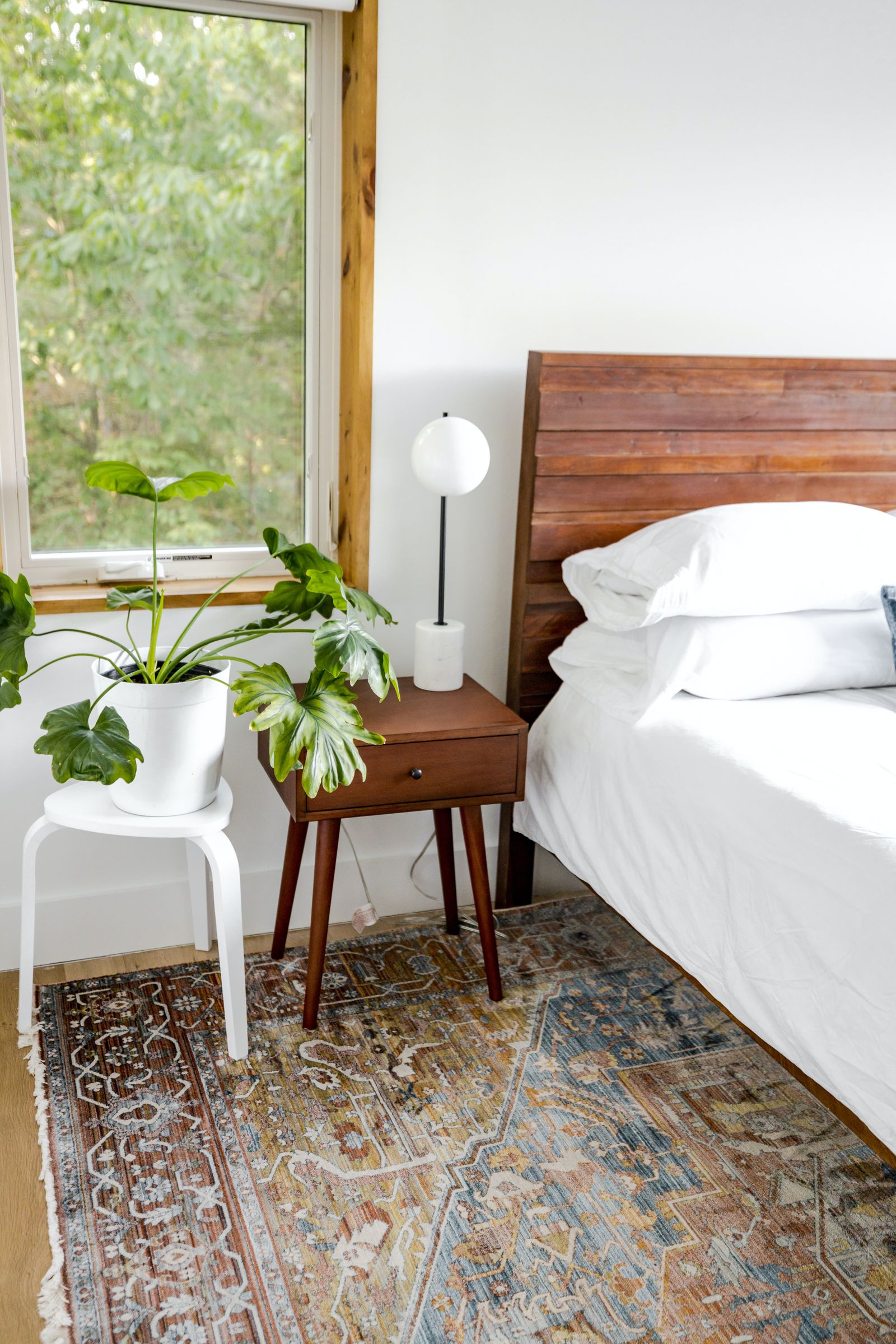
For a Scandinavian-inspired bedroom, start with the furniture and routines you already have. A restrained palette, useful bedside storage and a few contrasting textures can give the room a clear direction. White walls, a timber frame or a particular number of cushions are options, not requirements for comfort or proof of a room’s origin.
Choose the existing element that will guide the palette
Choose an element that is staying: the floor, bed frame, curtains or a rug. Put fabric and paint samples beside it and compare them under the lighting used in the room. In this photograph, the timber bed and cabinet already provide a strong colour. The pale bedding gives them a quieter background without requiring every object to match.
Our guide to neutral colors offers other starting points. In your room, test how much contrast you want between the wall and the headboard before repainting everything. A dark bedside object, coloured cushion or patterned rug can supply the contrast if the main surfaces are already pale.
Keep the bed and bedside surface useful
Compare the outside dimensions of bed frames with the mattress, door, storage and route around the bed. Keep a sound frame that fits these needs rather than replacing it just to obtain a particular material or style label. If you are changing the frame, check the mattress manufacturer’s support requirements and the actual product’s construction.
Decide what needs to be reached from bed: a lamp, glasses, a book or a charger. A small drawer may remove clutter from view, but it only helps if it can open beside the bed and the contents remain accessible. Place the lamp where its switch is easy to use and compare its light at the reading position. A photograph does not establish a lamp’s suitability or output.
Use textiles for the contrast you want
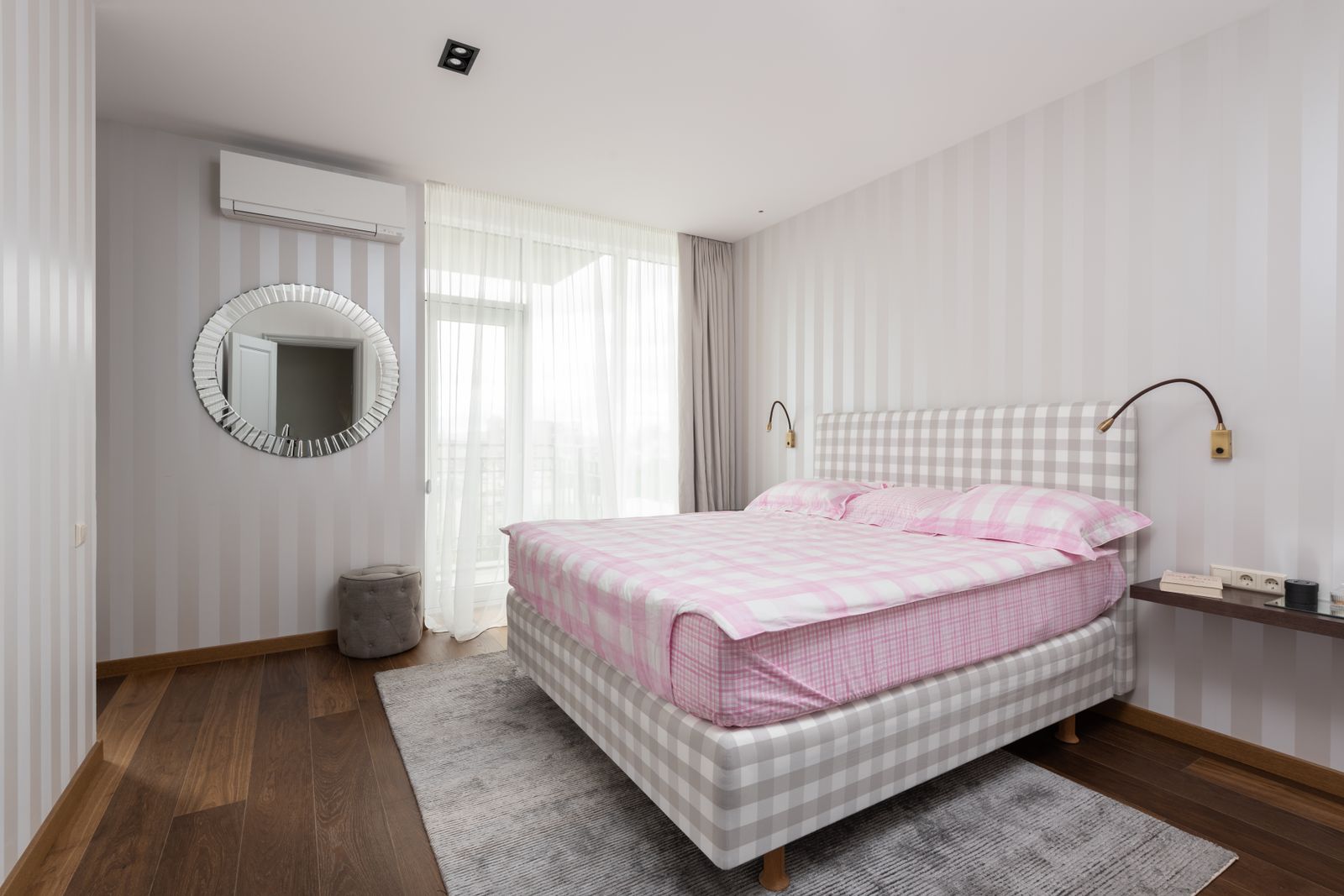
This reference uses colour and pattern on the bed itself. If your bedroom already has a patterned frame or curtains, a quieter cover can reduce competing details. If the large surfaces are plain, one patterned cushion or blanket can introduce a clear accent. Try the change using textiles you already own before buying a new set.
Choose duvet covers and other bedding for the sleeper, climate, cleaning routine and product care label. Layers are useful when they can be added or removed as needed; more layers do not automatically mean greater comfort. Check that a rug stays clear of door movement and that its edges and underlay suit the floor.
Place decoration around the activities
Look at the wall from the doorway and from bed. Decide whether it needs a picture, mirror or no additional object. Test a proposed picture size with a paper outline. Position a mirror for a useful view and fit it according to the mirror and wall requirements. A leaning arrangement in another room does not establish a safe fixing method for yours.
For plants, begin with the light and access needed for care, then consider the pot’s footprint. Leave space around controls and avoid a placement where a heavy object could fall onto the sleeping position. Keep decoration subordinate to opening a drawer, walking past the bed and reaching a switch.
Finish with one practical trial
Choose one change that addresses the room’s main difficulty: improve the bedside landing space, simplify a busy group of textiles or make the window covering easier to operate. Live with it through the usual day and evening routine before adding the next change.
A useful result is a room whose colours relate to what is staying and whose furniture supports everyday use. The two photographs offer contrasting combinations; neither establishes a universal Scandinavian palette, a documented client project or the dimensions your own bedroom needs.