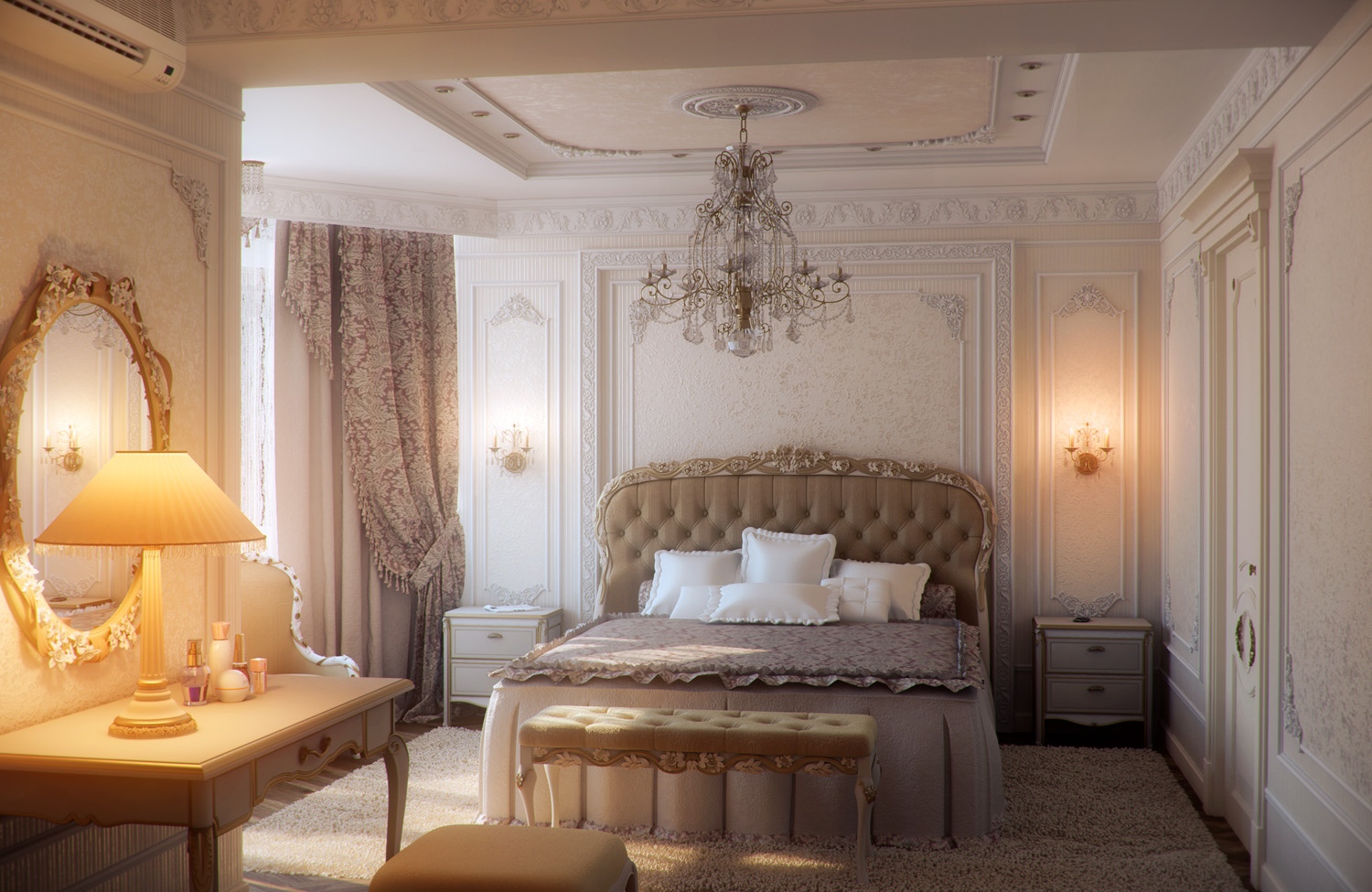


A classic bedroom can use soft colours, decorative wall detail, and substantial furniture without filling every surface. Start with the bed position and the routes through the room. The credited images below offer visual references rather than measured plans for another home.
Set the furniture layout first
Measure the bed, bedside pieces, wardrobe doors, and drawers. Check how each item opens and how the room is reached from the doorway. A large headboard or upholstered bench needs enough space to work with the circulation rather than simply fitting inside the walls.
Limit the main colours
Compare the wall, floor, curtains, and upholstery as one group. Soft neutral colours can provide a background for more detailed furniture, but undertones vary. Test fabric and finish samples in the bedroom’s daylight and evening lighting.
Choose one main decorative feature
A panelled wall, patterned wallpaper, a framed artwork, or a detailed headboard can provide a focal point. Compare its scale with the whole wall before adding more patterns. Keep switches and service access usable.
Make lighting practical
Review the general room light and the light needed for reading or dressing. Position lamps so they can be operated easily and their cables do not cross a route. A decorative fitting should be selected and installed for its actual location and support requirements.
Plan for ordinary use
Leave room for bedding, clothing, and cleaning around the furniture. Check whether pale upholstery and detailed surfaces suit the household’s maintenance routine. The effect described as luxury in a gallery does not establish a particular budget, product quality, or improvement in sleep.
Use the retained credits to identify the image you are discussing. Take the palette or composition as inspiration, then select dimensions and products for the room you actually have.
Images and retained source credits