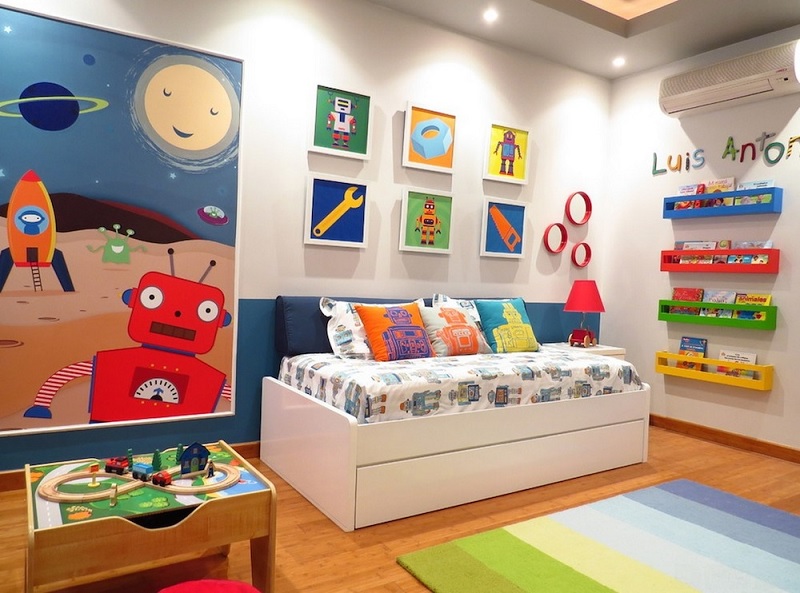
A child’s bedroom needs to work for sleeping, play, clothing and the activities the child actually enjoys. Start with the room’s constraints and the pieces that will stay, then choose a small number of changes together. These twelve ideas concern a child’s room after the infant-sleep stage; use the separate nursery planning guide for a baby.
1. Make a room sketch before buying furniture
Record the room dimensions, doors, windows, sockets and fixed fittings. Add the bed, open drawers and normal walking routes. A product’s overall width is only part of its footprint: leave room to use it and to clean around it.
2. Ask which activities need a place
Choose the priorities with your child: reading, drawing, building toys or getting dressed. Give the most-used activity a clear position rather than filling the room with furniture for every possible hobby. Keep an area that can change as interests change.
3. Plan storage and securing together
Choose storage that suits the actual toys, books and clothes. The CPSC’s childproofing guidance recommends anchoring furniture to reduce tip-over risks and using cordless window coverings where young children live. Follow the furniture’s securing instructions and get help if the wall or fixing method is uncertain.
Keep everyday items at a suitable accessible height so the storage plan does not encourage climbing to reach a favourite toy. Put small or hazardous items where the particular child cannot access them.
4. Choose the bed for the child using it
Check the model’s age limits, mattress specification, assembly and available replacement parts. For bunks, Health Canada’s safety guidance says children under six must not use the top bunk. It also specifies checking the mattress, guardrails and ladder, and keeping the bed away from windows, cords and ceiling fans. Use the actual instructions and applicable requirements before planning guest sleeping space.
5. Treat the window as a separate layout decision
Check the position of the bed, furniture and toys in relation to the window and its covering. Follow current window- and cord-safety guidance rather than assuming a curtain selected for its colour is also suitable for a child’s room. Keep the window’s operation and required access part of the plan.
6. Use a pattern the child can help choose
Try a small fabric or wallpaper sample beside the existing floor and furniture. An animal print, geometric pattern or illustrated motif can supply one feature without covering every surface. The lampshade photograph shows an elephant-print detail; it does not identify a product or verify its suitability for a particular child.

7. Put useful light where the activity happens
Try the task light from the reading or drawing position, checking glare and access to the switch. Use a fitting intended for its location and follow its operating instructions. Keep cables and decorative strings out of children’s reach and clear of the bed and walking route.
8. Choose a flexible colour arrangement
Compare the child’s preferred colours with the finishes that will stay. A quieter background with one accent is one option; it is not a requirement for every child. Test samples in the room’s daylight and evening light before buying the full quantity.
9. Keep display separate from sleeping and climbing
Decide which artwork or collection needs to be seen and choose a suitable position and fixing. Do not treat a ceiling decoration or floating shelf above a bed as a harmless finishing touch. Check weight, attachment, access and whether the display invites climbing or puts a reachable cord or hanging object near the child.
10. Make floor care part of the choice
Compare the existing floor’s cleaning instructions with the activities planned for the room. If adding a rug, check its fit, cleaning and position at doors and beside the bed. A photographed finish does not prove that every hardwood, carpet or rug will tolerate the same spills and cleaners.
11. Use accessories for changing interests
A removable picture, a textile or a display of current drawings can be easier to change than the main furniture. Select age-appropriate objects and check how they are stored or attached. Avoid buying an entire themed set before deciding which items the room actually needs.
12. Revisit the layout as the child grows
Keep the product manuals and check the room when furniture, activities or access change. Review bed suitability, securing arrangements, cords, small objects and the route through the room. A useful update may be moving or removing an item rather than adding another decorative piece.