
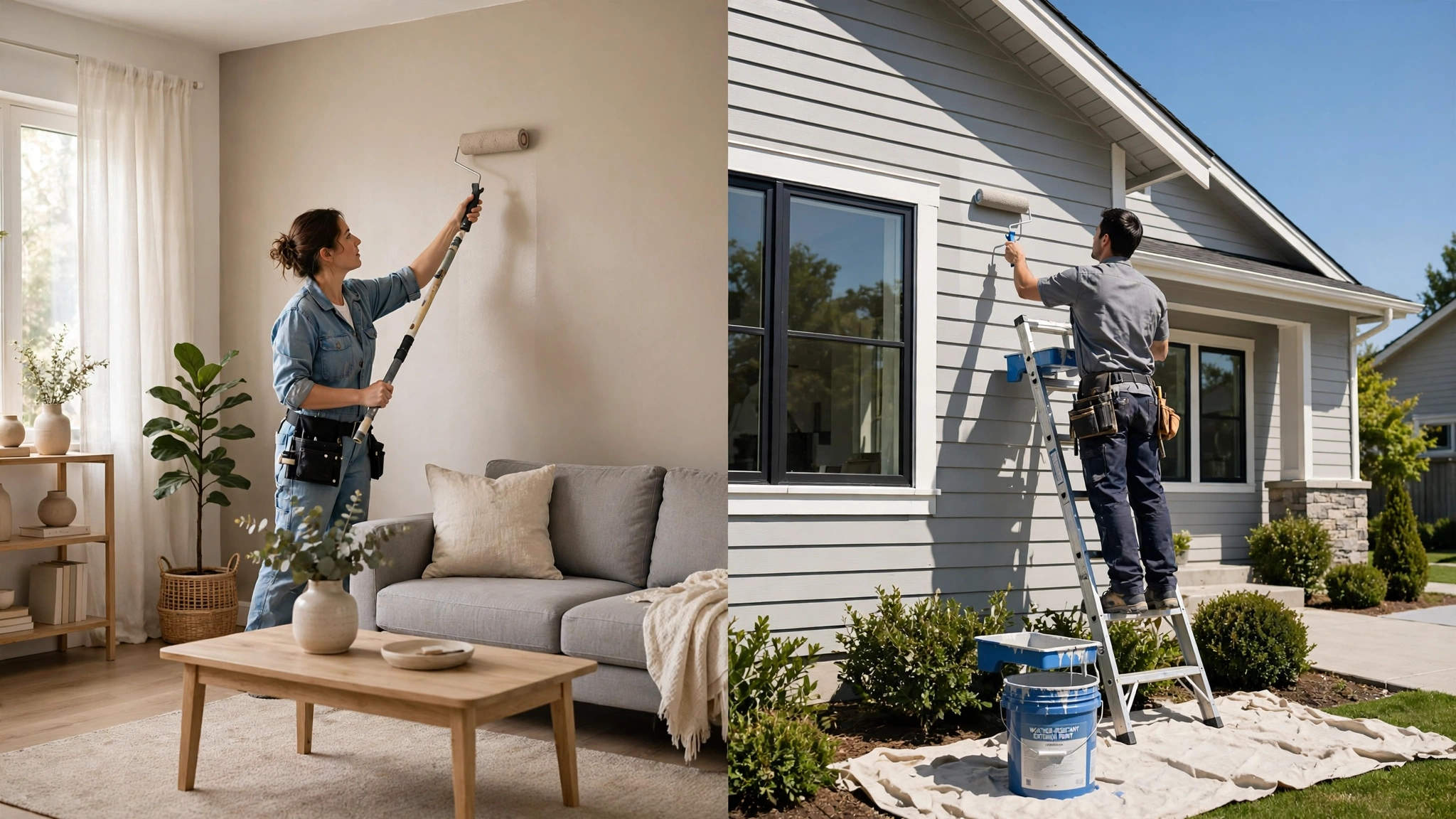
Painting a home is one of the simplest ways to refresh its appearance, improve comfort, and protect its surfaces, and an experienced house painter can help ensure the job is done correctly. Whether you are updating one room or repainting the outside of your house, choosing the right type of paint is an important decision. Many homeowners assume all paint works the same way, but interior and exterior paints are made for very different purposes.
Although both types of paint add color and improve the look of a space, they are formulated to handle different conditions. Interior paint is designed for controlled indoor environments, while exterior paint is built to withstand sunlight, rain, wind, and temperature changes. Using the wrong paint in the wrong place can lead to peeling, cracking, fading, and poor durability.
Understanding the differences between interior and exterior paint can help homeowners make smarter choices and achieve longer-lasting results.
What Is Interior Paint?
Interior paint is made for surfaces inside a home, including walls, ceilings, doors, and trim. Since indoor surfaces are not exposed to harsh weather, interior paint focuses on appearance, cleanability, and comfort.
One of the biggest benefits of interior paint is its smooth finish and wide range of color options. Homeowners can choose from many shades and sheens to match their style, whether they prefer a soft, modern look or a more traditional design.
Interior paints are commonly available in finishes such as:
- Flat or matte finish: Best for ceilings and low-traffic rooms because it hides imperfections well.
- Eggshell finish: Offers a slight sheen and is easy to maintain, making it popular for living rooms and dining rooms.
- Satin finish: More durable and suitable for hallways, kitchens, and family rooms.
- Semi-gloss and gloss finishes: Highly washable and ideal for trim, cabinets, and doors.
Another important feature of interior paint is that many formulas contain lower levels of volatile organic compounds, or VOCs. Since people spend so much time indoors, low-VOC paints are often preferred because they help reduce odors and support better indoor air quality.
What Is Exterior Paint?
Exterior paint is designed to protect outdoor surfaces from environmental damage. Exterior walls, siding, fences, doors, and trim are constantly exposed to rain, sunlight, humidity, and changing temperatures.
Because of these conditions, exterior paint is made to be stronger and more flexible than interior paint. It creates a protective barrier that helps prevent moisture from entering the surface and causing damage.
Some important features of exterior paint include:
Weather Resistance
Exterior paint is built to handle changing weather conditions. Rain, heat, cold, and wind can quickly wear down ordinary paint. Exterior formulas include ingredients that help the coating stay intact and maintain its appearance over time.
UV Protection
Sunlight can cause paint to fade and break down. Exterior paints often contain additives that help protect against ultraviolet rays, allowing the color to stay vibrant longer.
Flexibility and Durability
Outdoor surfaces expand and contract as temperatures change. Exterior paint is designed to move with the surface instead of becoming brittle and cracking. This flexibility helps the paint last longer and continue protecting the home.
The Main Differences Between Interior and Exterior Paint
Although interior and exterior paints may look similar once applied, their formulas and performance are very different.
1. Different Ingredients and Formulations
The biggest difference between the two is the way they are made. Exterior paints contain additives that improve resistance to weather, mildew, and UV exposure.
Interior paints are designed around appearance, easy cleaning, and indoor safety. They are made to perform well in stable indoor conditions rather than in harsh outdoor environments.
2. Durability Requirements
Exterior surfaces face much more wear than interior surfaces. Outdoor paint must handle rain, heat, cold, and direct sunlight.
Interior paint does not need the same level of protection because walls and ceilings are not exposed to those elements. Instead, it needs to stand up to everyday use such as cleaning, furniture movement, and normal household activity.
3. Resistance to Moisture
Moisture is one of the biggest threats to exterior surfaces. Exterior paint helps prevent water from soaking into wood, stucco, siding, and other materials.
Interior paint may offer some moisture resistance, especially in bathrooms and kitchens, but it is not designed to protect against outdoor rain or long-term exposure to humidity.
4. Drying and Curing Process
Interior and exterior paints also differ in how they dry and cure. Exterior paint is made to cure properly even when outdoor conditions change, while interior paint is optimized for stable indoor temperatures.
The environment where the paint is applied plays a major role in how well it performs. Even high-quality paint can fail if it is used in the wrong conditions.
Can You Use Exterior Paint Indoors?
Technically, exterior paint can be applied indoors, but it is usually not recommended. Exterior formulas may contain stronger additives that are unnecessary for indoor spaces.
Using exterior paint inside a home can lead to stronger odors, longer drying times, and possible indoor air quality concerns. Interior paint is the safer and more practical choice for indoor rooms.
Can You Use Interior Paint Outside?
Using interior paint outdoors is a much bigger problem. Interior paint does not have the protective qualities needed to survive exposure to weather.
When used outside, interior paint may quickly begin to:
- Peel from moisture exposure
- Crack due to temperature changes
- Fade in sunlight
- Lose protection for the surface underneath
What may seem like a cheaper option can end up costing more in repairs and repainting later.
Factors to Consider When Choosing Paint
Before starting a painting project, homeowners should think about several factors to choose the right product.
Location of the Surface
The first question is whether the surface is inside or outside. Interior walls need paint that supports comfort and appearance, while exterior surfaces need paint that offers protection and durability.
Surface Material
Different materials require different preparation and paint choices. Wood, drywall, brick, concrete, and siding all behave differently and may need specific products.
Weather Conditions
For exterior projects, local weather matters. Areas with heavy rain, high humidity, or strong sunlight may require paint with extra protective features.
Maintenance Needs
Some finishes are easier to clean than others. High-traffic areas often benefit from more durable finishes, while decorative spaces may focus more on appearance.
Why Professional Painting Matters
Choosing the right paint is only one part of a successful project. Proper preparation, application, and attention to detail all affect the final result.
A professional house painter understands how different products perform on different surfaces and can recommend the best option for each project. Professionals also know how to clean, repair, prime, and prepare surfaces so the paint adheres properly.
Good preparation helps prevent bubbling, peeling, and uneven coverage, which leads to a better-looking and longer-lasting finish.
Common Painting Mistakes to Avoid
Many homeowners take on painting projects without realizing how much planning is involved. Common mistakes include:
- Choosing paint based only on color
- Using interior paint outdoors
- Skipping surface preparation
- Painting in poor weather conditions
- Selecting the wrong finish for the space
Avoiding these mistakes can save time, money, and frustration.
Final Thoughts
Interior and exterior paints may share the same basic purpose, but they are designed for very different environments. Interior paint focuses on beauty, comfort, and easy maintenance, while exterior paint provides protection against weather, moisture, and sunlight.
Choosing the right paint for each area of your home is essential for achieving durable and attractive results. Whether you are updating a room or improving your home’s exterior, understanding these differences can help you make informed decisions and protect your investment.
For homeowners who want reliable results, working with an experienced painting professional can ensure the right products, preparation, and techniques are used from start to finish.