
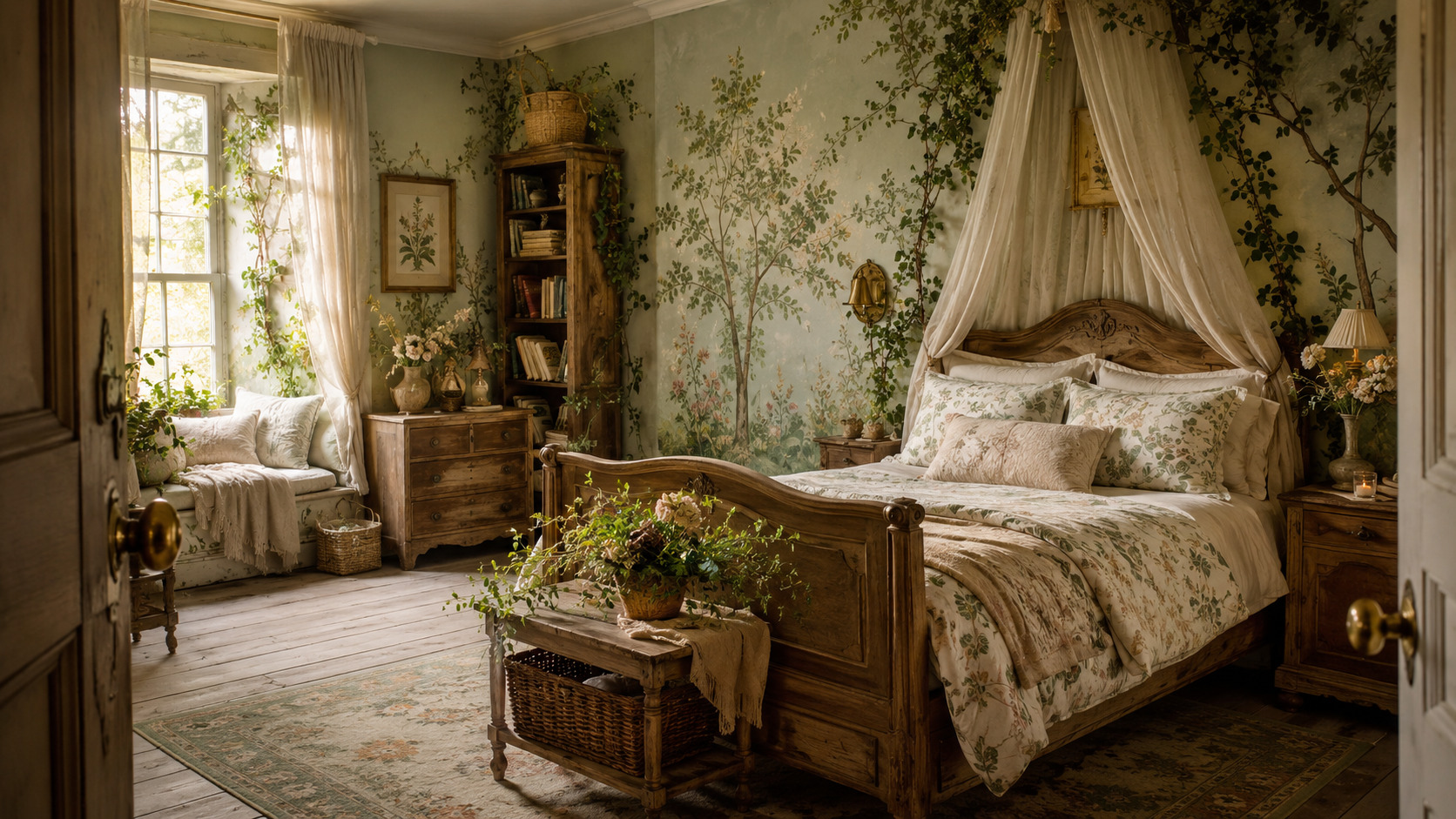
There is a familiar moment in many children’s bedroom makeovers: each decorative piece looks charming, yet the finished room feels more like a themed display than a place to sleep, read, and grow. A hidden garden works best when the fantasy is built into the atmosphere rather than crowded onto every surface.
A rustic secret garden bedroom combines woodland softness, weathered materials, botanical details, and a sense of discovery. The goal is not to recreate an outdoor garden literally. It is to suggest one through color, texture, light, and a few memorable focal points while keeping the bedroom comfortable and practical.
Key Takeaways
- Begin with a restrained garden palette of sage, moss, cream, dusty rose, and natural wood.
- Choose one strong feature, such as a botanical wall, canopy bed, or reading arbor.
- Layer breathable bedding and tactile materials instead of relying on novelty decorations.
- Keep furniture anchored, window coverings cordless, and hanging decor securely installed.
- Design the theme in removable layers so the room can mature without a complete renovation.
Table of Contents
- Plan the Garden Story
- Build a Botanical Backdrop
- Choose Rustic Furniture
- Layer the Bed
- Add Secret-Garden Details
- Shape the Lighting and Zones
- Balance Safety, Durability, and Budget
- Avoid Common Mistakes
- Frequently Asked Questions
1. Plan the Garden Story Before Shopping
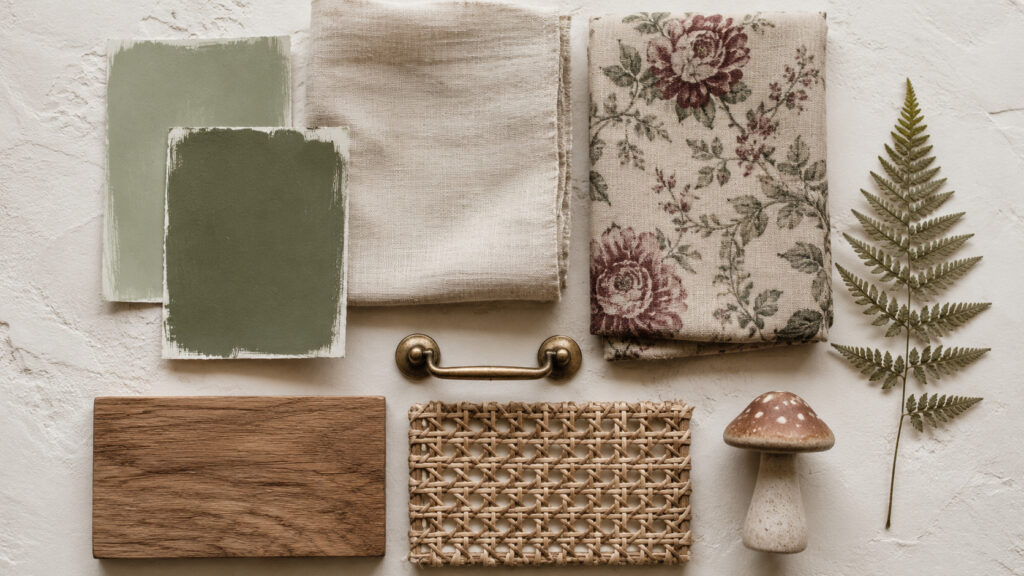
Decide what kind of garden the room suggests. A cottage garden may use faded roses, cream linen, and painted wood. A woodland garden leans toward moss green, oak, ferns, and deeper shadows. A fairy-garden version can add shimmer while retaining a natural base.
Limit the main palette to three or four colors. Sage green, warm white, natural timber, and dusty pink are easy to combine without making the room feel visually busy. Bring the child into this stage by offering a small set of choices rather than an unlimited selection. That gives her ownership while preserving a coherent result.
2. Build a Botanical Backdrop
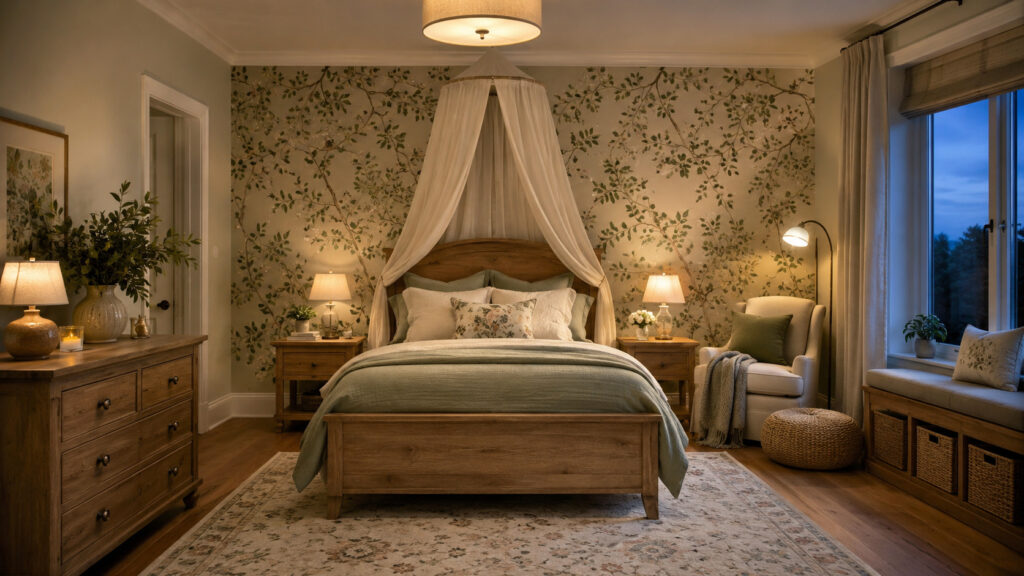
The walls establish the garden more effectively than a collection of small accessories. Paint one wall in muted green, use removable botanical wallpaper behind the bed, or create simple painted arches that resemble a garden gate. In a compact bedroom, a single feature wall usually provides enough drama.
A pale ceiling keeps the room open, while a discreet branch stencil can add surprise. Avoid covering every wall with strong patterns; a garden needs visual “paths” and quiet spaces as much as foliage.
3. Choose Rustic Furniture with a Lighter Touch
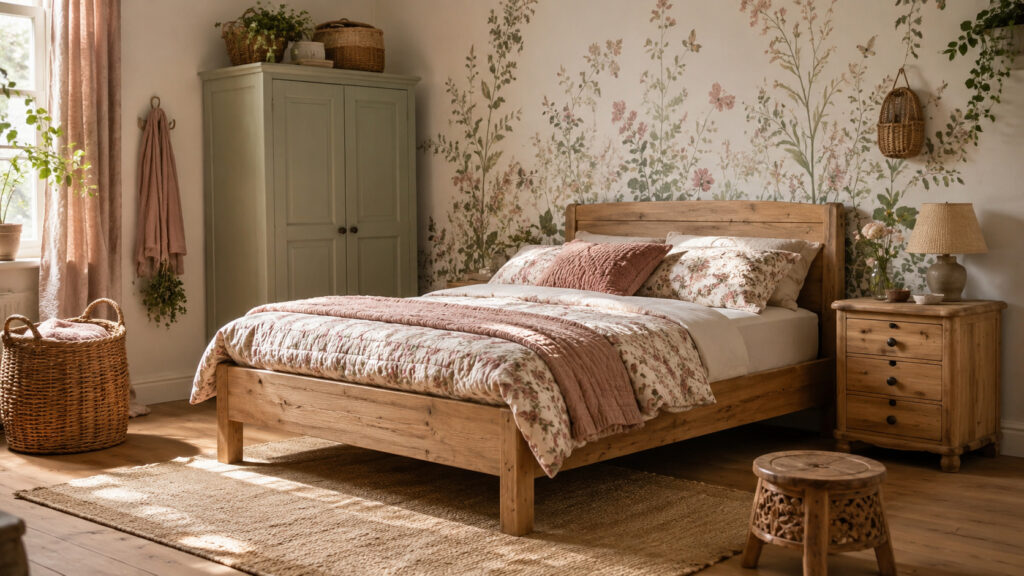
Rustic does not have to mean dark, heavy, or rough. A light oak bed, painted dresser, cane-front cabinet, or wooden bench can carry the theme. Rounded edges and washable finishes are more practical than heavily distressed surfaces that may splinter or trap dust.
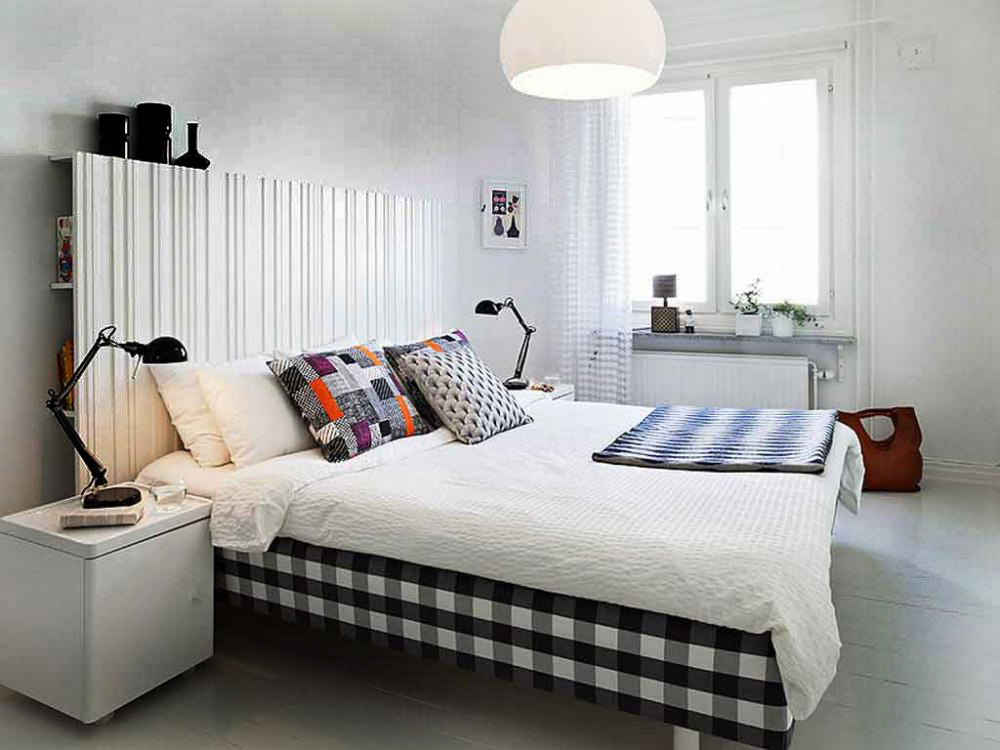
The bed should remain the visual anchor. RooHome’s overview of comfortable rustic bedroom ideas highlights the role of wooden bed frames, warm lighting, layered bedding, and uncomplicated window treatments. Those principles translate naturally into a secret garden scheme because they create warmth before decorative foliage is added.
For a small room, choose furniture that works twice: a storage bench at the foot of the bed, drawers beneath the mattress, or a bedside table with a shelf. The hidden-garden feeling comes from atmosphere, not from sacrificing floor space.
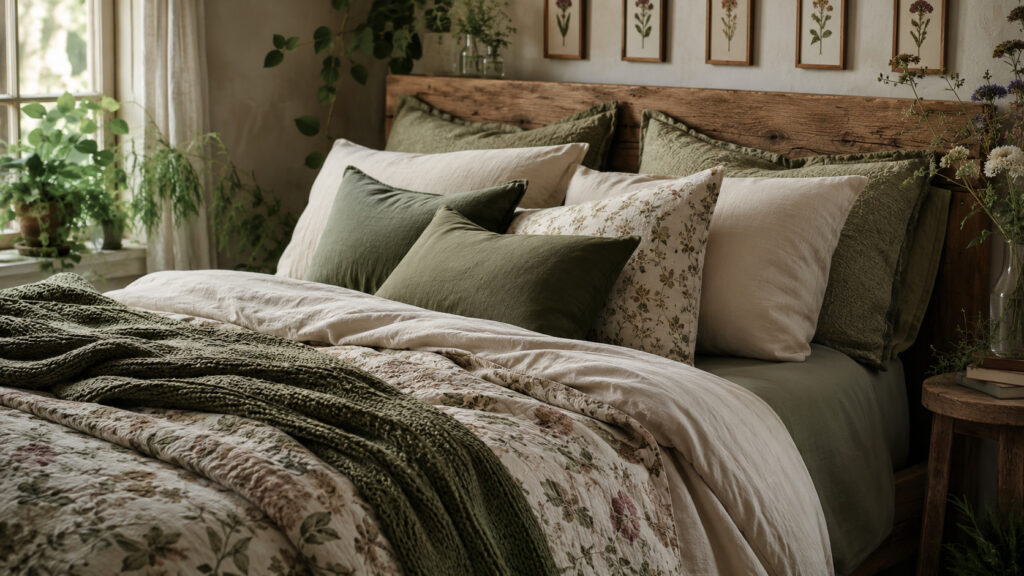
4. Layer the Bed Like a Garden Floor
Use bedding to add depth without clutter. Begin with a breathable base, then introduce one floral or botanical layer and one tactile accent. Cotton is practical for everyday washing; linen offers a relaxed, slightly rumpled texture; a lightweight quilt adds pattern without the bulk of several decorative blankets.
Keep the mix controlled. If the duvet has a detailed floral print, use mostly plain pillows. If the bed is neutral, a woodland quilt or embroidered cushion can become the feature. Avoid filling the sleeping area with oversized cushions and toys that must be removed every night.
5. Add Details That Feel Discovered
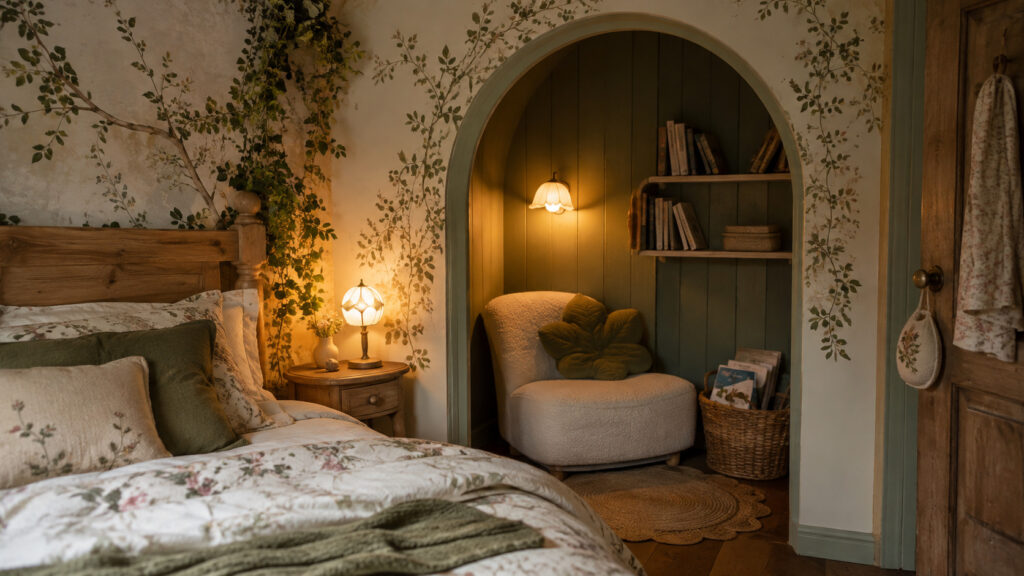
A secret garden needs one or two elements that feel slightly unexpected. Frame pressed leaves, hang a small antique-style mirror like a “window” into another garden, or place a ceramic bird on a shelf. A linen canopy can suggest a garden arbor, especially when it is mounted securely and kept away from lights, fans, and a young child’s reach.
Use faux vines selectively around a headboard, mirror, or reading nook rather than wrapping the entire room. Real plants can work for older children who can care for them, but species choice, allergies, pets, available light, and the risk of spilled soil all matter. High-quality faux foliage is often the easier option for a low-maintenance children’s room.
6. Shape the Room with Lighting and Small Zones
Layered lighting makes the room feel more magical and more useful. Combine general ceiling light with a bedside lamp and a focused reading light. Warm-toned illumination supports the rustic mood, while a dimmer or low-level night-light helps the room shift from playtime to bedtime.
Create zones without adding more furniture. A rug can define play space, low book ledges can establish a reading corner, and a desk tray can become a “garden studio.” Keep pathways clear from the door to the bed and storage.
7. Balance Safety, Durability, and Budget
Decorative ambition should never outrank bedroom safety. The U.S. Consumer Product Safety Commission recommends anchoring furniture with drawers, doors, or shelves to the wall. It also identifies cordless window coverings as the safest option where young children are present. Secure canopies and wall decor with hardware suited to the wall type, and ask a qualified installer for help when hidden wiring, masonry, or uncertain fixings are involved.
If painting or sealing furniture, follow product instructions and ventilate the room thoroughly. The U.S. Environmental Protection Agency recommends increasing ventilation around VOC-emitting products and considering low- or no-VOC options. Even then, allow finishes to dry and air out as directed before the child uses the room.
Spend first on the bed, mattress, storage, and lighting. Save on removable prints, cushion covers, thrifted frames, baskets, and peel-and-stick accents. A painted branch or arch can outperform a large collection of themed objects.
8. Common Mistakes That Weaken the Design
- Using too many greens: vary texture more than hue, and include cream or wood to provide relief.
- Overloading the canopy: excessive vines, flowers, and lights can look tangled and complicate cleaning.
- Ignoring everyday storage: visible clutter quickly overwhelms a delicate botanical scheme.
- Choosing only child-sized decor: include timeless furniture and changeable accessories so the room can mature.
- Mixing every rustic style: farmhouse signs, woodland animals, bohemian macrame, and ornate fairy decor rarely need to appear together.
Frequently Asked Questions
What colors work best in a rustic secret garden bedroom?
Sage, moss, warm white, muted rose, clay, and natural wood form a flexible base. Use the lightest shade across the largest surfaces, then reserve darker greens and floral colors for bedding, art, or one feature wall. This keeps the bedroom calm enough for sleep while preserving the garden character.
Can this theme work in a small bedroom?
Yes. Choose one strong focal point, such as botanical wallpaper behind the bed, and keep the remaining walls quiet. Use under-bed storage, wall-mounted book ledges, and a small rug to define zones without adding bulky furniture. Vertical details, including a painted arch or narrow canopy, can create atmosphere without consuming floor space.
How can the room grow with the child?
Invest in a simple wooden bed, neutral storage, and practical lighting. Build the fantasy through removable wallpaper, framed prints, cushion covers, quilts, and decorative objects. As preferences change, florals can be replaced with more mature botanical art while the rustic furniture and natural palette remain useful.
Are real plants suitable for a child’s bedroom?
They can be, but suitability depends on the child’s age, allergies, pets, light levels, and willingness to care for them. Select non-toxic species appropriate to the household and place pots where they cannot easily fall. Faux plants or pressed botanical art offer a similar visual effect with less maintenance.
What is the easiest low-budget update?
Change the wall color or create one painted botanical feature, then add a coordinated quilt and two or three nature-inspired prints. Reuse existing furniture by replacing knobs or applying a suitable finish according to the manufacturer’s instructions. Editing the room before buying anything often reveals that fewer additions are needed.
Create a Garden That Leaves Room to Grow
The most convincing rustic secret garden bedroom is not the one with the most leaves, flowers, or fairy accessories. It is the room where natural materials, soft color, useful storage, and one imaginative feature work together. Start with the background, solve the practical needs, and add the “secret” details last.
For another material-focused approach to a warm, layered bed, explore RooHome’s guide to cozy natural bedding materials. Although its visual reference is Southwestern, its discussion of cotton, linen, wool, texture, and intentional layering offers useful ideas for any earthy bedroom scheme.