
Most gardens don’t fall apart all at once. Mulch creeps onto the lawn a bit more each month. Grass roots push under the border into the bed. The neat line someone dug with a spade back in spring is, by summer, more of a suggestion than an actual edge. Nobody notices exactly when it happened. It’s just gradually not there anymore.
That’s usually the point when someone starts looking into proper garden edging, and searching out a company like Shapescaper garden edging instead of re-digging the same trench for the third year running.
Why a Spade Never Actually Fixes It
A cut edge looks sharp for about six weeks. Rain softens the soil, foot traffic compresses it, and grass does what grass does, which is spread into any gap it can find. Redoing the edge by hand works, technically, in the sense that it looks fine again for a while. It’s just not a fix. It’s maintenance dressed up as one, and it needs repeating every season for as long as the garden exists.
A few reasons the DIY edge doesn’t hold:
- No physical barrier stopping grass roots from crossing underneath
- Soil erosion during heavy rain reshapes the line over time
- Mulch and gravel migrate without something to contain them
- Mower and whipper-snipper damage wears down an unprotected edge faster than expected
None of that is a criticism of anyone’s gardening. It’s just what happens without a barrier doing the actual work.
What Steel Edging Actually Solves
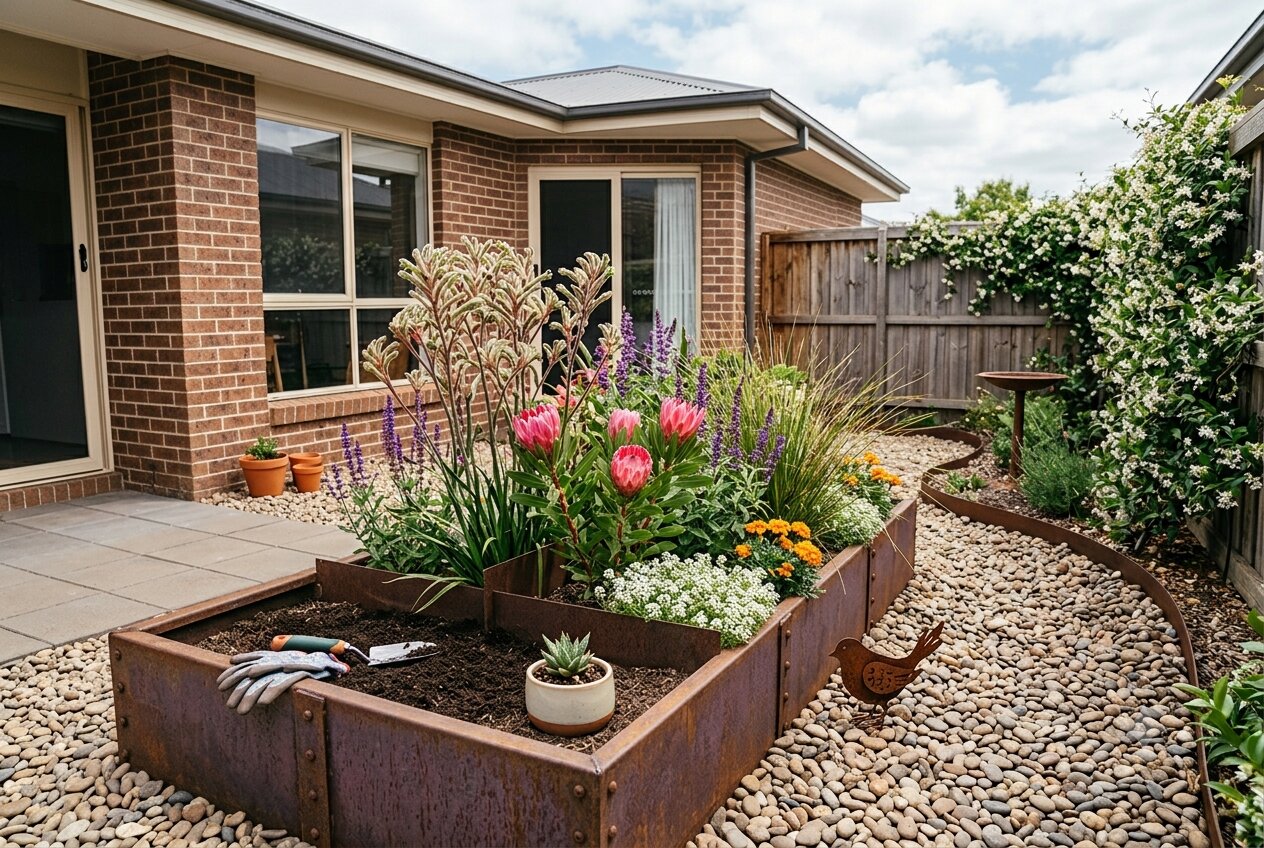
Galvanised steel edging does the one thing a spade can’t: it stays put. Once it’s in the ground there’s a physical line between the garden bed and everything around it, and that line doesn’t erode, shift, or need redoing after a storm. Grass can’t push under it because there’s nothing to push under. Mulch stays put because there’s an actual wall stopping it. Not glamorous, but it works. Most people don’t think about edging until they’re sick of doing the same job every few months for a result that never lasts.
Straight Lines, Curves, or Something in Between
One thing that puts people off proper edging is the assumption it locks a garden into rigid straight lines, like something from a display home rather than an actual backyard. That’s not really how it works anymore. Flexible steel edging follows a curve just as easily as a straight run. Flexible steel edging follows a curve just as easily as a straight run. Plenty of garden edging ideas lean entirely into curves and odd-shaped beds these days, because the material was never really the limitation people assumed it was. It also shapes how the garden reads visually, not just where the mulch stops. A bed that wraps around a tree, or curves alongside a path, doesn’t need to be squared off just to get a durable border.
Getting the Install Right
Edging that’s installed badly causes its own problems, which is worth mentioning because a lot of the frustration people have with steel edging actually comes from a poor install rather than the product itself. Depth matters. So does making sure the joins between sections sit flush rather than leaving gaps for grass to sneak through. A shallow install looks fine on day one. Starts lifting within a season, and the material gets blamed for what was really a depth problem. Do it properly the first time and there’s no redoing the whole bed a year later.
Getting it right the first time saves redoing the whole bed a year later.
Worth the Upfront Cost
You’ll pay more for steel edging than a spade and an afternoon. That’s just the upfront reality. A spade edge needs redoing every year though, and steel doesn’t. Do the five-year math and steel wins anyway. It also looks finished the whole time, not drifting in and out of tidy with the seasons.
A garden bed with a proper edge just reads as more deliberate. People notice, even if they can’t always say why.