

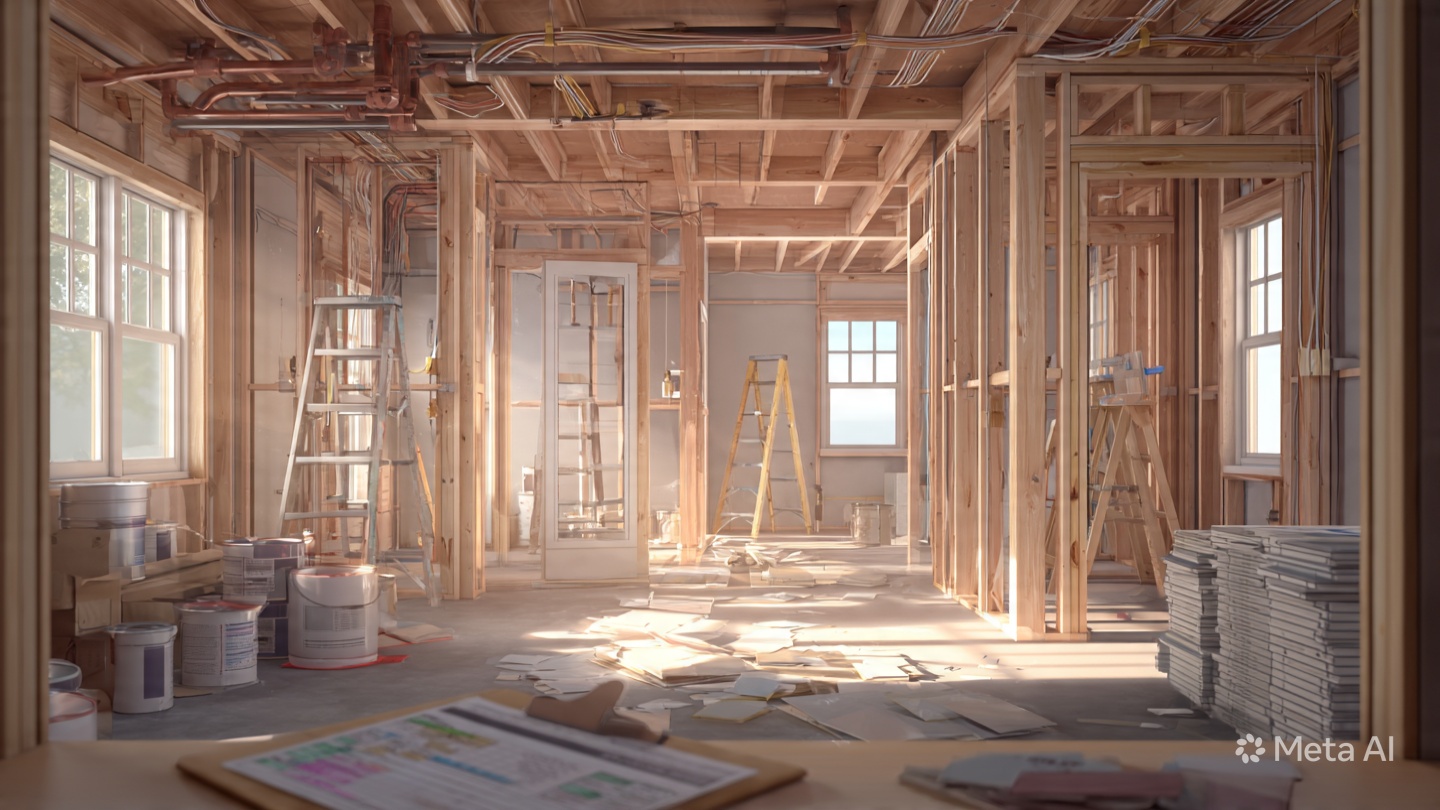
Every renovation horror story follows the same plot twist. It is rarely the materials. It is rarely even the contractor. It is sequencing, almost always. Paint went on before the electrical wrapped up. New floors went down before anyone double-checked the plumbing. A backyard structure went up before someone realized it was sitting exactly where the deck needed to go.
Getting the order right is not a small logistics footnote. It is the entire difference between a renovation that moves forward and one that keeps circling back to redo the same work for the second time, at twice the cost and half the patience.
1. Structural and Mechanical Work Goes First, No Negotiating
Anything touching the actual bones of the house, framing changes, structural repairs, foundation issues, has to happen before literally anything else gets discussed. People rarely mess up the structural stuff. Where the trouble actually starts is one layer down: plumbing, electrical, the HVAC rough-in. Every bit of it needs to be done and signed off before a wall gets closed up or a floor goes anywhere near it.
Seal a wall around half-finished wiring, and that wall is getting opened again later, and opening a finished wall is a much worse Tuesday than just leaving it open for two more weeks at the start.
2. Surfaces Have an Order Too: Ceiling, Then Wall, Then Floor
This order exists for a simple reason. Each step risks damaging whatever was finished before it, so working top to bottom means debris lands on something unfinished instead of something you just paid for. Floor work, including any tile replacement, belongs near the very end of the interior list precisely because of this. Ladders, dropped tools, deliveries rolling through, all of it threatens a finished floor.
Putting tile down early is one of the most common sequencing mistakes out there, and it ends in protective covering, careful tiptoeing around the house, and inevitable touch-ups by the end anyway.
3. Outdoor Structures Run on Their Own Clock
Outdoor builds, pergolas included, need their own planning logic separate from whatever is happening inside the house. Build one before locking in the layout of a nearby deck or patio, and you risk creating clearance problems that are genuinely annoying and expensive to fix once the structure already exists. Confirm the full outdoor layout before any single piece goes up. Otherwise, the gorgeous new pergola ends up sitting six inches too close to where the outdoor kitchen was supposed to go, and now everyone is having a conversation nobody wanted to have.
4. Fixtures and Finishes Always Go Dead Last
Cabinet hardware, light fixtures, plumbing fixtures, final paint, none of it goes in until every dust-kicking, debris-making trade has packed up and left. Install something early, and it either gets coated in paint dust or knocked loose during a later phase. Neither outcome is worth whatever few days you thought you were saving.
Conclusion
Nobody talks about renovation sequencing before a project starts, which is exactly why it ambushes so many people halfway through. Structural and mechanical first, surfaces top to bottom, outdoor layout locked before building, fixtures last. None of this guarantees a perfect renovation. It just stops you from paying twice for the same piece of work, which honestly might be the more important guarantee.