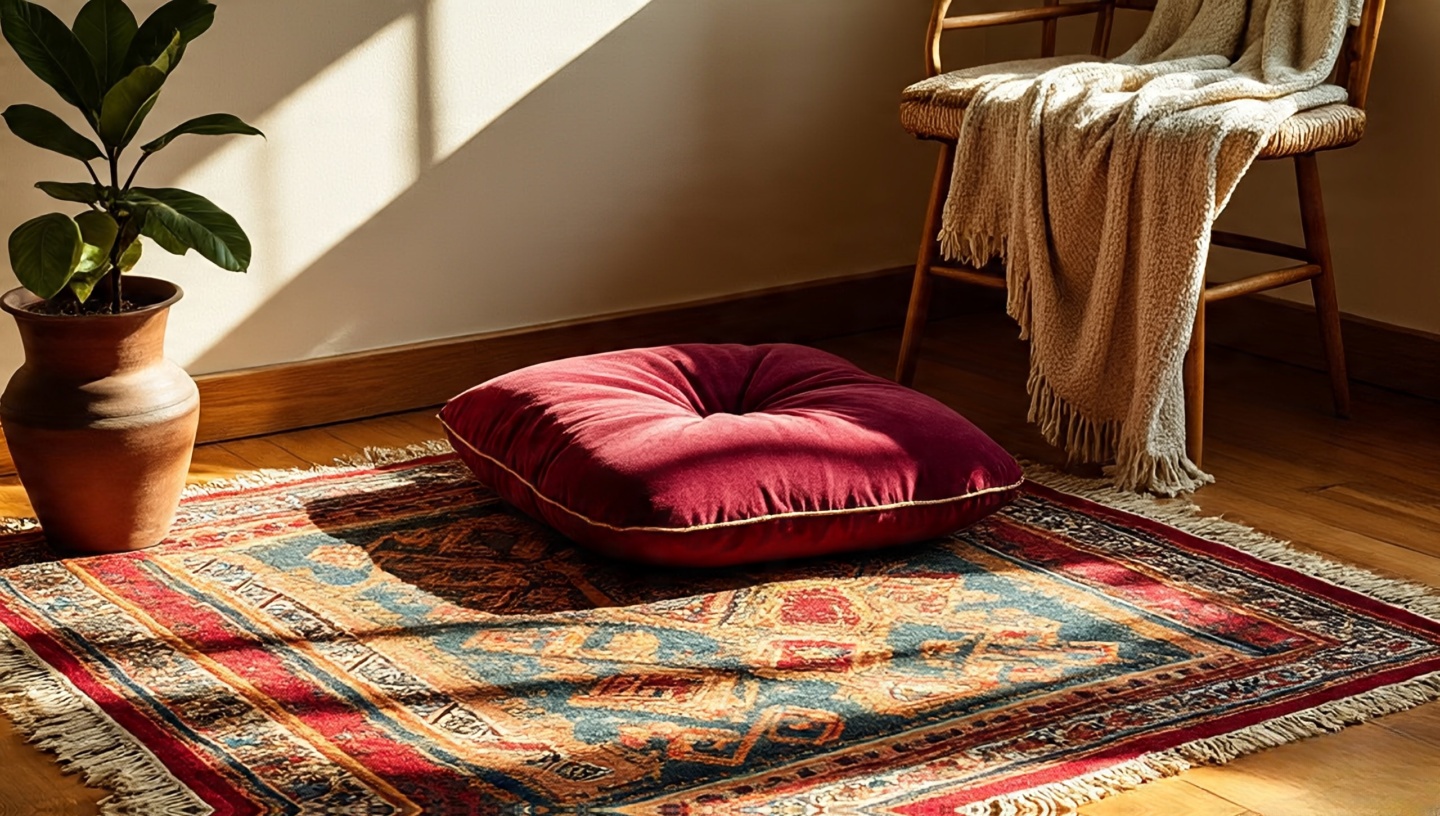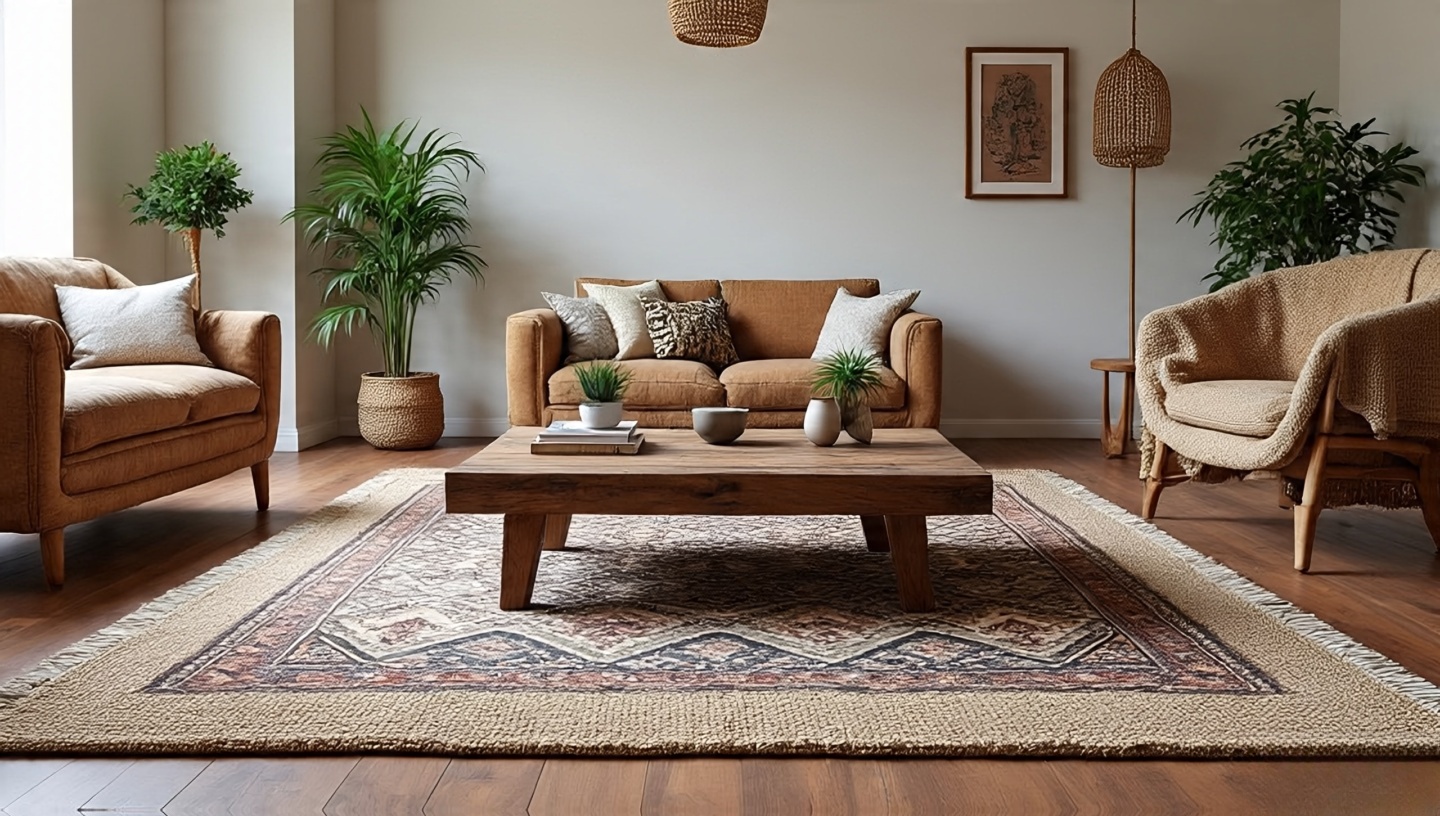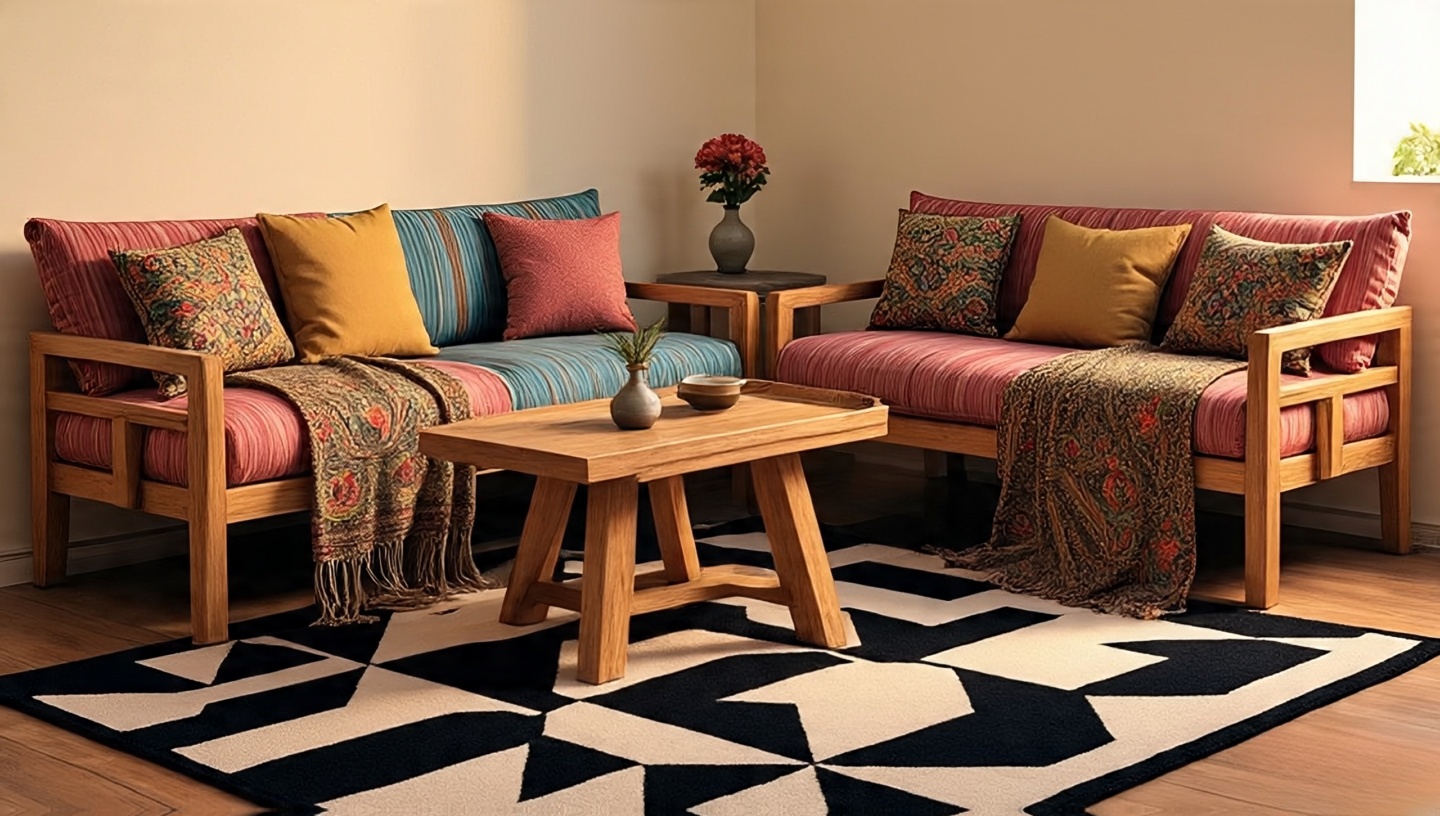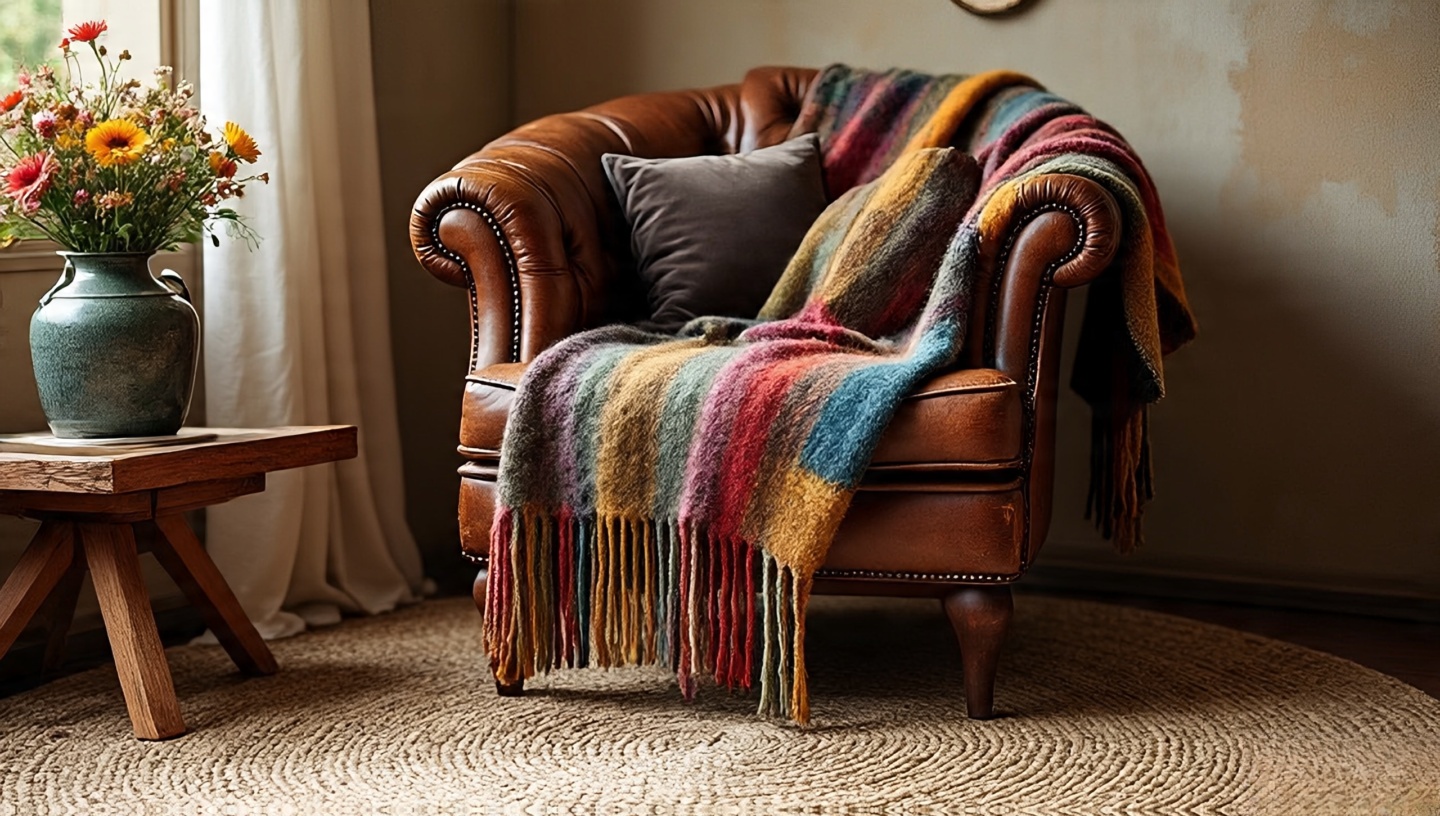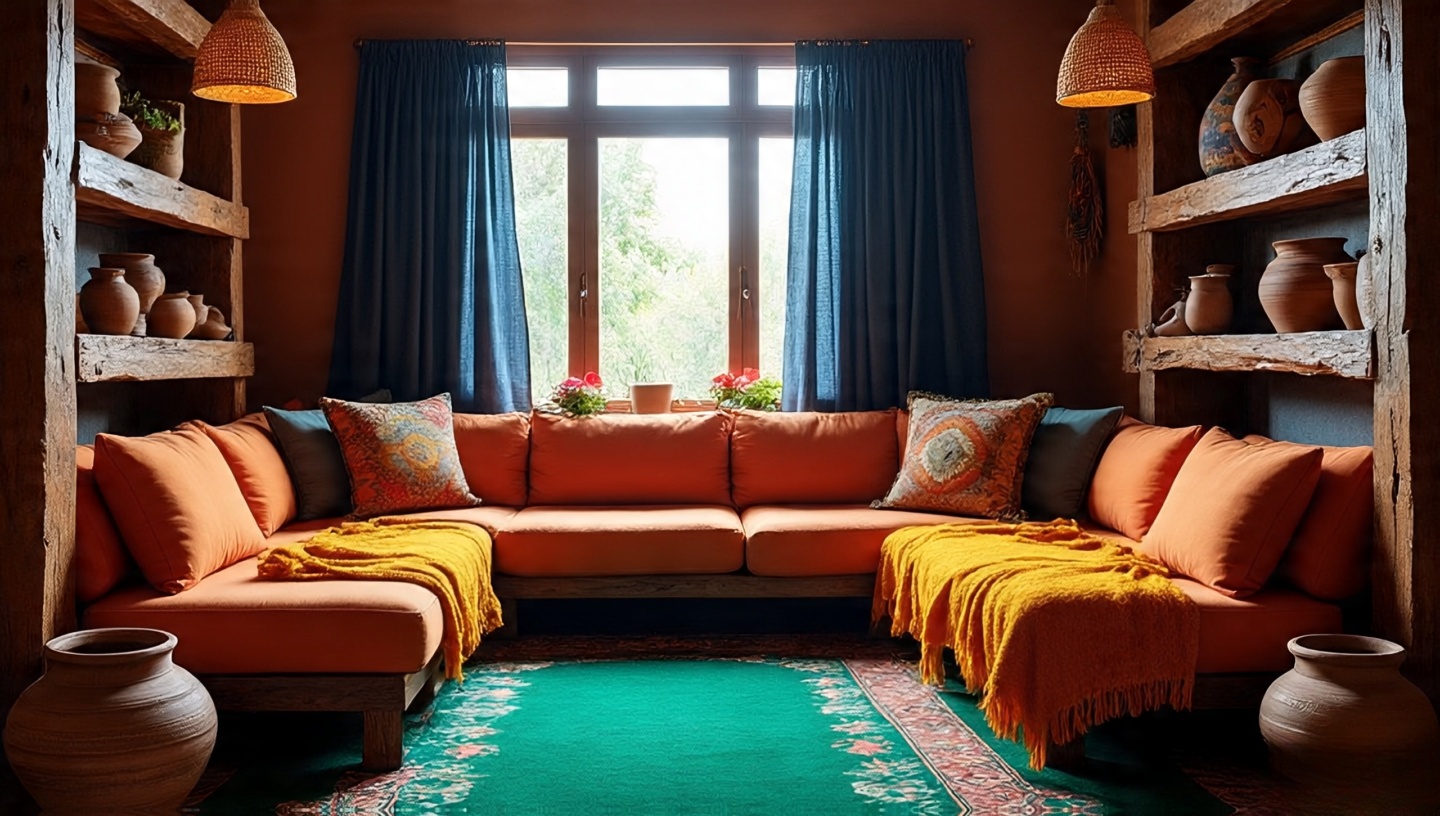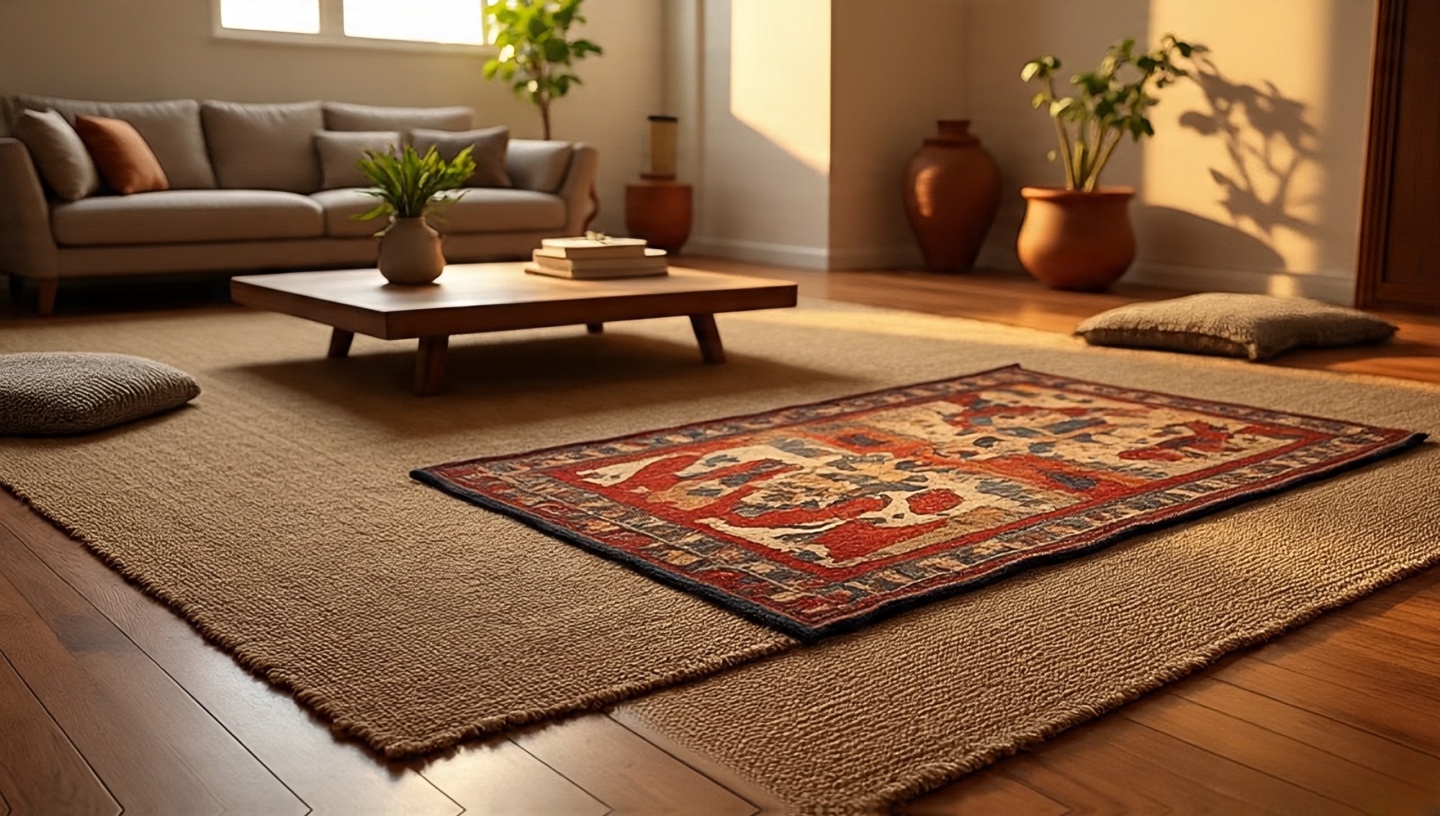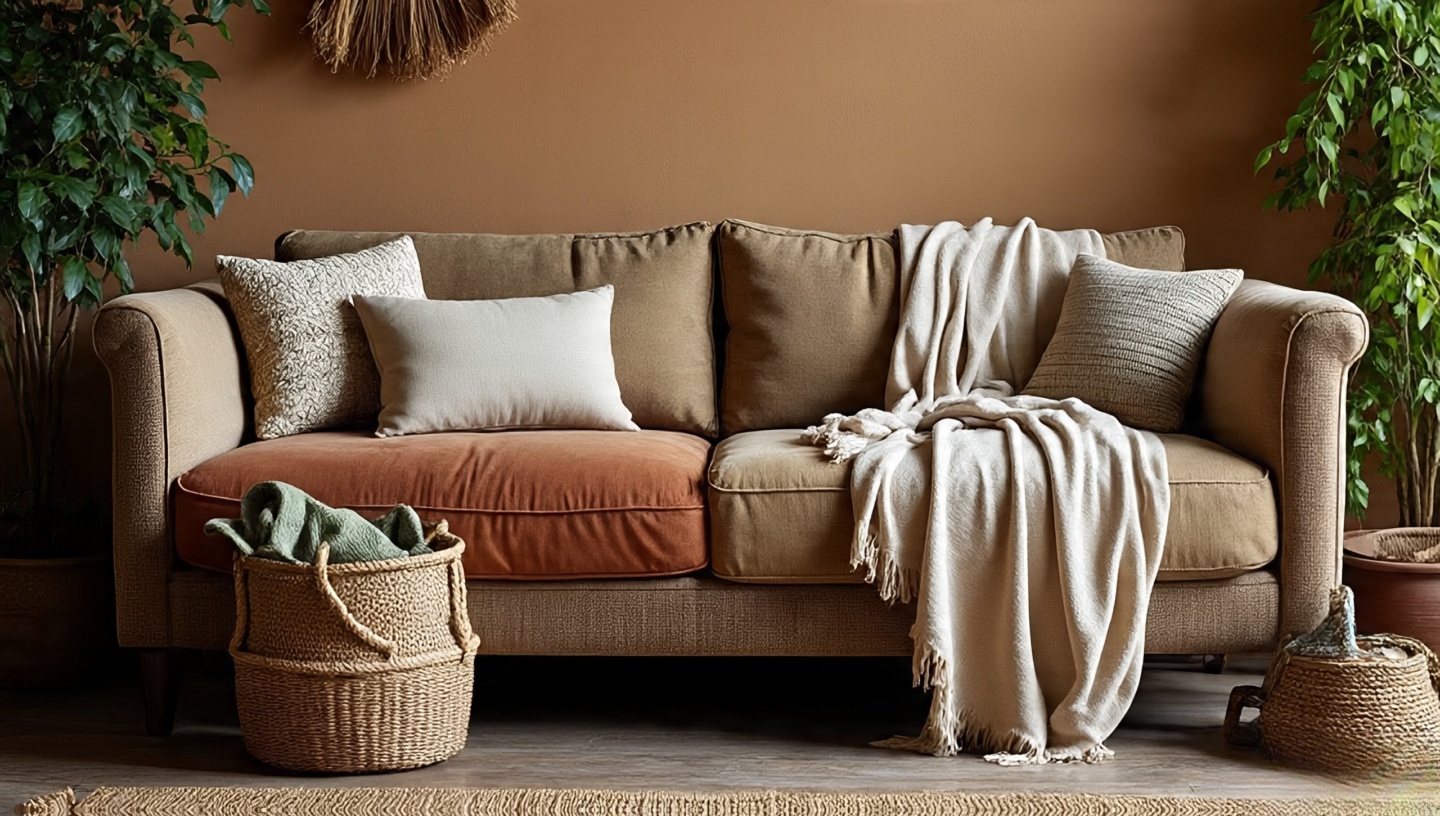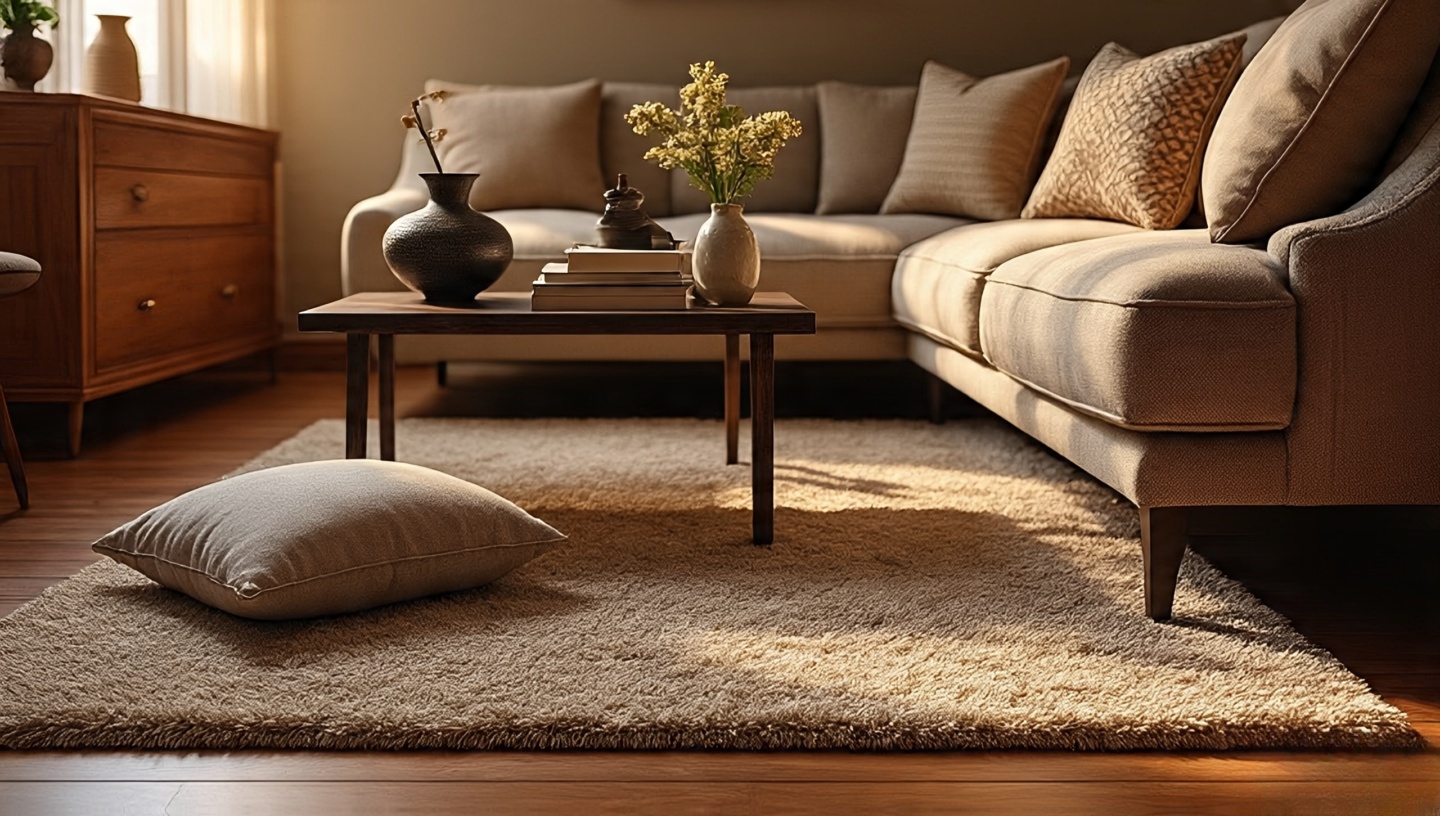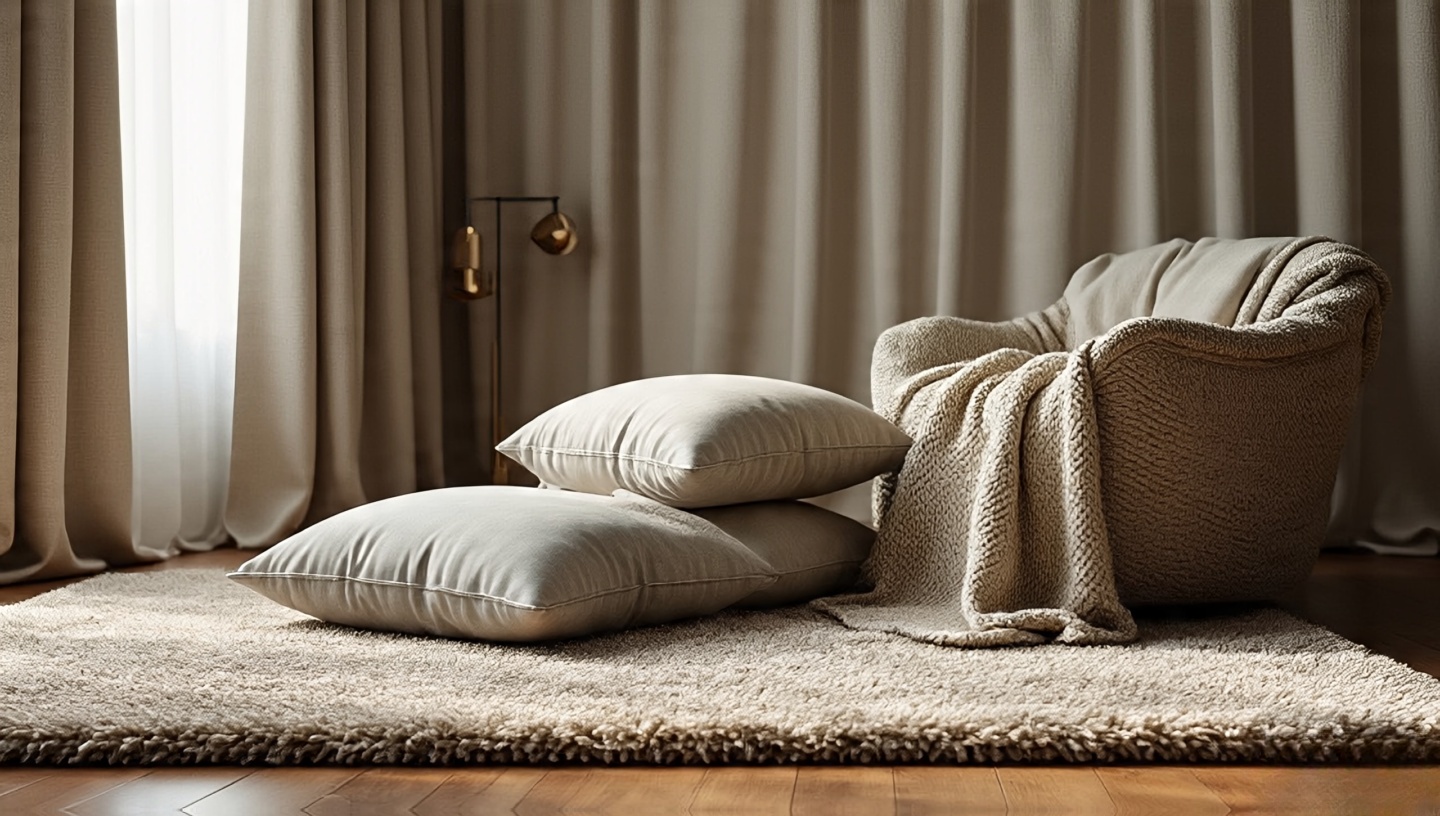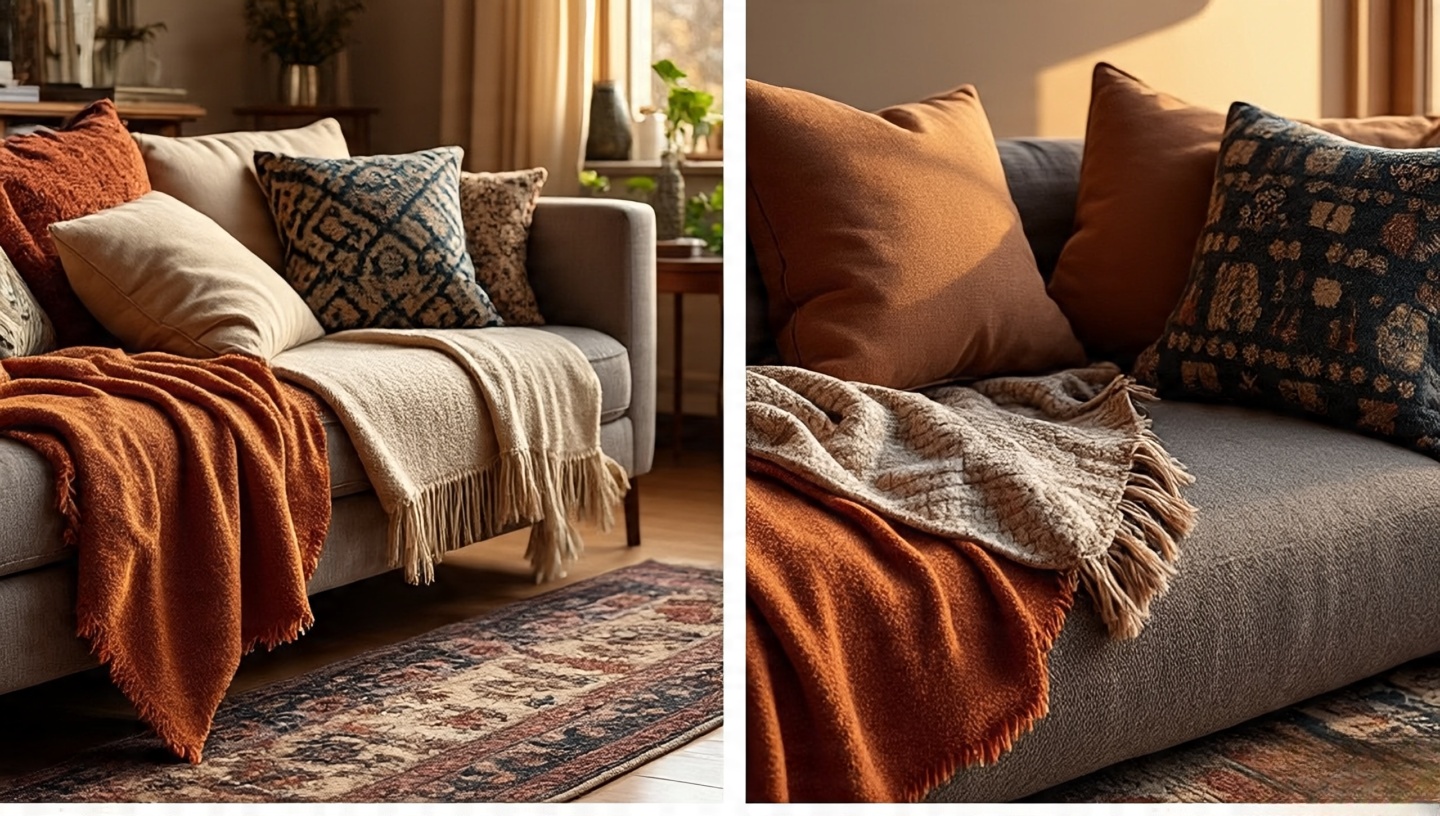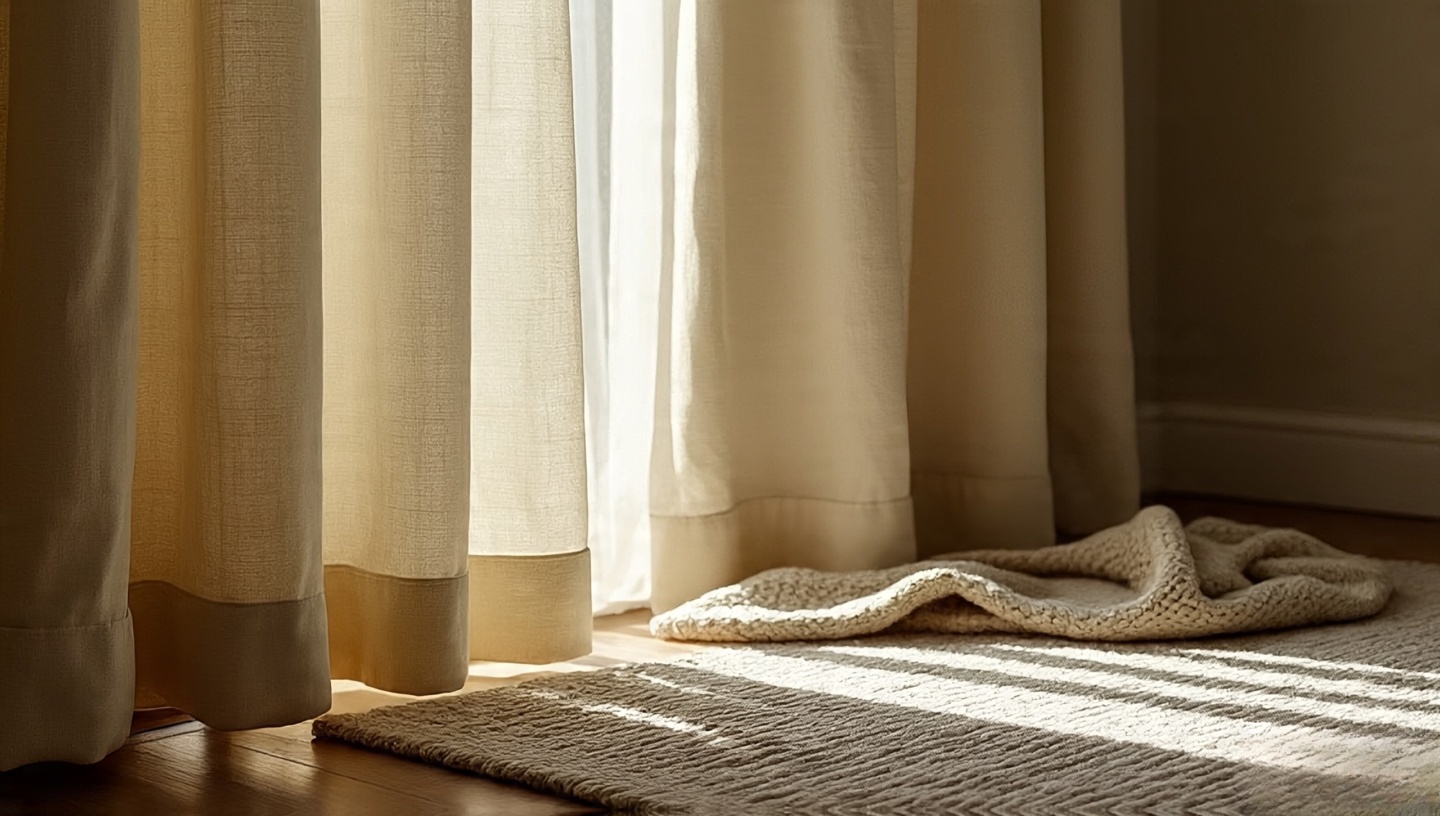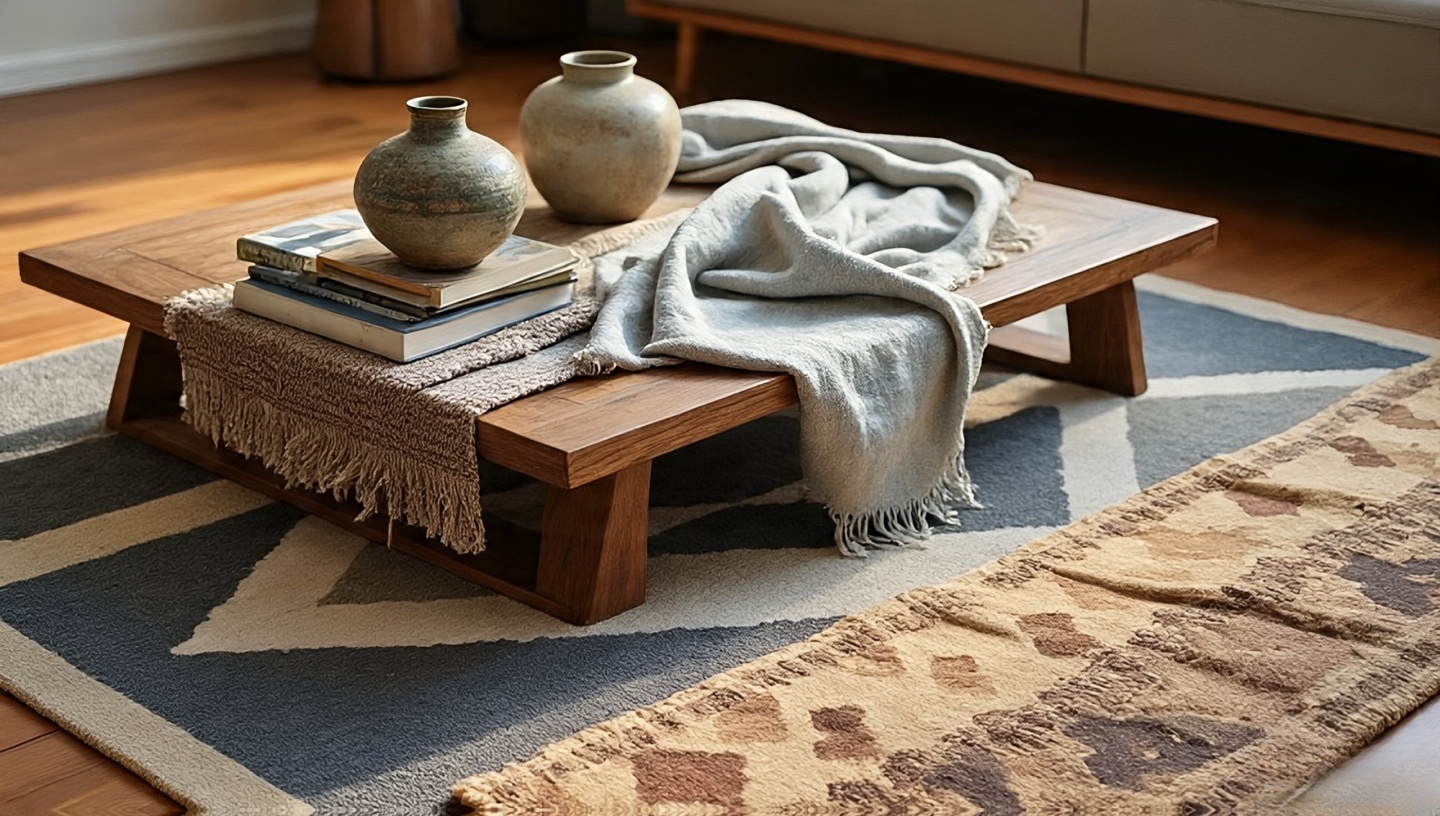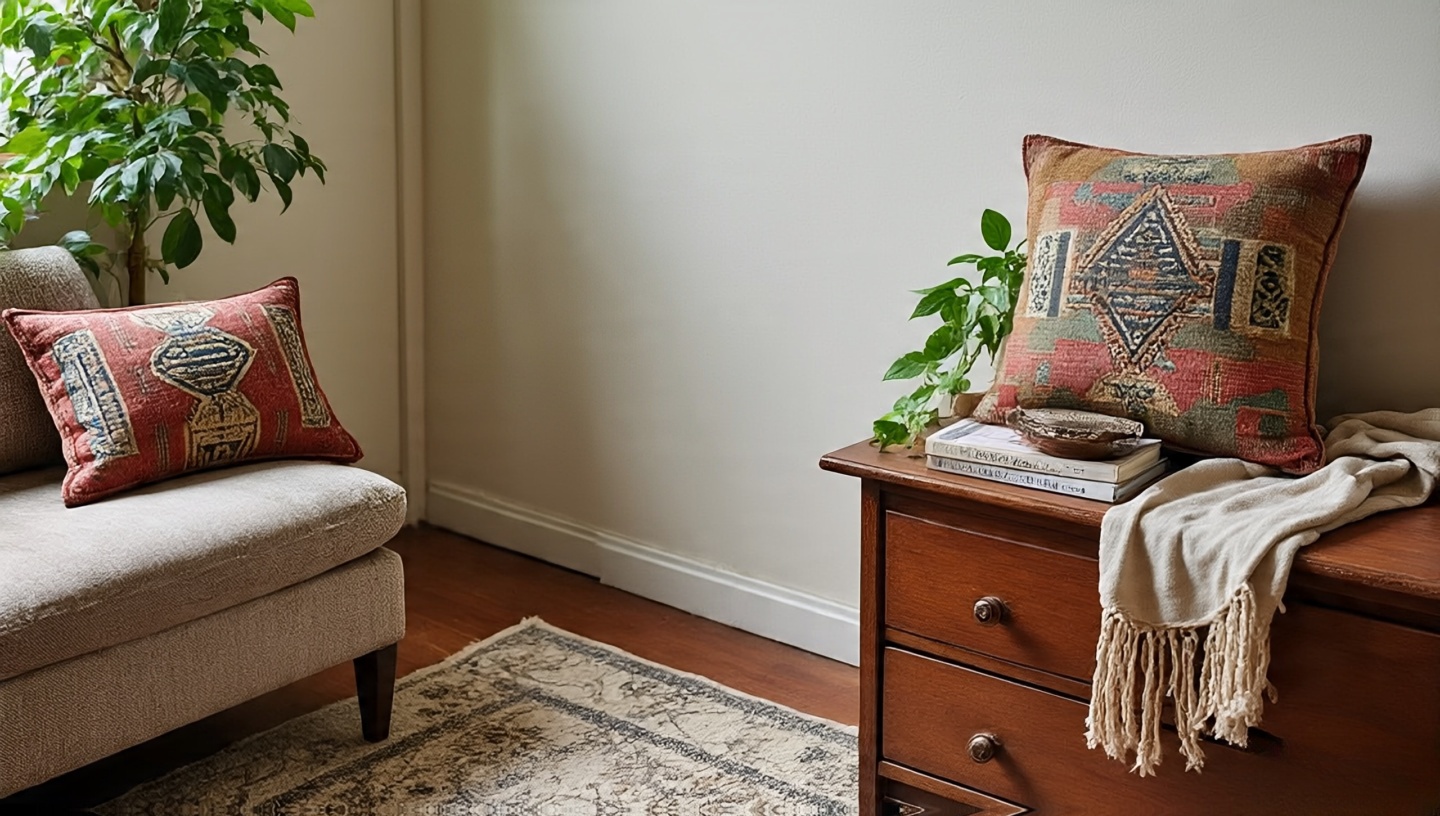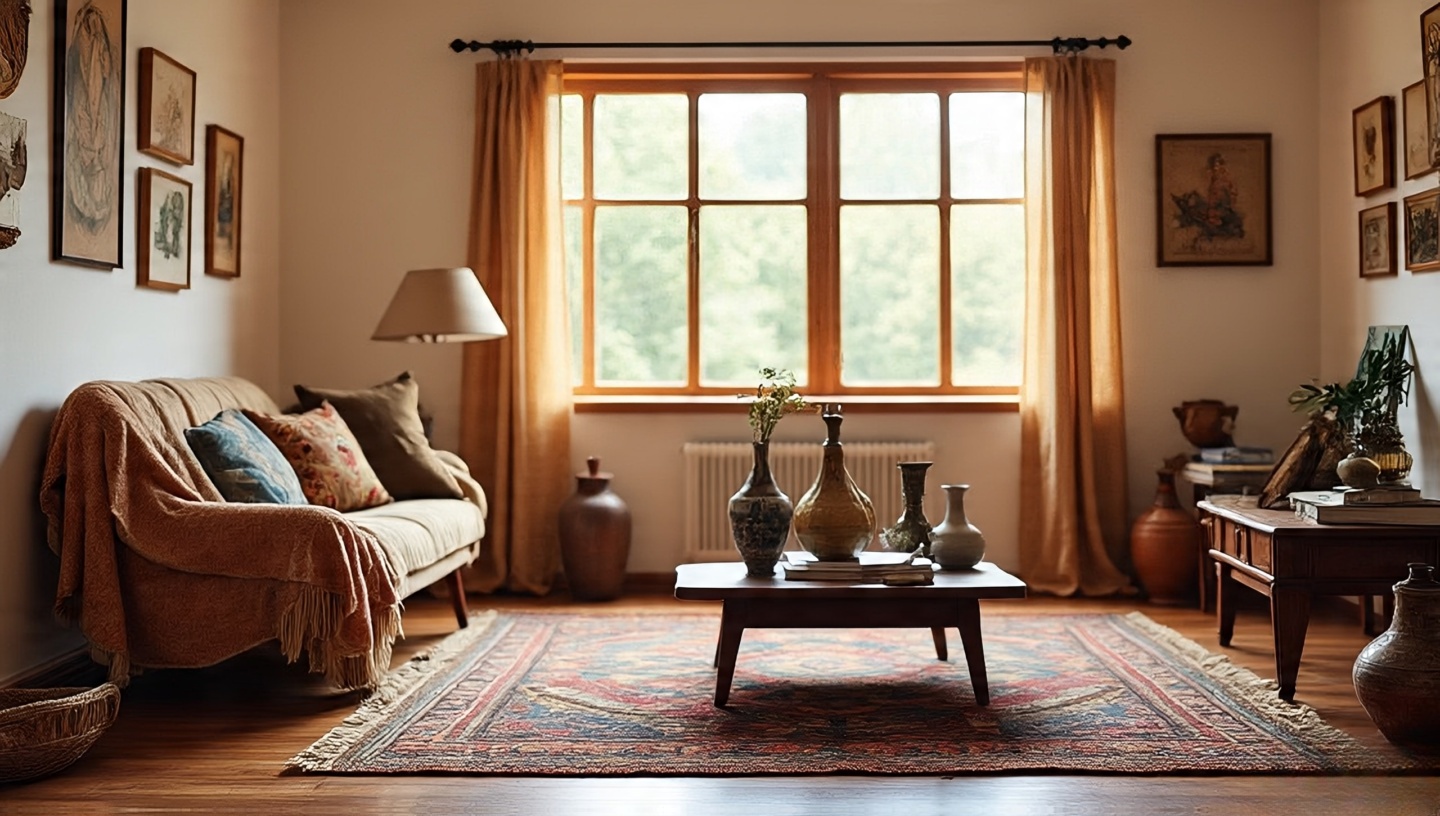


Layering textiles can introduce pattern and texture without replacing the room’s main furniture. It is optional: a single rug and a few well-chosen covers may be more useful than several overlapping layers. Decide what the arrangement needs to do before choosing its colors.
Mark the rug footprint
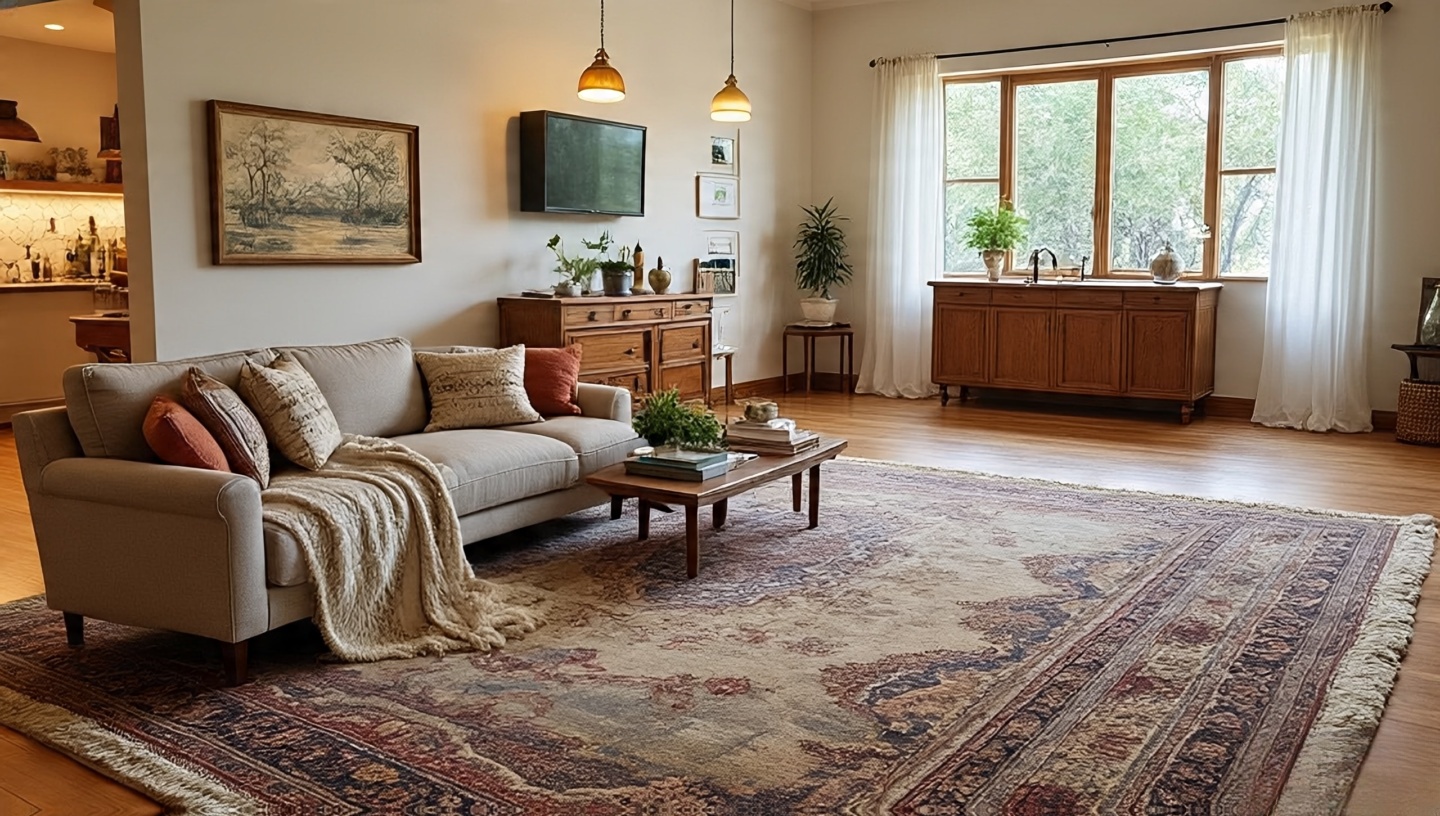
Use paper or surface-compatible removable tape to test the proposed outline. Add the furniture, door movement, and normal walking route. For two rugs, mark both layers. Check whether the top rug creates an edge where people enter the seating group or pull a chair out.
Follow the rug and underlay manufacturers’ instructions for the floor and intended use. Do not assume a decorative layer will stay in place simply because furniture touches one corner.
Give patterns different roles
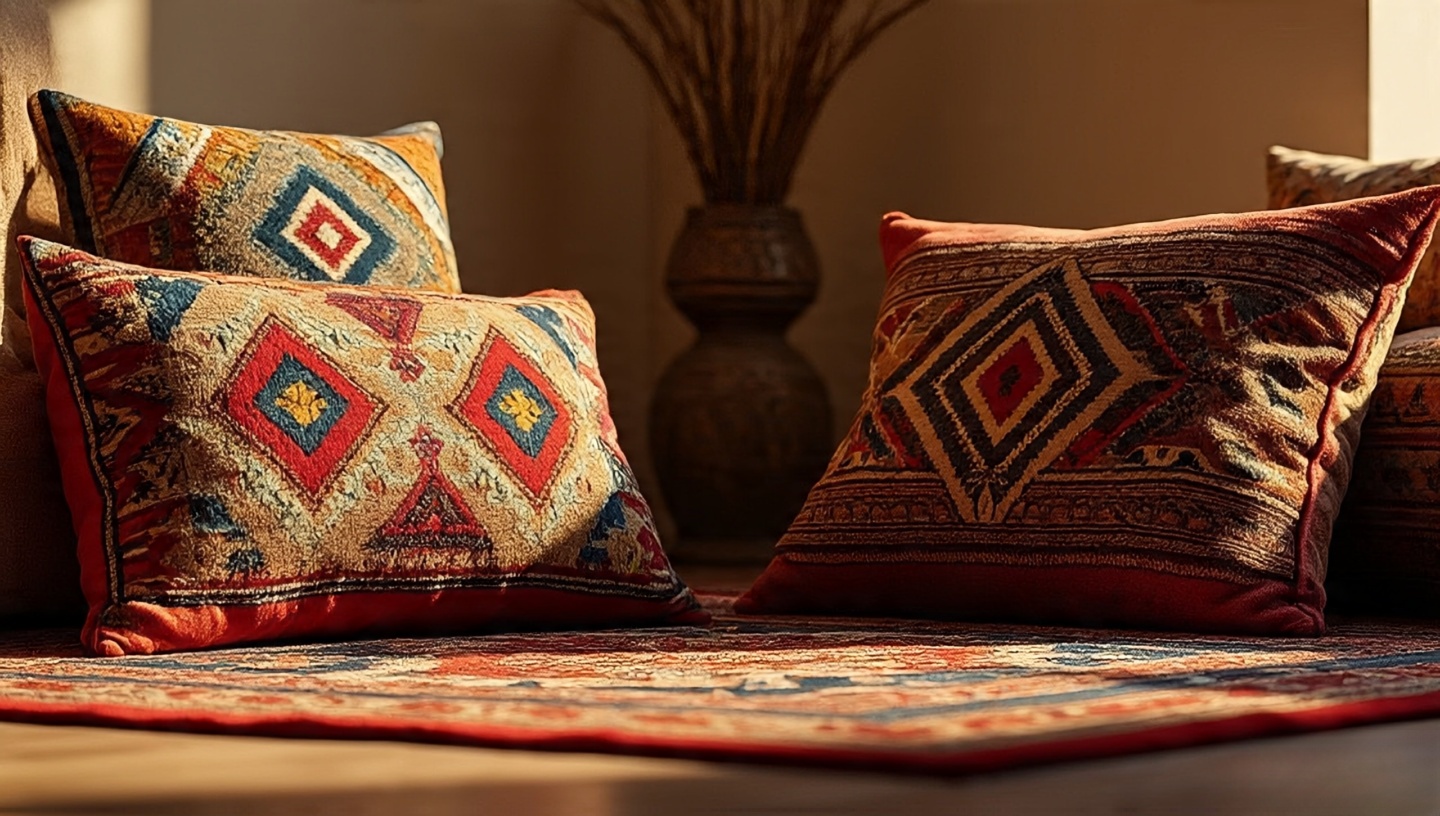
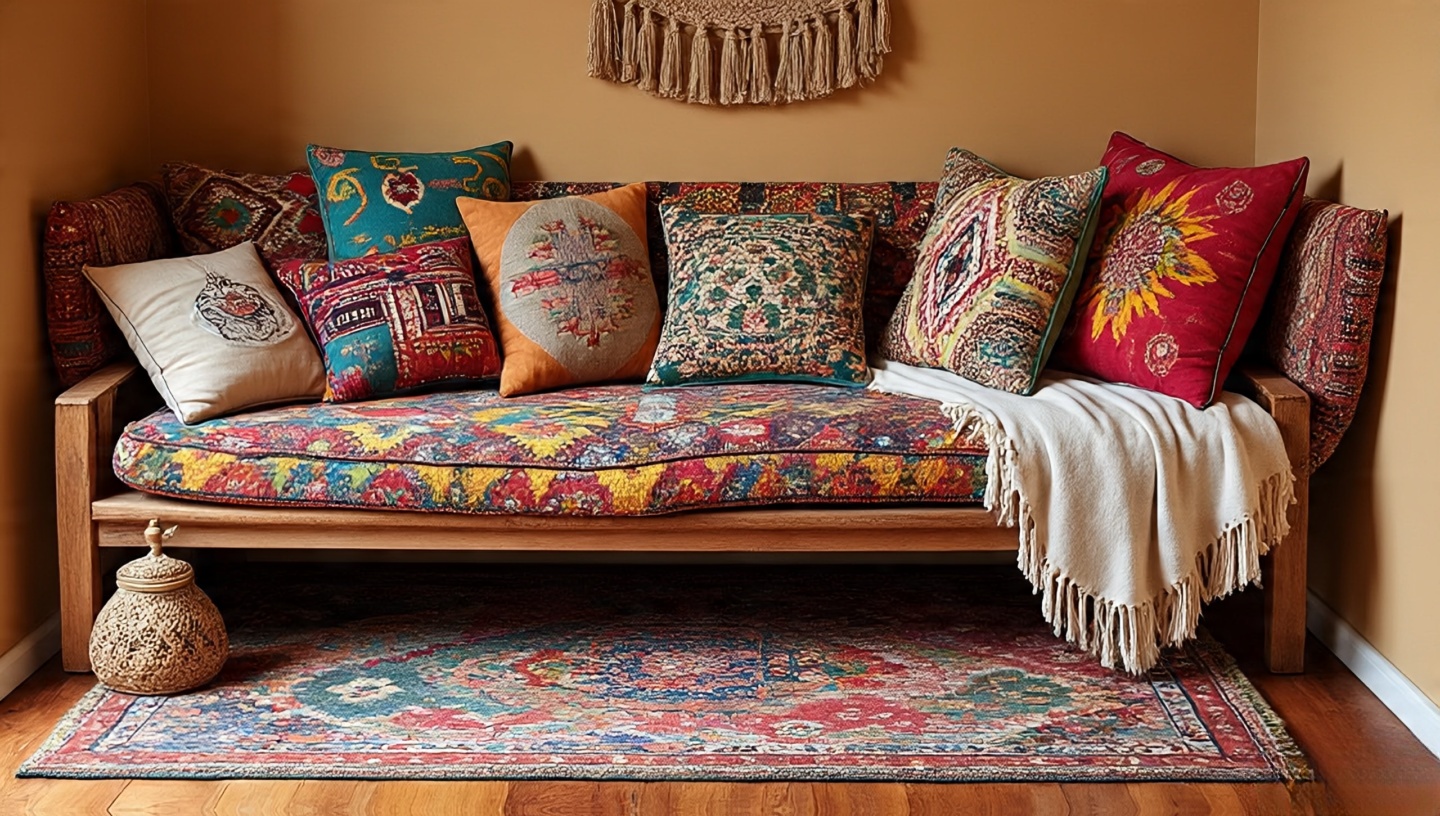
Choose one main pattern and compare a quieter textile beside it. Varying scale may make the combination easier to read than placing two equally busy motifs together. View full-size samples or a clear photograph of the complete design rather than a close-up alone.
Test the colors beside the floor and upholstery at different times of day. A palette that works in a bright reference image may need another balance in your own light.
Check how each textile is maintained
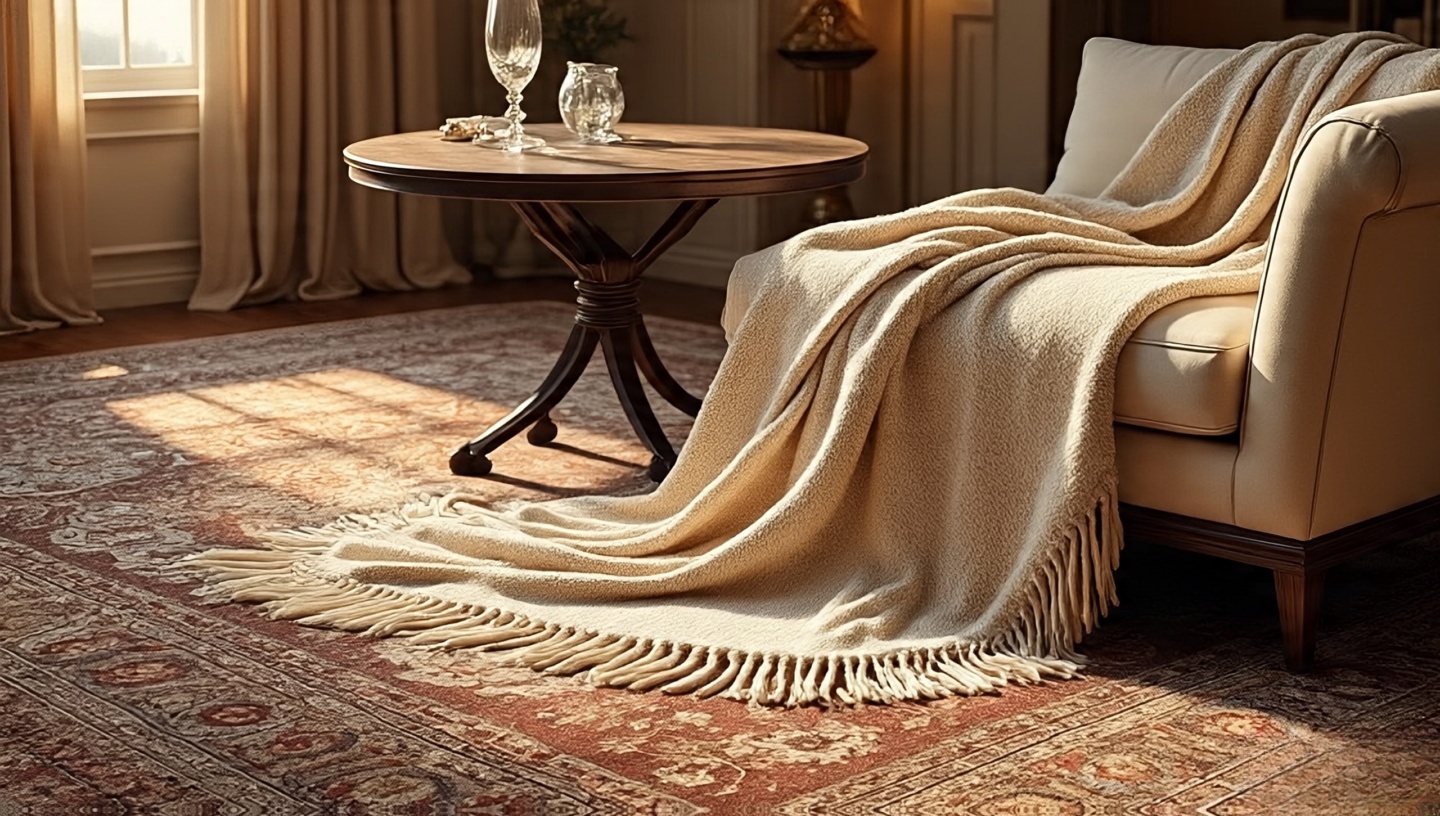
Record fiber, backing, finish, and care instructions. A sofa throw, dining rug, and bathroom mat have different demands. Do not move a decorative textile into a wet or busy location without checking suitability.
Keep a simple seasonal change
Store clean spare covers in a defined place and keep their labels. Change one element at a time so you can identify which combination works. Review the room after ordinary use, including vacuuming, chair movement, and access to storage.
The gallery offers visual references for these combinations. It does not supply product specifications or replace an inspection of an antique or valuable textile.
Images and retained source credits