
Kitchen plants work best when their position suits both the plant and the way you use the room. Start by checking light, watering access and the surfaces you need for cooking. Then choose the pot and the decorative arrangement. A plant that repeatedly has to be moved out of the way is a sign that the position needs another look.
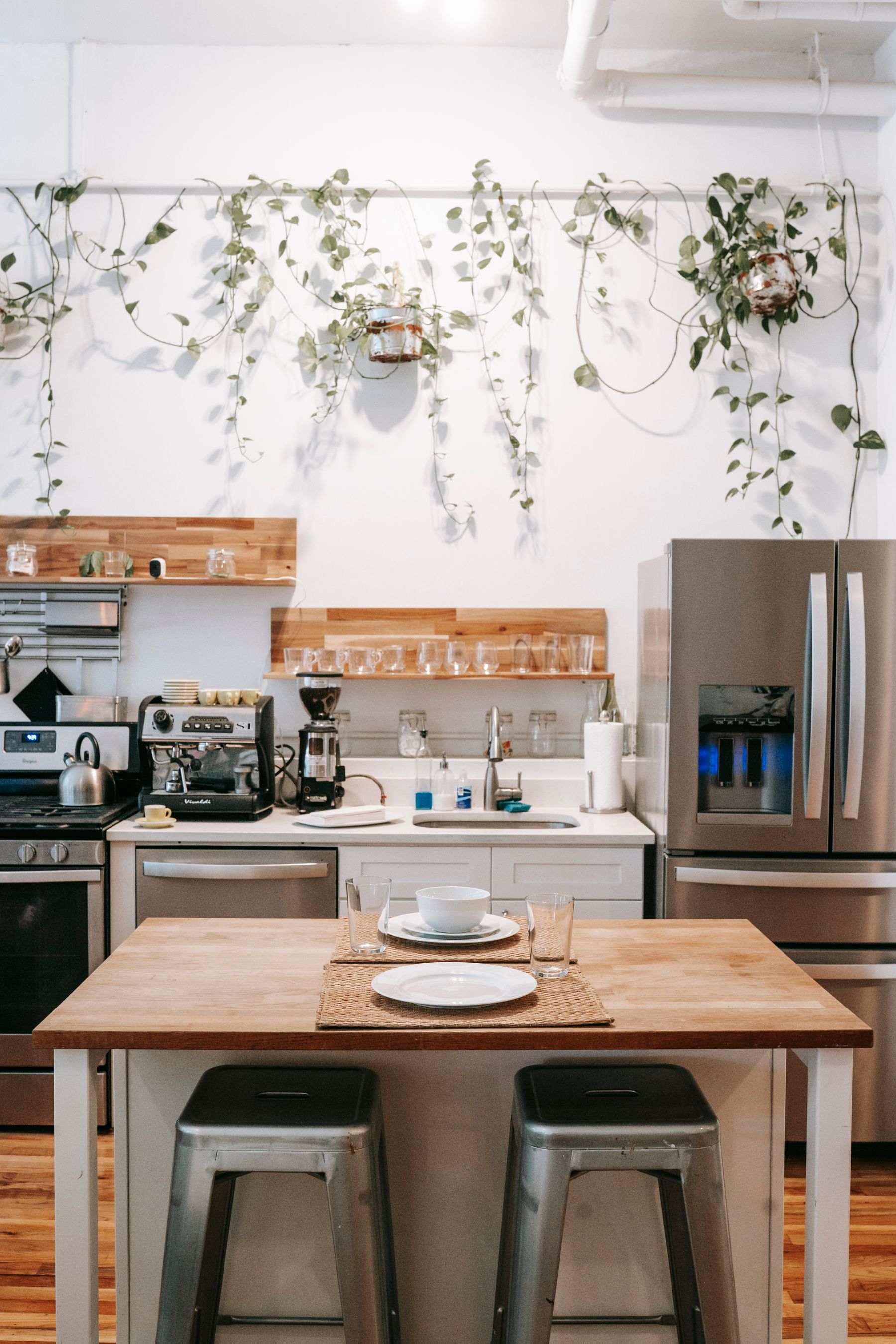
The opening photograph shows trailing greenery above a kitchen counter. It is a reference for the visual effect of a planted wall, rather than a specification for fixing containers or choosing a species. Before copying a high arrangement, work out how you would reach each pot and where water and trailing stems would go.
Opening photograph: Charlotte May / Pexels. Photographs are used under the Pexels License.
Check the growing conditions before choosing a plant
Look at the proposed position at different times of day. Note direct sun, shade from nearby buildings or blinds, and whether the window is often opened. Check the plant’s label against the conditions you can provide. The RHS houseplant growing guide explains why light, temperature and watering needs should lead the choice.
A room described as a bright kitchen can still have a shaded shelf. A sunny sill may also be very different from the space beside it. Choose for the particular spot, and allow for seasonal changes rather than treating the kitchen as one uniform growing environment.
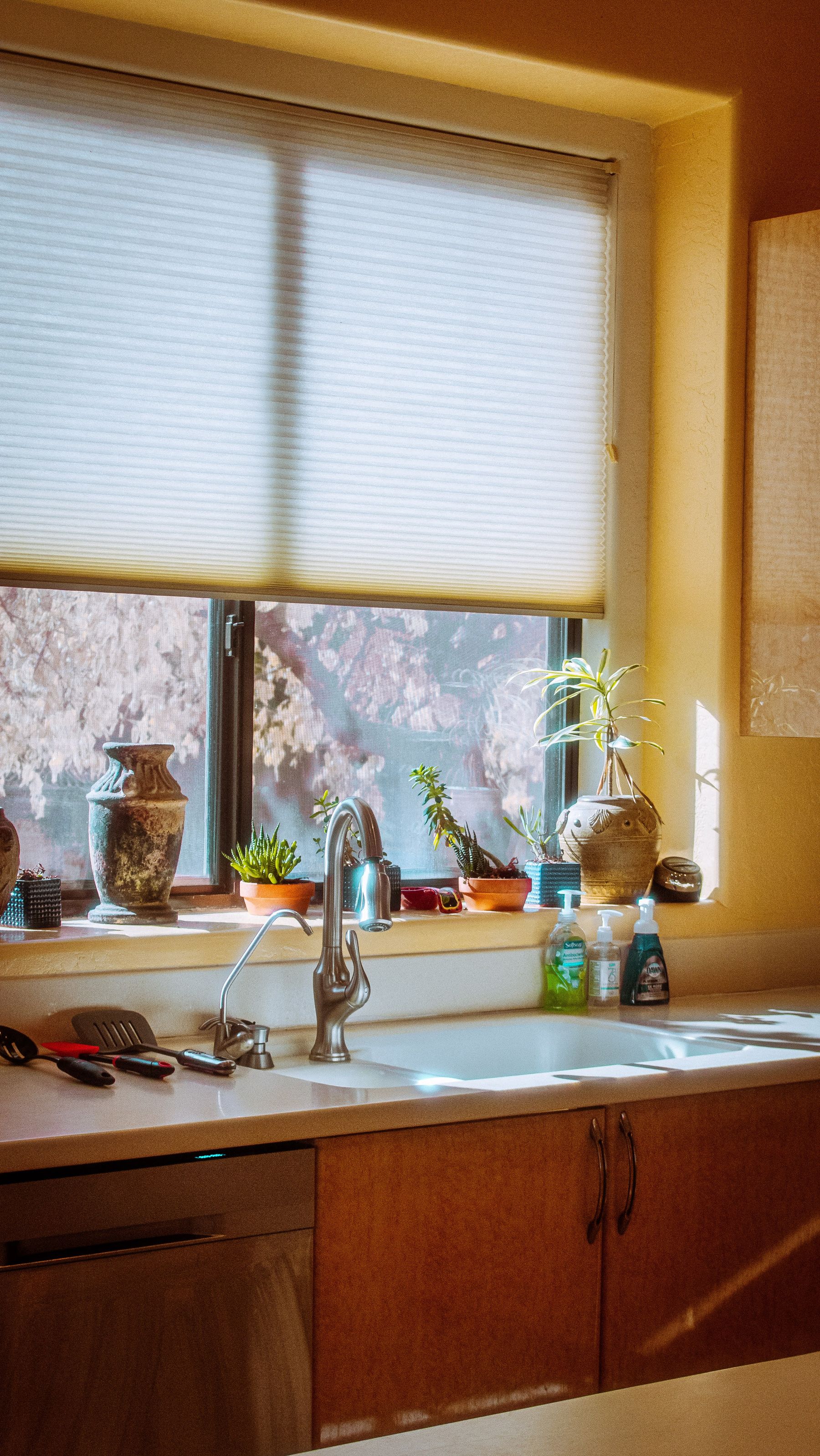
In this separate kitchen, several pots share a windowsill beneath a lowered blind. Include the blind, window handle and opening movement in your placement check. The photograph cannot establish the light a particular plant would receive throughout the year; the useful comparison is how the pots fit alongside the window’s everyday use.
Compare four possible positions
Walk through a normal cooking and cleaning routine before committing to a display. Open the appliance doors you use, reach for the window and clear the preparation space. These checks help distinguish a decorative gap from a practical place for a living plant.
| Position | Check before placing a pot |
|---|---|
| Windowsill | Light at that window, room for the pot, and access to the handle, blind and opening. |
| Shelf or cabinet | Light at shelf height, a stable position and a way to lift the pot down for care. |
| Hanging pot | Suitable support, the plant’s eventual spread and watering access clear of cooking and preparation. |
| Wall display | Support, drainage, surface protection and a realistic way to maintain every container. |
A cabinet top can be difficult to reach even when it looks spacious. Try the care routine before putting a plant there: can you inspect it and remove it without stretching across a hot appliance or crowded counter? For the room layout around a display, compare our tiny kitchen planning ideas.
For hanging containers and wall systems, follow the product’s mounting requirements and obtain suitable installation advice for the surface. Account for the container when watered, not just its empty appearance. A single reachable pot may be a better starting point than a large installation with an awkward care routine.
Plan drainage and protect the surrounding surface
Choose the growing pot and medium for the plant, then decide how the decorative outer container will work with them. The RHS guide to herbs in containers discusses drainage and growing conditions for culinary herbs. A decorative container’s appearance alone does not establish whether it is suitable for growing a plant.
With houseplants, allow excess water to drain and empty water that collects in a saucer rather than leaving the roots standing in it, as the RHS growing guide advises. Check what is happening inside an outer pot as well as what is visible from above.
Decide where you will do the watering and how you will return the container without drips. Check the surrounding worktop, shelf or sill against its care instructions. Keep soil, fallen leaves and gardening equipment separate from food and preparation surfaces, and leave access for cleaning around the display.
Keep decorative plants and culinary herbs distinct
Choose a plant sold and identified for culinary use if you intend to harvest it. A decorative houseplant is not automatically an ingredient. Keep its identity and care information, and do not use an unidentified leaf in food because it resembles a familiar herb.
Start with a culinary herb that you actually use and can provide suitable conditions for. A kitchen windowsill does not guarantee that every herb will thrive. Compare the growing requirements before grouping several plants in one display, and give each container access for care and harvesting.
If pets can reach the display, check the exact plant name against the ASPCA plant information when making your selection. A general description such as “indoor plant” does not establish suitability for a household with animals.
Make the care routine part of the arrangement
Keep the plant label and a short note of the position you chose. Check the growing medium and the plant’s needs before watering rather than assuming that every pot needs the same weekly treatment. Make inspection and cleaning easy enough to become part of using the kitchen.
For a display that extends into an adjoining room, our living-room plant placement guide offers another way to think about pots, access and the surrounding furniture. Start with one manageable position, use the kitchen normally and adjust the arrangement before adding more containers.