
A bedroom can look considered without a matching furniture set or a wall full of decorations. Start with the bed, the route around it and the things you use each evening. Then choose colours, lighting and objects that work with those everyday needs.
These 20 aesthetic bedroom ideas cover the original article’s themes, from pastel accents and mirrors to plants, reading corners and personal artwork. The photographs show separate rooms and details you can adapt. They do not provide room measurements or installation specifications.
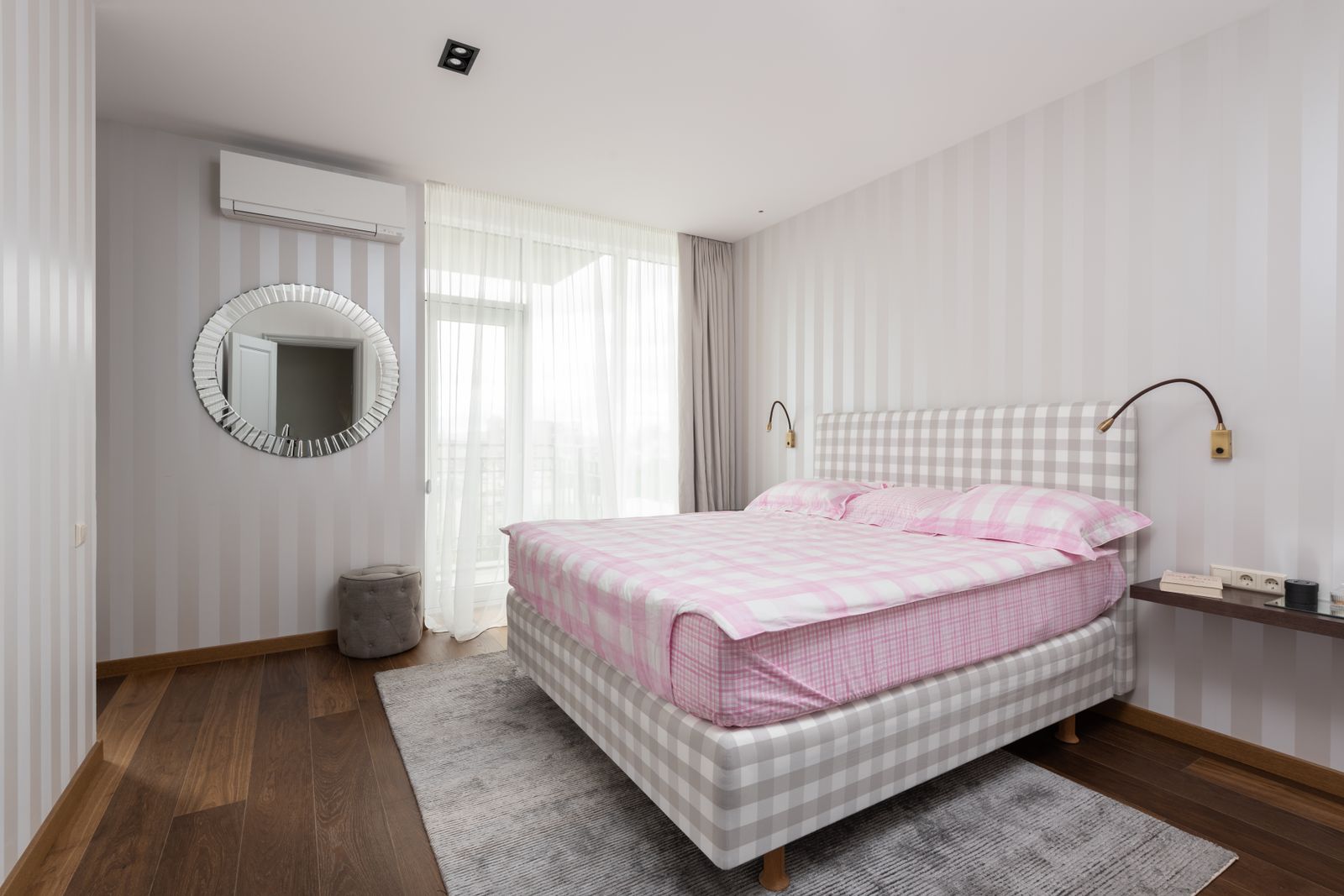
In the opening photograph, pink checked bedding sits against a grey checked bed frame and striped walls. The round mirror supplies a different shape, while the bedside lights keep the tables available for other objects. The useful starting point is the relationship between those elements: decide which pattern should stand out, then compare everything visible beside it.
Choose a change that solves a real bedroom problem
| What feels unfinished? | First change to try | Check in the actual room |
|---|---|---|
| The room feels visually busy | Keep one main pattern and simplify an adjacent surface | Compare the bed, curtains and wall from the doorway |
| The bedside table is crowded | Keep only the things used at bedtime and one suitable light | Can you reach the switch and open the drawer? |
| You want colour without repainting | Try a pillow cover, throw or piece of artwork | View the colour in daylight and with your evening lighting |
| A corner has no useful purpose | Try a seat, a book and a reading light together | Leave the door, wardrobe and walking route usable |
Keep decoration and sleep advice in perspective. The National Heart, Lung, and Blood Institute’s sleep guidance recommends a quiet, cool, dark bedroom and allows a dim night-light if needed. A colour scheme, decorative light or hanging ornament cannot promise better sleep.
1. Build a calm-looking palette around what you own
Lay your bedding beside samples of the curtain fabric and wall colour. Beige, ivory, grey and white can work together, but their undertones may look different when placed side by side. Test a small sample where you will actually see it, including near the floor and headboard.
You can also keep a dark wall or a richly coloured quilt. Decide how much contrast you want around the bed, then repeat a colour already present in the room. This gives each new purchase a reason to belong without making white walls a requirement.
2. Give string lights a defined place
A short run on a suitable wall display can be enough to introduce decorative light. Plan the route to the power supply before buying: a cable crossing a doorway or stretching over the pillow makes the arrangement difficult to live with.
Choose lights intended for the location and follow their mounting and operating instructions. Keep cords and lamps clear of bedding, curtains and places where they can be trapped or damaged. Decorative lights also need an accessible way to switch them off; assess a separate bedside light for reading.
3. Give one plant a workable home
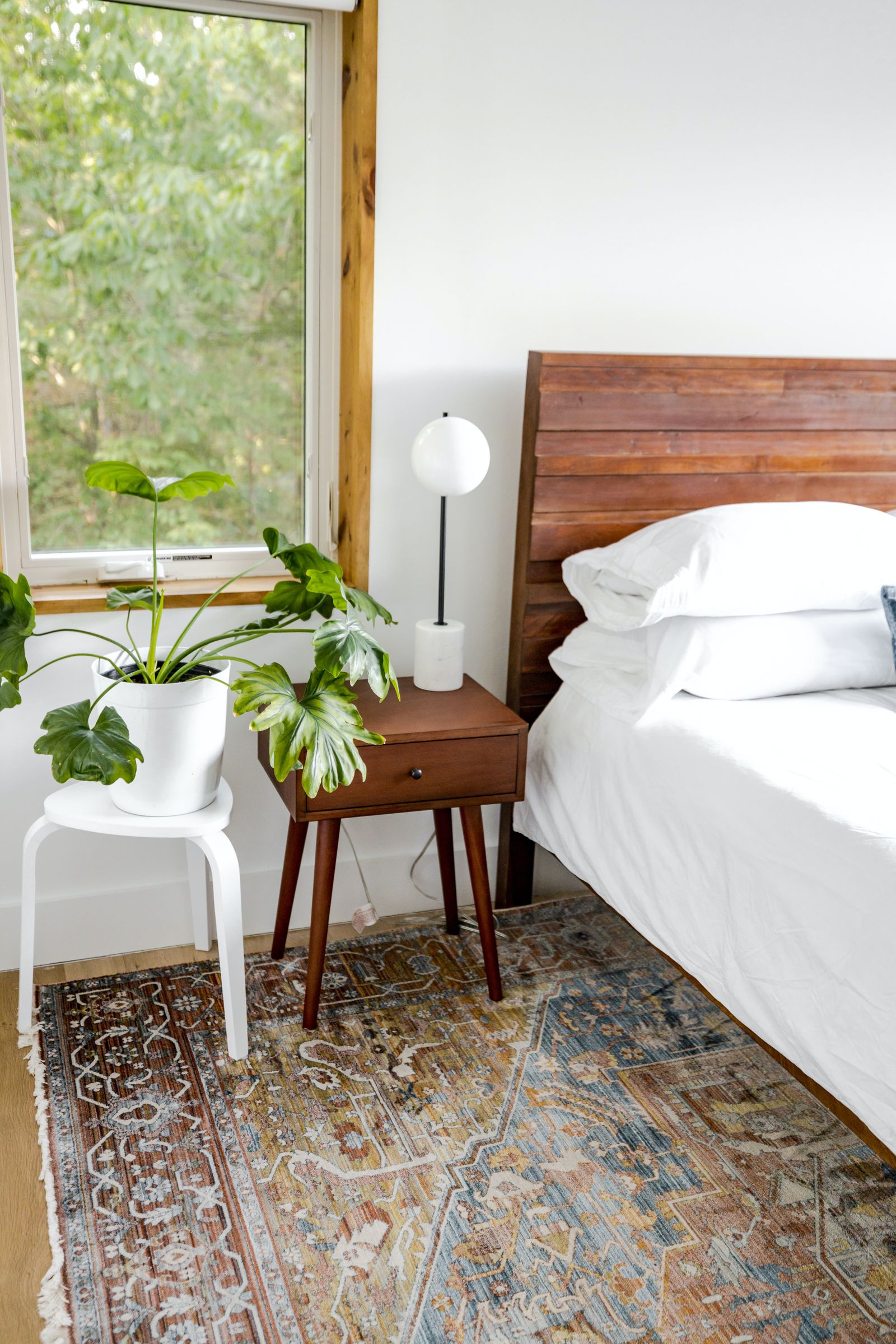
In this photograph, a leafy plant sits on a separate white stool beside the wooden bed and nightstand. That separates it from the globe lamp and leaves the main bedside surface with a clearer purpose. Try the same arrangement with the furniture you have before adding several small pots.
Match the plant to the available light and your ability to care for it. Use a stable position and a container that protects the surface when watering. Check suitability for household pets and children when choosing a species. A plant adds a shape and colour to the room; it is not a substitute for ventilation or cleaning.
4. Connect wood and woven textures through colour
Look at the undertones of the timber already in your room. A bed frame, nightstand and woven shade can relate through similar colours even when they are different products. Bring samples or photographs together before replacing a useful piece that initially looks out of place.
Texture works on a small scale too: a basket for a throw or a woven lampshade may supply enough variation beside smooth bedding. Include cleaning and care in the decision. These materials can change the room’s appearance, while temperature and ventilation need separate attention.
5. Compose a dresser with a round mirror and one tall accent
Start with the objects you need on the dresser, then test the space left for decoration. A round mirror and a vase of dried stems create different heights and outlines. Place them so you can still use the surface and open its drawers without moving the whole display.
Mount or secure the mirror according to its design and the wall’s requirements. A large mirror needs a suitable fixing arrangement even when the styling looks informal. If you use dried grasses, keep them away from lamps and other heat sources, and consider how easily they can be dusted.
6. Position a full-length mirror for dressing
Try the viewing position with the wardrobe open and enough space to step back. Check what the mirror reflects from the bed too: a clear view of the room may be preferable to a busy shelf or a bright light fitting. A corner is useful only if it leaves the usual route through the room open.
Use the manufacturer’s mounting or anti-tip provision for the actual product. Some mirrors are made with a stand, others for wall mounting, and some require securing when leaned. Resolve that detail before treating a loose mirror as finished decoration.
7. Plan a hanging chair before choosing its cushions
A hanging chair needs space for its movement as well as its resting footprint. Include nearby walls, glazing, furniture and the route around the bed when considering a position. Daylight can be appealing, but it does not determine whether the structure can support the chair.
Check the product’s load limits, support, fixings and installation instructions with a competent installer. A ceiling finish alone does not show what is behind it. A conventional chair can serve the same reading purpose when the installation or clearance requirements cannot be met.
8. Introduce pastel colour through one repeatable accent
Choose a colour you already enjoy seeing, then try it on a cushion cover, a lampshade or a piece of artwork. Compare it with the bed linen in both daylight and evening light. A small fabric sample can reveal a mismatch before you commit to new curtains or paint.
Repeat the accent in a second object if you want a connection across the room. Leave some surfaces plain so the colour remains easy to see. Pastels offer one possible palette; choose them for your preference without expecting a particular emotional response.
9. Give a round mirror the right light for its task
A round mirror can break up the straight lines of a dresser or headboard. Decide whether it is mainly decorative or will be used for dressing and makeup. The answer helps determine its position and whether the light actually reaches your face.
A glow behind the mirror outlines its shape, but a photograph of that glow does not establish useful task lighting. Try the viewing position and check glare before specifying a fitting. Choose equipment intended for the location, with suitable installation and accessible controls.
10. Use artificial vines as a limited wall accent
A few artificial stems can add an organic outline where a live plant would be awkward to maintain. Choose one area, such as beside a display or along a suitable shelf, and check how the stems look from the doorway. Leaving wall space around them makes the arrangement easier to read.
Keep them clear of vents, electrical equipment and heat sources, and allow access for dusting. Check that the fixings suit the surface. Artificial greenery supplies a visual effect; it does not provide the care needs or biological functions of a living plant.
11. Make a geometric shelf useful before filling it
A hexagonal or other geometric shelf becomes part of the wall pattern even when empty. Sketch its position alongside nearby artwork, then choose a few objects that fit inside its compartments. Check the usable depth, since a shelf that looks generous from the front may hold very little.
Follow the shelf’s load and fixing instructions for your wall. Keep heavy or breakable objects away from the position directly above a pillow. If the aim is everyday book storage, compare the proposed shelf with a suitable bedside unit before choosing by outline alone.
12. Test a reading corner with three things
Bring a seat, a book and a suitable light into the proposed corner. Sit there with the wardrobe and room door in use. This simple trial reveals whether the chair blocks a drawer or whether the light sits behind your head when you read.
Add a small place for the book or a drink only when there is room. A throw can connect the chair to the bedding without requiring a second decorating scheme. Our guide to a more usable, comfortable bedroom develops the same questions about layout, lighting and everyday belongings.
13. Let a cactus supply the outline
A cactus can make a strong silhouette against a plain wall. Choose a position that meets the particular plant’s light needs and keeps spines out of the way of a hand reaching for a curtain, switch or bedside object. Its eventual size matters as much as the pot it arrives in.
Keep decorative lights separate from the plant. Winding a cable through spines makes watering, inspection and moving the pot awkward. Try a nearby suitable lamp or a separate wall display if you want light beside the greenery.
14. Get a low bed profile with suitable support
A low bed can leave more wall visible above the headboard and suit a room with a low ceiling. Compare the height with how you get into bed, clean around it and use nearby furniture. A low frame may achieve the appearance while providing the support specified for your mattress.
Check the mattress maker’s support, ventilation and care requirements before putting it directly on a floor or rug. Keep the area dry and inspect it as instructed. The EPA’s household mold guide explains the importance of controlling moisture; it does not prescribe a bed base for every mattress. A window position also needs to leave access to curtains, ventilation and the room’s exit.
15. Choose a hanging ornament for its personal meaning
If a dreamcatcher or another hanging piece matters to you, give it a place where its shape and craftsmanship can be seen. Consider who made it, its meaning to you and how it relates to the room’s other objects. A single piece can be enough beside a plain wall or window.
Use an appropriate fixing, keep it clear of the bed and avoid obstructing window hardware or curtain movement. Choose its position for how it looks and what it means to you.
16. Create an evening lighting arrangement you can control
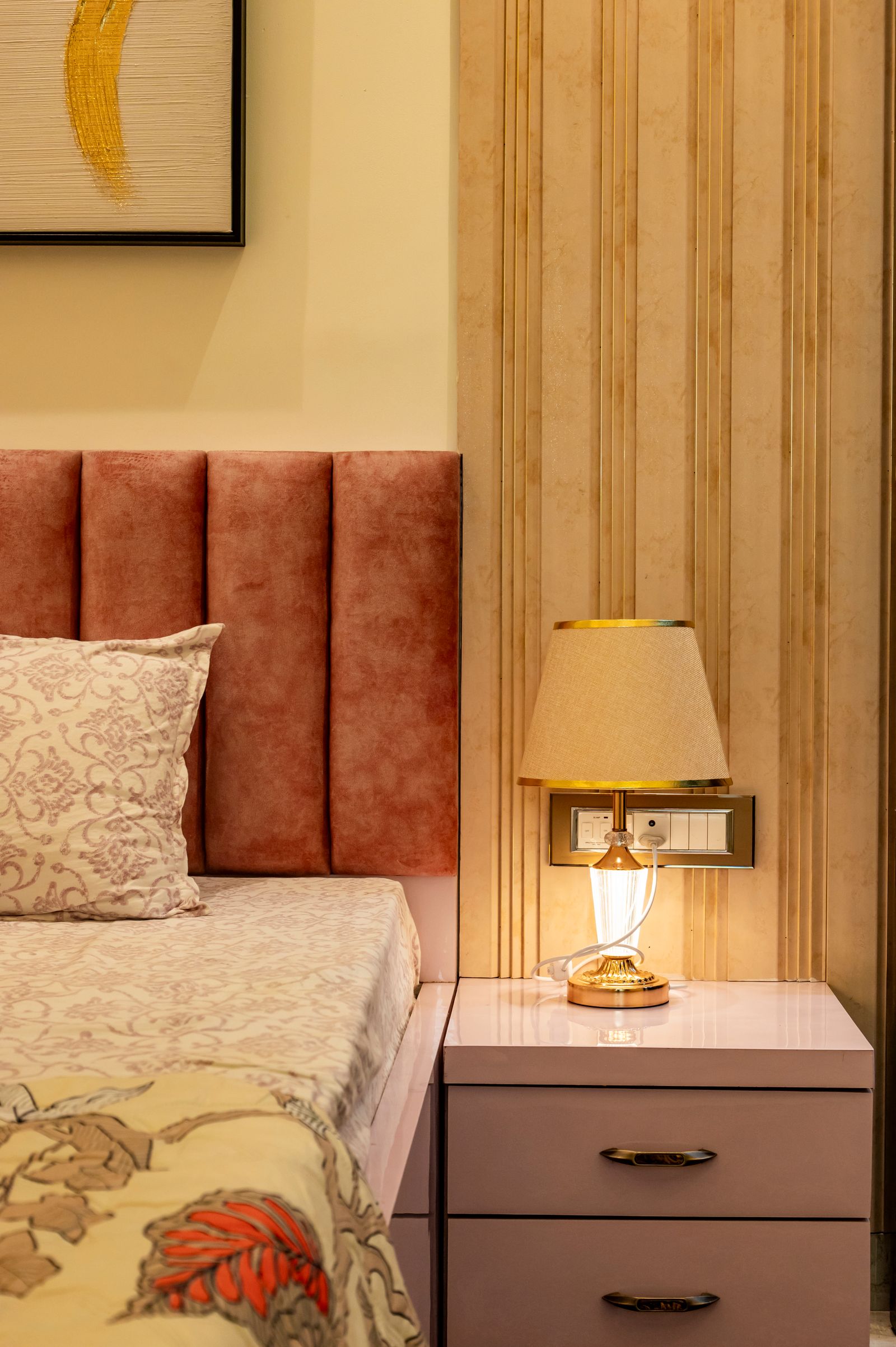
This bedside view combines a table lamp, a pale nightstand, a pink-toned headboard and patterned bedding. The light has a specific place beside the bed. Use that relationship as a starting point, then check the actual lamp’s glare, switch position and space needed by your bedside belongings.
Plan separate control for useful reading light and decorative light. For a candle-like glow, choose a battery-operated flameless candle. The U.S. Fire Administration advises against lit candles in bedrooms and sleeping areas. Do not copy an open-flame arrangement from a decorating photograph.
17. Layer bedding with a place to put it
Start with the bedding you actually sleep under, then add a cover or throw for the look and conditions you prefer. Compare texture as well as colour: a small check beside a plain fabric creates a different effect from two large competing patterns.
Decide where an extra pillow or folded throw will go when you get into bed. A basket or clear shelf may be more useful than an additional decorative cushion. Choose layers for your comfort and their care requirements; they do not fix drafts or other room maintenance problems.
18. Try pink beside the colours already present
Pink can connect with timber, grey, terracotta or green depending on its undertone and the surrounding surfaces. In the bedside reference, the pink headboard sits beside pale furniture and patterned fabric. You could test that relationship with a pillow cover before choosing an upholstered bed.
Keep the first change small enough to compare with what you own. View it with your existing bulbs, since changing the light can alter how the colour appears. Pink is available to anyone who likes it; a room does not need a gendered theme to use the colour.
19. Give greenery and decorative lighting separate routes
If you want both a vine-like wall display and points of light, plan each independently. Choose suitable mounting positions, leave the power supply accessible and check that neither element obstructs a curtain or a door. You can then remove one for cleaning without dismantling the other.
Follow the lighting product’s instructions about contact, covering and clearance. Keep artificial leaves and dried materials away from heat-producing parts. A separate light on an adjacent surface can create a layered appearance with fewer tangled components to maintain.
20. Arrange your own artwork as a small collection
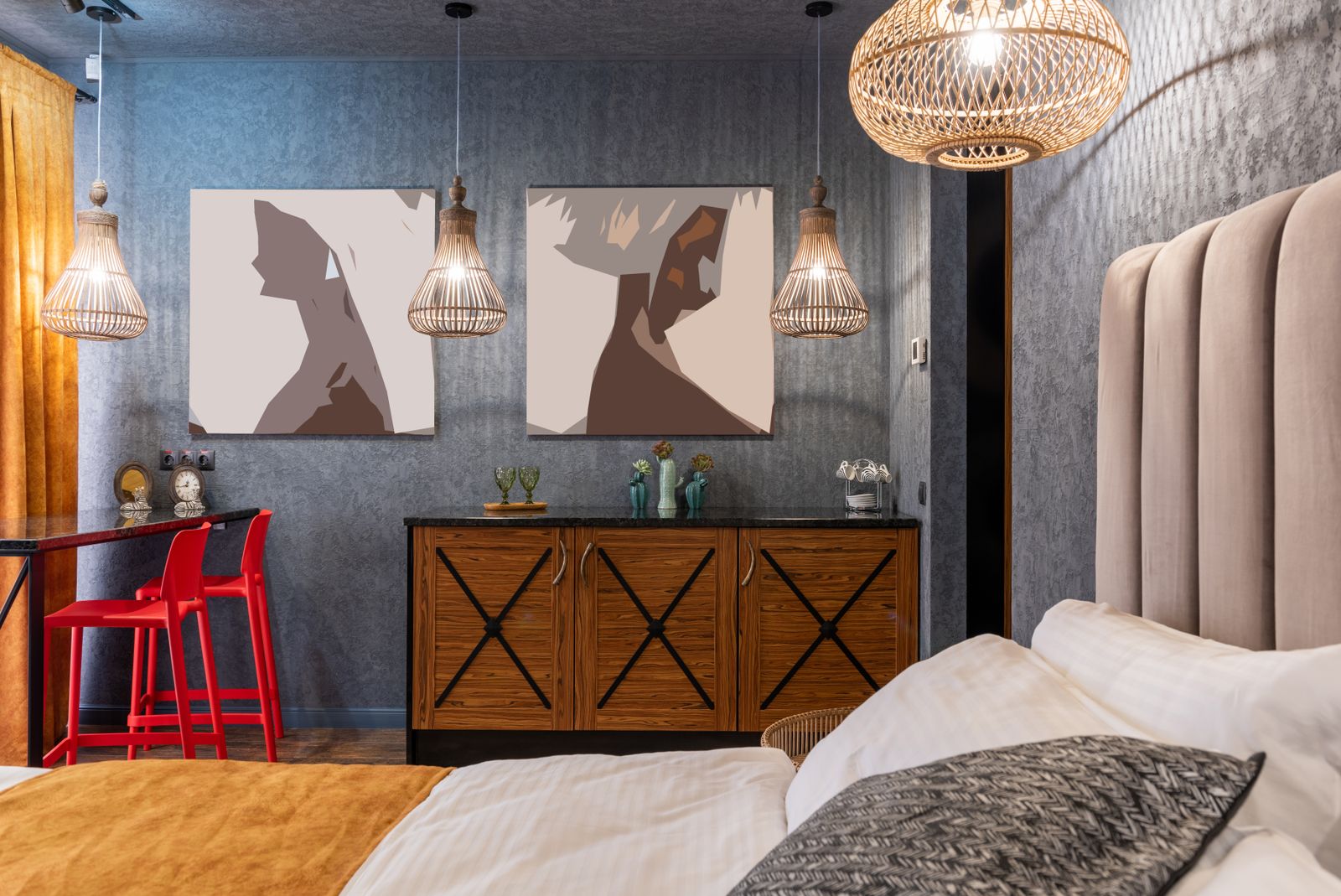
The graphic portraits in this room sit above a wooden cabinet, with woven-looking pendant shades, red stools and a mustard curtain adding other colours and textures. The artwork has a defined position within that group. Start by finding a similarly clear place for drawings, photographs or prints you want to see every day.
Try a paper layout on the floor before fixing anything to the wall. Check the weight, wall surface and appropriate mounting method, especially near the bed. A limited collection can be changed as your interests change. Keep a folder for work you might rotate into the display.
Make one change, then use the room
Choose the idea that addresses the part of the room you find awkward today. Try the layout or a small sample, use it through an ordinary evening and morning, then decide what else is needed. Leave room for the objects that matter to you and for the daily tasks the bedroom has to support.
Photo sources: opening bedroom by Max Vakhtbovych; wooden bedside arrangement by Andrea Davis; pink bedside arrangement by Ritam Das; artwork and bedroom details by Max Vakhtbovych. Images used under the Pexels License.