
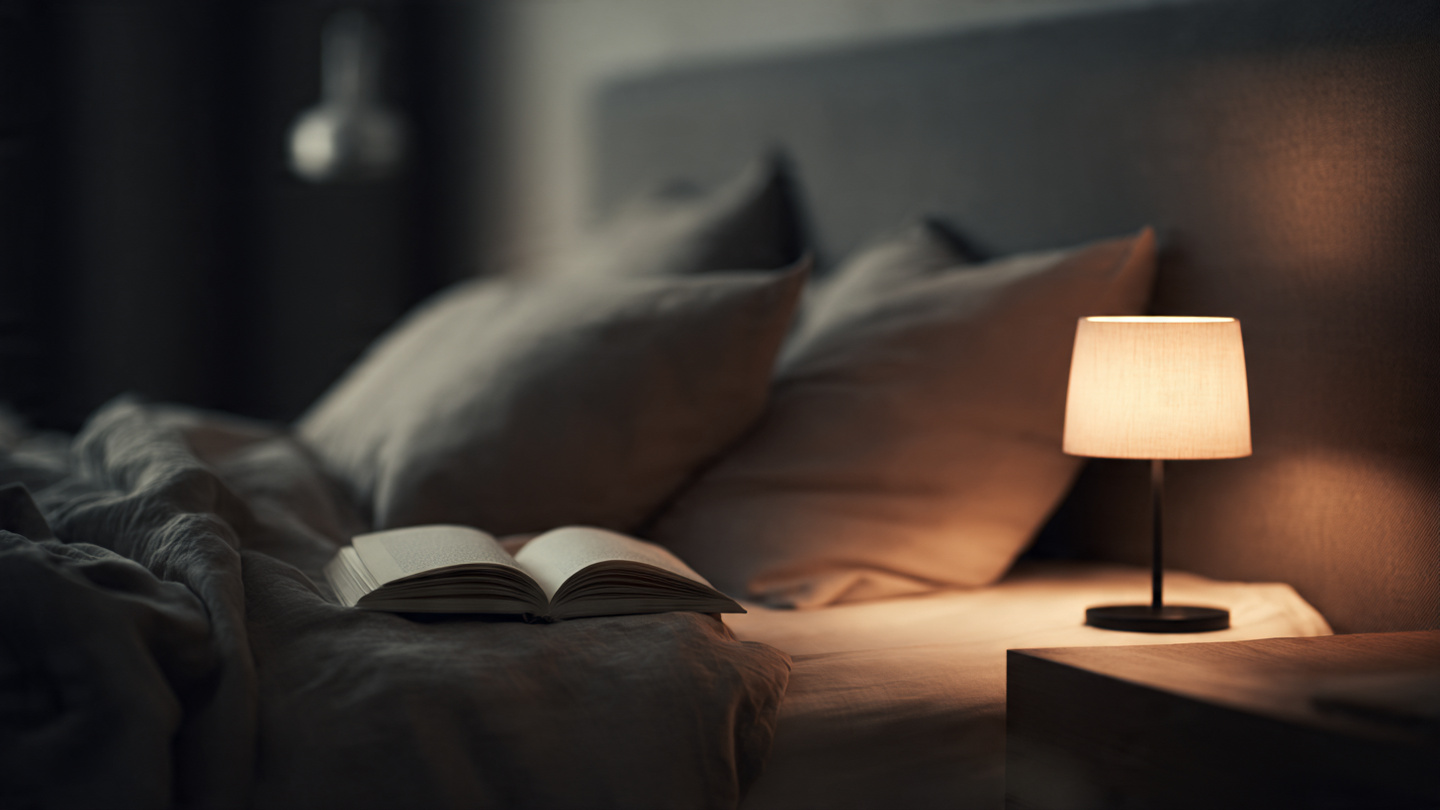
A bedside reading light needs to put useful light on the page, keep glare manageable and be easy to operate from the bed. Compare the lamp with the actual table, book position and people using it.
This guide compares six practical aspects of bedside reading lights: useful illumination, controls, fit, stability, appearance and everyday use. Judge the selected lamp in the actual bedside position, with the book and switch where they will be used.
Not just any table lamp will do for a bedside light!
Surely a bedside lamp doesn’t need to be fancy. Its main purpose is to help you find your way in and out of bed once the big light’s turned off, right? Well, I’d say wrong! In fact, the table lamp you choose to put by your bedside may just be one of the most important pieces of décor in your house. After all, it’s both the first light you see in the morning, and the last thing you touch before going to bed—which means getting it right is key.
A table lamp for your bedside might be the thing to help you wake up on early or overcast mornings. Its light helps you find your way in and out of bed, yes, but it also serves as auxiliary atmospheric lighting in your bedroom (or, in smaller homes, in what might be a combined bedroom/living room). A bedside lamp also adds to the overall aesthetic of your bedroom—an ugly one can spoil the otherwise carefully planned look of the rest of the room—and, of course, is crucial as the source of light for your many fruitful hours spent reading or chatting au lit.
The best table lamps for bedsides: 6 things to consider
We’ve learned that a bedside light is much more than just a finishing touch, a purely practical addition to your bedroom’s décor. In fact, a good bedside lamp has many different roles to fulfil. Let’s take a look now at 6 key characteristics and considerations of the perfect bedside lamp, to help you find one to fuel your bedtime reading.
1) Do you have somewhere to plug the table lamp in?
It might seem a bit dull, a bit obvious, to start with a question like this, but it’s worth asking! Most table lamps for bedside reading draw their power from an electrical wall socket, but depending on the layout of your bedroom, you may not have one to hand. In this case, you’ll need a table lamp you can charge and recharge, which may limit your options.
Alternatively, if you’re going full-renovation, you could opt to have your bedside lamps wired into the mains electricity with a light switch installed by your bed, like you’ve probably seen in hotels before. Of course, this is a pricey option and may lock you into a single style of lamp or reading light for the long run.
2) How bright does your table lamp need to be for nighttime reading?
The most crucial questions to ask of your bedside lamp are:
- How bright do you need it to be? and,
- Would you prefer to read in a warm, neutral, or cold temperature light?
The warmth and brightness of a bedside table lamp will be largely dependent on the type of bulb you choose to pair with the lamp itself, but for our purposes, let’s think of bulb and lamp as one and the same.
Test a lamp with the book at its ordinary distance and angle. Check shadows, the shade and any light reaching another person. The FTC light-bulb guide explains lumens and the Lighting Facts label. A package’s output figure is useful comparison information, while the result on the page also depends on the lamp and placement.
Choose the light’s colour appearance by preference and task, then test it with the book, shade and room. Warm-looking light may suit the atmosphere you want, but comfort also depends on useful brightness and glare. A colour-temperature label alone does not guarantee eye comfort.
3) What style of lamp and shade are you looking for?
Once you’ve figured out the practical side of things, it’s time for the fun stuff: getting to shop for a style of lamp and table lamp shades that complement you and your bedroom.
There are quite literally tens of thousands of different styles, shapes, vintages, colours and materials of lamp for your bedside table, meaning you’ve got plenty of fun browsing to do—either online or in-person—before you find your perfect lamp.
A good way to start might be to take a gander at various furniture makers’ websites, to get a feel for the many different kinds of table lamps for bedside reading there are. Then, armed with your preferences—e.g., a carved wooden stand vs a kitsch plastic one from the 70s, tall vs short, patterned lampshade vs plain—you can start to narrow down the search.
4) Matching the lamp table to the lamp
Compare the lamp and bedside surface together. Check that the base is stable, the switch is reachable and enough useful surface remains for ordinary items. A visual match matters only if the table can support the lamp and keep it away from spills, edges and awkward cable routes.
5) Standalone lamp or a matching pair?
Here’s another question: will you need a standalone lamp or a pair of two, one for either side? If you live alone, one ought to be enough, though you may still opt for two so visitors have a reading light as well, and for the sake of symmetry.
If you live with a partner, then chances are you’ll need to illuminate both sides of the bed—in such cases, you’ll have to decide whether symmetry is preferable, or the asymmetry of two different people’s tastes will mesh with your bedroom’s design…
6) To dim or not to dim, that is the question
Check which controls the actual lamp provides: on/off, brightness, colour appearance or a combination. Confirm compatibility between a replaceable bulb, fitting and dimmer using their instructions. A dimmer label does not establish that a lamp also changes colour temperature.
Try the useful adjustment range from the normal reading position, including the ease of reaching and identifying the controls. Compare replacement parts and operation when deciding whether the extra function is worth the cost for your use.
The Takeaway: What makes the best table lamp for bedside reading?
Reading in bed is one of the premier joys in life, and a nice bedside lamp to read by only makes it all the more enjoyable.
Compare useful light at the page, glare, reachable controls, stable placement and compatibility with the table. Choose colour appearance by preference and task, and check the actual product instructions instead of treating one lumen or Kelvin range as best for every reader.
And lastly, whether they come in pairs or as a standalone, table lamps for bedside reading are best when they’re made well, last a long time, and make you feel most at home, cosied up beneath the covers with a good page-turner in hand.