Home Blog Page 163

Why High Water Pressure Can Be Bad for Your Home

The ideal water pressure for a home should range between 40 and 80 PSI (pounds per square inch). The incoming water pressure should never be over 80 PSI because it can cause appliance malfunctions, erode your pipes over time, and cause many other problems.

At Rooter Hero Plumbing of Mesa, we know how costly high water pressure can be if the problem is not addressed in a timely manner. As a professional plumbing company, we are ready to help you fix water pressure issues in your home. We also provide reliable and cost-effective drain cleaning in Phoenix and sewer repair in Phoenix.

Let’s look at some of the ways high water pressure can be bad for your home and what you can do about it.

1. It Can Damage Your Pipes

Excessively high water pressure can put extra stress on your pipes, leading to worn-out seals and loosened joints. If left untreated for some time, high water pressure cause plumbing leaks that will eventually expand into cracked or burst pipes.

Prolonged extra stress on your pipes means the life expectancy of your pipes is reduced significantly, not to mention the risk of water damage in the event of burst pipes.

2. It Can Shorten the Lifespan of Appliances

High water pressure can wear out appliances such as water heater, dishwasher, washing machine, causing you to replace them more often. Additionally, it can damage plumbing fixtures like toilets, showerheads, and toilets.

3. It Can Increase Your Water Bill

Having high water pressure in your home will increase the cost of water use because you’ll let out more water every time you turn on the tap or flush the toilet.

Signs Your Water Pressure Is Too High

  • Banging or knocking sounds emanating from the pipes.
  • Dripping faucets and showerheads.
  • Leaking pipes due to loosened joints
  • Faucets that leak at certain times of day.
  • Toilets running even when not in use—however, this could happen due to a broken flapper.
  • Water rushes out of your faucets or showerheads at an excessive pressure.
  • Noisy appliances such as washing machine making odd sounds when it fills up or the dishwasher becomes unexpectedly loud.
  • Frequent appliance malfunctions.

What You Can Do About It

One of the most effective ways to address high water pressure in your home is to install a water pressure regulator near where the main water line enters your home. This device brings down the pressure to a safe level before the water reaches your plumbing fixtures.

Call Rooter Hero Plumbing of Mesa for All of Your Plumbing Needs

High water pressure is something that should be diagnosed and fixed as soon as possible to prevent pipe damage, appliance malfunctions, water damage and inconveniences.

If you think you may have high water pressure, get in touch with Rooter Hero Plumbing of Mesa and have the problem fixed correctly.

Rooter Hero Plumbing of Mesa offers a wide range of residential and commercial plumbing services, including drain cleaning in Phoenix, sewer repair in Phoenix, leak detection, water leak repair, tankless water heater installation and more.


What Experts Say About Townhouses Vs Condo Living

What Experts Say About Townhouses Vs Condo Living

What is a Condo townhouse?

A condo or a condominium is a single structure or a group of buildings with individual apartments owned by different people. Condos, like apartments, can range in size or design from single-family houses to high-rises, although they frequently have shared walls with other units. Unlike flats, residents own and care for the insides of their homes. They do not, however, own the land on which the structure is located. Commonly, a condominium corporation owns the outside, the grass, and the communal areas. The homeowners association (HOA) is responsible for maintaining these areas. All condo owners are part of this organization, which charges fees for routine upkeep and significant repairs.

A townhouse is a style of architecture sometimes referred to as a townhome. It’sIt’s a multi-level house with walls on both sides. These walls may be shared with other places. If you have your own townhouse, you also own the house’s exterior and the land you built it on. You, therefore, have more freedom and greater responsibility over how you use your property.

You can find condos and townhomes in cities, suburbs, and rural settings, and both may contain a single story or several stories. The most significant difference between condos and townhouses is in the ownership and fees. What you own and how much you pay for it forms the basis of the townhouse vs condo debate. They are frequently decisive considerations in choosing the one best for you.

Ownership

If you decide to buy a condo with the help of a real estate company like Broadhurst Real Estate, you will jointly own the building with the other owner-tenants and privately own your specific unit. This joint ownership extends beyond the physical construction of the building. It also encompasses the airspace, gardens, and shared spaces like the gym and pool.

Ownership of a townhouse is comparable to that of a detached single-family house. The only distinction is that the building may share some walls with another building and the ground it stands on belongs to you individually.

Homeowners’ association

When buying a condo or townhouse, you usually make monthly payments to contribute to an HOA. But you may ask but do townhouses have condo fees? Whether in a condo or townhouse, all tenants are in charge of the HOA, and you may join if you like. The HOA takes care of the regular upkeep of the communal areas. They also oversee the structure, the property and the common interior areas of a condo.

On the other hand, in a townhouse complex, the HOA is in charge of managing the common spaces. It usually includes the exteriors of the buildings and general grounds and roofs.

The HOA also develops regulations for all renters and manages property upkeep. These may include house rentals guidelines and what you can do with your land. It also includes asking about the HOA regulations and costs when comparing townhouses vs condos. They might differ significantly between properties.

Cost

Buying a condo or a townhouse is often cheaper than owning a single-family home, even with monthly HOA dues. Condos and townhouses are excellent options for first-time homeowners or anyone on a budget.

Since you aren’t investing in any land, condos are often less expensive to acquire than townhouses. But because the spaces are more jointly owned, the HOA dues of a condo tend to be higher.

There are other expenses to think about on this journey. This, however, depends on the property you are buying and where it is located. There are different charges for property taxes, house insurance, and home inspections. Mortgage interest rates are another factor to consider; these are often higher for condos.

Pros of Condos

Living in a condo has some advantages, and they include:

  1. More communal living: If you live in a condo, you’re likely to run into your neighbours frequently because you share almost the same things. Like a gym, trash can, parking space, mail room, and other common areas. You’llYou’ll have many opportunities to meet people at the various community activities that some HOA even host.
  2. Fewer house repairs: You’llYou’ll need to care for the insides of your condo. But when it comes to maintaining the outside, trimming the lawn or sanitizing the swimming pool, the HOA employs individuals for that.

Cons of Condos

  1. Decreased Privacy: The tight quarters of a condo may not appeal to someone who is reserved, especially since you have many neighbours. Here’sHere’s a tip: during your walk-through, pay attention to what you hear and inquire about the thickness of the floors and the walls. After doing that, you’ll better understand how soundproof the walls and flooring are.
  2. Less room: The inside of your condo will probably be smaller than a townhouse of comparable price, and you won’t have any private outdoor spaces. Therefore, you might need to work with the HOA to secure a common area. That is, if, for instance, you want to host a barbecue with only your pals and family, they could charge you a price.

Pros of Townhouse

  1. More privacy: Do you want to live in your own home instead of next door to Mr Jones? You’llYou’ll probably choose a townhouse if you’re seeking a residence that feels more like a home and less like an apartment.
  2. More room: Townhouses often feature larger rooms than condominiums and frequently include yards. So you can enjoy the outdoors and give your children and pets more space to play. So, a townhouse is a terrific choice if you feel you need a large area.
  3. Fewer interactions with your HOA: Homeowners associations will still be highly active in townhouse life, don’t be mistaken. But not the same as in condo communities. So, there could be fewer restrictions and lower costs.

Cons of Townhouses

  1. Less connection to other homeowners: It may be simpler to isolate yourself in a townhouse. However, you might need to make more effort to attend neighbourhood gatherings or get to know your neighbours. If not, you could experience a sense of alienation from your neighbourhood.
  2. More maintenance on the house: More room may equal more issues, and you’ll have to find solutions. You can ask whether the HOA has a list of recommended plumbers or contractors. This is if you’re not ready to manage the house care yourself.
  3. An HOA is still in place: Compared to a condo, you have fewer interactions with your HOA, and they won’t have much influence over the improvements you make within your house. You’reYou’re not entirely off the hook, though. They’ll be interested in what you’re doing outside.

Five Benefits Of Mini Split Heating And Cooling In Old Homes

Does your beautiful older home look much nicer than it feels — especially in the dead of winter or dog days of summer? A mini split installation can change all that!

Houses built more than a century ago have plenty of natural charm and unique features. But, the downside of an older home is outdated heating and cooling.

These homes were built well before forced-air HVAC was available. At most, you may have a home with excellent radiator heat. But, without ductwork, there’s no chance for central air. So, you’re stuck with loud, inconvenient, energy-guzzling window air conditioners.

Or, your home has ductwork, but it was installed decades after the home was built. As a result, it doesn’t reach each room the way it should, leaving you too hot in the summer and too cold in the winter.

For decades, homeowners have relied on outdated heating and cooling methods in homes like these. These include baseboard heat or dragging out space heaters in the winter. Or those window ACs we mentioned earlier.

Today, however, there’s a better solution. It uses less energy than traditional heating and cooling, does a better job, and doesn’t ruin the look and feel of your classic home by adding ductwork.

The miracle cure for home comfort in an older house? A mini split.

In this article, we’ll explain why older homes are hard to heat and cool. Then, we’ll explain what a mini split is, exactly, how it works, and why more and more homeowners today love them — especially for classic and historic homes.

Heating And Cooling Challenges In Older Homes

Older homes are challenging to heat and cool because many weren’t made with modern HVAC in mind. Most homes built before the 20th century were designed to trap heat! AC wasn’t invented, and people were more concerned about not freezing in the winter than getting too hot in the summer.

And, older homes with old insulation won’t retain heat or cooled air as well as houses with new insulation. As a result, you get drafts in the winter and warm air seeping in during the summer.

Finally, if a previous owner installed ductwork decades after the house was built, it won’t reach every room the way it would if the house was designed with that in mind.

That’s why even homes that have been “upgraded” with ductwork don’t get the level of comfort the homeowners want. That’s where a mini split comes in.

How Does A Mini Split Work?

A mini split transports heat from inside to outside your home (or vice versa). It never moves air over long stretches like a furnace with ductwork does. This process eliminates the need for ductwork — and the limitations that come with it. As a result, it’s an excellent way to upgrade the comfort in an older home.

Here’s how it works:

A heat pump outside your home draws in heat, or thermal energy, from the air around it in the winter. It compresses and amplifies that heat until it’s strong enough to keep your home warm and sends it inside.

Then, air handlers mounted in every room you’re treating draws in the air in that room. The units use the thermal energy coming in from the heat pump to warm that air. Then, they recirculate the warmer air in the room.

In the summer, it works the other way: The air handlers draw in hot air from the room, send that thermal energy down to the heat pump, and recirculate cool air.

The air handlers and heat pump are connected with a small line set that contains a coolant liquid. That liquid “carries” the heat from one to the other. That’s how you get all that excellent heating without requiring ductwork.

Five Advantages Of A Mini Split In An Older Home

Now that you know how a mini split works, here’s why they’re great for older homes:

  • No Ductwork Required
  • Non-Invasive Installation
  • Customized Settings
  • Quiet Operation
  • Energy Savings

No Ductwork Required

As we’ve stressed, there’s no ductwork. That saves you thousands of dollars on installation. And, you get better results. In terms of ductwork, a mini split system won’t lose pressure along the way.

You know how the second or third floor in a home with ductwork gets too cold in the winter and too hot in the summer?

It’s usually because the air pressure gets weaker the further away a room is from the furnace. But, that doesn’t happen with a mini split. The air handlers only draw in and recirculate the air in a single room. It never has to travel all the way down to a furnace and back.

That means every room gets excellent heating and cooling — no matter where it is in the house.

Non-Invasive Installation

No ductwork means no ripping through walls or building out soffits to house the ductwork. You also won’t have to cut holes in floors and walls for vents and returns! That’s especially important for old homes with original wood flooring.

Instead, mini split installation is fast and easy! You can get a single-zone system for one room installed in a day. Even a whole-home setup takes less than a week.

And, you won’t have a crew ripping through your house and changing the look and feel of your historic home. Instead, all you see are the air handlers tucked away high on each wall. Most times, the lines connecting them to the heat pump run through the walls like electrical wire.

Customized Settings

Each air handler works separately from the others. They all have their own thermostats so that you can set the temperature differently in each room. Or, you can set them all the same and have an even temperature across the entire house — probably for the first time ever!

This is great for bedrooms that were always too hot in the summer and too cold in the winter. Those second or third-floor rooms always have different heating and cooling needs than the first floor.

Now, they can get that!

And, everyone in your family can customize the comfort in their bedrooms. No more arguing about who likes it warmer or cooler at night.

Quiet Operation

Unlike forced-air furnaces and especially window air conditioners, you’ll feel the comfort from a mini split without hearing it!

Even when they’re working at full capacity, an air handler makes about as much sound as leaves rustling outside. People never hear it unless the room is completely silent and they are standing right beneath the unit.

That means no more talking louder or turning up the TV when the heat or AC clicks on. And, you can get to sleep without that rumble waking you back up.

Energy Savings

A mini split requires a tiny, tiny fraction of the energy that window ACs, furnaces, or central air need to do their jobs. As a result, they’re better for the environment — and your wallet!

These systems never burn fossil fuels to create heat. Instead, they move existing thermal energy from one place to another. That only requires a small amount of electricity to run the heat pump and air handlers.

And, since they do a better job of regulating the temperature, they don’t need to work as hard or for as long. Instead, the air handlers spend most of the time in a low-power mode that keeps a steady temperature.

The results? Better comfort using less energy that costs you less on your utility bill

When (And When Not) To Replace A Circuit Breaker In Your Home

Does a circuit in your home’s breaker panel keep tripping and cutting off power to part of the house? You may think that’s a sign it needs to be replaced. But, that’s probably not the case.

In fact, that means it’s working just fine. In reality, you rarely have to replace a breaker that’s less than 25 years old. But, you do need to call an electrician to troubleshoot the problem.

In this article, we’ll explain when you need a new breaker in your electric panel — and when you’re seeing the signs of a different, and probably more severe, electrical problem in your home.

Myth: A Circuit Breaker That Keeps Tripping Is Broken

A lot of people think a circuit breaker that keeps turning off, or tripping, is broken. But, that’s not the case! Instead, it’s doing its job by interrupting the power supply when there’s a potential problem. Instead, you need a professional to get to the root of the problem.

The Truth About Tripping Circuit Breakers

A circuit breaker’s job is to interrupt the flow of electricity from the outside source, to your panel, and then out to your outlets and switches. When there’s the risk of a surge, or way too much electricity coming through the wiring at once, it shuts off the current to prevent damage.

Now, this may happen every once in a while. It’s usually when you’ve plugged in too many things in the same room or to the same outlet.

Then, you’re drawing a dangerous amount of electricity through that one circuit. You risk the chance of the wires physically heating up and causing a fire! Or, sending a surge to your appliances and damaging them.

In that case, you can unplug some items and then flip the breaker back on. If it stays on, then you’re fine. But, if it keeps tripping, you’re looking at a bigger problem.

Three Reasons Your Circuit Breaker Keeps Tripping

The three main causes for a breaker to keep tripping over and over again are:

  • Overloaded Circuit
  • Too Many Appliances
  • Grounding Issue

Your first step should be to use less appliances, tools, or electronics in the room where the circuit tripped. But, if you do that and the breaker keeps turning off right away, it’s time to troubleshoot these three possible causes.

Overloaded Circuit

Your circuit may be overloaded at the panel. Sometimes, there’s a “double-tapped” circuit. That’s when two wires are connected to one circuit when there should only be one.

In that case, it’s drawing too much electricity.

Or, there’s an issue with the electricity coming into the house. In this case, the current is way too powerful and the breaker interrupts that flow to prevent it from overheating the wires or frying your electronics.

Too Many Appliances

As we mentioned before, you might have too many things plugged in and drawing from the same circuit.

This is easy to fix if you’re dealing with, say, a laptop, phone charger, and vacuum cleaner. You can always just move those to other outlets. But, what happens when there are too many appliances in one room?

It can happen if you upgrade, say, your electric stove to one that requires more electricity. It’s not like you can move it to another room! A related problem is a malfunctioning appliance that’s suddenly pulling too much power.

In these cases, your electrician needs to pinpoint the problem and determine if they need to rewire the panel or if you need to fix or replace a broken appliance.

Grounding Issue

A grounding issue is when your home no longer has a safe way to get rid of excess electricity. Every house has a grounding rod or other system where unused power flows into the ground instead of continuing to circulate through the house.

But, if that system is broken or disconnected, your entire home can have a dangerous amount of power flowing through it. The problem may first manifest as a single breaker that keeps tripping.

Eventually, you’ll start getting electric shocks from electronics and even plumbing fixtures as the current jumps to your water pipes. It’s a serious problem that requires immediate professional attention.

How To Fix A Circuit Breaker That Keeps Tripping

You can’t do too much to fix a breaker that keeps tripping yourself. It requires a professional to troubleshoot through the wiring to find the problem. But, you can take some preliminary steps to keep yourself out of danger and give your electrician a head start.

First, as we mentioned, unplug some stuff from the room where the power keeps shutting off. If that fixes the problem, you’re probably fine.

After that, you need to call an electrician if the power keeps shutting off. Especially if it only stays on for a minute or two. In that case, leave the breaker off and unplug everything you can.

When To Replace A Circuit Breaker

It is okay to do a circuit breaker repair if it broke. But, the only time you actually need to replace a circuit breaker is if it’s been in use for more than 20 years or shows visual signs of wear or damage. One sign of excess wear is corrosion — you may notice green or white specs or rust on the breaker. That needs to be replaced.

Scorch marks are another sign that you need a new breaker — and also some troubleshooting. Those marks mean the breaker was overheating at some point. You want to make sure that’s not still happening.

But, if it looks fine, a breaker should last for two decades — even if it keeps tripping. In that case, you need to find the root problem.

Why Your Mission Viejo AC System and Thermostat Stopped Working

3 Reasons Your AC Stopped Working

Are you wondering why your air conditioner has stopped working? Here are a few reasons: Float safety switch, Air filter, and tripped breaker. If any of these things do not solve the problem, call an HVAC service professional.

You can read on to discover a few easy fixes. You might also be suffering from a damaged filter, or your air conditioner is simply too old. In such cases, you might want to consider replacing the entire unit or seeking professional help for the issue.

#1. Float Safety Switch

If your air conditioning system has stopped working, you might not realize that you have a faulty float safety switch. These switches detect when the drainage pan is close to overflow and send a signal to the compressor to deactivate. By deactivating the compressor, you can prevent the condensation process from damaging the unit.

This simple part is relatively inexpensive, but it can save you thousands of dollars in the long run. If it doesn’t seem simple and you’re in need of AC service Mission Viejo, you should contact a professional. If the drain pipe overflows, it will cause mold growth and cause costly repairs to your home.

Besides being unattractive, mold can also be dangerous. Mold can easily spread to walls and other parts of your home. Not only is it unhealthy, but it can also be very costly to remove. If you have this safety device, you can prevent any damage to your air conditioner unit and other parts that make it work, inside.

#2. Air Filter

If your air conditioner has been running inefficiently for some time, one possible problem is the air filter. Usually, it’s the last thing that needs replacing, but in rare instances, a dirty filter can cause your air conditioner to malfunction. To test the air filter, place your hands in front of the air conditioner vane. Does it feel cool or cold? Remove the cover and check the components.

Clogged air filters need to be replaced regularly to prevent the heating and cooling system from working at its optimal efficiency. Also, dirty filters can lead to the freezing of the evaporator coil, which will prevent cool air from entering the home. According to this website, dirty filters can cause allergy symptoms and affect the temperature of your home. The air filter should be replaced every three months to keep the system functioning effectively.

#3. Tripped Breaker

A tripped breaker is a common problem in your air conditioner. If your air conditioner has been working for hours without being turned off, it is possible that you have a tripped breaker. Tripped breaker can also be caused by the wiring in your air conditioning unit or the air conditioner motor itself, which is expensive.

Tripped circuit breakers are a good idea to keep in mind, since they will trip before the fire starts. Another common cause for a tripped breaker is the outside unit. You should check the condenser coil for debris that could be causing the circuit to trip.

A malfunctioning fan motor could also be causing the power overload, so you should contact an air conditioner repair company immediately. Other reasons for the air conditioner to stop working include a clogged evaporator coil or a damaged evaporator coil which are both electrically dangerous.

Other Possibility: No Electricity Connected

If your air conditioner is not turning on, a common problem is that there is no electricity connected to the outside unit or condenser. Check to see if there are any loose or corroded contacts in the wires. If necessary, replace them with a new one.

If that does not solve the problem, you might need to check other wiring issues, such as a short circuit. The breaker panel could also be the culprit. The panel will reset when pushed to the off position and back on again.

Some older panels have fuses instead of breakers. Replace any blown fuses to restore power. Otherwise, the air conditioner may shut off again. If this is the case, you can replace the blown fuse and get the system running again. If you continue to experience problems, contact your electrical company for further assistance.

How to Put a Screen in a Window

You may have noticed that some homes’ windows come with screens. Perhaps you might have a few in your house’s windows and wish to add more. Window screens are not always a staple in every home’s windows, but you can certainly add them!

Yet, how can you add a screen to your window? Here is where you can find out how!

Why Get a Window Screen

There is a reason why window screens are commonplace in some people’s homes. Window screens provide various benefits that help your home in ways you may not have expected.

Here are a few of the benefits right here:

Keeping Bugs Out

One common dilemma during the summer is whether to open windows. Opening your windows might be great to help bring in some cool, fresh air into your home to help you cool off. However, this invites unwanted bugs to come in. The way window screens are designed to keep pesky bugs at bay and don’t allow them to come into your home.

Improves Air Flow

Without worrying about bugs entering, window screens also help to circulate air throughout your house and promote better ventilation. In turn, you’re creating a more healthy home. How so? When you circulate fresh air inside, it helps to clean the air in your home by eliminating any odours or bacteria.

Right Light Control

Like the windows you choose, you can choose window screens based on light control. Typically, window screens are good at blocking out extra rays of sunshine. For instance, if you have been noticing the sun spilling into your living room and creating a bad glare on your TV. Adding a screen to the window causing the glare can help reduce the glare, making it easier to watch TV during the summer. You want to choose a screen whose design best fits your needs.

Provides Some Security

An unexpected benefit of window screens is how they can provide security. You might think it might not be enough if you have seen broken window screens, which can give the impression that they’re flimsy. However, those are usually made with softer materials like fibreglass or aluminum. You can get stronger, more reliable security with window screens made of steel. You can rest assured that window screens made of steel will make them resistant to being cut or someone trying to force themselves inside your home.

A Greener Choice

Are you an environmentally conscious person? Are you also wishing to keep your energy bills from getting higher? Getting a window screen answers both those questions! Window screens shield your home from excess heat, reducing how much you use your air conditioning and fans. You won’t consume as much energy, resulting in a reduced utility bill!

How to Install a Window Screen

Interestingly, there are two methods for putting in a window screen – interior and exterior. Yet, what makes these two approaches different? The difference is that you can find exterior screens from the outside, usually on the home’s first floor. Meanwhile, interior screens are from inside the house. There you can find a lot on the second floor of a home. So, depending on what windows you plan to change, you need to consider those when installing.

Once you know and have the window screen you want, you can begin installing them onto your windows.

Here are the steps to get you there:

  1. Slide your screen into the top of the window frame while grasping the screen’s base.
  2. Grasp the lift tabs and bring the screen upwards to compress the tension springs.
  3. Handle the screen’s base with the lift tabs into the window’s frame. Let go of the upward motion on the lift tabs. Let the screen’s frame drop down gently into the window’s frame.
  4. Check the frame’s position in the window before sliding the frame slightly from side to side. You want to center it in the window’s opening, if necessary. Ensure no large openings for pests to come in.

A good tip is if your screen is equipped with plunger pins rather than lift tabs, you must press the pins into the frame with your fingers as you lift the screen out of the window.

Window screens are rather handy to have in your home. Hopefully, this gave insight into putting them into your home and reaping their benefits!

When Is Roofing Season?

Nobody likes to think about their home’s roofing prematurely, but the fact is that it needs to be maintained just like everything else. Depending on where you live, there might be a specific season for roofing work. So when is roofing season in your area? And what should you do to prepare for it? And what are the telltale signs that it’s time for a new roof? It all starts with a look at how roofing companies and homeowners alike decide to kick off roofing season. It’s probably no surprise to you that it very much depends on the weather.

Rainy Season

The roofing season is typically chosen to avoid the rainy season. That’s when homeowners need to be most vigilant about the roof damage and leaks. However, it’s always a good idea to have your roof regularly inspected, even during non-rainy seasons, to ensure that there are no underlying problems and so that you can get your roofing repair or replacement scheduled just in time for fair weather.

Winter

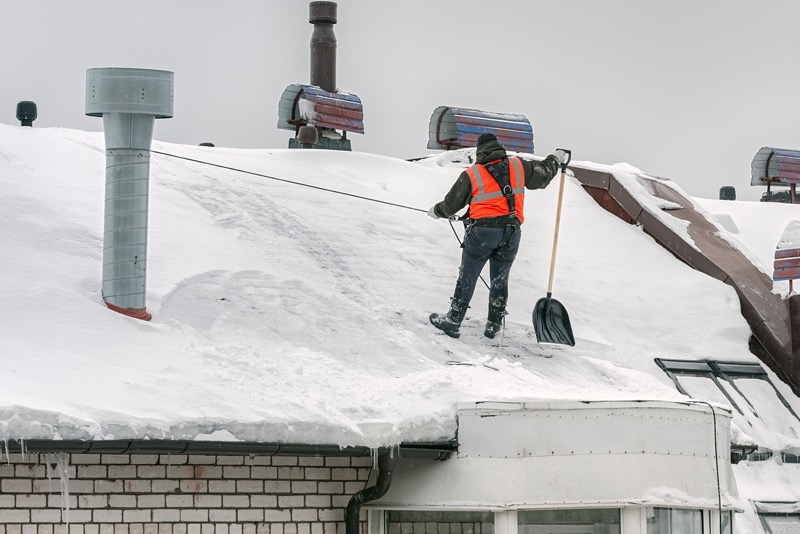
Cherepovets, Russia – January 25, 2022. Climber on insurance cleans the roof from snow. Work at height.

Roofing season is typically not during winter. In colder climates, the asphalt shingles on a roof can become brittle and break if they are covered in snow and ice. This can lead to water damage and leaks in your home. In fact, many older homes experience “ice dams” where moisture seeps into small cracks, thaws, freezes, and thaws again, and damages the roofing from inside out, as well as vice versa. The best time to have your roof repaired or replaced is typically during the spring or summer, when the weather is warmer and when the material is much more pliable. You wouldn’t want to work with brittle shingles if you can help it.

The Best Time To Schedule Roofing

The best time to roof is when the weather is warm and dry. However, depending on your location, there may be higher precipitation that affects when roofing can be done. During the rainy season, it’s important to avoid working on the roof if it’s raining or if there’s a chance of rain in the forecast, as this can cause serious safety hazards.

Roofing season is generally considered to be in the spring and early summer months before the temperature gets too hot and the asphalt starts to melt. However, there are some contractors who do roofing work in the winter months, as long as it’s not too cold or icy.

If you live in an area where the weather significantly warms for days at a time, as with chinook weather patterns, winter is technically possible. But it all depends on whether a roofer can get a job done in that time. Sometimes the weather can take a turn, so it’s best to approach that situation with caution.

Roofing companies may decide to offer discounts for scheduling roofing repairs during their slower seasons. Roofing season generally falls during the late spring and early summer months as well as fall. Many roofing companies will offer seasonal discounts of 10-15% off the total cost of repairs. For homeowners in need of repair work, calling around to different companies and asking about their seasonal discounts is a great way to save money on expensive repairs.

Is Autumn a Good Time for Roofing?

Roofing season can also take place during the autumn months when the weather is a bit cooler but usually drier – so you can avoid rainy weather in places with higher-than-average annual precipitation. This makes it easier to work on the roof without damaging the shingles and also prevents any rain or snow from coming into contact with the newly installed roof.

This timeframe is often when repair companies are less busy, so you may be able to get a discount or a quicker turnaround on your repair/replacement. Plus, autumn weather is generally milder than summer weather, so it’s easier and less dangerous to work on roofs during this time of year. If you’re thinking about getting your roof repaired or replaced, late autumn may be the best time to do it.

Depending on your geographical location, the autumn leg of the roofing season can take place as early as September and last through November. If you’re thinking about getting a new roof, make sure to schedule an appointment with your local roofing contractor during this time period for optimal results.

If you’re like most homeowners, you probably start thinking about your home’s roof in the fall. After all, as the weather starts to cool down, it’s important to make sure your home is prepared for winter.

Is it Worth Renovating an Old House?

Buying an affordable home that suits all the many needs of your household can seem nearly impossible in today’s retail market. One option that has become popular among homeowners is purchasing an old, and affordable, home and renovating it to their liking. There are a variety of different factors that should be considered before pursuing this type of project. Although an old home that needs to be renovated can seem like it could be a gamble on your bank account and real estate future, it can also be a valuable and rewarding investment. You should expect an older and affordable home to have some areas that will require renovations that could be pretty pricey, the experience will enable you to customize this older home and personalize it in all the ways you wouldn’t be able to otherwise if you purchased a modern house. Although renovating an older home is naturally associated with painstaking and time-consuming work and high expenses, it’s an investment that is definitely worth serious consideration. Though before you begin to seriously contemplate whether or not purchasing an older home to renovate is the suitable option for you and your household, there are crucial factors you need to take into account to help you make an educated decision.

Find out how pursuing home renovations on an older home can be advantageous to you while also retaining some of the drawbacks that can also deter some homeowners.

Advantages of owning an older home

  • Older homes can often be more solidly built than modern houses. With secure flooring and thick walls, there is usually no need for complete reconstruction and only necessary to update the plumbing and electrical systems.
  • Upon getting an older home, you will find that it has unique features that are often not found or built into modern and contemporary houses. You will find stylish and timeless light fixtures in different rooms, stunning and solid hardwood floors, and beautiful mouldings that you won’t be able to find anywhere else. Of course, these characteristics that you find compelling in the home can easily be salvaged during your renovations so you can combine evocative features with contemporary ones for a unique home interior.
  • Older homes are generally more affordable than contemporary and modern homes. And by doing long-term renovations, such as floor replacements and kitchen remodelling, you will be able to save thousands of dollars while adding value to your home. If you ever think you may sell your older home at some point in the future, these costly renovations will turn out to be well worth it in the future.

Disadvantages of purchasing an old home

  • Unfortunately, doing home renovations on an older home can be extremely pricey. A number of features and crucial fixtures in the home might need to be replaced or repaired, including the flooring, foundation, roofing, electrical, plumbing, and insulation, which can all begin to accumulate into a higher cost than you anticipated.
  • Complete renovations are a time-consuming process that can be even lengthier when the home you’re renovating is an older one. Due to the additions that will be needed, the renovations that will have to be tended to, and any other expenditures, fixing up an old home is expected to take an allotted amount of time you should prepare for.
  • Toxic materials are more likely to be found in older homes than in modern houses. Materials, such as asbestos and lead, are nearly impossible to see with the naked eye and they will subtly deteriorate your health without you even knowing. Because of these potential dangers that can impact your health, it is typically recommended by home renovation experts to hire a professional to inspect your older home, test for hazardous materials, and subsequently remove the materials to induce the safety of the household.

Considerations

There are many considerations you need to factor into your decision to renovate an old home. One of the considerations is the expense of the whole project and how it compares to your proposed budget. You will need to add up every estimated cost, even the potential costs you might not be anticipating, to see how it aligns with your renovation budget. You will also need to consider the entire timeline of the remodelling project and how it could impact your living situation. You will need to make living arrangements if necessary and grasp an accurate timeline by asking your contractor about the estimated timeline.

You will also want to acquire a reliable contractor on your team and hire one that has the background, accreditations, and accuracy. Get referrals from family and friends, and be sure to hire someone that will keep you in the loop. Contact your local renovation company within your area for more information about home renovations.

Avoid These Mistakes To Stop Your Drains From Blocking

Dirty drains are a common problem in homes and businesses. When drains become clogged, it can be a huge headache. Not only is it inconvenient, but it can also be dangerous. In this blog post, we will discuss some of the most common mistakes that people make when it comes to drain maintenance. We will also provide tips on how to avoid these mistakes and keep your drains clear!

Mineral Build-up

One of the most common mistakes people make is not removing mineral build-up from their drains. Over time, minerals can build up in your drains and cause them to become clogged. This is especially true if you have hard water. Hard water contains high levels of minerals, such as calcium and magnesium. These minerals can deposit on the walls of your drains and eventually lead to a blockage. To avoid this problem, you should regularly clean your drains with a solution that will remove mineral build-up. You can purchase drain cleaners at most hardware stores. Just be sure to follow the instructions carefully and use the cleaner in a well-ventilated area.

Cat Litter

Another common mistake people make is using cat litter to clean their drains. While cat litter can absorb liquids, it can also clog your drains. The clay in cat litter can expand when it comes into contact with water. This expansion can cause a blockage in your drain. In addition, cat litter can also harbour bacteria and viruses that can be harmful to your family. To avoid this problem, you should use a different method to clean your drains. There are many drain cleaners on the market that will not clog your drains. Just be sure to read the labels carefully and choose a cleaner that is safe for your particular drain.

Natural Debris

Another common mistake people make is using natural debris to clean their drains. This includes things like leaves, twigs, and dirt. While these items may seem harmless, they can actually clog your drains. Leaves and twigs can get caught in the drain and cause a blockage. Dirt can also build up over time and cause a blockage. To avoid this problem, you should use a drain cover to keep natural debris out of your drain. You can purchase drain covers at most hardware stores. Just be sure to choose a cover that fits snugly over your drain so that nothing can get through.

Food Scraps

One of the most common mistakes people make is putting food scraps down their drains. Food scraps can quickly build up and cause a blockage. In addition, food scraps can attract pests, such as rodents and cockroaches. These pests can spread disease and contaminate your food. To avoid this problem, you should dispose of food scraps in the garbage. Do not put them down your drain! If you have a garbage disposal, be sure to use it sparingly and only put small amounts of food scraps down at a time. Professional drain cleaning services can also help to remove food scraps from your drains. Special cameras are used by plumbers to inspect blocked drains and identify the cause of blockages.

By following these tips, you can avoid making common mistakes that lead to blocked drains. Just remember to regularly clean your drains and do not put anything down them that could cause a blockage. If you do this, you will be well on your way to keeping your drains clear!

Linen Sheets Canada: 2022 Colour Trends

It’s no secret that keeping up with the latest trends is essential when it comes to fashion, home decor, and more. But what about when it comes to your bedding?

Whether you’re looking for a pristine white sheet or a bold colour, linen is a light and versatile material that can add a sense of calm to any room. Our latest blog post looks at the 2022 colour trends for linen sheets. From muted pastels to earthy tones, there are plenty of beautiful options to choose from!

If you want to update your bedroom decor this year, check out our colour recommendations. And if you’re in the market for some new linen sheets, be sure to check out our selection of linen sheet sets in Canada.

Classic White

Your bedroom should be a place of sanctuary and peace. A place where you can relax and unwind from the stresses of the outside world. And one of the easiest ways to achieve this is by using linen sheets in classic white.

You can also consider ivory and beige in place of white. These shades will coordinate well with any colours used in your home. With these classic shades, you can easily match your bedding to the rest of your home and bedroom decor.

Earthy Colour Palettes

Earthy tones are another unmistakable 2022 linen colour trend. This colour palette is versatile and charming, giving your room a down-to-earth feel. Warm tones include deep nutmeg, clay, brown, green, and desert-inspired shades. It’s a simple yet elegant way to bring a sense of nature into your indoor space.

Bold colours

Bold patterns and colours, like green, purple, blue, and red, have gained popularity this year. Play with fun colour combinations, such as brown sheets and a navy blue duvet, to make a room unique to you and enhance the aesthetic. Work with your selected pattern and decorate your space in ways that match the rest of your home design.

Young woman in comfortable bed with dark blue linens, above view

Neutral hues

Perhaps you already have a bold interior colour and wonder what bed sheet colour you should choose that would pair well? Neutral shades are the perfect bedding match and can include a light gray, burgundy, golden brown, taupe, and ochre palette. Neutral colours provide a steady, soothing, and quiet atmosphere. They’re friendly to other bold colours and even compliment them while creating depth.

Serene pastel colours

If you like the beach vibe, choosing pastels like teal green, light green, lavender, sea blue, and mauve may help you achieve this look. Apart from a beautiful bedroom, serene coloured linen sheets give you a relaxed feel and offer you a calm place to sleep.

Choosing Your Perfect Linen Sheets

Linen offers a relaxed softness to your bedroom. The inspiration behind the colour you choose for your linen sheets can come from anywhere, depending on your taste and the ambiance you want to create in your bedroom. Decorating your bedroom shouldn’t be a mere mix of colours. Every choice must be intentional and have a purpose. If you’re looking for linen sheets or duvet covers, choose from one of the above trends and pick a colour palette that captures your sense of style.

Recent Posts

Posts You Might Like