

Home Blog Page 204

Buying A Vacation Home on South Padre Island TX

The past two years have been a time of turmoil. The covid-19 pandemic played havoc with our working and personal lives. For many of us, being unable to leave home meant realizing that perhaps a bigger property was in order. For others, it simply highlighted why a vacation away from home is essential.

Taking time out from work and the daily routine of life is good for both mental and physical health. It’s notable that, in the wake of the receding pandemic, demand for RVs has rocketed, both for hire and purchase. An RV is a great way for a family to explore the many wonderful sights and scenes in the USA.

But what about something more permanent? There has also been a boost in interest in vacation homes, especially in sought-after coastal destinations. Vacation homes make a sensible investment as they are an asset that may make you money when you are not present. We’ll look at that idea shortly, but first, we want to tell you why South Padre Island is perhaps the ideal choice for your vacation home.

Why Choose South Padre Island?

South Padre Island is becoming increasingly popular with outsiders looking for the perfect location for a vacation home. There are plenty of properties to choose from – we recommend a browse at NextHome on the Coast, which is a real estate agent operating on and around the island – and we’ll feature a few examples for you. So, why South Padre Island?

Located in Cameron County, Texas, South Padre Island is the name for both the town and the barrier island it sits on, which forms part of the Texas Gulf Coast. The weather is one reason for the island’s popularity as a vacation resort, but there is more to it than simply sun, sea, and sand.

The island has become a traditional destination for students on Spring Break – another reason a vacation home here is a good investment – and is known for its water sports and fine fishing. Quiet and also with a lively nightlife, the population of fewer than 3000 inhabitants gives further ideas as to its popularity.

Connected to the mainland town of Port Isabel by the Queen Isabella Causeway, South Padre Island is in easy reach of many vacation destinations in Texas and also features a popular waterpark on the island. Latterly, people have traveled to South Padre to watch SpaceX launches from the site at Boca Chica, which can be clearly seen from the island. Let’s have a look at rental and what you can expect to pay for a property in the vicinity.

Can I Rent my South Padre Island Home? 

Not all buyers are coming to South Padre Island temporarily. It has become popular with those who are looking for the joy and relaxation of coastal living in a beautiful spot. Many condominiums, along with hotels, have sprung up on the island in recent years, with coastal and waterside locations being popular.

Property at South Padre Island is easy to let when you are not there and can bring in quite a decent income. However, you need to choose your property carefully if you are to attract vacationers to your property when you are away. We recommend you talk to the local real estate agents mentioned above as they will be able to help you choose. What should you pay? The variety of property available is impressive, so there should be something on the island for every budget.

How Much Will I Pay for a South Padre Island Home

There is a strong housing market in South Padre Island as there is across the USA right now, so here are a few examples that were on sale at the time of writing to give you an idea of what you can expect to pay for your South Padre Island vacation home.

  • A 2 bed, two bath apartment in an attractive location with sea views for $239,000
  • A 2 bed, three bath apartment on East Parade Drive for $149,000
  • A 3 bed, 1600 square foot home in a desirable location on a large plot for $815,000
  • A 3 bed, semi-detached home on a good plot for $495,000

The above are just a few examples of properties we found for sale on South Padre Island, and there are many more we could have included.

Also, an option is buying a plot of land and having your vacation home built for you. This can work out as a cost-effective method of getting your ideal home with no compromises, as there are local building companies who will do the job for you. Plots that we found included:

  • An 11,000 square foot plot two blocks from the beach with all amenities connected for $335,000
  • A 6,200 square foot lot in a pleasant location for $145,000
  • A smaller lot close to the coast for $125,000.

The many lots for sale are worth checking out as there are some good-sized spaces for a coastal dream home on South Padre Island.

What Should I Look for in an Ideal Vacation Home? 

If you are buying a vacation home for rental and occasional use by yourself, you should look for the following to maximize your rental potential:

  • A waterside or beachfront location or within easy reach of the beach
  • Two bedrooms or more to accommodate families
  • Easy to find and drive to a location
  • All amenities connected
  • Attractively decorated and comfortably furnished.

The local real estate agent will be able to advise you as to the best choice of property or land within your budget and help you find your dream vacation home in this delightful spot. If you are looking to move to South Padre Island permanently, it is a wonderful place to live with a relaxed and welcoming atmosphere. Start your search by talking to local real estate agents and find the ideal South Padre Island vacation home right now.

Reference:

Ragatz, R. L., & Gelb, G. M. (1970). The quiet boom in the vacation home market. California Management Review12(3), 57-64.

Different Ways to Buy Flooring at An Affordable Price

Overview

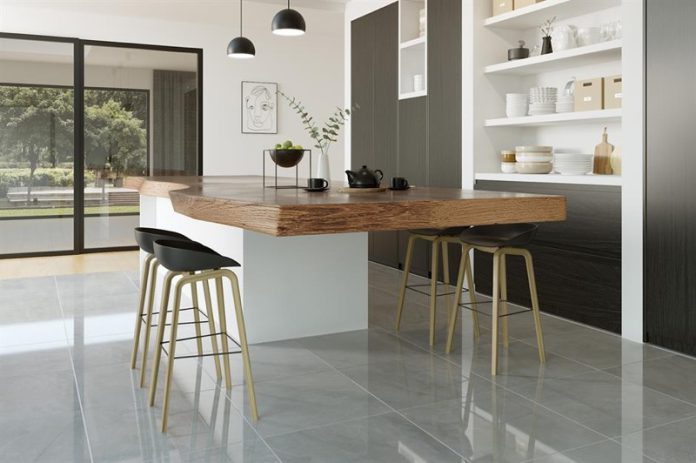
It is a tough job to find the right flooring for your home that can match the theme of your house and will fit exactly in your budget; wondering why we are saying this? Well, sometimes, the flooring can cost you a lot of money. Especially if you choose hardwood flooring, you have to spend quite a lot of money. Whereas you will get the same look in engineered flooring with much less price, the drawback is that engineered flooring might not last, but we can assure you hardwood flooring will last for decades.

And this can create a huge dilemma for you to choose the right flooring style. That is why to help you out, we have listed down different ways you can buy flooring for your home at a much cheaper cost that will perfectly fit your budget.

Ways to save money on your new flooring

In this section, we have discussed different ways you can save money on your new flooring:

1. You need to know your objectives

Indeed one of the biggest mistakes that people make when it comes to buying flooring is that they choose the wrong product for their lifestyle. You need to understand one thing: carpet might be a perfect choice for your bedroom, but it does not fit in the hallway, kitchen or living area. You must prefer to choose different floorings for your wet areas, such as kitchen, bathroom, laundry room, and other flooring types for the rest of your house. If you know which flooring types fit specific areas of your home, you can easily save your flooring and your budget.

2. Search for End of line flooring sale

One of the best ways to save money on your new flooring is to buy them on sale, and what can be best other than purchasing your favorite flooring at the end of line flooring sale. You must understand that at the end of line flooring sale, you will get various types of styles in flooring that can totally fit into your budget. Thus, we highly recommend you to shop for your flooring from the end of line flooring sale.

3. You must install your flooring by yourself

You must understand that flooring installation can take a lot of money and that if you want to save some money on your new flooring, you should install it by yourself. You can take help from your family, friends or close relatives in that case. You can search for laminate flooring; they are easy to install with just a few basic tools. Installation of new flooring by yourself is indeed a fun activity that you can do by yourself.

The bottom line

In the end, we would suggest you ask for a discount from the shops; nowadays there are shops that offer you great discounts and deals, just look for them and your flooring type at that time. We hope our blog post has helped you to understand how to save money when you are buying new flooring for your home.

The Importance Of Prefilled Syringes For Home Use

Prefilled syringes have witnessed rapid growth in the last few years. The pharmaceutical industry seeks more advanced and convenient drug delivery methods. With the introduction of prefilled syringes, there is minimal wastage of drugs, increased lifespan of the medicine, and the convenience of self-administration. The presence of prefilled injectable drugs allows an individual to administer the dose at home instead of going to the hospital and investing time and money.

Expansion of pre-filled syringes

The pharmaceutical market has grown over the years and is exploring every option outside the conventional process. In the past, glass syringes dominated the industry, but today the trend is shifting to the use of high-quality plastic and disposable syringes. Prefilled syringes have been in use across the globe in a wide array of therapeutic sectors like blood stimulants, vaccines, and so on.

Prevention of contamination

Over the years, the pharmaceutical industry has gradually shifted towards pre-filled syringe usage. The prime reason behind the shift is that prefilled syringes can address a lot of the problems that are common in traditional syringe setups. One of the highlighting advantages of using prefilled syringes is the elimination or reduction of drug contamination. Every time a syringe is inserted into a vial to draw the dose, it is a potential admixture-associated contamination risk.

Thanks to pre-sterilized syringes that increase safety and eliminate the need for on-site cleaning. With the presence of modern techniques, like electron beam sterilization tunnels, manufacturers can develop large-scale prefilled syringes. Plastic-based Cyclopoly Olefin (COP) resin is becoming the common material in the majority of prefilled syringes. This is mainly because of COP’s resistance to breakage, and lesser reactivity to surface and drug absorption rates compared to the glass vials.

Convenience and ease of usage

Vaccines and injectable products are not always stored in a perfect environment. They are required to be deployed regularly in emergencies and also respond to the different disease outbreaks. Prefilled syringes are considered a better option because of the rapid speed at which such syringes can be administered. Furthermore, one doesn’t have to be a specialized expert to administer the prefilled syringes. Drug reconstitution can be deployed at home by common people without the need to seek the assistance of doctors.

Medical professionals around the world respond positively to the benefits of using prefilled syringes. They seem to be preferring the prefilled technology to standard syringes. Furthermore, pre-filled syringes are manufactured with ready-to-use medicine with precise drug dosage. This is one of the highlighting advantages, minimizing the risks of potential dosage errors.

The pharmaceutical companies manufacturing the prefilled syringes with the exact dosage are useful and convenient not only for home users but medical users as well. It helps to prevent or eliminate a large quantity of drug wastage. Usually, the conventional single-dose vials and the multidose vials have a 20% to 25% of drug overfill. This can lead to overdosing and thereby cause side effects.  It is not the case with prefilled syringes, thereby ensuring the drug administrator delivers the correct and precise dose and eliminates human errors.

Self-injectable vials for home use

One of the key reasons behind the rising popularity and rapid growth of prefilled syringes is the home use suitability. The self-injectable prefilled syringes trend offers an immense advantage of convenience for regular patients. Auto-injectors and pen injectors are the two most common self-administrations used for insulin injections, home replacement therapies, autoimmune therapies, cancer, and allergy treatment. Pen injectors have been in use since the 1980s, which eventually gave rise to auto-injection technologies.

The advanced, disposable, and modern prefilled syringe technologies feature a hidden integrated needle that can be administered into the skin to a depth of 2.5mm. There is a passive safety feature that enables the prefilled syringes to be thrown away without needlestick injury risks. Furthermore, the syringe technology also allows for changes to the gauge of the hidden needle so that different drug formulations can be catered to.

Growth and innovation in prefilled syringe market

The pharmaceutical sector is dependent on the continuous innovation and improvement of its products. The prefilled syringe manufacturers around the world always strive towards the efficacy, convenience, and safety of the syringes. A major aspect of the innovations involved in prefilled syringes is based on addressing ongoing safety against needlestick injuries. A lot of the development in the area focuses on expanding the reach and range of applications for which prefilled syringes can be perfectly suited.

Technology has advanced in a state where multiple-chamber prefilled syringes are available. Such syringes have the potential to administer a freeze-dried drug contained in one of the chambers.  The second chamber on the syringe contains a diluent liquid. When the plunger on the syringe is pushed down, the chambers mix the diluent and the dry powder in a quick swirl motion. Furthermore, the prefilled syringe manufacturers are also working towards addressing safety concerns involving needlestick injuries.

Because prefilled syringes are self-contained products, they demand lesser interaction and preparation when compared with standard syringes. Therefore, prefilled syringes are considered better in their design to prevent needlestick events. Scientists and researchers all over the world are working towards more proactive safety measure designs for integrating with prefilled syringes. This will eliminate unnecessary and hazardous possibilities of injuries. Safety measures range from simple needle shields or protectants to auto-needle retraction systems that place the needle inside the syringe barrel even when taken away from the injection site.

Conclusion 

Convenience, ease of use, and eliminating dose errors are some of the biggest advantages of using prefilled syringes. The manufacturers have to face several challenges like concerns with quality control, drug stability, interactions and reactions with other products, and so on. Prefilled syringes make administering drugs easier and safer for patients and doctors alike. The patients always receive the right drug dosage. Moreover, the less overfilled prefilled syringes have an advantage over vials of eliminating the overdosing incidents. The technology behind prefilled syringes makes them easy to use, convenient, and safe as well. They might be costlier than traditional vials, but the convenience of use and the safety surpass the expense.

The Advanced Guide to Best Shower Systems with Body Jets

After a stressful day, taking a shower is a terrific way to relax. It lets you remove the filth and debris that got gathered on the whole day, allowing you to sleep soundly perceive that you would be spotless and rejuvenated. As an outcome, most individuals consider having a phenomenal archive of shower furnishings to be desirable.

Various types of showers and showering accessories have evolved significantly over time. The showers used to be designed of lengthy tubes and a scout. The water may squirt outside of his and into the individual’s body. Showers currently come in a range of shapes and sizes, ranging from showering modules to shower systems.

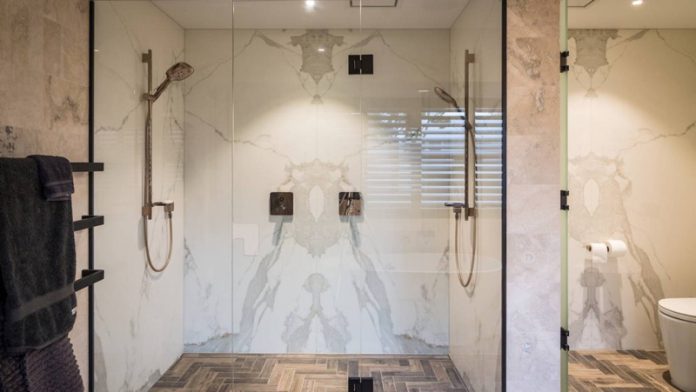
Shower body sprays include multiple spray heads connected to the shower enclosure in conjunction with the primary showerhead. The spray heads, which look like tiny shower heads or flattened panels, operate in collaboration with the principal showerhead to provide a splendid showering sensation.

The desirable body spray layout would include the whole torso using water regardless of the individual’s orientation. The body jets needs to be positioned on the adjacent wall from the showerhead and diverted from the shower doorway.

Fontana showers showering series was born out of a desire for innovative methods and novel concepts for bathroom design. It would be a perfect blend of artistry that meets modern advancements needs. It creates a powerful and illustrious lasting impression. There several cutting-edge advancements have smashed perceptions. Despite the portrayal of aspirations of discoveries, originality, and efficiency, every product is best and unique.

Fontana showers offer a broad array of showering commodities such as multifunction showers, body sprays, handheld showers, showering panels, and chemotherapy multifunctional showering sets. On PVD coatings like Rose Gold, Matt Black, Graphite Grey, Matt Grey, Venetian Gold to render with the eventual showering expertise, which makes us best in the market compared to our competitors, we fully grasp the intention of our consumers. Consumers wish to experiment with a broader range of functions, layouts, and finishing.

Body Sprays

The body sprays come upon two choices, body Jets and body showers. The Body Jets is 2 inches in diameter and often comes up from the exterior walls. The water jet could be adjusted and placed competently. they can stay prepared for targeted muscle groups. & Trigger points on the human body to calm and soothe those regions, it remains significant muscle pain management. Due to the compact size of the body jets and a relatively small range of body jets, water could pass on increased pressure and thus provide an intense, relaxing massage. Water flowing options on body sprays is of three types. They are standard, fog, and therapeutic massage. These features were available on the body jets.

Body Showers

The body showers got splashed against the surface and are adjustable. They deliver a far gentler stimulation than bathtubs and body jets. They are highly endorsed to do showering regularly. The body showers feature a bigger diameter of around 4 inches and release a large volume of water to form an exhilarating aquatic therapy effect while matched to the body jets. These surfaces spilled with a body shower. The Body showers were ideal for everyday showering since they offer der spa therapy than body jets.

Controllers

The controllers with click-select technology, thermostatic diverted and mono lever diverted, the blender was among the shower controllers we provide. Keep enjoying the utmost comfort daily through activating your bathroom fixtures with the touch of switch/ buttons, thanks to these trendy click-select ™ innovations.

Through these controllers, you could adore water on a consistent thermal gradient, this offering solid security from scorching hot uncertainty and thus ensuring everybody’s convenience and protection.

If you wish to buy the best shower systems with body jets, then shop from Fontana showers, the only destination to acquire quality products at a reasonable price.

Upgrade The Comfort In Your Historic Home — No Ductwork Required!

Do you love the look of your older home but not the feel? Houses built a century or more ago weren’t built with ductwork in mind. As a result, they’re often hot in the summer and cold in the winter.

But, retrofitting ductwork is expensive and damaging to a classic house. If you’re on a historic registry, you probably can’t make changes like that anyway.

Today, there’s a better solution. A ductless mini split installation makes every room in your home exactly as warm or cool as you want it. It provides better heating and cooling than conventional forced-air. Plus, it costs a fraction of what electric heaters, gas furnaces, and central cost to run.

And, with no ductwork involved, there’s no major construction (or destruction) needed! That means no tearing out walls, carving out classic wood floors to install vents, or building ugly soffits, or ductwork enclosures, in any rooms.

Sounds too good to be true? Well, it may even work better than you’d imagine!

In this article, we’ll walk you through everything you need to know about ductless heating and cooling in older homes: How they work, why they’re worth it, what they’ll look like, and how much a mini split installation might cost you.

How Ductless Mini Splits Work

The “secret” to mini splits is that they don’t move warm or cooled air through your home. Instead, they only move heat around. That’s how one system can control the temperature in your entire home without ductwork to force air from the furnace to every room in the house.

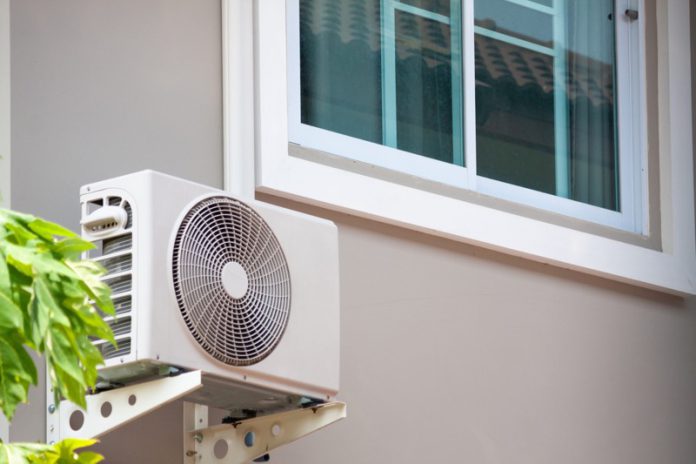
You start with a heat pump, which sits outside your house and looks a little like an AC condenser. In the winter, it draws heat from the air (there’s always heat, even when it’s freezing cold).

That heat warms up a refrigerant liquid, or coolant, which runs in a closed-loop to your indoor units, called air handlers. When the coolant travels inside, it brings the heat with it.

Meanwhile, the air handlers draw in the air in your home. These are usually wall-mounted units that sit up near the ceiling. You’ll get one for every room you’re treating.

The coolant releases the heat inside the air handler, which warms up the air. Then, the indoor unit recirculates the now-warm air back into your home.

In the summer, it works in the opposite direction. The system takes the heat in your home and releases it outside.

Since you’re only moving heat, all you need is a small, flexible line that looks like a hose. It carries the refrigerant from one place to another. Instead of big, bulky ductwork, you can run that line behind your walls where you can’t see them — just like your electrical wiring.

Benefits Of Mini Splits For Older Homes

Besides looking better in an old home, mini splits offer many more benefits!

First is cost-savings! The heat transfer process we explained in the last section doesn’t burn expensive gas or oil to create heat. Nor will it require a lot of electricity to heat coils. Instead, the transfer process uses a tiny amount of power.

Next is comfort! Mini split heat pumps almost all the time in a low-power mode instead of cycling on and off a few times every hour. The result? The temperature is always within a degree or two of your thermostat setting.

Then there’s customization! You can treat a single room or area with one air handler. Or, put them all through the house. Or any combination in between!

Since each air handler has a built-in thermostat, they all work independently. You can set the temperature in each room just the way you want it without affecting other parts of the house.

What A Ductless System Looks Like In Your Home

The air handlers are the only part of a ductless system you’ll see in your home. The heat pump is outside, and the lines run behind the walls.

As we mentioned, the most popular indoor unit style is the wall-mounted air handler. These are usually white boxes around three feet across, one foot high, and a foot deep. They mount high on the wall, close to the ceiling.

Other models are low-wall units, which look like the skinny heaters you see in hotels. They’re a few feet tall and a few feet wide, and they sit on the floor attached to the wall.

Finally, recessed ceiling cassettes mount up in your wall. All you see is a vent on the ceiling.

In some cases, you’ll see the lineset running along the wall. That’s if there’s no way to run it behind the drywall. The lines are in a neat casing that you can paint to match the room.

Basic Pricing Estimates For A Mini Split Installation

The average cost of a mini split installation ranges from around $3,000 for one air handler that treats a single room, or zone, in your home. Then, the cost goes up with each additional air handler. The cost to completely heat or cool most homes is around $17,000, and there are ways to bring that number down.

First, you can get tax credits from the IRS for installing energy-efficient heating and cooling. And most local utility providers offer similar incentives. That can knock hundreds or even thousands off the price.

And, most manufacturers offer promotional discounts at different times of the year. Coordinate your installation around those offers, and you’ll save even more.

Finally, remember that these use a fraction of the energy of your old system! That means you’ll save money every month on your bills. Those savings make up for the extra upfront cost after a few years.

Going ductless is a big decision, but it’s becoming more popular than ever in the United States! Homeowners love the extra comfort and lower bills. And, people with classic houses get all that without ruining their home’s beautiful look and feel.

Beat Allergy Season With Help From Your Heating And Cooling System

Beat Allergy Season With Help From Your Heating And Cooling System

Spring and summer are brutal seasons for seasonal allergy sufferers. All that pollen means itchy eyes, runny noses, coughs, and more. And, being inside doesn’t help. But, your heating and cooling system can help alleviate those systems!

Everyone tracks pollen into the house. But once your windows are closed for the season, those tiny particles have no way back out. So, they build up inside your home, along with pet dander, dust, and other irritants.

It’s also a big problem for people with asthma. These tiny contaminants will also cause asthma attacks.

But don’t worry: You can still breathe easy at home this allergy season! We’ll explain how, from cost-free and inexpensive tips to easy routines and, finally, what to buy if you need more help.

Three Easy, DIY Tips For Getting Rid Of Allergens

You can significantly reduce the amount of allergens in your home with these DIY tips:

Get Rid Of Decorative Pillows And Fabric Curtains

They may look great, but they’re a breeding ground for dust mites and havens for pollen. And, you usually can’t wash these. So, you’re stuck with whatever is building up on them.

Use A Bagged Vacuum CLeaner With A HEPA Filter

Bagless vacuums are popular because they’re easy to empty, and you don’t have to buy more bags for them. But, when you empty them, you’ll release dust and allergens back into the air. Instead, go with a bagged model that comes with a HEPA filter. The industrial-grade filter traps microscopic contaminants.

Run Your Air Conditioning In The Summer

Two advantages here: First, you’ll keep your windows closed, which keeps pollen outside. Second, the air conditioner also dehumidifies the air. Dust and pollen attach to water droplets in the air, so you end up breathing them in. When the air is dry, those tiny particles drop to the ground instead.

Regular Routines To Keep Your Home Allergen-Free

Next, establish a routine to keep all those allergens at bay. Here’s what to put on your schedule:

Change Your Furnace Air Filter Every Two Weeks

The air filter in your furnace traps dust and dirt as it passes through the vents. But, when it gets too full, that dust shakes off and circulates back through the house. Most filters need changing every month. But, change that to every two weeks for extra protection against dust and allergens.

Clean Linens Every Week

Wash all your sheets and pillowcases once a month in your washing machine’s hottest settings. This schedule reduces allergen buildup, and the hot water kills off dust mites and other tiny pests.

Dust Surfaces With A Damp Cloth

During your weekly cleaning routine, use a damp cloth to wipe down countertops, windowsills, fan blades, and the tops of doors and door frames. That captures the dust instead of merely displacing it.

And, always start with the fixtures closest to the ceiling and work your way down. That way, any remaining dust falls down, where you’ll wipe it up as you go.

Using Filters And Air Purifiers To Improve Your Indoor Air Quality

If you’re still struggling with seasonal allergies or asthma at home, it’s time for the big guns: more robust air filters and new appliances that will clean the air in your home better than ever before.

Air Filters

You can upgrade from the standard one-inch furnace filter to stronger models that trapper smaller particles. They’re a little more expensive but make a huge difference. But, check your furnace’s requirements first. If you install a filter that’s too strong, your HVAC system can’t circulate air through it, and you’ll end up with weak heating or cooling.

Air Purifiers

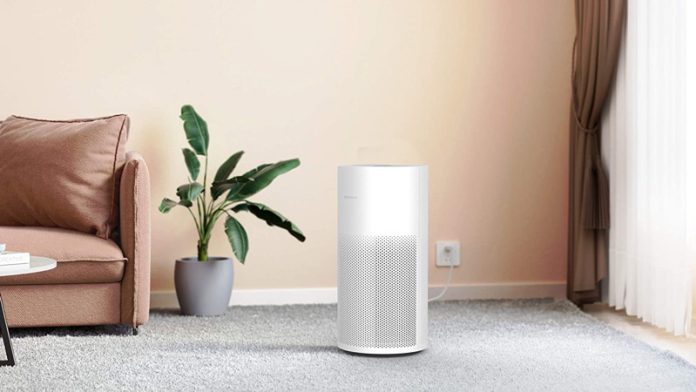
The best air purifiers on the market eliminate everything from dust and pollen down to mold spores and even bacteria and virus particles. You’ve probably seen ones that plug into the wall and treat a single room. But there’s much better out there.

A whole-home air purifier hooks up to your HVAC system and cleans the air as it passes through the ductwork.

First, the air passes through the strongest air filter available — one that can trap even the most minuscule particles. The purifier comes with a separate blower motor, so you don’t lose circulation.

Then, these systems use UV or UVC lights to neutralize and eradicate toxic and organic contaminants on the filter. The result is super-clean air blowing back into your home.

These air purifiers are a considerable investment, but they’re also amazingly effective. So, we recommend starting with those DIY tips and cleaning routines. Then, if you still need more, talk to your HVAC contractor about the best air purifier options for your home.

Does The Air In Your Home Feel “Dirty?” Here’s What To Check

Indoor air quality at home is more important now than ever before. According to the CDC, Americans spend more than 90 percent of their time indoors. And with the work-from-home and home-schooling, and remote-learning revolutions in full swing, we spend even more of that indoor time in our homes.

But what happens when your home is making you sick?

All sorts of contaminants can grow or build up in your home. We’re talking about everything from dust, allergen, and dust mites to bacteria, volatile organic compounds (VOCs), and toxic mold.

It sounds scary, but it doesn’t have to be that way!

We’ll help you spot the signs of poor indoor air quality at home. Then, we’ll discuss what causes these problems. And, of course, how to get rid of them!

This problem can occur in any home. But, if you have a ductless mini split for heating and cooling, you’ll especially want to read this to the end.

Four Signs Of Poor Indoor Air Quality At Home

How can you tell if you have poor indoor air quality at home? Ask yourself if you notice these problems at home. If you experience some or all of them, your air quality is most likely to blame.

Seasonal Allergy Symptoms

Do your allergies get worse when you’re home? More so than at work or other people’s houses? That’s a sign of excess dust and pollen in your home. It’s most common in the summer because your windows are closed with the AC on. You’re staying cool, but there’s no way for air to circulate to flush those contaminants out of the house. Instead, they build up and cause problems.

Asthma Attacks And Flare-Ups

Excess dust or pollen trigger asthma attacks at any time of the year. And, high humidity makes things worse: The “stuffy” air makes it harder to breathe. And, those tiny allergens stick to water droplets in the air. They’re “floating” around for you to breathe them in.

Bad Smells

Bad smells often indicate bad air quality. It’s anything from cooking smells to bathroom odors or any sort of chemical or gas smells. Those scents are indications of toxic or otherwise unhealthy particles in the air you’re breathing.

Most of these fall under VOCs, which is short for Volatile Organic Compounds. In a nutshell, these are chemicals emitted as gasses that we end up breathing in.

Mold Problems

Mold spores are to blame for everything from skin rashes, trouble breathing, and even sometimes nausea, fatigue, and difficulty concentrating. If there’s mold in your home, there are mold spores in the air, and they can make you very sick.

Hot And Cold Spots In Your Home

Hot and cold spots are important, if indirect, signs of air quality problems. It means your HVAC system isn’t doing a good job of circulating the air.

In the winter, heat isn’t reaching every room, resulting in cold spots. The AC can’t cool your entire house in the summer, leading to warm areas.

But you also need that circulation to get rid of dust and allergens. When the air gets to the furnace, it passes through a filter that traps dust and dirt, so it comes out clean. Without that process, the air stays dirty. And, those contaminants will build up in the house instead of circulating.

How To Improve Your Indoor Air Quality

Now that we’ve touched on what causes IAQ problems and how to spot their presence, let’s talk about getting rid of them!

Get Fresh Air

First, open your windows from time to time, even in the summer and winter. Of course, you need them closed when the heat or AC is running. But, getting some fresh air every few days helps eliminate all kinds of allergens and contaminants that have been building up inside for weeks or even months.

Make A Cleaning Routine

A robust weekly cleaning routine eliminates many contaminants that lead to unhealthy air in your home. Cleaning thoroughly, vacuuming, wiping surfaces with a damp cloth, and washing your linens in hot water all make a huge difference.

Change Your HVAC Filter

We talked briefly about the air filter in our heating and cooling system. Furnaces, central air, and mini splits all use them to trap dust and tiny particles. But, you need to change them out, so they don’t get clogged.

All that buildup makes its way back into the air when that happens. To avoid this, change that filter every month. For mini splits with reusable filters, clean them out every month.

Control Humidity

Your air conditioner doubles as a humidifier, significantly reducing humidity in the summer. You can also buy separate humidifiers if that’s not enough for your home. These range from portable plug-in models that treat a single room to whole-house appliances that attach directly to your furnace and central air.

Use An Air Purifier

Different air purifiers use strong filters, UV or UVC lights, and even electricity to trap, neutralize, and eradicate bacteria, mold spores, viruses, and many other organic and non-organic contaminants. As with humidifiers, you can buy inexpensive models that treat a single room. Or, invest in a system that works with your HVAC system to treat your entire house.

Clean Your Heating & Cooling System

Dirt, dust, and even mold can grow in your HVAC system. And the problem is most common with ductless mini splits.

The insides of the air handlers are dark, warm, and moist — a perfect breeding ground for microbial growth. Plus, they are tough to clean because of all the tiny parts jammed in there.

As a result, you’ll get loads of mold growing in there. Then, the spores — along with dust, dirt, pollen, and other pollutants — end up in the air you breathe when the system blows it back out into the room.

If you’ve never had a professional mini split deep cleaning, you owe it to yourself to have an HVAC tech — or better yet, a company specializing in this service — look inside and show you what they find. The good news is that a fast, easy clean can get rid of the problem.

There’s a lot that goes into your indoor air quality, but it can be easier than you think to make the air you breathe at home much healthier! Start with these easy tips and feel the difference for yourself.

How To Heat And Cool Your Home With Solar Power

Are you ready to get off the grid? Now, you can — and you don’t need to live in the woods or make considerable changes to your lifestyle.

Thanks to solar power and HVAC advances over the last few years, it’s now possible to heat and cool your home entirely through your solar panels. You can get rid of the gas company for heating and cooking. And, you won’t sacrifice your comfort or switch to an electric-heat stove that doesn’t cook as well as gas.

With a bit of planning and investment in new appliances and equipment, just about anyone can take this huge step toward sustainability, energy independence, and creating a net-zero home.

In this article, we’ll walk you through the basic steps you’ll need to take to achieve a truly sustainable and energy-efficient home. You’ll need some help from local professionals in your area, but consider this your road map.

Here’s the process, in four easy steps:

Tracking And Adjusting Your Energy Usage

The first thing you’ll want to do is begin tracking your energy usage and looking for ways to reduce it later. But, believe it or not, you probably won’t have to make many lifestyle changes to cut down on your energy usage.

You’ll likely be surprised by how much electricity you currently use — and how much you can cut down without adjusting your habits or behavior!

For instance, are you familiar with phantom power? It’s the energy your appliances draw even when you’re not using them. And, with more electronics in households today, phantom power is a significant part of your electric bill.

Or, maybe you leave certain lights on after bedtime for pets or if you have young kids that may get up at night. Switching to a different lamp or light switch that uses less energy also impacts your usage.

The best way to find it all is to install a sensor that tracks your electricity usage. One of the best out there is the Sensi. It hooks up directly to your electric breaker box, tracks how much every electronic device or appliance in your home uses, and sends the information to an app you can check on any time!

Solar Panels: Clean Renewable Energy At Home

You may want to use more electricity than normal before getting your panels. Many municipalities only regulate the number of solar panels you can get based on your prior energy usage.

The more you use regularly, the more solar panels you can get. If that’s the case, use more power the year before you get your panels. Then, use that electricity tracker to cut your usage significantly once you go solar!

Another advantage of solar is that it’s much “cleaner” than what you get through your utility company.

“Dirty” energy is when you get sudden surges of power. They happen from time to time with regular electrical service, and they can damage electronics.

But, solar power from your private panels always comes through clean.

Heat Pumps: Electric, Energy-Efficient Heating And Cooling

Now that you have solar power, it’s time to get rid of that old gas furnace and central air! Replace it with a heat pump system, like the Daikin Fit, that uses electric heat and cool your home.

Heat pumps use far less power than any conventional HVAC setup. That’s because they never burn fossil fuels to generate heat.

Instead, it uses a unique process to draw in what little heat is outside in the winter, amplify it, and then use it to heat your home.

All it needs is a little bit of power to run its process. It’s a fraction of what you’d need for baseboard heat or an electric furnace. And, it’s much less than the comparable amount of oil or gas you’d need.

The same goes for the summer: Heat pumps don’t need nearly as much power to remove heat from your home as central air or especially portable ACs.

And, today’s best heat pumps work even in sub-zero temperatures. These advances make them a crucial part of going green. You can go completely electric, or use a system such as the Daukin VRV Life in residential homes to keep a gas furnace as a backup heat source.

Either way, you’ll rely on your renewable, clean solar power, and not fossil fuels or a utility company, to heat and cool your home.

Induction Ovens: Electric Stoves That Work Like Gas

We’ll be honest: Electric stoves kind of stink. They don’t heat up as fast as gas, and they don’t cook as evenly. That can make cooking the last challenge for someone trying to go green. And, finally, there’s a great solution.

Induction ovens use electricity, but they heat like gas! They don’t use thermal induction to heat the oven or the coils on the range. Instead, they use magnetic induction to instantly transfer heat to your pots, pans, baking trays, and other cooking vessels.

The result? Fast heating, great cooking, and better energy efficiency than gas stoves or even standard electric models!

Getting off the grid isn’t always easy. But, it’s more doable today than ever before. If you follow these steps, do your research, and put in the time, your home can be efficient, green, and energy independent without you sacrificing your comfort or changing your lifestyle.

Home Heat Recovery Systems Offer an Energy-Efficient Solution

Have you ever tried to determine exactly how much money you are spending each and every year on the cost of heating your homes? It can be a tedious challenge depending on the energy source you use for home heat. Some homes use electric heat and others heat their homes with gas. However, there are other appliances that use those same energy sources, so how do you calculate exactly how much you are paying for just that heat source in terms of all the ways in which electricity or gas are being used? Perhaps that’s the wrong way to look at what it’s costing you to heat your home. You know that it is a significant amount on usage, so maybe it’s better to analyse how better to save money through energy-efficient solutions.

Exactly How Efficient Is a Home Recovery System?

Before understanding how home heat recovery systems work, let’s look at what we know about how efficient they can be. According to the latest estimates on the actual savings a family can realise with an HRV (Heat Recovery Ventilator), as much as 60-95% of the heat lost in exhaust can be recovered. That leads to an amazing amount of efficiency. A more efficient heating system, then, is much less costly to operate!

How Do HRV Systems Work?

Now then, to understand just how they offer this energy-efficient solution to the cost of heating your home, let’s take a brief look at how an HRV system works. Basically, what happens is that the HRV pulls that stale but warm air from your home, exchanging cooler fresh air from outside. Not only does it warm that fresh air being drawn in but that warmed fresh air replaces the stale air being drawn out. Technically and mechanically, it can be difficult to understand, but that’s a brief summary of ‘how’ it works and what it’s meant to accomplish.

The Actual Savings You Can Realise

The obvious purpose for seeking efficiency is to reduce the cost of heating your home. Also, factor in what you are spending on powering an air filtration system so that you aren’t breathing in stale air with all the allergens you are exposed to. The actual savings can be easily calculated if you take into consideration other appliances using the same energy source. If heat is the only thing using gas, for instance, then imagine having a heat source that is 60% to 95% more efficient with the installation of an HRV? That would be a significant savings in your household budget, wouldn’t it?

So then, how efficient are home heat recovery systems? If you factor in the high cost of heating today’s home where much heat is lost through walls, cracks, lack of insulation and other factors, improving efficiency up to 95% is a significant improvement and cost reduction. When balanced with the cost of that installation, you will see that, within a very short period of time, that cost will have been compensated and you will start seeing that savings at that point. Let the savings begin!

Installing Heat Pumps Could Help Shift to Low Carbon Homes

Spring Meadow Farm, Ely.

With so much attention on energy efficiency as of late, it is only natural for homeowners to look for ways to create the kind of environment that leaves less of a carbon footprint. Making the shift to a low carbon home is no longer a challenge, nor does it have to be confusing thanks to the many options readily available today. One option is to install a heat pump, which can make sense in the right homes. Let’s take a look at how installing a heat pump can help you shift to a low carbon home you feel great about.

Greenhouse Gas Emissions Can Be Lowered

While there are several great reasons to install a heat pump, the fact that it can drastically reduce a home’s greenhouse gas emissions is high on the list. Some research shows that it can lower the carbon footprint in the home by up to two thirds. This is an impressive number and one that should not be overlooked. The way these heat pumps work is by heating the house during the cold winter months, and then during the mild months of spring and summer, they will pump the heat out of the house. The result is a very comfortable and consistent temperature in the home.

Who Would Benefit Most from a Heat Pump?

Besides the desire to lower the carbon footprint, is there anything else that makes for the right environment for this piece of technology? For the most part, your home needs to be well insulated for the heat pump to work optimally. Signs of a well-insulated home include:

  • Windows that are double glazed
  • Cavity wall insulation throughout the home
  • Loft insulation

Heat pumps work by moving the heat energy that is outdoors into your home. While they require electricity to operate, they can generate more energy than what they use. These units will even work if the outdoor air temperature is cool/cold, so this is not something you have to worry about.

If you find you spend a small fortune on oil, gas, or electric heat systems, you can also benefit from a heat pump since they cost much less to operate.

Look for Dual Purpose Units

Did you also know that some heat pumps provide two functions in one? Some can do a great job heating your home and can also heat the water in the home. Again, it is about lowering the carbon footprint and of course, you will be saving money in the process. If you are shopping for heat pumps in Northern Ireland, be sure to look for a unit that heats the home and your water, giving you the most value for your money.

In the past, it was somewhat difficult to try to make eco-conscious decisions for your home and try to lower its carbon footprint, but times have changed. Installing a heat pump is one of many smart moves you can make, as you can see by the benefits outlined above.

Recent Posts

Posts You Might Like