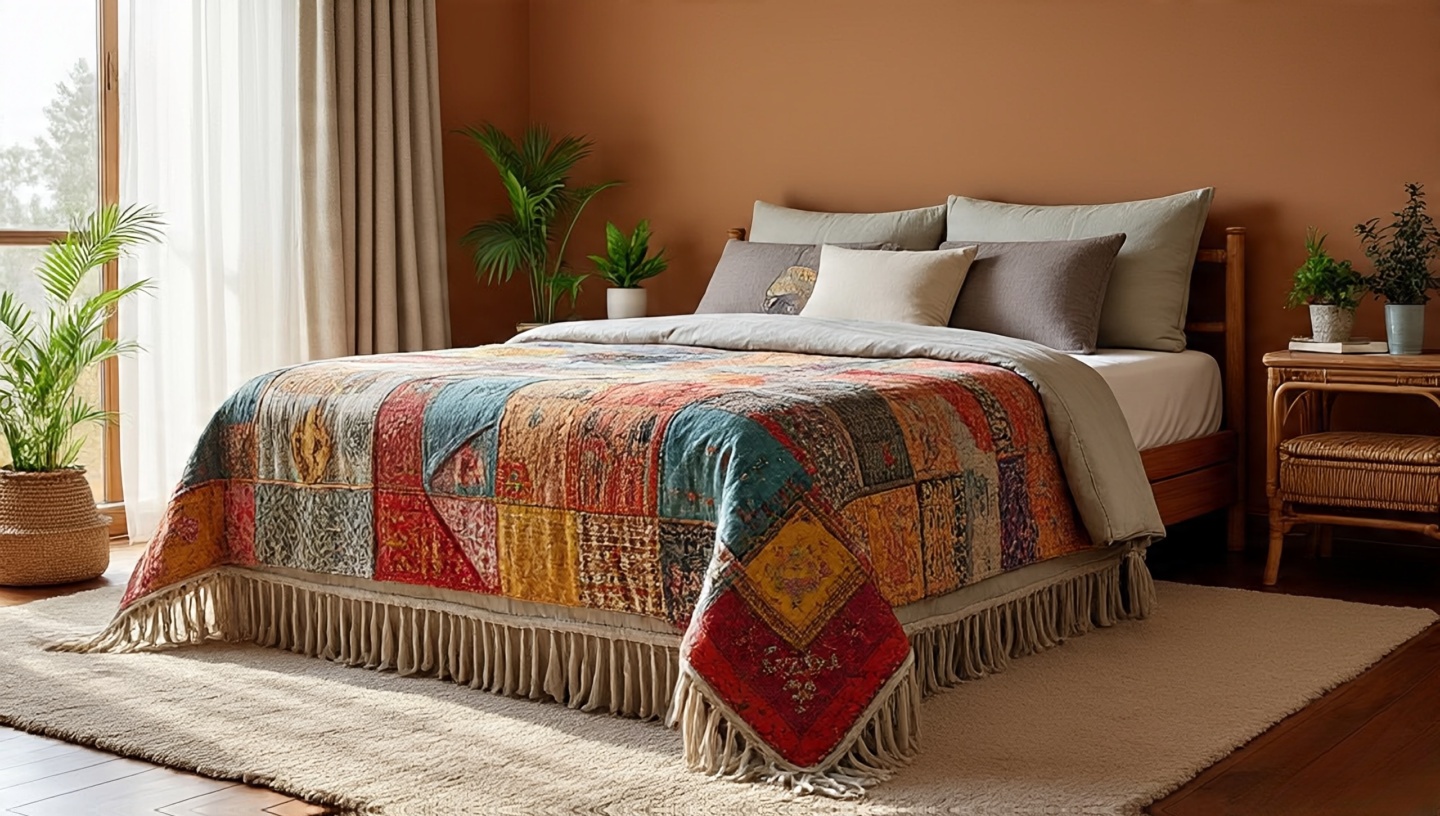
Layered bedding can combine a plain base with a patterned quilt, cover, or throw. Begin with the bed’s dimensions and the way it is used. Extra layers should be manageable to wash, store, and move when they are not needed.
Record the actual sizes
Measure the mattress and check the bedding manufacturer’s dimensions rather than relying only on a size name. Compare the proposed cover’s drop at the sides and foot of the bed. Check whether an additional topper changes the fit of a fitted sheet.
Read the fiber and care labels
Product descriptions should identify the materials and cleaning method. Linen-like texture does not prove a textile is linen, and a handmade appearance does not establish its origin. Compare samples where possible and decide whether the required care suits the household.
Avoid buying a delicate decorative cover for a role that needs frequent washing unless its instructions support that use.
Choose one main pattern
Try the largest patterned piece first, then compare quieter covers or cushions around it. View the full textile rather than a cropped motif. A small repeat and a large repeat can look very different across the bed.
Treat an inspiration image as a palette reference rather than a prescribed number of cushions. Keep a convenient place to put decorative pieces at bedtime.
Check provenance for named textile traditions
If a seller describes a quilt as kantha or assigns it another specific cultural or craft origin, ask for its maker, construction, and documented description. A stitch pattern alone does not verify provenance or age. Follow the seller’s and maker’s care advice for a valuable or older piece.
Keep the arrangement useful
Review the bedding through normal changes and laundering. Store clean spare textiles in a suitable dry place, retain the labels, and avoid accumulating layers that the household does not use. This guide concerns decorative and practical choices, not treatment for sleep conditions or a claim of personal professional experience.