Did you just get a job that’s located far away from where you live right now? Or, are you planning on moving for personal reasons, and perhaps want to take your business with you, move the offices and continue operation in the new location? Numerous different reasons for a long distance move, but only one right way to do it.
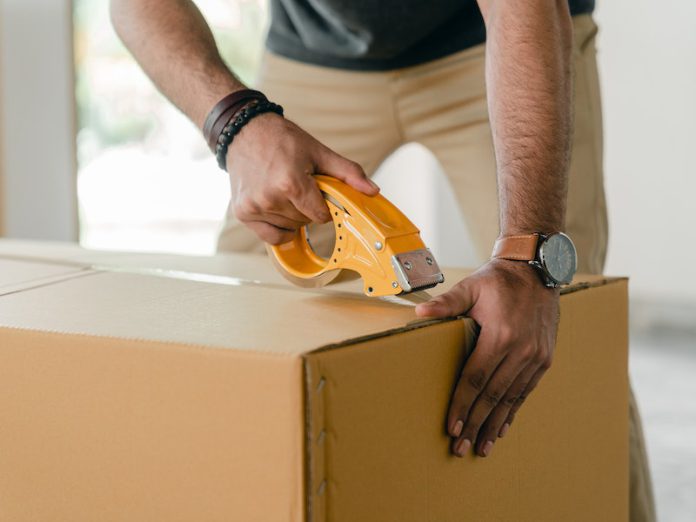
What is that one right way? Hiring long distance movers, of course. Sure, doing everything alone is also an option, but not exactly a great one, as you’ll quickly realize once the process begins and you find yourself frustrated at every step of the way. From packing, a task you can get some tips on if you go here, to transporting everything to the new place, you’ll certainly find the idea of doing all of this alone daunting.
As you should. Playing it smart means hiring long distance movers to do the necessary work for you and safely transport all of your belongings from one location to another. Not exactly sure when it is that you should hire these professionals, so wondering if you really need them right now? Completely normal to wonder something like that. And, by reading on, you’ll get a clearer idea when you will need these professionals.
When To Hire Long Distance Movers
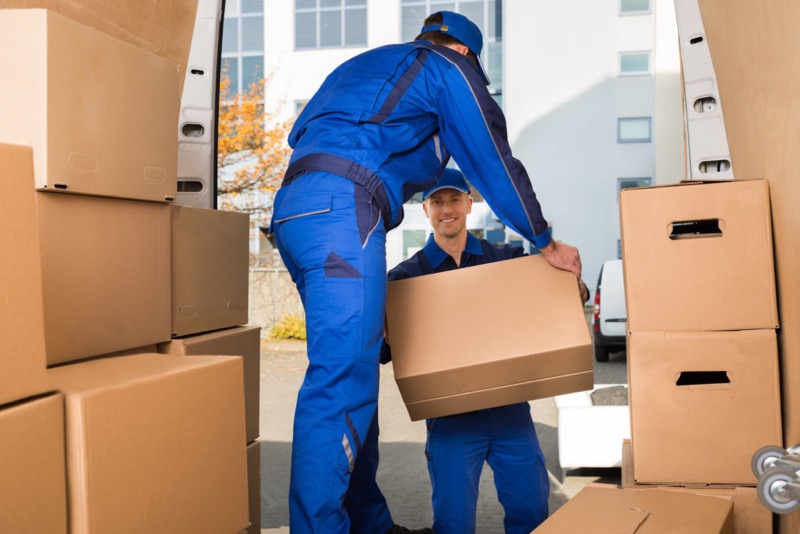
Here’s the most obvious answer to the above question. You’ll need to hire long distance movers when you are, well, moving a long distance. Of course, you could be confused about what distance constitutes a long one. While that may depend on the company you choose, the general rule of thumb is that a move longer than 400 miles is considered a long distance one.
Before I start getting into details about when and why to hire these pros, there’s one more thing for you to know here. If you’ve calculated the distance and realized that you need these specific services, it would be best for you to schedule them in advance, instead of waiting for the last minute. While you could get last minute services, those could wind up costing you more. And then, there’s always the danger of the movers not being available on such a short notice, which is why hiring in advance is important.
Visiting https://www.lifestyle-moving.com/ and similar websites and companies will probably make the hiring process clearer, allowing you to understand precisely when it is that you should contact these professionals. Understanding the precise services they provide will also make it easier for you to figure out precisely what you should expect from these professionals. So, now that you’re aware of that, let me tell you more about when it is that you should consider hiring long distance movers.
Want to take your offices elsewhere? There’s just so much equipment to deal with and transport that you’ll probably get frustrated the moment you begin thinking about it. When you hire these movers, though, you’ll get rid of the stress right away, knowing that the equipment will be handled with care and that they will deal with the entire moving process without you having to even lift a finger. Quite convenient, isn’t it?
Speaking of convenience, you’ll need the same when moving to a new home as well. From furniture to smaller personal belongings, everything you’ll want to take with you will be important. And, letting professionals handle the important stuff will guarantee their safe transportation. You do want all of your belongings to be safely delivered to the new location, don’t you? Hiring long distance movers is the way to go if you do.
You may have been thinking about handling the move alone, but you’ve realized that it will take a long, long time. Time you don’t have, or time you don’t want to waste this way. Well, by hiring professional movers, you’ll get quick services, meaning that the entire process will be completed as soon as possible, and you won’t have to worry about wasting a lot of time on trying to do it alone. So, needing to do this quickly is another reason for hiring these experts.
Hiring them when you want to save some money is also a good idea. Does that sound a bit counterintuitive? I get why it may, but here’s the thing. First, planning for a long distance move will take time, and getting everything prepared will cost money. Then, there’s also the fact you’ll have to deal with transportation yourself, possibly even driving back and forth a few times if you decide to do it alone, which will accumulate a lot of gas expenses.
And, of course, some unexpected situations may arise during the transportation process, including vehicle break downs. Paying for repairs will also, thus, be a must, and so will probably paying for lodging and food during your trip. On the other hand, when you hire long distance movers, you get a flat fee for the service and you pay that one fee without having to worry about any emergency and surprise expenses along the way. Plus, you won’t have to worry about your belongings getting damaged, which ultimately means that this is the more cost-effective option.
How Far & How Much Are You Moving?
Unsure of whether you need to hire long distance movers? The most significant thing to ask yourself when trying to determine that is how far you’re actually moving. Been reading carefully? Then you remember me saying that, usually, anything over 400 miles is considered a long distance move. That, however, depends on the professionals you’ll hire, because different companies may have different policies.
In any case, realizing you need these professionals, you’ll probably contact a few of them to hear their offers out, because you understand that hiring experts is better than doing this alone. Saying goodbye to the stress of the process will have you smiling throughout, completely confident your belongings will be safely and quickly transported, without suffering any damage whatsoever. To top it all off, you’ll get a fair quote when you hire the right company, regardless of how far you’re actually moving.
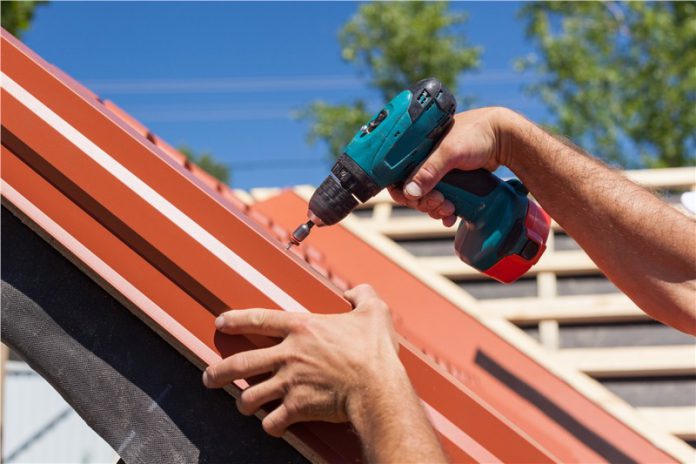
Discovered some roof damage recently? And, now wondering if you can have it repaired, or if replacements are in order? Not an easy decision to make, especially for people who don’t quite have a lot of experience with roof work and who don’t know much about how repairs and replacements are done. Nobody wants to waste time and money on replacements if unnecessary, but the truth is that repairs can sometimes cost more and take up more time, if they are being done in vain and if the roof is no longer in such a good state that it can benefit from a repair.
Various roofing services exist that you can use, and you will most likely need some of them from time to time. Painting, repairs, restoration, replacement… All of those have their purpose. And, naturally, understanding what you need is the best way towards actually being happy with the end results. While I get that understanding what you need may be difficult, you should certainly be ready to put the necessary effort into finding that out, so as to use the perfect services.
Most usually, people are unable to decide between repairs and replacements as there are multiple factors to consider when trying to make that choice. Before we get to it, though, I want to make one thing perfectly clear. Whatever you choose, hiring experts to do that for you is the right way to go, because doing it alone could be even more damaging and not to mention dangerous.
Should You Get A Roof Replacement Or Repair?
Now that we’ve cleared that up, that is, now that you understand the importance of hiring experts, you need to learn what to hire them for. Replacement or repair? As mentioned, various different factors have to be considered during the process of determining which one of these services you need. It’s not like you can just make a random decision and move on. Well, theoretically, you can, but it might not be the best decision when made that way.
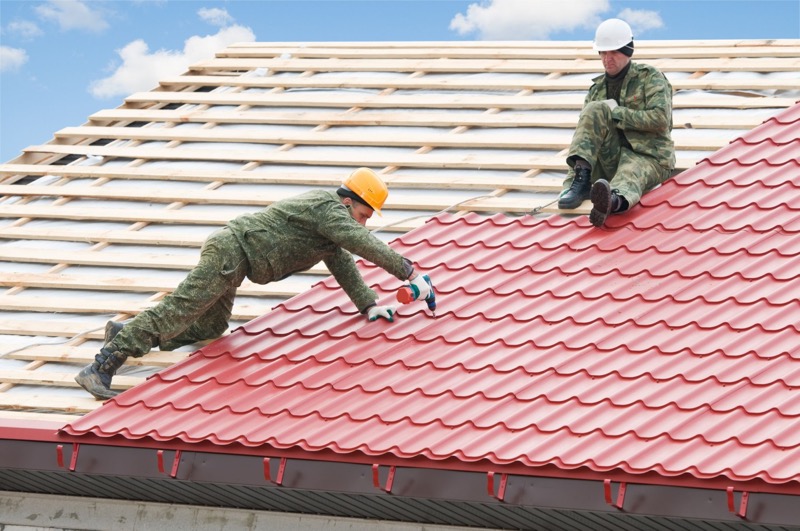
Hiring skilled local roofing contractors such as Global Exterior Experts to have the structure completely replaced will give you peace of mind, knowing you won’t need to be dealing with frequent repairs in the future.
When first installing this structure on your home, you’ll have a lot of different types to choose among. And, while you won’t think about this in that particular moment, the truth is that the type you’ll choose will later play a role in whether you need repair or replacements. Doing your best to learn more on how to select the right type is, thus, of crucial importance, but you can’t go back in past, can you? Since you can’t, considering the lifespan of the type you’ve chosen will help you determine if it can benefit from a repair, or if you may need to go for a replacement. Doing repairs on roofs that are well past their lifespan is not the most cost-effective solution.
The extent of the damage done to the structure also plays a significant role here, as it should be perfectly logical already. Are you dealing with only a few missing shingles, or are there extensive leaks caused by the damage that the structure suffered? Is the damage limited to a specific area on the roof, or is it quite extensive, covering larger portions of the structure? If limited to a specific area, a repair should do the trick. Yet, if the damage is extremely extensive, repairs could cost almost as much as a replacement, in which case it makes sense to get a brand new roof instead of patching up the old one.
The timing also has to be considered here. If you’re pressed by time, given that a storm is coming, for example, you may not have time for replacements. Investing in repairs in that case will help you protect the structure from further damage and protecting your entire property for that matter. Once the storm season is over, however, you can go back to your replacement plans, if you realize that the roof won’t exactly withstand the next storm season.
What plans do you have with your home? If you’re planning on selling it soon, upgrading it with a new roof could be a good selling point. In fact, it could increase the value of the property and help you sell at a much better price. Also, if you’re planning on living in the property, well, forever, you can definitely justify a replacement, as you’ll do this once and forget about it altogether in the future, especially if you choose materials that have an extremely long lifespan.
Last, but not least, considering your budget when trying to make this decision is also a must. Understanding how much roof replacement costs will give you a clearer idea on whether you have the budget for it, or if you may need to stick with repairs for the moment even though you understand those are not the best solution. Anyway, finding a way to fund the replacement project is a good thing to do, because repairs will cost more in the long run, especially if your roof is rather old.
Expert Replacement Benefits
Clearly, there are numerous benefits to roof replacement services. Hiring experts to have the structure completely replaced and to install a new one for you will give you peace of mind, knowing you won’t need to be dealing with frequent repairs in the future. Something you may have had trouble with, especially if your roof is older. Plus, replacement may be much more cost-effective, especially if it is true that you’ve had to deal with frequent repairs in the past. The costs of those could surpass the costs of getting a brand new structure.
Furthermore, installing a brand new structure on your home will increase its value, which is a great thing if you are planning on selling any time soon. Even if you aren’t planning on selling now, you could decide to do so in the future, and having a well-maintained and healthy roof will not only help you find buyers more easily, but also allow you to sell at a higher price. Definitely a huge benefit to consider.
Asbestos, a hazardous mineral once extensively used in various industries, has exposed countless employees to severe health risks for decades, leading to numerous cases of mesothelioma, lung cancer, and other respiratory illnesses.
Prolonged exposure to asbestos fibers presents significant health risks, particularly to the respiratory system. Inhaling these hazardous fibers can lead to life-threatening diseases and due to the long latency period of these illnesses, prevention and avoidance of exposure are paramount.
For decades, numerous workers across industries were unknowingly exposed to asbestos, resulting in devastating consequences for their health and quality of life. Many individuals who handled asbestos or worked in asbestos-contaminated environments have faced debilitating diseases, imposing substantial challenges on their lives and livelihoods.
While asbestos usage is now regulated, the possibility of encountering it at work still exists. Understanding safety precautions and educating employees on appropriate actions in such situations is crucial to safeguard their well-being.
Keeping Safe Around Asbestos
Keeping safe around asbestos is of utmost importance to protect yourself and others from potential health risks. Follow these essential guidelines to ensure your safety when working in environments where asbestos may be present:
Awareness and Education:
Educate yourself about asbestos, its potential health hazards, and the locations where it might be found. Understand the importance of following safety protocols and precautions to minimize exposure risks.
Identify Asbestos-Containing Materials (ACMs):
Be aware of common materials that may contain asbestos, such as insulation, ceiling tiles, floor tiles, roofing shingles, cement pipes, and some wall textures. If you are unsure whether a material contains asbestos, treat it as potentially hazardous until confirmed otherwise.
Work with Professionals:
Avoid handling or attempting to remove asbestos-containing materials on your own. Hire trained and licensed asbestos professionals for inspections, testing, and removal if necessary. These experts have the knowledge and equipment to handle asbestos safely.
Protective Equipment:
When working in areas where asbestos might be present or during asbestos removal, wear appropriate personal protective equipment (PPE), including a respirator with HEPA filters, disposable coveralls, gloves, and safety goggles. Make sure the PPE fits properly and is in good condition.
Minimize Disturbance:
Do not disturb asbestos-containing materials unnecessarily. If you suspect the presence of asbestos, avoid drilling, cutting, or breaking the material, as these actions can release harmful fibers into the air.
Wet Methods:
If asbestos must be disturbed for repair or removal purposes, use wet methods to minimize fiber release. Spraying water or using a gentle mist can prevent the fibers from becoming airborne.
Controlled Work Area:
Establish a controlled work area when handling asbestos-containing materials. Isolate the area with barriers and warning signs to prevent unauthorized access.
Proper Waste Disposal:
Follow local regulations for asbestos waste disposal. Double-bag any debris or materials containing asbestos and label them clearly as hazardous waste and dispose of asbestos waste at approved facilities.
Decontamination:
After working around asbestos, carefully remove and dispose of your PPE. Thoroughly clean your skin and clothing to prevent any potential asbestos fibers from spreading. Know more about the importance of PPE here.
Regular Health Monitoring:
If you work in an environment with potential asbestos exposure, you will need to participate in regular health monitoring programs. This can help detect any asbestos-related health issues at an early stage.
Report Suspected Asbestos:
If you come across damaged or deteriorated materials that might contain asbestos, report it to your supervisor or building management immediately.
By following these safety measures and promoting awareness among coworkers, you can significantly reduce the risks associated with asbestos exposure and contribute to a safer working environment for everyone.
Workers who remove asbestos or perform maintenance, remodeling, or demolition tasks are most likely to be exposed. To minimize risk to employees, contact a professional like Black Diamond asbestos removal Newcastle to have the site assessed and an exposure plan developed.
Removing Asbestos
Asbestos removal is a complex and hazardous procedure that should be undertaken by licensed and experienced professionals to ensure safety and compliance with regulations.
Any asbestos trash should be disposed of at a permitted disposal location.
Even before removal, professionals need to assess the area, plan safety precautions to systematically remove asbestos in the area to avoid causing damage that could release fibers. All removed asbestos materials are securely sealed and double-bagged in specialized asbestos disposal bags. This containment prevents any potential fibers from escaping during transportation.
Asbestos waste should never be disposed of with regular household or construction waste. Instead, it should be taken to authorized facilities that can handle hazardous materials. The disposal options include:
Licensed Landfills: Some landfills are specifically licensed to accept asbestos waste. These facilities have the necessary equipment and procedures to handle and contain asbestos properly.
Hazardous Waste Transfer Stations: These stations accept hazardous materials, including asbestos, for proper disposal. They ensure that the waste is transported to appropriate disposal sites.
Asbestos Waste Collection Services: In some areas, specialized waste collection services are available for asbestos disposal. These services are equipped to safely transport and dispose of asbestos waste.
In conclusion, the importance of following asbestos safety procedures and maintaining a vigilant approach to asbestos exposure cannot be overstated. To protect ourselves and others from the dangers of this hazardous mineral, strict adherence to safety protocols is crucial.
By being aware of the risks associated with asbestos and educating ourselves on its presence in workplaces and older buildings, we can make informed decisions to prevent exposure. Employers must prioritize the safety of their workers by conducting thorough risk assessments, providing adequate training, and ensuring the proper use of personal protective equipment.
Engaging licensed professionals for asbestos removal and disposal is also imperative to ensure that the process is handled with expertise and in accordance with regulatory standards.
Maintaining a safe working environment and adhering to proper asbestos safety procedures not only protects the health of workers but also safeguards the well-being of future generations. Let us prioritize safety and be steadfast in our commitment to protect ourselves and those around us from the dangers of asbestos.
As a group of naturally occurring fibrous minerals, asbestos was widely used in the construction industry and various other applications due to its remarkable properties, including heat resistance and durability. Unfortunately, over time, the hazards associated with asbestos exposure have become apparent, leading to a wave of regulations and efforts to remove it from workplaces. This article explores the dangers of asbestos in the workplace and the crucial steps necessary for its safe removal to protect workers’ health and well-being.
Asbestos-related illnesses, such as mesothelioma, lung cancer, and asbestosis, can take decades to manifest after initial exposure. Inhalation of asbestos fibers is the primary route of exposure, typically occurring during activities that disturb asbestos-containing materials (ACMs). Common sources of asbestos in workplaces include insulation, ceiling and floor tiles, pipe insulation, roofing materials, and fireproofing materials. When disturbed, these materials release tiny asbestos fibers into the air, which can be easily inhaled by workers.
Workers exposed to asbestos are at significant risk of developing debilitating and life-threatening diseases. Mesothelioma, a rare and aggressive cancer that affects the lining of the lungs, abdomen, or heart, is almost exclusively caused by asbestos exposure. Lung cancer and asbestosis are also prevalent among individuals who have worked in asbestos-contaminated environments. Asbestos fibers, once lodged in the lungs, cannot be expelled, leading to chronic inflammation and scarring over time.
In response to the alarming health risks, many countries have enacted stringent regulations regarding the handling and removal of asbestos in workplaces. These regulations mandate employers to assess asbestos-containing materials, establish proper management plans, and ensure the safe removal of asbestos when necessary. Additionally, guidelines for personal protective equipment (PPE) and worker training have been put in place to minimize the risk of exposure.
How to Remove Asbestos in the Workplace Safely
Asbestos Assessment and Identification: Before any removal work begins, employers must conduct thorough assessments to identify asbestos-containing materials. This process involves inspections and laboratory analysis to determine the presence and quantity of asbestos fibers.
Certified Abatement Contractors: Asbestos removal is a highly specialized task that requires skilled professionals. Certified asbestos abatement contractors possess the necessary training and expertise to handle asbestos safely. Hiring qualified contractors ensures that the removal is conducted according to regulations and industry best practices.
Developing a Removal Plan: A comprehensive removal plan is vital to minimize exposure risks. It should outline the scope of work, safety measures, containment procedures, waste disposal strategies, and a clear timeline for completion.
Worker Protection: All workers involved in the removal process must be equipped with appropriate PPE, such as respirators, gloves, coveralls, and eye protection. Proper training in handling asbestos-containing materials and emergency response procedures is essential.
Containment and Air Monitoring: The removal area must be isolated and contained to prevent asbestos fibers from spreading to other parts of the workplace. Continuous air monitoring is crucial to verify that asbestos levels remain below permissible exposure limits.
Proper Removal Techniques: Wetting ACMs before removal helps to minimize fiber release. Specialized tools and methods, such as wet stripping and gentle removal, should be employed to avoid generating dust.
Waste Disposal: Asbestos waste should be double-bagged in approved containers and labeled appropriately. Disposal must follow local regulations and be performed at licensed facilities equipped to handle hazardous materials. Read here to know more.
Without competent assistance, you run the danger of violating one among the many asbestos-related regulations and incurring hefty fines or penalties.
To properly remove contaminated protective gear and equipment, experts must adhere to a set of guidelines. These protocols guarantee worker security and stop workers from bringing asbestos into their residences.
Why You Should Never Attempt to Remove Asbestos Yourself
Lack of Expertise: Asbestos removal is a highly specialized task that requires training, experience, and knowledge of proper handling procedures. Without adequate expertise, attempting removal can lead to significant exposure risks, both for yourself and others in the vicinity.
Health Hazards: Disturbing asbestos-containing materials without proper precautions can release a high concentration of asbestos fibers into the air. These fibers can linger in the environment for extended periods, posing an ongoing health threat to anyone who comes into contact with the contaminated area.
Legal Consequences: Many countries have strict regulations regarding asbestos removal due to its health risks. Attempting to remove asbestos without the required certifications and permits can lead to severe legal repercussions and fines.
Inadequate Protective Measures: Removing asbestos without the necessary protective equipment can result in direct exposure to hazardous fibers. Asbestos fibers can easily attach to clothing and skin, increasing the risk of secondary exposure to family members and others in contact with the person attempting the removal.
The Safe and Responsible Approach
Asbestos Inspection: If you suspect the presence of asbestos in your home or workplace, the first step is to arrange for a certified inspector to conduct a thorough assessment for safe asbestos removal. This inspection will identify the location and condition of asbestos-containing materials.
Certified Asbestos Abatement Contractors: If the inspection confirms the presence of asbestos, hire a certified asbestos abatement contractor to handle the removal. These professionals are equipped with the necessary training, tools, and safety protocols to ensure safe and compliant asbestos removal.
Compliance with Regulations: Professional asbestos removal contractors are well-versed in local regulations and guidelines governing asbestos removal. Hiring a certified contractor ensures that the removal process is legally compliant, minimizing the risk of legal issues and penalties.
Proper Containment and Disposal: Certified contractors will establish proper containment measures to prevent asbestos fibers from spreading during the removal process. They will also dispose of asbestos waste following strict protocols and regulations.
Peace of Mind: By entrusting the removal to professionals, you gain peace of mind knowing that the process is being handled safely and responsibly, protecting the health of yourself, your family, and those around you.
The dangers of asbestos exposure cannot be overstated, and attempting to remove asbestos yourself is a decision fraught with risks. Protecting yourself, your loved ones, and others in your community requires responsible action. Always engage certified professionals for asbestos inspection and removal to ensure the safety and well-being of everyone involved. By adhering to this essential reminder, we can collectively contribute to a safer environment, free from the dangers of asbestos.
In the sweltering heat and humidity of an Australian summer, air conditioning is a must. Three out of four homes today use air conditioning to be cool and comfortable throughout the year.
If you don’t already have central air conditioning in your house, you’ll want to know what to look for in a system.
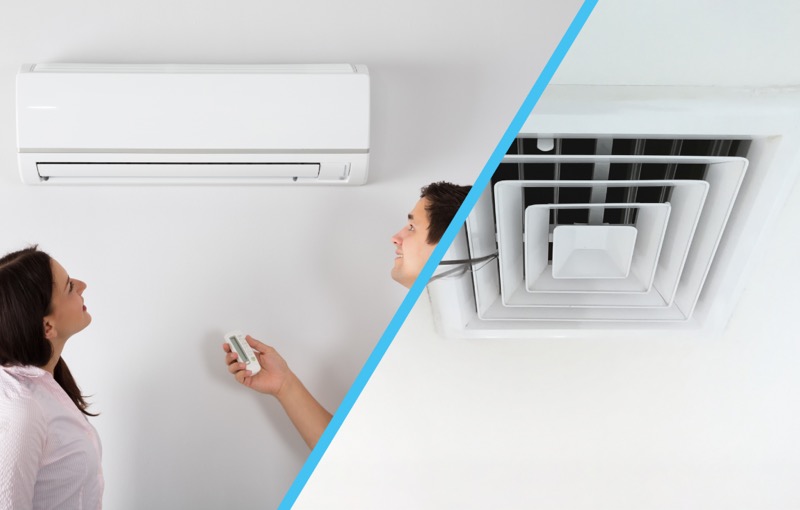
The most common types of air conditioners are ducted and split systems, but which is superior? Well, this might be somewhat tricky to answer, folks, because both have their uses.
Before you choose one of them, you should know that there are many things to think about, including the size of your home, the local climate, and your financial situation. The ideal system is energy efficient, so it won’t break the bank to install and will keep your home comfortably cool in summer and warm in winter.
Find out the differences between ducted and split-system air conditioners with our guidance, folks. In order to help you decide between a ducted and a split system air conditioner for your house, we’ve put together this detailed guide to help you weigh the pros and cons of each. You can discover more here https://thepropertytribune.com.au/lifestyle/how-to-stay-cool-on-christmas-day-with-a-forecast-max-temperature-of-30-across-australia/.
Okay, so let’s begin!
Comparing Ducted and Split System Air Conditioning for Your Home
You should know the differences between the two types of air conditioners before deciding which one is best for your home, even though they both perform admirably in terms of cooling and heating.
While ducted air conditioning is the most economical choice for a whole house, heating and cooling a single room with a split system is far more cost-effective.
When you compare and contrast each model’s features, you can determine which one is best for your needs.
1. Installation
Due to the increased difficulty of installing ductwork, ducted air conditioners are more expensive up front than split systems. If you want cold air to be distributed throughout your home, you’ll need a system of ducts and vents installed in the ceiling. Therefore, the layout of each property dictates how the ducts are designed.
While it’s more cost-effective to have a ducted air conditioning installed during construction or renovation, not all preexisting structures are suitable for the addition of such a system.
Since split-system air conditioners normally don’t necessitate major structural alterations to your home, their installation is typically quick and simple. Split systems come in a variety of sizes, so you can pick the one that works best in your home and with your budget.
2. Aesthetics
Both split and ducted air conditioners have bulky compressor outside units, but ducted systems are more aesthetically pleasing. Every room has its own set of outlets and controls, but the ductwork and central fan coil unit are concealed in the ceiling.
Linear grilles, bar grilles, and 4-way directional grilles are just some of the many types of ducted air grilles available to you.
Split systems can take up way more space because you have to put a unit on the inside wall of each room you want to cool. Depending on the brand or type, the internal unit may be too big to blend in with the decor of your home.
In comparison to ducted air conditioning, the noise level of split systems is quite high. Keep in mind that the installation of several split system units will result in an increase in background noise.
3. Performance
You should be aware that a ducted air conditioning systems have a higher initial cost but lower operating costs over time. With a ducted system, you can control the temperature in your entire home or office from one convenient location.
More vents can be installed in larger rooms because ducted systems are tailored to your home’s specific layout. You can save even more money on utility bills by zoning the house so that only certain rooms need air conditioning.
If you need to cool down only one room or a single space, a split system air conditioner is your best bet. You can choose a model with a lower impact on the environment and your utility bills thanks to the energy rating sticker.
Split systems only provide heating and cooling in the areas where the internal units are installed. Large rooms or rooms with inner walls can be particularly challenging for them. If you want to regulate the temperature in every area in your house, you’ll need to buy multiple units or a multi-head system.
4. Maintenance
Regular maintenance is required for all air conditioners, but split systems are typically less complicated to care for. The filters are easily removable and washable, so there’s no need to call in a pro every time one needs to be changed.
To keep the system running at its best, it is important to have the units and coils professionally serviced on a regular basis. Over time, you may spend more on repairs if you have more than one split system unit.
On the other hand, a yearly expert servicing is recommended for ducted air conditioning units. A skilled expert is required to service the concealed parts in the roof, as clogging the ducts would damage their performance.
Because of this, ducted systems may require more regular upkeep than split systems. However, ducted air conditioners are well-known for their dependability and durability, so with occasional maintenance, you can count on them to serve you well for many years. You can find out more here.
Making an Informed Choice with Aircon
How do you decide between a ducted air conditioner and a split system? It all depends on your specific requirements and price range.
A split system air conditioner is a good choice if you need to cool a small area, have limited funds, or value convenience and speed of installation.
A ducted air conditioning system may be a better option if you want a quiet and unobtrusive cooling solution that will effectively chill your entire home.
You can always ask professionals what they think would be the best fit for your home! After all, you want to make the smart choice, right? Oh, and if you want the best performance from your air conditioner, you should have a technician handle the installation.
Understanding the cost of plumbing services can help people plan financially. It is even better when people have an idea of the cost even before the need for these services arises.
When doing your research, you should bear in mind the various kinds of plumbing services being offered. Installation, maintenance, repairs, and inspection services are involved. You can check out this website for a breakdown of the various plumbing services and get a quote.
This article will shed some light on the cost in the United States. But before we go any further, you should know that there are no one-size-fits-all prices. This is for reasons including the differences in locations across the country, the wide range of services, the varying demands by service providers, as well as inflation or deflation.
A Comprehensive Guide to Plumbing Costs
Discussed below are price ranges for plumbing services in the United States:
1. Service Call Charges
This charge is meant to cover the cost of transportation to their client’s location, as well as basic inspection. The assessment of whatever the problem is would determine the eventual cost of fixing the problem. Depending on some factors, plumbers may request between 50 – 200 dollars for this.
2. Hourly Rate
As with many other artisans in the country, most plumbers charge on an hourly basis. Depending on several factors, the rate is around 60 – 200 dollars per hour.
3. Service Rates
Although these professionals work with fixed hourly rates, the costs of some services are a bit fixed. These are particularly repair and replacement kinds and some of them include:
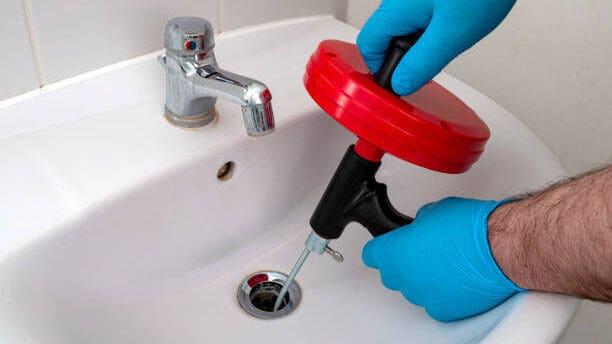
Cleaning Clogged Drains – This cost would be anywhere from 100 – 300 dollars. The exact cost also depends on the location and severity of the clog. Plumbers that use advanced devices for locating the clogged spot are also likely to charge more.
Faucet Repair – A leaky faucet causes water wastage. You would need around 60 – 150 dollars to fix a leaky faucet.
Faucet Replacement – A faucet may be damaged beyond repairs. It could also be that your preference is to have it replaced. Whatever the case is, it would cost around 200 – 500 dollars to have it replaced. The type of faucet and the complexities involved in fitting it could add or remove from the cost.
Toilet Repair – You would need around 100 – 300 dollars for this.
Toilet Replacement – The cost is increased because a toilet would have to be purchased. For this reason, it could be as high as 700 dollars. On the other end of the spectrum, it could be as low as 200 dollars.
Pipe Repair – The size of the pipe’s section that needs to be repaired largely determines the price. Depending on the size and some other factors, clients would have to pay between 150 – 400 dollars.
Pipe Replacement – Having an entire pipe layout replaced will certainly cost more than repairing it. We are talking of anywhere between 900 – 6000 dollars. The length of the pipe layout and the complexities involved in installing them also determine the price.
Water Heater Repair – There are several possible reasons a water heater would not work fine or work at all. Depending on the specific reason(s), the price of fixing the problem is somewhere around 150 – 600 dollars.
Water Heater Installation – The labor cost for installing a water heater is between 700 – 1600 dollars.
These are a few of the price ranges for plumbing services. For more information on this, you can visit: https://www.forbes.com/home-improvement/plumbing/plumbing-repair-cost/.
4. Permits
Permit fees may have to be paid before certain tasks can be carried out in some places. The minimum charge is usually set at 50 dollars. However, it could be as high as a few hundred dollars in some places or depending on the project.
What Factors Affect the Cost of Plumbing Services?
The aforementioned section was mostly about the price ranges. Well, these costs are determined by several factors, some of which have been mentioned in passing. The factors that affect the cost of plumbing services include the following:
The Location
Plumbers in certain locations are known to charge more or less than their counterparts in other areas. Largely, those in metropolitan parts are known to charge more than those in rural parts.
Purchased Materials
Some jobs require that certain materials are purchased. This is especially the case with replacement services. The price of the materials used will definitely affect the price.
Task
Some jobs are more complex and time-consuming. An example would be laying out new pipes for a building. It is way more complex than cleaning a clogged drain.
As a result, the complexities of executing the job and the time involved mean that it would cost a lot more. This is besides the fact that more materials will be required.
Logistics
The distance covered before the plumber gets to your location would have to be accounted for in the service charge. This is why hiring professionals far from your location may cost more than hiring local-based options.
Time Spent
These professionals usually work on an hourly rate basis. This means that time-consuming jobs would cost more.
Urgency
Clients in need of emergency services usually have to pay more. The same usually applies to those who require plumbing services during non-conventional work hours.
Experience & Reputation
The services of some plumbers are more expensive or cheaper than others. The experience of the professional is usually a major determinant. Those without so much experience are likely to charge less than those who are very experienced.
Reputation is equally a determinant. Some professionals have made a good name for themselves over the years. As a result, clients do not mind paying the extra that they charge.
The Existence of Additional Issues
Additional problems may be detected while a service is being carried out. This can drive up what the plumber charges.
Conclusion
Some factors affect the cost of plumbing services as discussed here. Knowledge of these factors will help people budget accordingly.
It is good that you have these services carried out at cut prices. However, this should not be at the expense of getting quality plumbing services. So, bear this in mind when searching for plumbers or plumbing service providers.
As the coldest season of the year, winter has us all dressing in warm jackets and equally warm boots, wearing hats, scarves and gloves to keep us comfortable. Once we get home, though, we take all of the big clothes that hinder our movability, and decide to get even more comfortable by turning on the heat. Being able to walk around your home in nothing but a T-shirt during winter is something we all definitely love, and you’re probably not an exception to that rule.
So as to be able to do that, though, we’ll need to properly heat our homes during winter. What are you doing about it this season? Are you struggling with your heating systems, or have you actually found the perfect way to keep your home warm during winter? Perhaps try some of the methods found in this article.
Anyway, if you’re struggling with your current heating solution, or if you’ve just now moved to a new home, or built one for that matter, you’ll need to find the best one for you. Choosing at random is not the best idea here, because this is a big investment you’ll have to make, and you want to be completely happy with it. Winding up being unhappy with the solution you’ve previously paid for will only make you frustrated.
So, before making any of these important choices, what you should do is find out about the best ways to heat your home in the winter, and then decide for yourself which one could be perfect for your specific situation. Understanding not only what kind of a system to install in your home, but also how to keep it running efficiently, is certainly of utmost importance. Because, while some things are up to the system, other things are up to you, meaning you’ll have to learn how to do your best to heat your home in winter successfully.
Best Ways To Heat Your Home in Winter
It’s not easy to say what the best heating solution is for you specifically, because that depends on several different things. The size of your home, the actual climate, your lifestyle… All of those factors and much more have a huge impact on what the perfect solution will be for you. So, taking all of that into account when learning about different heating options is a must, as that’s how you’ll find out precisely which options could work best for you.
That being said, you do need to learn about the different heating options in order to make this choice. The ducted gas heating option, as further explained at https://www.smoelair.com.au/ducted-gas-heating-melbourne, is a popular one, and then there are also heat pumps, central heating solutions, AC units, hydronic systems, electric space heaters, gas and wood heaters, slow combustion ones, as well as the solar options. Considering those significant factors such as the size of your home, the actual climate in your area and your lifestyle, will help you select the perfect solution for you.
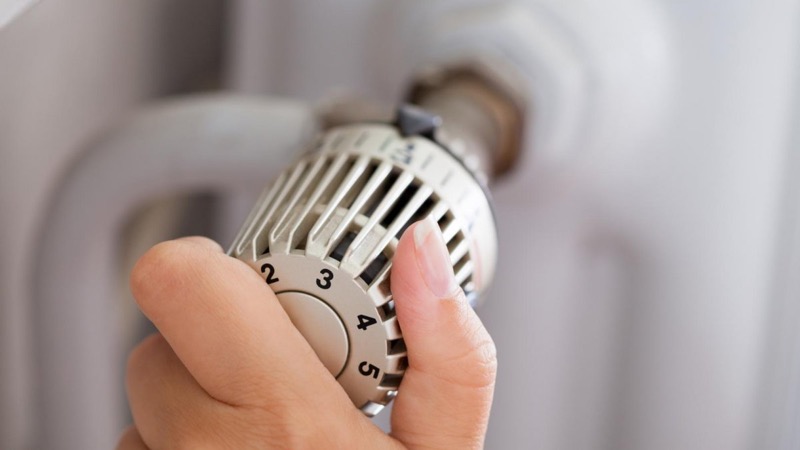
Whatever you choose, though, you’ll need to take some other tips into consideration so as to keep your home properly warmed up in the winter. For example, if you are using radiators, placing a thin sheet of card covered in foil behind it can be a good trick to warm up the place faster and more successfully. Why? Because the foil will reflect the heat back to your home, so instead of heating the walls, you’ll be heating the actual room, and keeping it warm for longer.
No matter which heating system you choose, it won’t exactly be working as efficiently as possible if there’s a lot of draught in your home. So, draught proofing the place is, therefore, a must. Filling the gaps you’ll find around the windows and doors will not only keep the home warmer and cosier for longer, but also help you save on your bills, which is another huge plus.
Getting your devices properly serviced on a regular basis is also of crucial significance if you want to heat your home perfectly. Having professionals check the devices, service and maintain them, means they will always function as efficiently as possible, allowing you to be completely comfortable in your home, knowing that your heating system is working perfectly to keep you warm. Of course, always hire trusted and reliable professionals for this job.
You can also use some old-school tricks to maximize the efficiency of your heating system. Closing the curtains, rolling out a rug, and keeping the oven door open after it has been used will all warm up the place even more. And, naturally, make sure to identify your ideal temperature and set the thermostat to it, as that will further improve the efficiency of your system, while keeping you completely comfortable in your own home.
Install Ducted Gas Heating
If looking for the cheapest heating solution, you may not immediately find ducted gas heating on the list. If, however, looking for the most cost-effective one in the long run, then you’ll undeniably need to consider this particular system. And not only because it is cost-effective, but also because it is extremely reliable and highly successful at keeping your home properly warmed up during winter. A fantastic investment the cost of which will be offset by energy savings, the ducted gas heating comes with numerous benefits, and understanding those will help you decide if you want to get this system or not.
First off, it prides itself in providing you with consistent and reliable heating, no matter how cold it gets outside. Its zoning feature allows you to divide your home into areas and choose which areas to heat during the day. This level of control will certainly appeal to every homeowner, and then there’s also the fact that ducted gas heating is not only environmentally friendly, but also much safer for the whole family. Its low maintenance needs and a long lifespan make it even more appealing and this system is ultimately deemed to be the most cost-effective one on the market, which is certainly a great reason to get it.
Regularly maintaining a lawn is essential to keep it looking its best and stay healthy. Not only does a well-maintained lawn look amazing, but it also delivers many other benefits. For starters, regularly mowing and shortening grass helps control weeds from taking over the area, which can be unsightly and potentially damaging to the environment.
Additionally, regular lawn maintenance will help promote better air quality by keeping dust levels down and helping reduce the amount of pollen in the air. Furthermore, having a neat lawn can increase property value since potential buyers are more likely to be drawn to homes with beautiful outdoor spaces.
Finally, maintaining your lawn frequently will help preserve water resources since properly cared-for turf requires less water than an unmaintained one. You can get a professional to handle your lawn and leave it looking its best. By clicking here, you can get access to their services.
Watering and Fertilizing Tips for Beautiful Turf
When watering and fertilizing your turf, you should keep a few tips in mind. First of all, make sure that you water your lawn deeply and infrequently. It will encourage the roots to grow deeper into the soil, making them more drought-resistant. Additionally, try to water your lawn in the morning or evening when temperatures are cooler and there is less wind.
It will help reduce evaporation and ensure that more water reaches the roots of your grass. As for fertilizing, use a slow-release fertilizer that contains nitrogen, phosphorus, and potassium. These three elements are essential for healthy turf growth. Apply the fertilizer at least once every six weeks during the growing season and follow the instructions on the package for proper application rates.
Best Practices for Weed Control in Your Yard
Weed control is an essential part of keeping your yard looking its best. To ensure that your lawn is free from weeds, it’s important to follow a few best practices:
Make sure to mow your lawn regularly and at the right height. It will help keep weeds from taking over by preventing them from getting enough sunlight to grow.
Use a pre-emergent herbicide in the spring and fall to prevent weed seeds from germinating. You can also use post-emergent herbicides to kill existing weeds, but read the label carefully and apply them according to directions.
Consider using mulch or ground cover plants around trees and shrubs to reduce the amount of light that reaches the soil surface and prevent weed growth.
Learn How to Aerate and Overseed Your Lawn Properly
Aerating and overseeding your lawn is a great way to keep it healthy and lush. First, you must aerate the soil using a garden fork or an aerator machine. It will help loosen the soil and allow air, water, and nutrients to penetrate deeper into the ground. Once you’ve done that, it’s time to spread the grass seed.
Use a good quality seed mix suitable for your climate and soil type. Spread the seeds evenly over the entire lawn area, then lightly rake them in so they make contact with the soil. Finally, water your lawn regularly until the new grass has grown in fully. This process may take several weeks, depending on how quickly your grass grows.
You walk into a kitchen where the oven preheats itself with a simple voice command, the refrigerator reminds you of your upcoming appointments, and the coffee maker brews your favorite blend at the touch of a button. These wonders are not dreams of the future; they are the reality of smart appliances, designed to revolutionize the lives of the elderly.
In this article, we’ll delve into the world of smart appliances, exploring their remarkable benefits, key features, and why they are a game-changer for the elderly. So, let’s embark on this journey of technological marvels that make everyday tasks safer, more accessible, and downright convenient.
Benefits of Smart Appliances for the Elderly
Imagine having an extra pair of hands that make your home safer, more convenient, and energy-efficient. That’s precisely what smart appliances offer to the elderly population. Let’s take a closer look at their incredible benefits.
Enhanced Safety and Convenience. Smart appliances are a boon when it comes to safety and convenience. With automated shut-off and safety features, you can bid farewell to worries about leaving the stove on or forgetting to turn off the iron. These appliances empower you with hands-free operation and voice control, allowing you to effortlessly manage tasks with a simple command.
Improved Independence and Accessibility. Maintaining independence is paramount for the elderly, and smart appliances can be valuable allies in this pursuit. Equipped with easy-to-use interfaces and intuitive controls, these appliances eliminate complexity and frustration.
Energy Efficiency and Cost Savings. Smart appliances don’t just make life easier; they also help you save money and reduce your environmental impact. Energy monitoring and optimization features enable you to keep track of your energy consumption and identify areas for improvement.
Key Features of Smart Appliances for the Elderly
From the kitchen to cleaning to health and wellness, smart appliances cover a wide range of everyday needs.
1. Smart Kitchen Appliances
In the heart of any home, smart kitchen appliances take center stage. Picture a refrigerator that not only keeps your groceries cool but also sends you reminders when food is about to expire. Voice-controlled ovens and stovetops make cooking a breeze, allowing you to adjust temperatures, set timers, and even search for recipes with just your voice. And let’s not forget dishwashers that detect how full they are and adjust water and energy usage accordingly.
2. Smart Home Cleaning Appliances
Cleaning the house is no longer a chore when you have smart cleaning appliances. Robotic vacuum cleaners equipped with mapping and scheduling capabilities efficiently navigate your home, ensuring every nook and cranny is clean. Smart washing machines with automatic detergent dispensing take the guesswork out of laundry, while voice-controlled smart dryers with wrinkle prevention features ensure your clothes are ready to wear without the hassle of ironing.
3. Smart Health and Wellness Appliances
Taking care of your health and wellness becomes easier with smart appliances designed specifically for the elderly. Smart pill dispensers offer medication reminders and track adherence, eliminating the risk of missed doses. Temperature-controlled smart water pitchers help you stay hydrated, while smart sleep monitors and adaptive lighting promote better sleep quality. These appliances become your partners in maintaining a healthy lifestyle.
Considerations for Choosing Smart Appliances for the Elderly
When it comes to selecting smart appliances for the elderly, several key considerations come into play. Ease of use and user-friendly interfaces are vital to ensure a seamless experience. Clear displays, intuitive controls, and voice commands make interacting with the appliances effortless.
Safety features and certifications, such as automatic shut-off and compliance with standards, provide peace of mind. Compatibility with existing appliances and integration into smart home ecosystems are crucial to leverage the full potential of these appliances. Likewise, it’s crucial to consider the availability of reliable electrical services to ensure proper installation, maintenance, and troubleshooting of smart appliances for the elderly.
Challenges and Limitations of Smart Appliances for the Elderly
While smart appliances bring a myriad of advantages, it’s important to acknowledge potential challenges and limitations. Technological barriers and the learning curve associated with new devices may present initial hurdles.
Affordability and cost considerations need to be taken into account, although long-term cost savings are often realized. Regular maintenance and adequate support for smart appliances are essential to ensure they continue to function optimally.
Additionally, it’s worth noting that smart appliances do not replace the need for human assistance entirely, and certain tasks may still require additional support. For example, complex cleaning tasks or heavy-duty chores may necessitate the involvement of professional cleaning services for the elderly, complementing the convenience and assistance provided by smart appliances.
Closing Thoughts
In a world where technology continues to advance at an astounding pace, smart appliances have emerged as transformative tools for the elderly. With enhanced safety, improved independence, and remarkable convenience, these appliances empower the elderly to lead more fulfilling lives. So, go ahead and indulge in the wonders of technology – because age should never be a barrier to a life well-lived.
roohome.com– Children do not only have to play in the park, you can also create a comfortable and fun playground in the house. You only need to provide one special room to serve as a playroom. Decorate the playroom properly and correctly. Pay attention to the color selection because this will determine the atmosphere and appearance of the playroom. And also, in decorating this one room, you must first know what your child likes. That way, they will feel more comfortable and happy when playing in their playrooms. And, in this article, we have provided 24 Playroom Ideas that you can use as a reference. So, let’s check it out!
1. Make The Room Fun with a Colorful Look
Cc: Pinterest
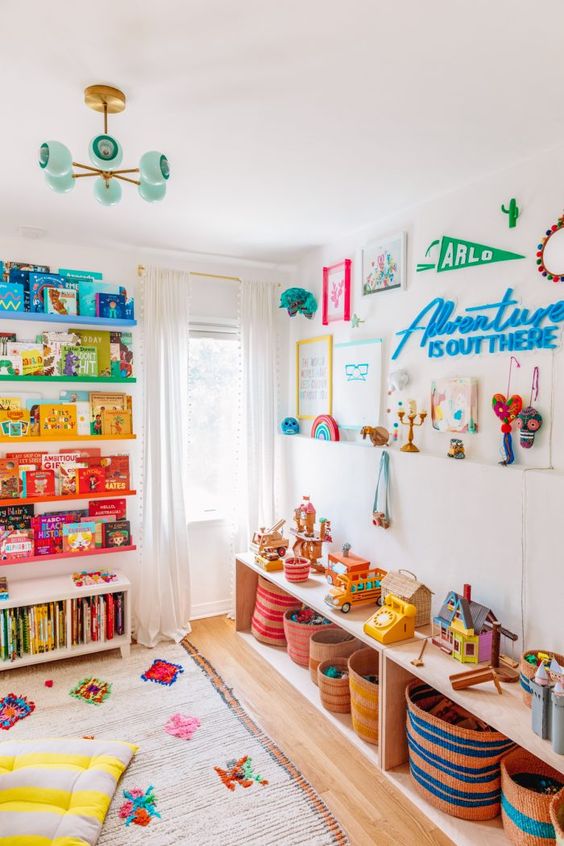
The first of 24 Playroom Ideas is a colorful playroom. This idea can bring a cloudless atmosphere that will make your kid feel fun and happy in this room. Besides that, this can also stimulate children’s creativity. And also, they can know some colors which can be their reference in drawing.
Play with bright colors like yellow, blue, green, pink, and so on. Also, present a bit of an eccentric color such as red that can remove the pale impression in the room. And, to make these colors look stand out and live in the room, you have to make white as the main color. Also, illuminate the playroom with natural lighting.
2. Cozy Lower Window Seat
Cc: Pinterest
Make the window area a comfortable spot in the playroom. Here, you can decorate the window area with a few colorful seat cushions. Put the throw pillows on there too. Choose throw pillows with simple motifs to enliven the playroom and make it feel fun. Adding some dolls is also an interesting idea that can add aesthetic value to the playroom.
Leave the window plain without any decoration. That way, natural lighting can enter the room freely. It will really help in making the colors in the room look more alive and light up.
3. Indoor Treehouse Playroom
Cc: Pinterest
Train your child’s motor skills by making a treehouse in the playroom. There is a ladder and a slide which can also make children feel happy when playing in the room. No need to make it with a large size. Making it simple is better. Try to choose materials that are safe for children. If you use wood, make sure the surface is finished so it will not hurt your child.
For colors, you can adjust them like are in the real park. Choose white as the main color that will make the appearance bright and neutral. Then, add greens to bring a freshness to the room. This color will blend with the wood color and make the playroom look natural.
4. The Mural Wall Makes The Room Feel More Alive
Cc: Pinterest
If you feel the playroom looks so simple and boring, this is a sign that the room needs a special touch. Here, you can rely on the wall mural. And, this becomes the next of 24 Playroom Ideas you can choose from.
There are many wall murals that you can apply. However, you have to adjust to what your child likes. And, if your kid loves the sea, you can create a sea mural wall for the room. Also, draw some marine animals such as whales or dolphins. It will give a more attractive look to the playroom.
5. Show Off The Result of Your Kids’ Creativity in The Room
Cc: Pinterest
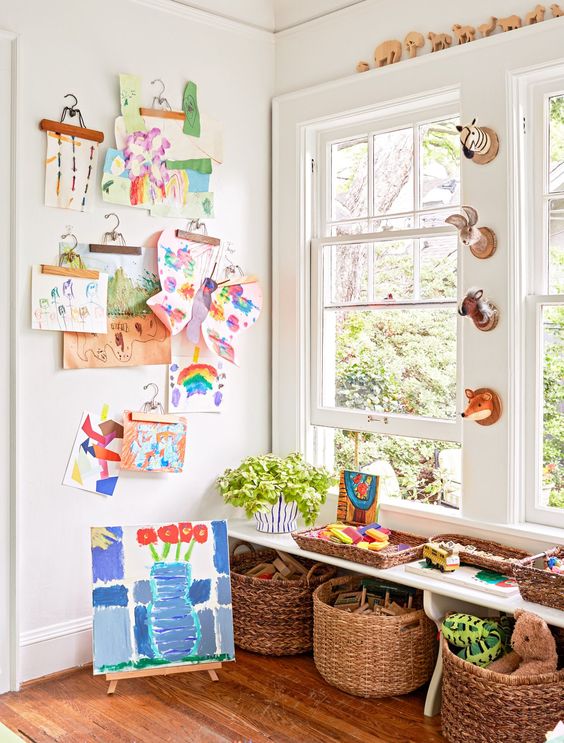
Every kid’s creativity must be appreciated. That way, kids will feel proud and continue to develop their creativity. And, if your kids like drawing, then you can utilize the results of their drawing. You can make it as a decoration to enliven and beautify the playroom.
Hang your kids’ drawings on the wall randomly and messy. That way, it will look more artsy on the wall. And, if your kids have a large pretty painting, show off this by placing it on a small stand. Place it in the corner of the room adjacent to your kids’ drawing table. That way, the painting can stand out and immediately attract the eye.
6. Decorate The Room with Pretty Rugs
Cc: Pinterest
A rug is a mandatory item for the playroom. Children love to run around so much that we do not know when they will fall. And, falling on the rug is much better than falling directly on the floor. The rug has a softer and smoother texture so that when the child falls it will minimize the injuries that will get to the child. Therefore, you can use two or three rugs. Layered it will make the floor surface softer. With this, children will feel comfortable when playing in the playroom. And, this becomes the next of 24 Playroom Ideas you can follow.
Utilize the rug as decoration to increase the beauty of the playroom. Choose a rug with attractive motifs and colors. Using an animal-shaped rug can also bring a cloudless ambiance so that your kid will have fun in this room.
7. Add More Storage to Store The Toys
Cc: Pinterest
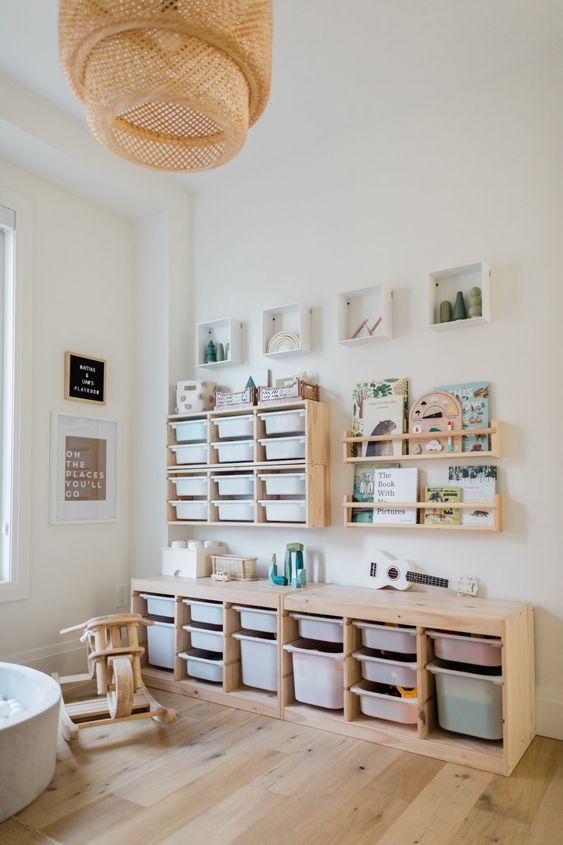
There will be lots of toys in the playroom. If not stored properly, it will make the playroom messy and uncomfortable. Therefore, present some storage space. It would be much better to use lower shelves. That way, children can immediately tidy up their toys when they are finished using them. Also, use some wicker baskets to organize the toys. You can utilize it to add the beauty and feel of fun by choosing colorful wicker basket like the picture above. For toys with interesting designs, it would be better to display them in the room. Put these on the shelves as playroom decorations.
8. The Presence of Yellow Brings A Cloudless Ambiance into The Room
Cc: Pinterest
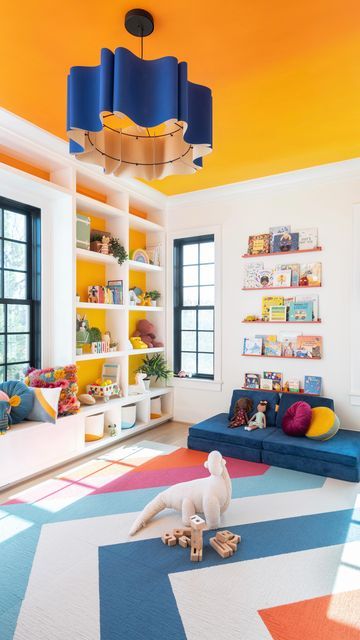
Yellow is the most effective color to bring a cloudless ambiance into the room. Applying it to the playroom interior is a great idea. It becomes the next of 24 Playroom Ideas you can choose from.
Make yellow as an accent in the room. Applying it to the ceiling can make the room look attractive. Also, in this way, yellow will not overshadow the other colors in the room. So, it will be balanced.
Also, apply yellow on one side of the wall. The wall where the built-in shelves are located is the most appropriate to choose from. The white built-in shelves look prettier with yellow on the wall.
9. Make The Room Bright Naturally
Cc: Pinterest
Lighting is an important aspect of the room. This affects the comfort and also the beauty of the room. And, in having a comfortable room, you have to make it bright. It would be better if you could make the room bright naturally. Natural lighting is much better than lamps. It can make the room warmer and make the colors in the room look more alive.
Select a window with a large size to be installed in the playroom. If this window is still lacking in illuminating the room, you can install a skylight window. Lighting from above would be much better. This will spread across the room and remove any dark shadows from the room. That way, the room not only looks brighter but also feels more spacious.
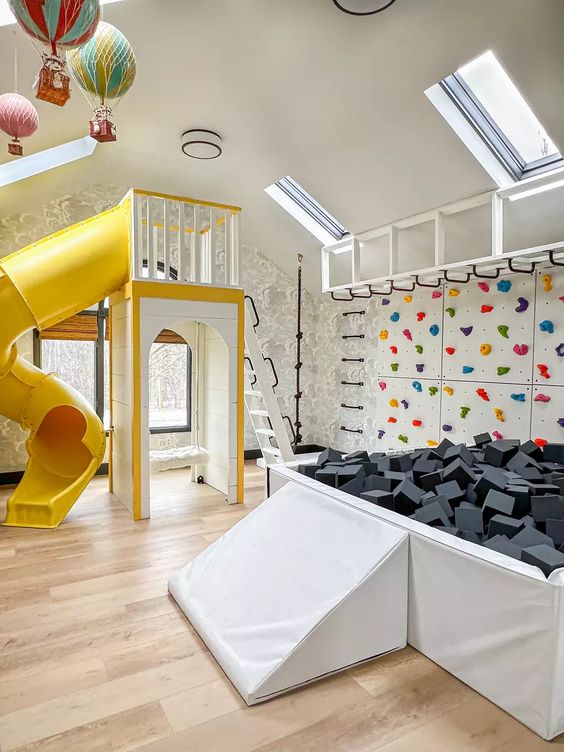
10. Indoor Kids Rock Climbing Wall
Cc: Pinterest
Rock climbing walls can train children’s motor skills very well. So, making a rock climbing wall in the playroom is a very appropriate idea. This becomes the next of 24 Playroom Ideas that you can apply.
Try not to install it too high so that it is not dangerous for children. You can also do a mountain mural wall. That way, the child will imagine he is climbing or climbing a mountain. Make the picture of the mountains colorful so it will bring a cloudless ambiance that will boost your kid’s mood and make him feel happier in the room.
11. Create A Cozy Reading Nook in The Room
Cc: Pinterest
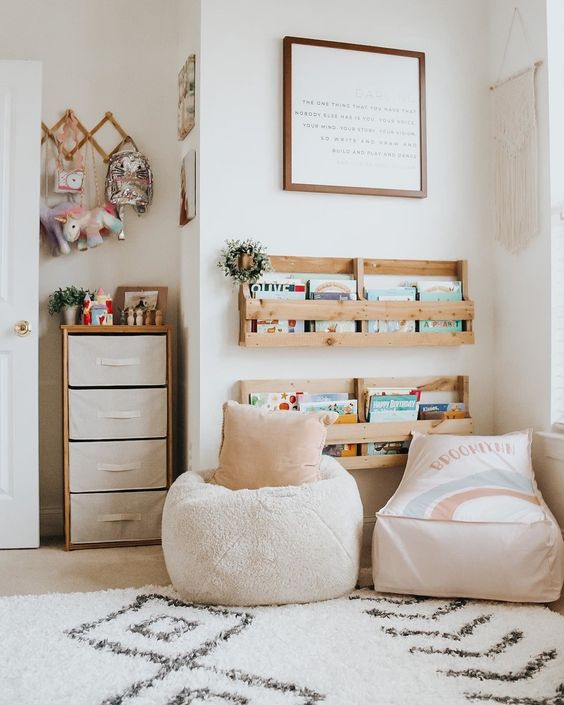
Make reading a fun activity for children. Therefore, you must provide a reading spot that is comfortable and fun for children. As in this one idea where the reading nook is made so attractive with a colorful appearance. The combination of bright colors is very helpful in boosting the kid’s mood. Children will feel happier in this spot.
Make a bright reading nook by installing windows there. That way, natural light will enter and immediately illuminate the reading nook. Also, add some throw pillows and dolls as decorations. And, if you want to make the reading nook feel more comfortable, you can apply upholstered walls.
12. Cute and Tidy Playroom
Cc: Pinterest
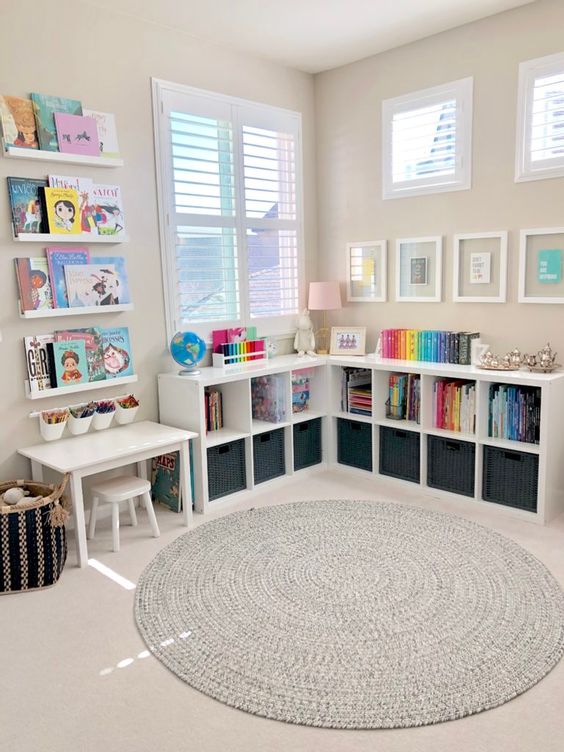
A tidy room will feel much more comfortable. So, if you want to make your child feel comfortable in the playroom, you have to make this room tidy first. Use the lower cubbies for storage. Organize the stuff very well, like the top side for books and the bottom side for children’s toys. It would be better if you use close storage for the toys. That way, it will be free of clutter. Also, pay attention to the decorations in this room such as pictures hanging parallel to the wall or reading books that are neatly placed in their places.
13. A Simple Kids Kitchen Playset
Cc: Pinterest
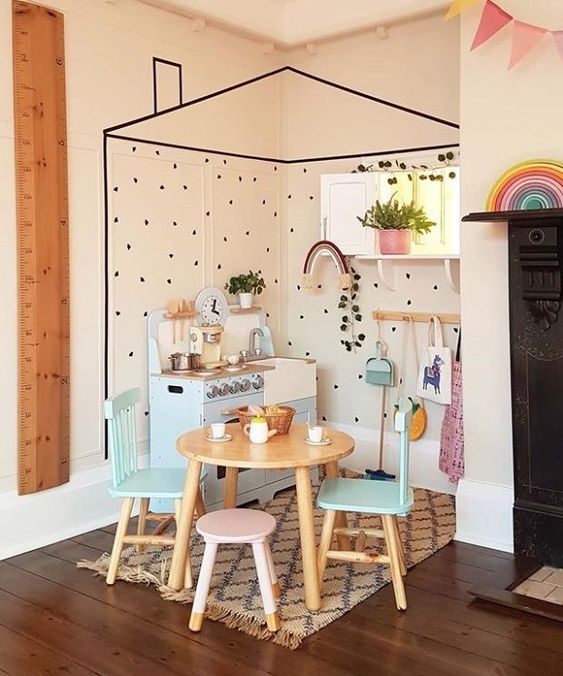
Children really like playing cooking or just enjoying a cup of tea as if they have a house of their own where they enjoy their free time. So, make this imagination look real by making a simple kitchen in the playroom. You can use a kids’ kitchen playset. Also, present a small dining table along with the benches.
The decoration of this area is more attractive so that children feel happy in their kitchen. You can draw a line so that it looks like a small house. Make this look more realistic by adding some small plants in there. Also, use rugs to provide visual boundaries.
14. Place A Small Tent in The Corner of The Room
Cc: Pinterest
Children are indeed very active. Almost all of their time is used for playing, drawing, and so on, so we never know when they are feeling tired. Therefore, present a place for them to rest in the playroom. This becomes the next of 24 Playroom Ideas that you can follow and apply.
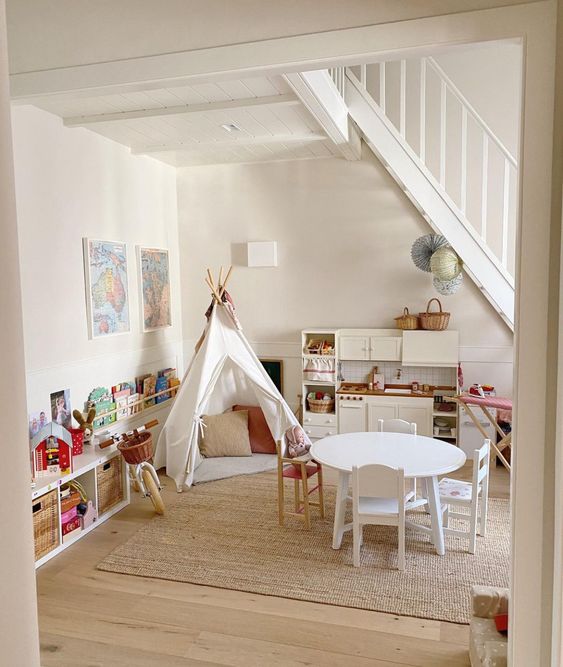
Build a small tent right in the corner of the room. Make it comfy by using a soft seat cushion and some throw pillows. That way, they can lie down or just sit down to rest and recharge their energy. Not only that, but this can also build their imagination in camping in the backyard.
15. Bright and Warm Playroom
Cc: Pinterest
The next of 24 Playroom Ideas is a bright and warm playroom. With white as the main color, the room looks naturally bright. Besides that, the white color also makes the appearance neutral so that other colors will stand out in the room.
The use of sheer curtains allows natural light to enter the room properly. This makes white brighter and also more alive. And, the playroom looks so natural with the use of light wooden furniture. The combination of natural white and brown tones of the wood brings out a warmth that makes the room feel cozy and serene.
16. Tidy Small Playroom
Cc: Pinterest
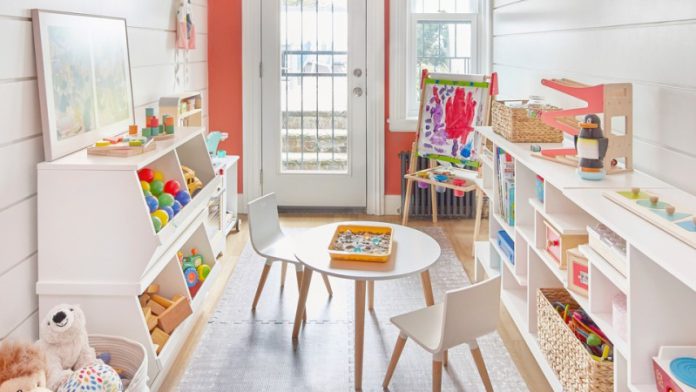
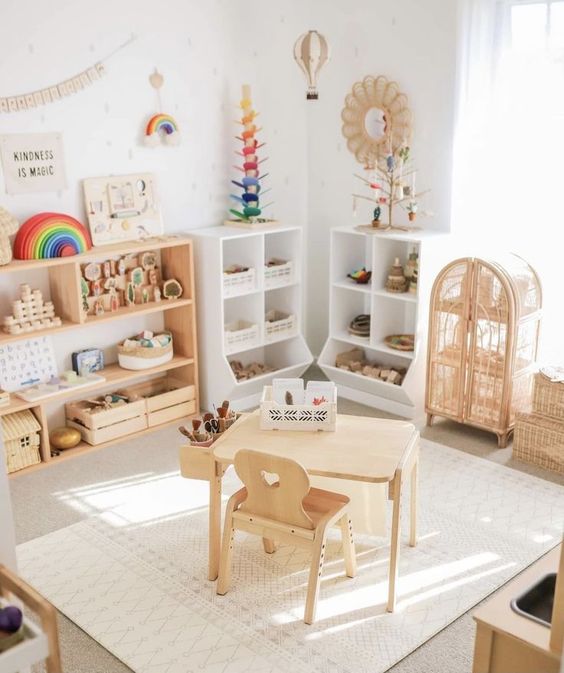
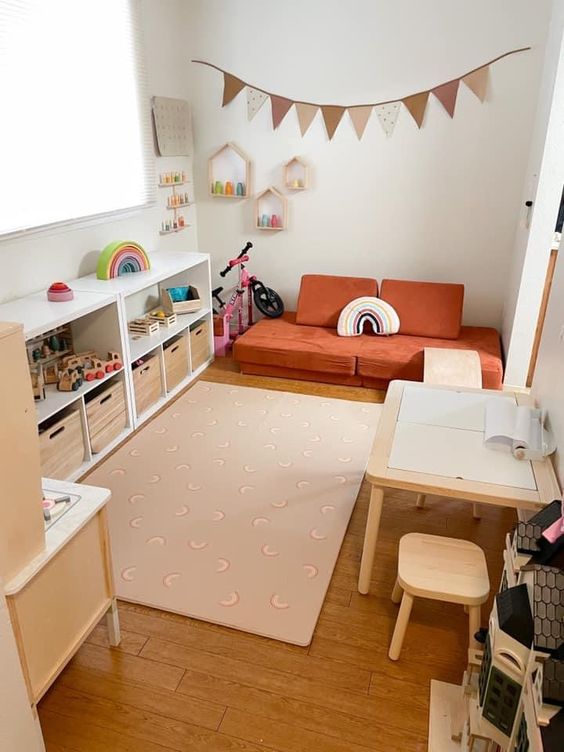
It does not matter if you only have a small room to serve as a playroom. Children do not only have to play in the treehouse. You can make a small playroom become fun by placing some toys, reading books, and also a table for children to draw on. That way, the playroom is not just a room for children to play and have fun, but also a room where children can explore and increase their creativity.
Make white the main color to make the small playroom bright and feel more spacious. Light up the room with natural lighting. Choose bright and soft colors to decorate the room. However, also present a touch of darker or quirky colors to eliminate the pale and stiff impression in the room.
17. Make The Room Calm with Soft Colors
Cc: Pinterest
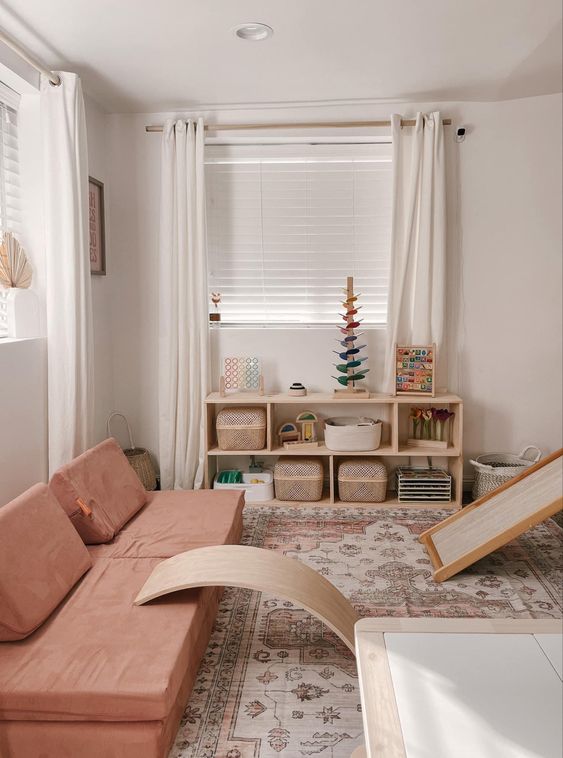
This soft pink sofa is the center of focus in the playroom. With white as the main color, soft pink looks more stand out. It changes the look of the room drastically. It makes the look of the room softer so that the ambiance in the room is calmer. This is really good for increasing the comfort of the room.
To maintain a serene atmosphere, the playroom is decorated very simply. The walls are left plain. There is only a cubby containing storage and some children’s toys. Even so, this room is far from stiff and boring. This is because there is a rug with a very beautiful pattern and a soft color. The use of light wood furniture also decorates the room and also brings more warmth and serenity to the playroom.
18. Utilize The Wall Area for Storage
Cc: Pinterest
Using a shelf or cubby will take up the space in the room. Therefore, it is advisable not to use too many shelves in a small room. However, in the playroom, there are lots of items that must be stored properly. That way, the tidiness and comfort in this room will be maintained. And, utilizing the wall as storage is a great idea that you can apply. This becomes the next of 24 Playroom Ideas.
Install floating shelves on the playroom wall. Use a basket or a container to organize the items so that the room will look tidier. And, for the floating bookshelves, you can neatly put the reading books directly there.
19. Small Bean Bag for Cozy Reading Nook
Cc: Pinterest
The seat determines whether the reading nook feels comfortable or not. And, for those of you who want to make your kids’ reading nooks feel comfortable and also attractive, using small bean bags is a great idea.
Choose the bean bag with a color that blends in with the interior. You can also choose bean bags that have simple but beautiful motifs. It can enliven the room and give a more beautiful effect to the look.
20. The Colorful Wall Enliven The Room
Cc: Pinterest
If you want to make the playroom look simple but colorful, doing a mural wall is a great idea. You can do a colorful wall mural like in the picture above. Make the image look more abstract for a more interesting result. Combine several colors that can add freshness to the room such as green. Also present are orange and yellow colors to bring a cloudless. That way, the playroom will be perfect.
To make this wall the center of focus, place a cubby on this wall. Take advantage of several colorful baskets filled with toys, books, drawing tools, and more as decorations. It will greatly fill the wall and make it prettier.
21. Comfortable Attic Playroom
Cc: Pinterest
Take advantage of the attic to be a comfortable room for children to play. Due to the limited area and also the short ceiling, it would be better to apply the dominant white color. And also, light up the attic room with maximum natural lighting. This method will be very effective in making the attic playroom feel more spacious.
If you want to bring other colors to make the playroom attractive, then black is the right color. This is the neutral color that will match white. But, you can also give a little touch of yellow to bring a cloudless atmosphere that will make this room feel fun.
Soft seat cushions that are placed parallel and lengthwise are not only a place for children to rest. It also makes the attic look longer and wider. You just need to decorate it with pretty throw pillows to make the attic playroom beautiful.
22. Pretty Pink Reading Nook
Cc: Pinterest
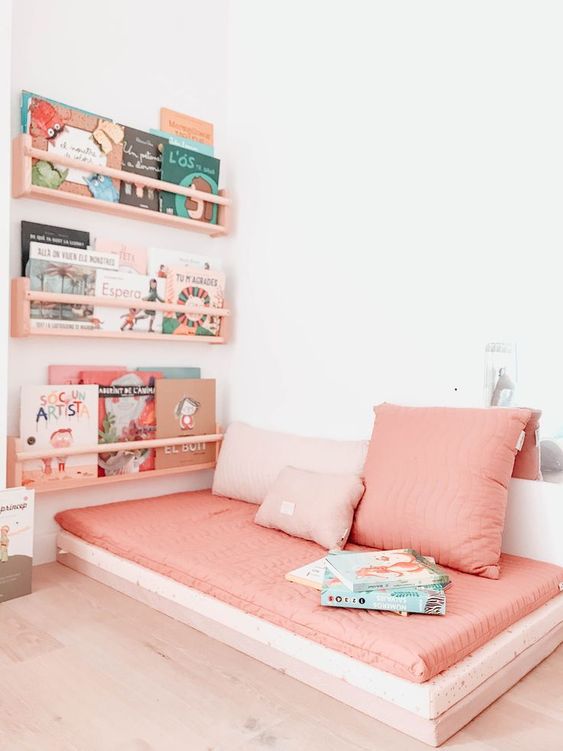
A pretty pink reading nook is the next of 24 Playroom Ideas. The pink color is perfect for your daughter’s playroom.
The choice of a soft pink color makes the appearance also look soft. When it is juxtaposed with white, it makes the look of the playroom become bright. And, the use of these two colors (white and pink) is enough to make the playroom become pretty. So, you don’t need to present other colors. That way, the reading nook looks simpler, quieter, and more comfortable.
However, if you want to beautify this area, you can utilize the reading book. Place some reading books on the floating bookshelves. So, it will be seen and decorate the pink reading nook well.
23. Animals-Themed Playroom
Cc: Pinterest
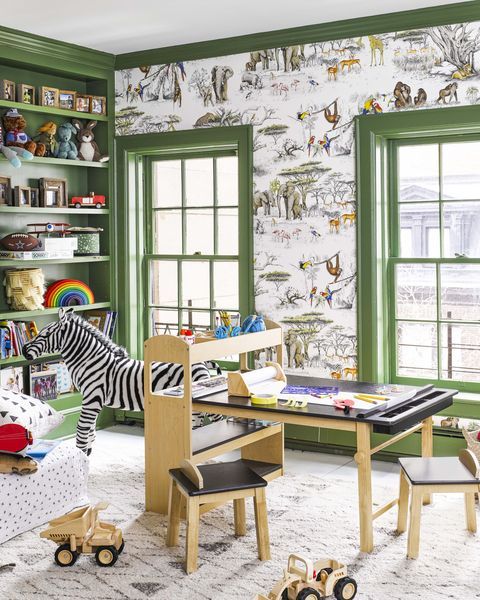
If your child really likes animals, then making an animal-themed playroom is an interesting idea to try. With this, children will feel happy and comfortable in their room.
You can choose white to make the look of the room natural. Then, use green as if to make the playroom feel like you are in a forest. From this green color, children can feel freshness directly. Light up the room with natural lighting so it will naturally be bright. Then, make the animal-themed look more real by applying a wall mural with an animal symbol and also presenting a doll in the form of a zebra or something else.
24. Make A Swing in The Playroom
Cc: Pinterest
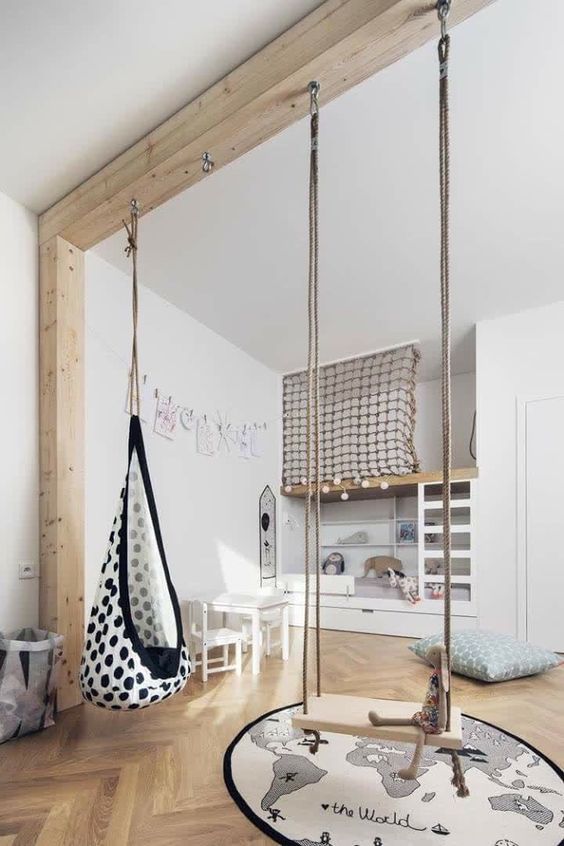
Make a swing in the playroom is the last of 24 Playroom Ideas. As we know that children love to play with slides, swings, or other things. So, if you bring one of them into the playroom, they will be very happy. In addition, the swing does not really take up space like a slide. So, it will be perfect for small playrooms.
Place a small rug directly under the swing. That way, when the child falls, this will minimize the collision between the child’s body and the floor. It would be better if you could use something thicker and stretchier like a seat cushion or anything else.
Final Words
The points above are 24 Playroom Ideas that can be your reference. In making a playroom, you must first know what your child likes, starting from colors, toys, hobbies, and so on. That way, it will be easier to create a concept for the playroom. You can choose one or combine the ideas above into one. Use your creativity to come up with the best room for your child to play in. So, happy trying and good luck everyone!