
The concept of house and land packages has gained significant traction in the real estate market, promising a convenient and comprehensive solution for prospective homeowners. As this approach becomes increasingly popular, so do the misconceptions and myths surrounding its dynamics. Buyers often find themselves inundated with conflicting information, leading to confusion and hesitation in their decision-making process. It is essential, therefore, to distinguish fact from fiction and to understand the intricacies of house and land packages in order to make informed and confident real estate investments. This article aims to debunk common myths associated with house and land packages, providing a comprehensive understanding of their diverse benefits and implications for buyers in the current real estate landscape.
Myth 1: House and Land Packages are Only for First-Time Homebuyers
Contrary to popular belief, house and land packages cater to a broad spectrum of homebuyers beyond just first-timers. While they do serve as an excellent option for those stepping onto the property ladder for the first time, they also present a viable opportunity for seasoned investors and those looking for a hassle-free, comprehensive real estate solution. From young families seeking a tailored living space to retirees eyeing a tranquil retirement haven, the versatility of house and land packages makes them an appealing option for various buyer demographics. In fact, numerous examples abound of experienced property investors leveraging the benefits of house and land packages to diversify and strengthen their investment portfolios.
Myth 2: House and Land Packages are One-Size-Fits-All Solutions
The misconception that house and land packages offer limited customization options fails to acknowledge the flexibility inherent in these offerings. Prospective homeowners have a plethora of choices when it comes to personalizing their dream homes, ranging from the selection of architectural styles, interior designs, and fixtures to the overall layout and landscaping preferences. Whether it’s the inclusion of eco-friendly features or the integration of modern smart technologies, house and land packages can be tailored to suit the unique tastes and lifestyle requirements of individual buyers. Testimonials from satisfied homeowners further attest to the value of customization in these packages, reflecting the diverse and personalized nature of these housing solutions.
Myth 3: House and Land Packages Lack Investment Potential
Dispelling the notion that house and land packages lack investment potential requires a closer examination of the tangible benefits and returns they can offer. In reality, these packages often present an attractive avenue for long-term financial gains, especially in burgeoning real estate markets. With the potential for capital appreciation and rental income, savvy investors recognize the stability and potential profitability of house and land packages. Comparative analyses of investment outcomes also reveal the favorable performance of these packages, underscoring their viability as sound investment options. Insights from financial experts and real estate professionals further underscore the positive prospects and returns that can be derived from strategic investments in house and land packages.
Debunking the prevalent myths surrounding house and land packages is crucial for empowering prospective buyers to make informed decisions in the realm of real estate. By separating fact from fiction, individuals can better appreciate the diverse opportunities and advantages that Home Group’s house and land packages bring to the table. It is imperative for buyers to conduct comprehensive research and due diligence, considering factors such as location, customization options, and the reputation of builders, to ensure a seamless and rewarding home-buying experience. With the guidance of reliable information and a nuanced understanding of the intricacies of house and land packages, buyers can confidently navigate the real estate market and discover the true potential and value offered by Home Group team’s tailored housing solutions.
One homeowner’s nightmare stands out during the chilly winter months – frozen pipes. There’s nothing worse than waking up on a cold, frosty morning to discover that your water isn’t running because the water in your pipes has frozen solid! But don’t panic. This is a problem that many homeowners face, and there are steps you can take to prevent it from happening and deal with it when it does. Asking for the help of a professional plumbing contractor in Jonesborough can also make a huge difference in solving this issue.

Know the Risks
When temperatures drop below freezing, there’s a high risk of your pipes freezing. This is especially true for pipes in unheated areas of your home, such as basements, attics, or crawl spaces. Outdoor plumbing fixtures like faucets and sprinkler systems are also at risk. Knowing where your pipes are located and which are most vulnerable can help you take preventive measures.
Insulate Your Pipes
Insulating your pipes is one of the most effective ways to prevent them from freezing. You can use foam pipe insulation or old towels, newspapers, or rags to wrap around exposed pipes and keep them warm. Make sure to pay special attention to pipes located in unheated areas.
Keep Your Home Warm
During extremely cold weather, it’s crucial to keep your home warm to prevent your pipes from freezing. Ensure your heating system is working correctly, and set the temperature at a minimum of 55°F (12°C) when you’re away from home or on vacation. You can also open cabinet doors under sinks to allow warm air to circulate the pipes.
Run Water
Letting water drip from faucets can help prevent pipes from freezing. This is because running water is less likely to freeze than stagnant water. It’s especially important to let hot and cold water run in all taps, including those in unheated areas.
Deal with Frozen Pipes
If you turn on the faucet and only a trickle of water comes out, it’s likely that your pipes are frozen. First, keep the faucet open and apply heat to the frozen section using a hairdryer, space heater, or hot towels. Never use an open flame, which can damage the pipes and pose a fire hazard. If you can’t locate the frozen area or if you’re unable to thaw it yourself, call a plumbing contractor for assistance.
Avoid Future Freezing
Once you’ve dealt with frozen pipes, prevent them from freezing again. Consider adding extra insulation to vulnerable pipes, especially those in unheated areas. You can also invest in a smart thermostat that alerts you when the temperature drops below a certain level so you can take preventive measures right away.
Dealing with frozen pipes is never fun, but with these tips and tricks, you can handle the situation like a pro. Always take preventive measures, keep your home warm, and seek professional help if needed. With these steps, you can enjoy a worry-free winter without frozen pipe nightmares. And if you do encounter frozen pipes, don’t hesitate to call a plumbing contractor for assistance. Stay warm and stay safe!
Hot water systems are undeniably a core part of every Australian household. These systems, whether gas or electric, serve a critical purpose – delivering steady, reliable hot water for bathing, cooking, cleaning and more. Therefore, it’s important to choose the right system for your needs and energy efficiency. This article will compare the two most common types: gas and electric hot water systems and provide a comprehensive guide to help you make an informed decision.
Understanding Hot Water Systems:
A hot water system, by its broadest definition, is an appliance that heats and stores water for use in your home. Gas hot water systems utilise the combustion of natural gas to heat water rapidly, providing continuous hot water supply. They’re known for their high energy efficiency and can operate even during power outages, which can be a significant advantage in certain situations.
On the other hand, electric hot water systems use an electric element to heat water stored within the system. They’re praised for their flexibility in terms of placement, safety features and quiet operation. Despite their differing mechanisms, both systems aim to meet your hot water needs, underscoring the importance of thoroughly understanding these systems before making a purchase decision.
Exploring the Benefits of Gas Hot Water Systems:
Generally, gas hot water systems are lauded for their continuous hot water supply, ensuring there’s always hot water when you need it. Due to this, they offer excellent energy efficiency. The advantage of operating independent of power supply further bolsters their appeal. Additionally, you may see potential cost savings with gas systems over time, owing to comparatively lower gas prices.
Advantages of Electric Hot Water Systems:
Conversely, electric systems come with their own set of benefits. They are generally more affordable and simpler to install, which can be a budgetary boon. Their need for venting is non-existent, thus allowing various placement possibilities within the home. Electric systems also offer a range of sizes, catering to different household sizes from quaint flats to large family homes. Safety features and quiet operation are additional attributes that tilt the balance in favour of electric systems.
Factors to Consider When Choosing Between Gas and Electric:
When deciding between gas and electric hot water systems, a few key factors come into play. Critically, it’s essential to evaluate the cost of energy in your locale. Equally important is to assess your household’s hot water demand, to ensure you select a system capable of meeting your needs. Installation space and system maintenance requirements also deserve careful consideration. Last, but not least, don’t overlook the environmental implications of your choice.
Potential Drawbacks of Gas and Electric Hot Water Systems:
Upfront cost can be a potential deterrent when considering gas systems as these units generally cost more to purchase and install. In contrast, electric systems can incur higher ongoing energy costs, particularly with frequent use. And while gas systems can operate during power outages, they also present a concern around potential carbon monoxide leakage. Electric systems, meanwhile, are wholly reliant on the power grid, which can pose difficulties in an outage.
In summary, both gas and electric hot water systems have their pros and cons. There isn’t a one-size-fits-all solution, and the best system largely depends on your individual needs, lifestyle and circumstances. Whether contemplating new hot water installations or upgrading existing equipment, make sure to get professional advice before committing. This article aims to equip you with the basic knowledge you need when diving into the world of hot water systems, leading you to make a choice that supports your home and lifestyle well into the future.
Stiff, painful muscles and joints can make daily activities more challenging. A hot tub’s warm water and pulsating jets offer hydrotherapy services to ease discomfort, helping your muscles feel better quickly.
Regular sessions in a hot tub can help relieve pain from arthritis, back issues, and fibromyalgia. Plus, its warm waters and pulsating massage may even aid in improving sleep!
Buoyancy
Buoyancy is a physical principle that enables objects to rise when submerged in fluids. This can be found in hot tubs, pools, submersion chambers, and anywhere else you might interact with water.
Water can help counteract gravity and ease the stress placed on painful joints or the spine by up to 90% in neck-depth water and 50% in waist-depth water, thus increasing the range of motion, controlling edema, and swelling, and providing a safe environment for performing exercises that would otherwise be difficult on land. You can visit this site to learn more about edema.
Buoyancy offers a soothing experience that also helps alleviate pain by stimulating neurotransmitters in our brains that regulate our natural responses to stressors, decreasing sensitivity to pain.
These benefits of floating provide immediate relief from muscle tension and stiffness, but the longer you float the greater its therapeutic effects. We suggest floating at least twice each week, but this isn’t mandatory.
Hot tubs for heat therapy
Though it may seem counterintuitive, heat therapy can be an effective pain management tool. It is important to identify when heat or ice therapy would best help an injury; typically, ice should be applied when treating fresh injuries while heat can help ease muscle spasms or aches.
Heat therapy works by increasing tissue temperatures and stimulating vasodilation, which increases blood flow while simultaneously relieving muscle stiffness and tension.
It can be effective at relieving neck or back pain due to muscle or arthritic joint strain and increasing flexibility; moist heat therapy can be achieved using hot water bottles, steamed towels, or baths heated between 92- and 100-degrees Fahrenheit.
Professional paraffin wax bathing or hydrocollator packs may also provide benefits.
Chronic pain can lead to serious health complications, including depression and anxiety. It can interfere with sleep and make daily tasks challenging; thus, it’s crucial that you find a treatment solution tailored specifically to you and your lifestyle. Soaking in hot tubs in Cincinnati can be a simple and effective way to bring pain relief. You can consult with your doctor if you have any concerns about this type of treatment.
Contrast Therapy
Contrast therapy is another tool that can be utilized to relieve muscle pain and accelerate healing, by using hot and chilly water alternately to increase blood flow, decrease inflammation, and relieve muscle tension.
Warming muscles with hot water cause blood vessels to dilate while cold temperatures constrict them, creating a pumping effect by constantly switching temperatures which improves oxygenated blood flow to injured tissues and accelerates healing processes.
Studies have demonstrated that contrast therapy helps reduce lactic acid buildup and speed recovery from intensive exercise by improving the delivery of nutrient-rich blood to muscles being utilized, decreasing fatigue and soreness, and improving recovery time.
Physical therapists commonly utilize contrast hydrotherapy by having patients submerge painful areas in a tub of warm whirlpool water and then quickly moving them into a bucket filled with chilly water – repeating this cycle several times for maximum benefit and safety considerations.
To maximize the effectiveness of contrast hydrotherapy, patients should complete one cycle after the next: cold-to-hot-to-cold.
At home, you can also benefit from taking cold baths- starting slowly, perhaps starting with just 30 seconds in each bath until your body adjusts – although if this technique becomes too cold for you to tolerate, simply switching up hot and cold showers instead may provide similar benefits. You can click the link: https://www.goodrx.com/ice-bath-benefits to learn more.
Massage
Chronic pain can have an immense impact on every aspect of your life – your health, emotions, work, and relationships are all at risk. Additionally, chronic pain may reduce interest in activities and lead to depression, stress, and difficulty sleeping – but thankfully there are effective pain management techniques that will allow you to return to living again.
Massage helps ease chronic pain by activating endorphins – natural, body-produced painkillers. They work by masking or diminishing feelings of discomfort while inducing feelings of euphoria and well-being.
Furthermore, massage pressure may relax muscles, increase blood flow, improve circulation, and ultimately decrease tension, and anxiety that contributes to pain.
According to research, massage can also decrease both the number of pain signals sent to the brain and their intensity, as well as alleviate emotional distress – two essential components in managing pain effectively.
Results of the study demonstrated that patients receiving regular massages experienced lower pain levels and required less medication than those not receiving massages. One limitation of the research was that massage therapists did not collect physiological data from participants; hence the effectiveness of massage as a pain management technique is dependent upon participant perception rather than external measurements.How Hot Tubs Help With Chronic Pain – A Guide for Cincinnati Residents
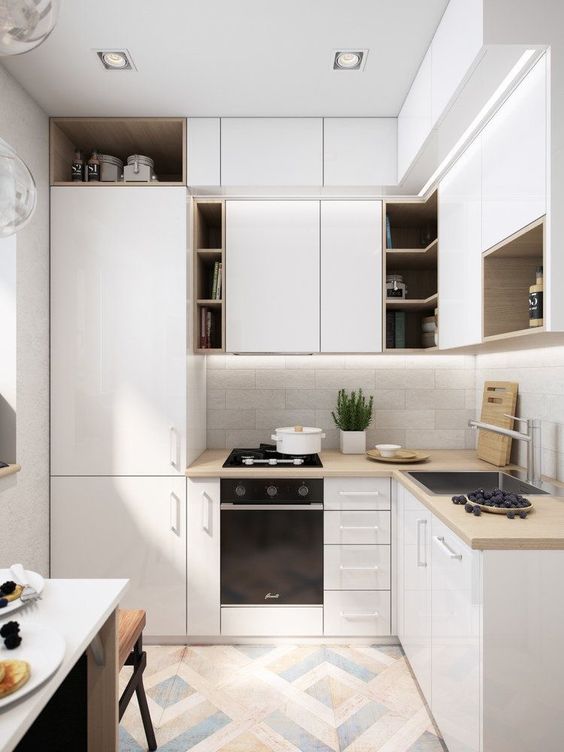
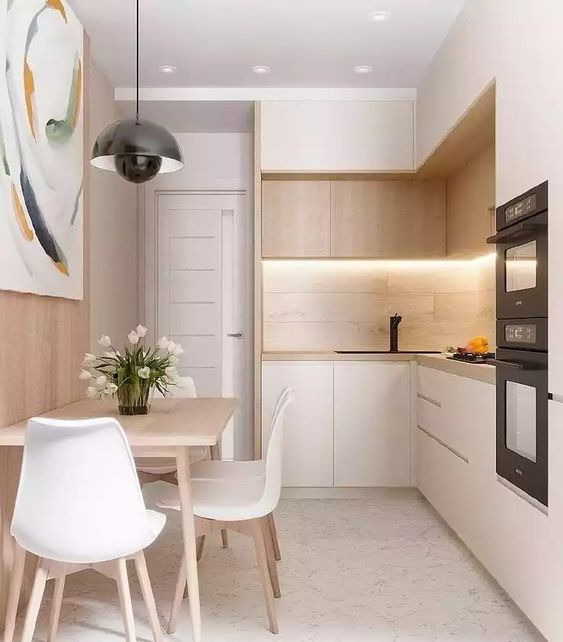
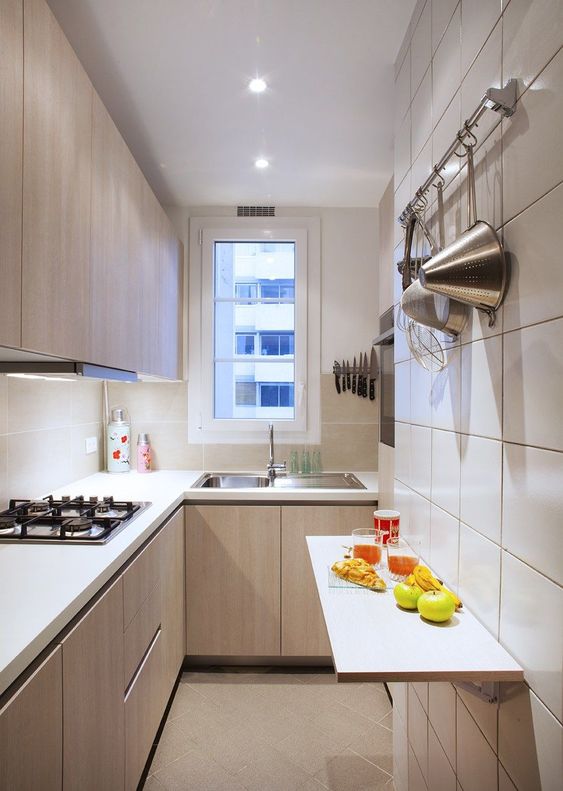
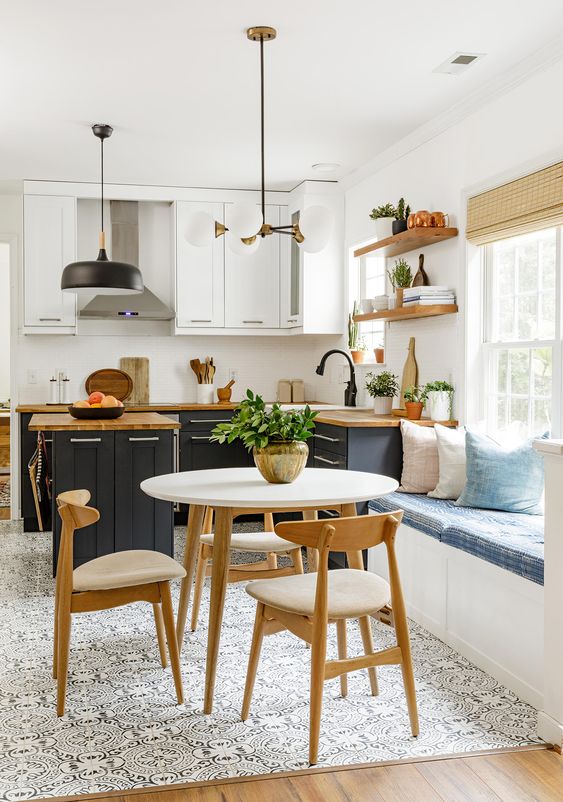
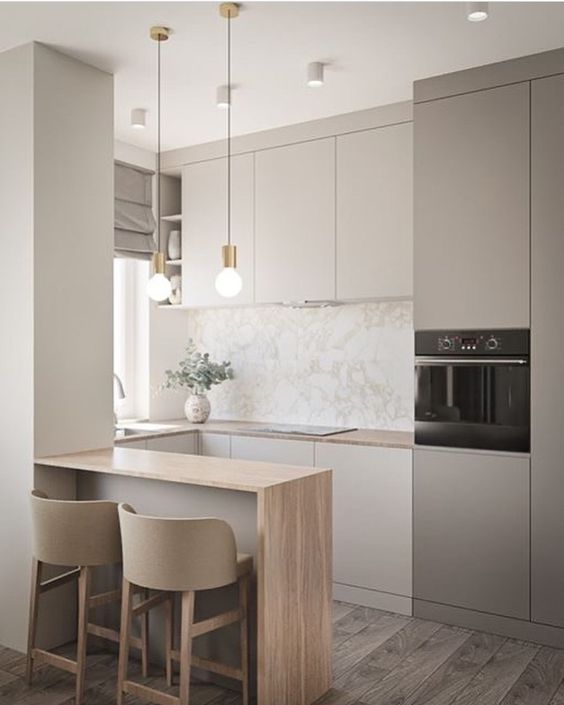
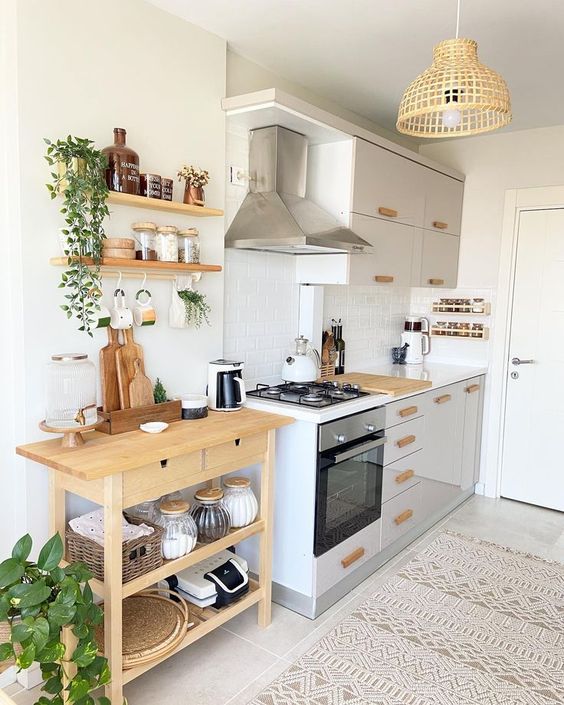
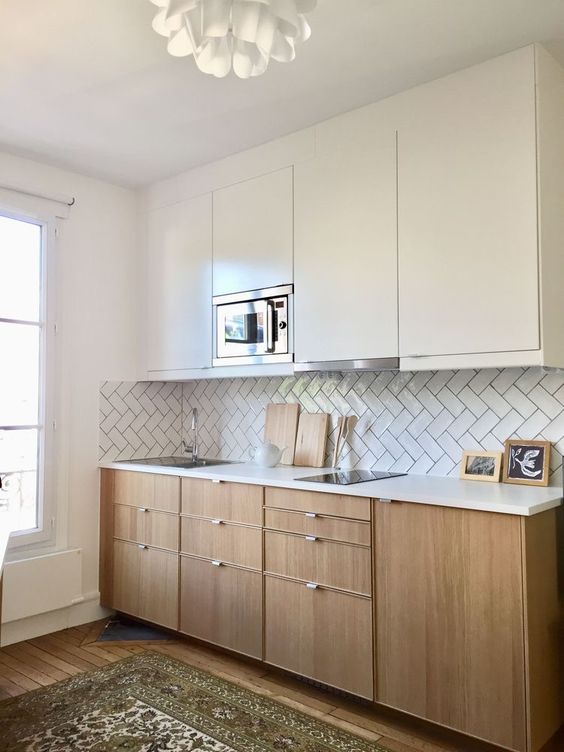
roohome.com– Various kitchen appliances and stuff often hinder us from creating a clean and tidy small kitchen. The large number of items creates a cramped feeling which really disturbs the comfort of the kitchen. Also, decorating and designing the kitchen becomes more difficult. It would be better to discuss with an interior designer to get a small kitchen that is beautiful and comfortable. However, before that, first, find out some comfortable small kitchen ideas. This will be very helpful in determining the dream small kitchen in your home. And, in this article, we have provided 20 Tiny Kitchen Ideas to Steal. So, let’s check it out!
1. Make It Dramatic with String Light
Cc: Pinterest
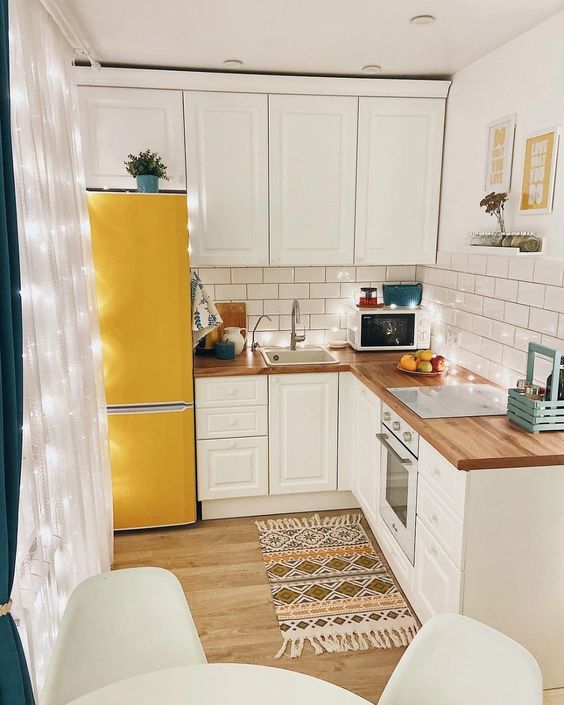
The tiny kitchen feels so spacious with the dominant white color. The use of sheer curtains filters the light entering the kitchen. With this, the appearance of a white kitchen is not too dazzling. However, decorations in the form of string lights create a more dramatic impression. It decorates the tiny kitchen very well. String lights are installed in the backsplash and sheer curtain areas. The light looks like a very beautiful sparkling star. And, this becomes the first of 20 tiny kitchen ideas you can steal.
String lights with white lighting are very appropriate for the tiny kitchen. It makes the white colors more vibrant and brighter. It also supports a kitchen that feels more spacious.
2. Dominant with White
Cc: Pinterest
If you are wondering what color is suitable for a small kitchen in your house, then the answer is white. This color not only gives a bright impression to the appearance but can also erase dark corners in the room. This is what makes a small room feel more spacious.
The white color is applied throughout the small kitchen, starting from the window frame, kitchen cabinets, ceiling, and backsplash. If you want other colors there, using light wood is the most appropriate. To add aesthetic value and eliminate the stiff or boring impression of a white tiny kitchen, you can rely on tiles in pastel colors. Simple patterned tiles are the most appropriate for maintaining a clean and minimalist impression in a small kitchen.
3. Deepen Your Backsplash
Cc: Pinterest
Making the backsplash area look deeper is one way to make a small kitchen feel more spacious. The most effective tip for deepening the backsplash area is to install LED lights along the backsplash. And, this is the next of 20 tiny kitchen ideas you can try on.
For lighting, you can choose the right light. For example, white light for the white nuances tiny kitchen to add brightness to the room and make the white color more lively, or yellow light for the backsplash made of light wood to help the wood produce warmth which can make the tiny kitchen feel more comfortable.
The LED light in the backsplash area is a very fitting accent for a minimalist kitchen. It decorates the kitchen very well. The light on the backsplash is a decoration in itself that adds color and beauty to a small kitchen.
4. Let Window Exposed
Cc: Pinterest
Take advantage of the windows in the kitchen, whether large or small. The key to making a small kitchen feel more spacious is color and lighting. It would be better if you could illuminate the kitchen with natural lighting. It can spread across the room very well and can also eliminate dark shadows in the room.
Do not put any decorations on the windows such as curtains, blinds, and so on. Let the light enter freely into the kitchen. That way, the kitchen not only becomes brighter but also makes the small kitchen feel more spacious.
5. Open-Plan Concept
Cc: Pinterest
Applying an open-plan concept is a surefire way to make a small room feel more spacious. The kitchen can be combined with the dining area. Because of this combined concept, the colors between the kitchen and dining area should not clash. It would be better to apply the same color group, such as white as the main color and other neutral colors as accents.
Because there are no walls separating the kitchen and dining area, you have to provide a visual barrier. Using different colors is the easiest way to do this. However, you can also install pendant lamps with different designs.
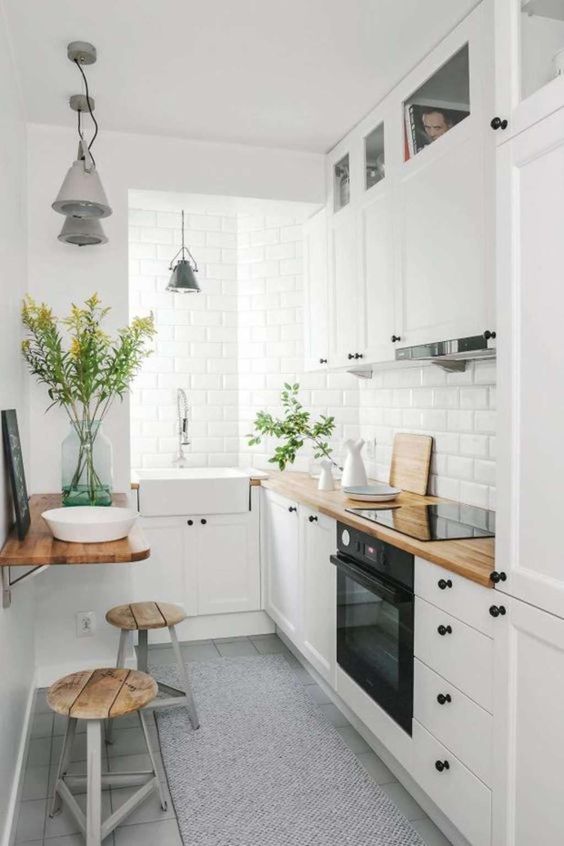
6. Floating Table for Dining Area
Cc: Pinterest
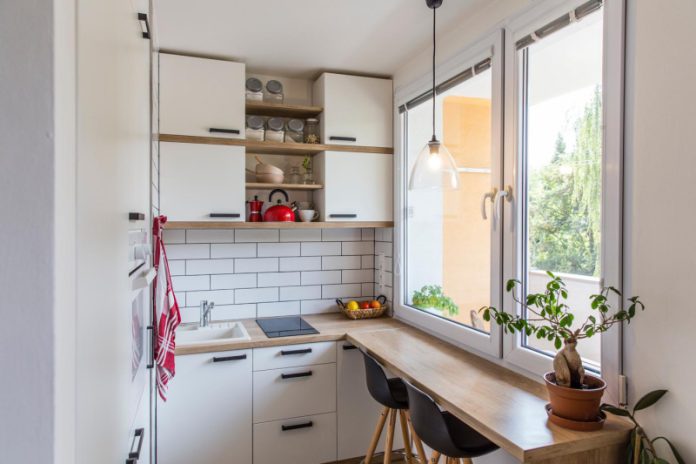
Even though it is small, you can still create a small dining area in the kitchen. This is very challenging because you are required to utilize the available space but not give the room a cramped impression. And, using a small floating table is the most appropriate.
There will be empty space in the area under the table that you can use to store stools when not in use. That way, there will be more free space available in the small kitchen which makes it feel more spacious.
Even though the dining area in the kitchen is very small, it manages to stand out. There are larger plants placed on the table. The glass vases filled with water and green plants are not only decoration but also freshen up the kitchen area and make it seem more lively.
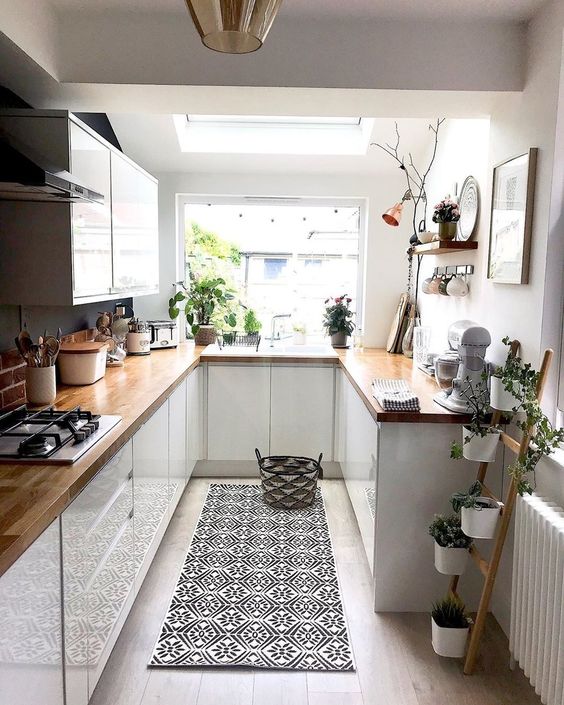
7. Beautiful Kitchen Rug
Cc: Pinterest
There are many decorations that not only beautify the appearance but also have other benefits such as giving the illusion of more space in a narrow room. And, the rug is one of them. The black and white kitchen rug with a beautiful motif is perfect for decorating a small kitchen.
The colors on the kitchen rug look integrated with the kitchen interior. The combination of neutral colors with natural elements brings calm and comfort. Moreover, natural lighting is maximized which makes the kitchen look bright. There are no motifs in the backsplash area, walls, and countertops so the motif on the rug successfully stands out in the small kitchen.
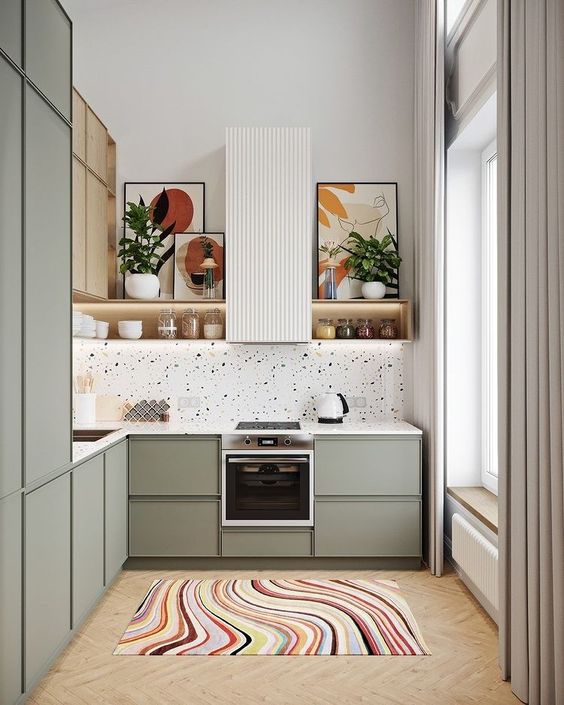
8. The Illusion of a Higher Wall
Cc: Pinterest
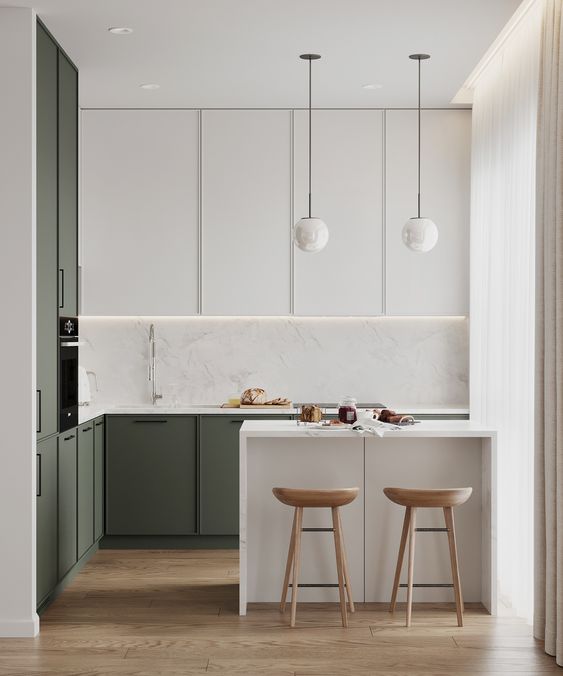
The white kitchen looks so attractive by using green kitchen cabinets with gray tones. The dove surface looks even more attractive when exposed to lighting coming from the large windows in the room. However, in this idea, the kitchen cabinet is not only a reliable storage place for kitchen stuff but also gives the illusion of a taller wall.
On the wall directly facing the window, the kitchen cabinet is made high until it touches the ceiling. This is what makes the walls in a small kitchen look taller. Also, with the walls looking higher, this small kitchen feels wider and more comfortable.
9. Minimize Colors
Cc: Pinterest
When decorating a small room, you must refrain from using colors that you like. Do not use too many colors for a small kitchen because it can make it look full and cramped. Just choose two or three colors. The neutral color group is the most appropriate option for you to choose.
Keep white as the dominant color in the room to create a bright and more spacious appearance. And, black is an accent that beautifies and eliminates the stiff impression of a small kitchen.
Try not to use too much black so it does not disturb the brightness of the room. So, if you want to make this color stand out in the room, apply it scattered.
10. Let Terrazzo Decorate The Kitchen Well
Cc: Pinterest
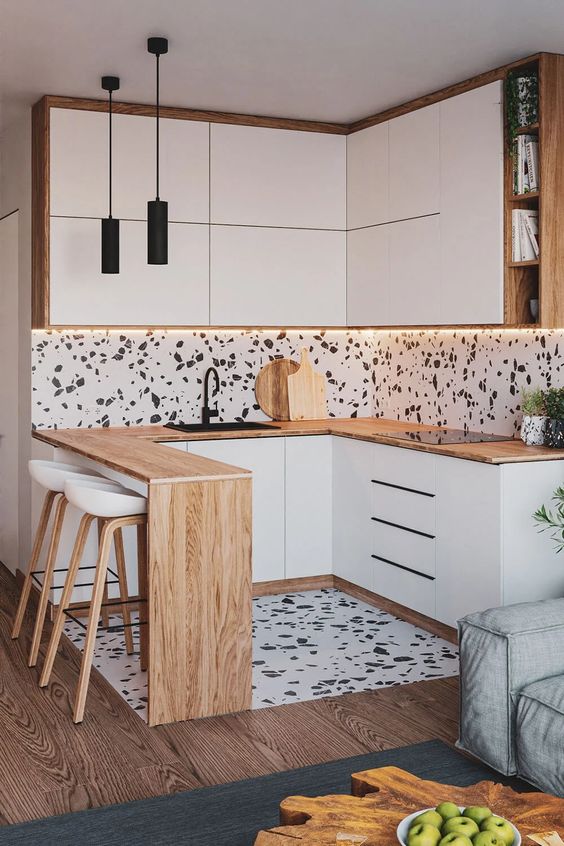
The small kitchen looks so clean and comfortable with a minimalist concept. White, which is the dominant color, neutralizes the appearance and makes the texture and color of the wood look more alive. The combination of white and wood color brings warmth and makes it feel more comfortable. The feeling of warmth is increasingly felt with the yellow LED light installed in the backsplash area.
Even though it is minimalist, the kitchen still looks attractive with the terrazzo motif installed on the backsplash and floor. The white and brown colors of the terrazzo still fit into the kitchen interior, thereby maintaining a harmonious impression in the room.
Terrazzo tiles for the flooring seem to be a barrier between the kitchen area and other areas. It also makes the tiny kitchen feel more spacious.
11. Plants are The Best Decoration
Cc: Pinterest
Even though it has aesthetic value and an attractive appearance, you could not bring all the decorations to your small kitchen. Due to limited space, choose the most appropriate decoration. Use decorations that not only support appearance but also comfort. And, the most appropriate decoration for the small kitchen is plants. Besides enhancing and enlivening the kitchen, plants bring freshness which can make this small room more comfortable.
Maintain a clean concept in the countertop area. For plants, you can install floating ceiling shelves right above the bar table. And, put small plants there neatly. This is the next of 20 tiny kitchen ideas you can steal.
12. Pretty Wall Organizing
Cc: Pinterest
Installing kitchen cabinets on all walls of the kitchen can make the room feel crowded and cramped. Therefore, leave space to install open storage on the wall. That way, the wall will remain visible in the room and will not cause an annoying cramped feeling.
Install floating wall shelves vertically until they are the same length as the kitchen cabinet. And, as an open area, you can use this as a storage area as well as an interesting spot in your small kitchen. You can place several displays such as beautiful plates, bowls, and mugs there. Also, put some other displays such as pictures, your favorite book, small plants, and so on. This is the next of 20 tiny kitchen ideas you can choose from.
13. Skylight Window
Cc: Pinterest
Small kitchens require maximum lighting. And, if using a window on the wall is not enough to illuminate your small kitchen, then a skylight window is the solution. This is the most appropriate option for you to choose. Lighting from above will be much better at spreading to all sides of the room, eliminating corners and dark shadows that can make a small kitchen feel more spacious and less oppressive.
The skylight window also shows a view of beautiful blue clouds which can add comfort to the kitchen. You can enjoy this beauty from inside your kitchen.
There is a skylight window with a design that can be opened and closed using a remote. This is the best model for the kitchen. You can open the skylight window while cooking and let the steam from your cooking escape through the window. That way, the freshness of the air in the kitchen area can be maintained properly.
14. Beautiful Colorful Wall Accent
Cc: Pinterest
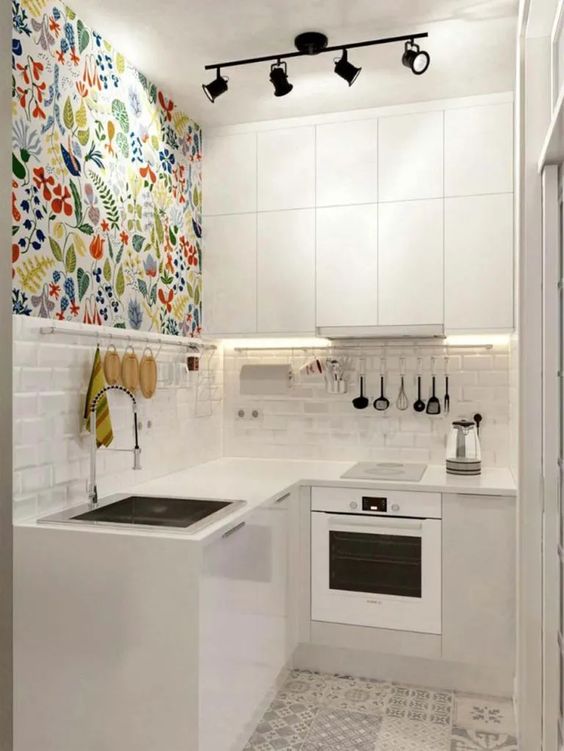
The small kitchen looks perfect with a white and minimalist concept. The play on the texture in the backsplash area becomes its own decoration which makes it look attractive. And, what is interesting about this idea is the application of bright, concentrated colors. The wall mural is applied to some of the walls in the room. Besides the bright colors that liven up the atmosphere, the motifs on the wall mural also beautify the appearance of this small kitchen.
There is a spotlight that leads to the wall mural area, making it look more alive and standing out in the small kitchen. And, with white which neutralizes the appearance of the kitchen, all the colors on the wall mural become more lively.
15. Simple Small Kitchen
Cc: Pinterest
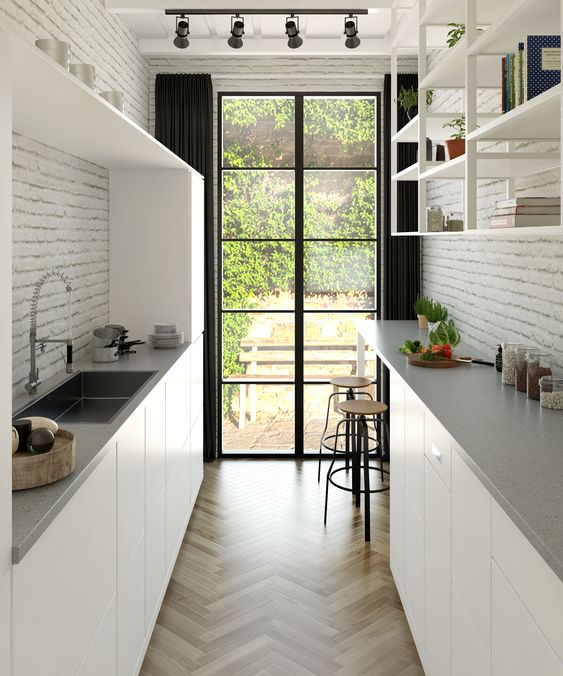
This small kitchen has an elongated design so applying a straight design is the most appropriate option. The room is made more comfortable with a bright appearance. White is the main color and natural lighting is maximized. There is no space to install windows. Therefore, choosing a glass door is the right choice.
There are no special motifs, other colors, or decorations. However, this white tiny kitchen still looks attractive by relying on exposed brick walls painted white. The texture of the exposed brick wall is what decorates and gives beauty to this tiny kitchen. And, this is the next of 20 tiny kitchen ideas that you can steal.
16. Streamline The Kitchen Space
Cc: Pinterest
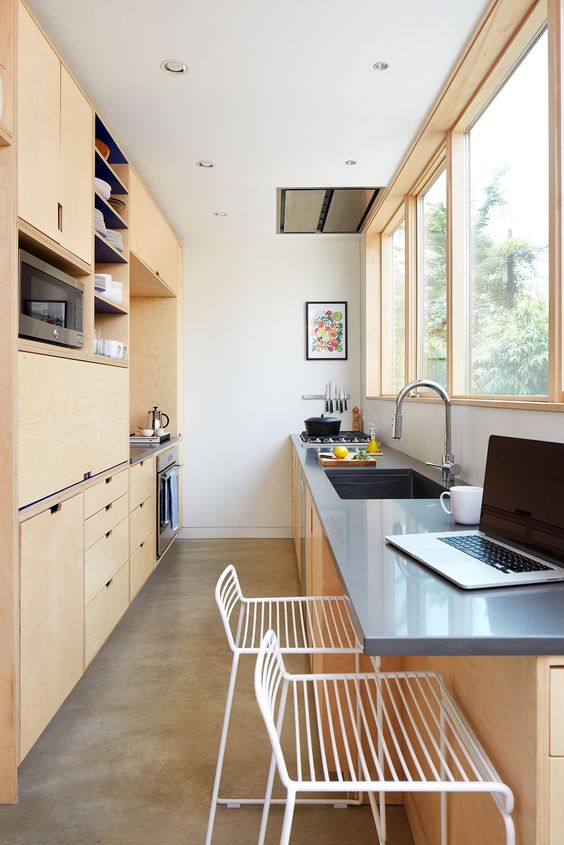
Just like the previous idea, this kitchen also has an elongated shape. Therefore, the kitchen is made slimmer so that it looks like a hallway in the house. The kitchen cabinet is fully installed on one side of the wall. And, the other side of the wall is for the countertop with a window above it along the kitchen. With this, the kitchen gets excellent light too.
There are no special decorations and colors that decorate the kitchen. The small kitchen is made more natural by relying on white and wood materials. However, with this natural concept, natural nuances are present well and make it feel warmer, calmer, fresher, and more comfortable.
17. Make The Wall Full
Cc: Pinterest
The key to making the kitchen feel more spacious is on the walls. Focus your attention on the kitchen wall. Make the walls look taller by using a full kitchen cabinet that reaches the ceiling. Leave the kitchen cabinet plain without any motifs there. That way, a minimalist concept will be created in a small kitchen very well. And, this becomes the next of 20 tiny kitchen ideas you can try on.
White is the color you should choose for your kitchen cabinet. However, if you want to make something interesting, then choose another color for the kitchen cabinet. It would be better to choose colors that are still included in the neutral color group such as olive, navy, and so on.
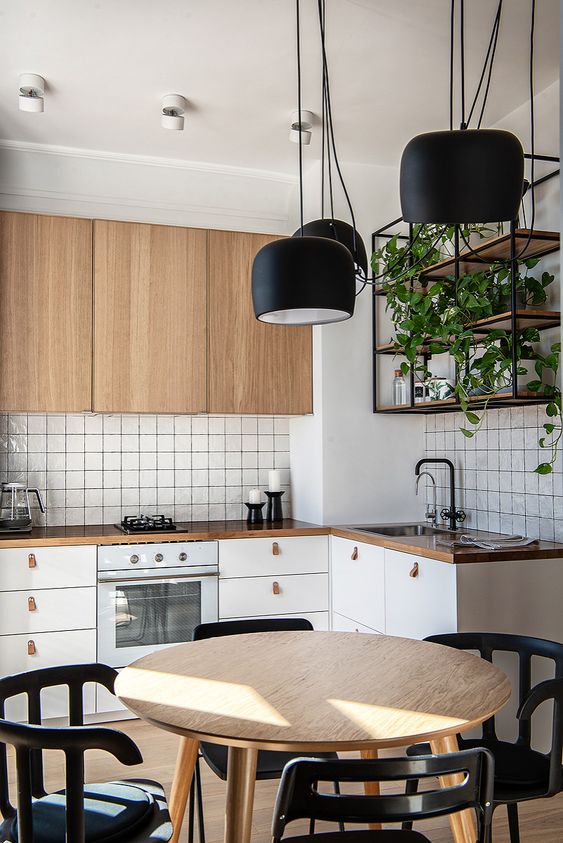
18. Simple Pendant Lamps
Cc: Pinterest
The many designs of the pendant lamp available make it no longer just for lighting up a room but also as a decoration that adds to the aesthetic value of the room. However, for the small kitchen, the pendant lamp used cannot be done haphazardly. You must choose a lamp with the right design and size.
Because space is limited, choose a pendant lamp with a smaller size so it will not take up a lot of space and make the tiny kitchen feel cramped. Second, also pay attention to the design of the pendant lamp itself. Because a small kitchen looks better with a minimalist concept, also choose a pendant lamp with a minimalist design. That way, harmony in the appearance of the small kitchen can be maintained properly.
19. Add A Table to The Kitchen
Cc: Pinterest
This small kitchen is only filled with a modest kitchen cabinet, in fact, it tends to be small. This provides more space in the kitchen which makes it feel more spacious. However, because there are many items in the kitchen, additional storage space is needed. This idea uses a small table placed next to the kitchen cabinet so that the kitchen looks slimmer. And, this is the next of 20 tiny kitchen ideas you can choose from.
The wooden small table brings another color into the small kitchen. It looks so perfect in a white kitchen. Right above the table, there are floating wall shelves for open-storage. Using the same wood material as the table makes the kitchen look harmonious and simple.
20. Straight Kitchen Design
Cc: Pinterest
In a small kitchen, beauty is not the only point that must be considered. Prioritize comfort in the kitchen. Make a small kitchen feel comfortable by making it feel more spacious. Create more free space in the kitchen by not using too many kitchen cabinets. And, straight kitchen design is the last 20 tiny kitchen ideas you can steal.
Floating kitchen cabinets have the same color as the walls so they look like they blend together. There are no visible corners or rigid lines between the walls and kitchen cabinets.
The white tiles for the kitchen backsplash display the texture and perpendicular lines that decorate this small kitchen. So there is no stiff or boring impression in the kitchen area. Besides that, it also looks great when exposed to light coming in through the window. The tiles look glossy and look beautiful.
Final Words
Decorating a small kitchen is indeed more challenging because we are required to resist all desires in choosing displays down to the colors we like. Besides that, when decorating, we also have to take into account every space in the room. How can we beautify the appearance of the kitchen without making it feel cramped? And, the points above are 20 Tiny Kitchen Ideas that can keep your kitchen beautiful and comfortable. Some decorations can also make the kitchen feel more spacious.
Owning a home with sustainable features like rainwater tanks and eco-friendly carpet flooring is not just an eco-conscious choice but also a smart investment. These elements, designed to reduce your environmental impact and lower your bills, require regular maintenance to ensure they function efficiently over time.
In this guide, we’ll delve deeper into the nuances of maintaining rainwater tanks and carpet flooring, along with a holistic approach to caring for other sustainable elements in your home.
Maintaining Your Rainwater Tank
The rainwater tank is the heart of any rainwater harvesting system and it demands careful attention. Start with a thorough cleaning of the tank’s interior. Remove sediment, leaves, and debris, ensuring the water stays pure. Simultaneously, inspect the filters, pipes, and connections. Over time, these can accumulate sediment, affecting water flow. Regular checks, preferably every six months, prevent clogs and ensure your rainwater tank functions optimally.
Troubleshooting Rainwater Tank Issues
Encountering problems with your rainwater tank is common, but understanding how to address them is key. Low water pressure, often a result of clogged filters, can be rectified by cleaning or replacing the filters. Strange noises might indicate a failing pump, requiring professional inspection. Foul odours may point to stagnant water, necessitating a complete system flush. Diagnosing issues promptly and employing targeted solutions lets you maintain a constant supply of high-quality rainwater for various household needs.
Caring for Your Carpet Flooring
Carpet flooring is renowned for its comfort and insulation properties and it requires specific care to maintain its aesthetic appeal. Regular vacuuming is essential, but beyond that, consider periodic deep cleaning. Steam cleaning, for instance, can effectively remove embedded dirt and allergens, enhancing indoor air quality. When dealing with stains, opt for natural cleaning solutions like vinegar and baking soda. These not only remove stains effectively but also contribute to a chemical-free living environment.
Troubleshooting Carpet Woes
Carpets endure significant wear and tear, leading to issues like wrinkles, stains, and odours. Wrinkles, caused by improper installation or shifting furniture, can be resolved through professional stretching services. Stains, ranging from coffee spills to pet accidents, require immediate attention. Blot the stain gently, working from the outer edges inward, to prevent spreading. For persistent odours, sprinkle baking soda liberally on the carpet, let it sit for a few hours, and then vacuum thoroughly. These simple yet effective methods can rejuvenate your carpet, extending its lifespan significantly.
Taking a Holistic Approach
Sustainable living encompasses more than rainwater tanks and carpet flooring. Solar panels, energy-efficient appliances, and eco-friendly insulation are equally vital components of an eco-conscious home. Regularly clean solar panels to maximize their energy absorption capacity. Maintain appliances by following manufacturer guidelines, ensuring they operate at peak efficiency. Additionally, inspect insulation for wear and tear, replacing it if necessary, to maintain a comfortable indoor temperature without excessive energy usage.
Final Words
As responsible homeowners, our actions ripple into the broader community, shaping a sustainable future. By investing time and effort into the regular maintenance of rainwater tanks, carpet flooring, and other eco-friendly elements, we not only enhance our living spaces but also contribute significantly to environmental preservation. Embracing these practices not only saves us money in the long run but also fosters a sense of responsibility, making our homes a beacon of sustainability for generations to come.
At its core, a bathroom exhaust fan is designed to keep bathrooms dry and odour-free. Oftentimes, homeowners take the benefits of a bathroom exhaust fan for granted. From sinks to showers and toilets to tubs, bathrooms are inherently wet and smelly. That’s why addressing the humidity and odours that often linger in the bathroom with a bathroom exhaust fan is crucial to maintaining a healthy home.
Meet the Culprits: Understanding Bathroom Humidity and Moisture
Without proper ventilation in your bathroom, moisture, humidity, mould, and other pollutants can wreak havoc on your bathroom. In any bathroom, there are three main sources of humidity:
Showering and bathing
Hand and face washing
Wet towels and bathmats
Uncontrolled humidity can have major impacts on home structures and health. Poor ventilation, or none at all, will create the ideal conditions for mould and bacteria to grow. Without proper ventilation, mould can grow on tile grout, drywall and wood, damaging the structural integrity of your bathroom and home. Dealing with these issues is never easy and almost always costly. On top of that, mould and mildew growth can severely affect your health. Exposure to mould spores can cause allergic reactions, skin issues, and respiratory issues.
The Benefits of a Bathroom Exhaust Fan
That is why a bathroom exhaust fan is essential to your home. Bathroom exhaust fans maintain air circulation and remove any excess moisture that would otherwise cause mould. Bathroom exhaust fans will also protect the structural integrity of your bathroom, avoiding damage to walls, ceilings, and fixtures. In addition to preventing structural damage, mould, and unwanted health issues, bathroom exhaust fans will enhance the overall air quality in a home. Bathroom fans are equipped to remove bad odours and other air pollutants while promoting a more comfortable and relaxing bathroom environment.
How to Choose the Right Bathroom Exhaust Fan
When choosing a bathroom exhaust fan, it’s important to consider the following factors:
Size and airflow capacity
Noise level
Ventilation type
Energy efficiency
Features and controls
Begin by assessing your bathroom’s size to determine what airflow capacity your new fan will need. Next, many fans are rated by sones, which indicate the fan’s noise level. The lower the sone rating, the quieter the fan will be. When choosing a bathroom exhaust fan, consider selecting a fan with a sone rating of 2 or below for a peaceful and calm bathroom environment. There are two main ventilation types: ducted and ductless. Ducted fans are more effective at removing odour and humidity, making them the best choice for bathrooms.
When reviewing bathroom exhaust fans, look for fans with the ENERGY STAR label, indicating that the fan meets strict energy guidelines. Lastly, bathroom exhaust fans come with a variety of features and controls. Some of the most sought-after features include adjustable fan speeds, automatic sensors, and automatic timers. Some fans even have lighting features for added functionality.
Remember that a bathroom exhaust fan is essential to your home. Not only will it improve the air quality in your bathroom, but it also prevents mould and damage to the walls, ceilings and other fixtures and prevents unwanted health issues like allergic reactions, skin issues, and respiratory issues.
AJ’s Electrical serves customers across Vancouver and the Lower Mainland, helping them with their electrical needs. Their expert team has over 60 years of combined experience. They know what it takes to ensure safety, functionality, and efficiency for your home.
Solar energy is not only an investment in our planet’s future, but it can also be a financially smart choice for homeowners and businesses alike. While the benefits of solar energy are clear, understanding how to finance a solar panel system can feel overwhelming. At Solares Energies, we believe that the path to sustainable energy should be accessible and transparent.
In this comprehensive guide, we’ll explore various financing options, including grants, loans, and incentives, to help you make an informed decision.
Grants: Free Money for Your Solar Investment
Grants provide an excellent way to reduce the upfront cost of a solar panel system, and they often come from governmental agencies or private organizations committed to promoting renewable energy. These grants are typically provided as a one-time payment that directly offsets the purchase and installation costs.
Federal Grants: Many countries offer federal grants for renewable energy projects. It is advisable to check with the relevant government department to understand the available programs and eligibility criteria.
State or Regional Grants: Local governments may also have specific grants to encourage renewable energy adoption within their jurisdictions.
Private and Non-profit Grants: Occasionally, non-governmental organizations and private foundations offer grants for solar energy projects. These may target specific groups, regions, or types of installations.
Loans: Borrowing to Build a Sustainable Future
For those who may not have the available funds to pay for a solar system upfront, loans can be an attractive option. Various institutions provide loans specifically designed for solar panel purchases and installations.
Solar-Specific Loans: Some banks and credit unions offer loans explicitly tailored to solar energy projects. These loans often have competitive interest rates and flexible terms.
Home Equity Loans: If you have equity in your property, you may qualify for a home equity loan to finance your solar panel system. This option generally offers lower interest rates compared to personal loans.
Commercial Loans: Businesses looking to invest in solar energy might explore commercial loans tailored to meet their specific needs.
Incentives: Reducing Costs Through Tax Credits and Rebates
Incentives play a vital role in making solar energy financially accessible. Governments and utility companies often offer various incentives to encourage the adoption of renewable energy.
Tax Credits: Some governments offer tax credits for purchasing and installing solar panels. These credits can significantly reduce the overall cost by allowing you to deduct a percentage of the installation costs from your income taxes.
Rebates: Rebates are direct discounts or reimbursements that lower the initial purchase price. They can come from government agencies, utility companies, or manufacturers.
Feed-in Tariffs and Net Metering: These incentives allow you to earn money by selling excess energy back to the grid. While the structures and rates may vary, they can provide ongoing financial benefits.
Leasing and Power Purchase Agreements (PPAs)
Another way to access solar energy without the upfront costs is through leasing or Power Purchase Agreements (PPAs).
Leasing: Solar leasing allows you to rent the solar panel system from a provider like Solares Energies. You pay a fixed monthly fee and enjoy energy savings without the responsibility of owning the system.
PPAs: With a PPA, you agree to purchase the energy generated by a solar system located on your property but owned by a third party. You pay for the energy at a predetermined rate, often lower than traditional utility rates.
Can I add battery storage to my solar panel system?
Yes, adding battery storage to your solar panel system is not only possible but often a wise decision. A battery storage system allows you to store excess energy produced by your solar panels during the day, which you can then use during the evening or when the sun isn’t shining. This ability to store energy helps in maximizing the use of your solar panels and provides greater energy independence.
Battery storage systems can be integrated into both new and existing solar panel installations. Several types of batteries are suitable for solar energy storage, including lithium-ion and lead-acid batteries. Your choice might depend on various factors such as budget, energy needs, and space availability. It’s essential to consult with a solar energy expert, like Solares Energies, to understand the best options for your system and ensure that the battery is installed correctly and safely.
If you’re looking for the best Solar Panels Marbella has to offer, then look no further than Solares Energies.
How much are solar panel systems in Spain?
The cost of solar panel systems in Spain varies widely depending on the size of the system, the type of panels used, installation complexity, and other factors. The price for a residential solar panel system in Spain might range from €4,000 to €10,000 for a standard system. Commercial installations or more extensive residential systems will likely be at the higher end of this range or even exceed it.
It’s essential to note that Spain offers various incentives and subsidies for solar energy, which can significantly reduce the overall cost. Additionally, long-term savings on energy bills should be considered when evaluating the investment in a solar panel system. Working with a reputable solar energy provider like Solares Energies can help ensure that you get a system that fits your needs and budget and that you are taking full advantage of available incentives and financing options.
What are solar panels?
Solar panels are devices designed to capture sunlight and convert it into electrical energy. They are made up of many individual solar cells, which are typically constructed from semiconductor materials like silicon. Each solar cell contains a positive and a negative layer, which together creates an electric field, like a battery.
When photons from sunlight hit the solar cells, they knock electrons loose from their atoms. These free electrons flow through the electric field, creating an electric current. This current, known as direct current (DC), is then channelled through an inverter to convert it into alternating current (AC), the standard form of electricity used in most homes and businesses.
Solar panels are often installed on rooftops or other sun-exposed locations to maximize their exposure to sunlight, and they can be linked together to create a system capable of generating significant amounts of electrical power. By converting sunlight into electricity, solar panels provide a renewable, environmentally friendly energy source that can reduce dependence on fossil fuels and decrease greenhouse gas emissions.
Top of Form
Financing solar panels is a multifaceted process, but understanding the available grants, loans, incentives, and alternative financing methods can empower you to make the right choice for your situation.
At Solares Energies, we are committed to guiding our clients through every step of their solar journey. From initial consultation and system design to financing options and ongoing support, our team of professionals is here to ensure that your transition to solar energy is seamless and rewarding.
Whether you are a homeowner aiming to reduce energy bills or a business striving for sustainability, we believe that solar energy should be within reach. If you want the best Solar panel installation Spain has to offer, then look no further than Solar Panels Spain.
Contact us today to explore the best financing options for your solar panel system and take a significant step toward a greener, more energy-efficient future.
Building your first house can be an exciting journey, but at the same time, it can also be quite stressful! There will be things that constantly need your attention, and though you want everything to go smoothly, at times problems might arise along the way and ruin your plan.
For any first homeowner, it is important to remember that the process of building your dream house begins long before the actual construction starts. Thus, while you can’t predict every issue that might come up during the home-building process, you can still reduce them by preparing thoroughly from the first time you plan to build a house.
Below we have curated the important things you should consider to ensure that building your new house goes as smoothly as possible!
1. Plan Your Budget
Make a list of all the materials you’ll need to build your dream house. From this, you can start to estimate how much money you will need to do it. Don’t forget to include expenses like hiring a construction team and buying any construction supplies. By creating this list, you will be able to keep track of your expenses and avoid any overspending.
Budgeting is important to do right away after you start thinking about building a house. Come up with a realistic estimate of how much you can afford to spend on building your house. The main goal of budgeting is to find a balance between what you want and what you can afford. Do keep in mind that you might have to spend more than what you initially planned. Even if you’ve set a budget, unexpected expenses might arise. To prevent over budget from becoming too much, from the start you should include miscellaneous costs in your budget to prepare for additional expenses. After all, constructing your first home will involve various one-time costs, such as turning, lawn and garden equipment, and much more.
Most of the time, people will need to borrow money from the bank to build their dream house. But do remember that you should be cautious when doing this. Especially with banks that offer you loans exceeding the actual amount you need. You don’t need to build a home that maxes out the full amount of the bank’s approved load.
2. Choose the Right Lot
If you haven’t purchased a lot for your new home, you should consider talking to the real estate agent to get a rough estimate for the land prices in the areas that you’re interested in. The cost of land can vary, depending on the location, property market, and many other factors. You should look for a piece of land that can meet your requirements and fit your budget.
Additionally, after finding the right “one” – don’t forget to do some kind of research first related to local factors such as zoning regulations, construction guidelines, drainage conditions, and even soil quality related to the land you are considering buying.
Another important factor worth considering is to ensure that the land is conveniently located near schools, stores, or recreational areas. It might also be best to see whether there are long-term plans related to the area development, this can be a good factor that can help increase your investment value.
3. Selecting the Right Builder
Be very careful in choosing your builder as you’ll need to work closely with them for months, or even years to construct your dream home. Choosing the wrong one can lead to several problems that might last for years. Some of the important factors to consider before choosing your builder are their qualification, track record, references, and pricing.
To make an informed choice, gather quotes from at least three different builders for comparison. Afterward, research them carefully by reading reviews from past customers who have used their service. Another way to choose the right and trustworthy builder is by seeking recommendations from friends and family.
4. Designing Your House
This is perhaps the most exciting part of the home-building journey. During this phase, you can bring all your ideas to life. To make this process smoother, consider hiring a qualified architect. An architect can be the key person to help you build your dream house.
Another thing to keep in mind when designing your house is the other necessity that you want to place in your house, for example, the HVAC system. Especially if you are living in a hot region, ensuring you install an air conditioner system in your house is a necessity. But to ensure you are placing the air conditioner in the right place, you should discuss this also with your architect.
Do keep in mind to also hire the right air conditioner service provider such as from luceaircon.sg to install your air conditioner. They can help ensure the installation is done in the right way, and ensure your aircon can run optimally.
5. Handle Legal Matters
Last but not least, you need to also consider all legality matters before building your house. It is crucial to find out what permits you need to obtain in your state. Avoiding legal issues is essential to ensure a smooth home-building process.
Although it might feel stressful at times, you should never overthink your home-building journey and instead focus on enjoying the process. By paying attention to these factors that we’ve listed above, you will be able to avoid costly mistakes that might occur during the construction process.
Epic books has grown into a service that has won awards and gives millions of families and schools quick, unlimited access to alot of books online.
A fibreglass pool is not just a place to splash around during the summer; it’s a luxurious and sophisticated addition to your home that offers a multitude of benefits. Beyond providing a refreshing escape from the heat, a fibreglass pool enhances the overall aesthetic appeal of your property, creating a stunning focal point that adds value and allure. With its durable construction and long-lasting quality, this investment is bound to attract potential homebuyers who are seeking a distinctive and captivating feature. Other ways that you can elevate and add value to your backyard area are through beautiful landscaping, outdoor entertainment spaces or water features that complement and enhance the appearance of your fibreglass pool. You could even add a fire pit to your space to create a cosy and inviting ambiance, making your backyard the ultimate oasis for relaxation and entertainment all year round. Don’t miss out on the opportunity to elevate your property to new heights with a beautiful fibreglass pool that will be enjoyed for years to come.
Low Maintenance Costs
Fibreglass pools are highly regarded and sought out for their exceptional low maintenance requirements in comparison to concrete or vinyl pools. The smooth and non-porous surface of a fibreglass pool effectively inhibits the growth of algae, significantly reducing the need for frequent chemical treatments and cleaning. This remarkable feature not only ensures a hassle-free pool ownership experience but also appeals to potential homebuyers who desire a pool that doesn’t come with high maintenance costs. By having a fibreglass pool, you can make your home even more attractive, potentially enhancing its overall value and appeal.
Durability and Longevity
Fibreglass pools are renowned for their exceptional durability and remarkable resistance to wear and tear. Constructed with high-quality materials and advanced manufacturing techniques, these pools are built to withstand the test of time. Their robustness and resilience ensure that they remain in pristine condition for many years if properly cared for, eliminating the need for costly repairs or replacements. This long-lasting durability not only provides peace of mind to potential homebuyers but also adds significant value to your home. By investing in a fibreglass pool, you can rest assured that the next owner will benefit from its longevity and enjoy countless hours of relaxation and recreation.
Increased Appeal for Resale
A fibreglass pool can significantly increase the appeal of your home for resale. Homes with well-maintained swimming pools brisbane often attract more potential buyers, creating a sense of exclusivity and luxury. This increased demand can lead to heightened competition, potentially driving up the selling price and maximising your return on investment. Especially in places with warmer climates like Australia where residential pools are becoming increasingly popular as some people see them as a requirement. Furthermore, fibreglass pools are widely regarded as a premium feature, adding a touch of sophistication and elegance to your property. This can provide a considerable advantage when negotiating the price of your home, as buyers are willing to pay a premium for such desirable amenities.
Energy Efficiency
Fibreglass pools are well-regarded for their exceptional energy efficiency, which is yet another compelling factor that can potentially contribute to an increase in your house value. With their non-porous surface, these pools require significantly less filtration and heating, resulting in noticeably reduced energy consumption when compared to other pool types such as concrete. This not only saves on energy costs but also aligns with the principles of environmental consciousness. For the discerning buyer who values sustainability and seeks to minimise their expenses, this feature can undoubtedly be a standout selling point that sets a fibreglass pool apart from the rest.
Ease of Installation
One of the key attributes that may attract potential buyers is the exceptional ease and speed of installation offered by fibreglass pools. Unlike concrete pools that can take several months to install, fibreglass pools can be efficiently installed within a matter of days, causing minimal disruption to the homeowner. This means that any potential buyer would not only enjoy the luxury of having a premium feature like a pool but also appreciate the significant advantage of avoiding the accompanying hassle and waiting time typically associated with other pool options. With fibreglass pools, the dream of enjoying a refreshing swim and relaxing by the poolside becomes a reality in no time! Not to mention that for those who might, for whatever reason, want to get rid of the pool in future, the process is also simpler and more cost-effective compared to other pool types, making it an attractive selling point for potential homebuyers but giving them that flexibility.
Versatile and Customisable
Finally, the versatility and customizability of fibreglass pools can greatly enhance the appeal of your property. With a wide range of shapes, sizes, and colours available, these pools can be perfectly tailored to fit any backyard design or personal preference. Whether you prefer a sleek and modern pool or a more natural and organic look, fibreglass pools offer the flexibility to cater to your specific tastes. This attention to detail and adaptability can make your property even more attractive to a diverse range of potential homebuyers, ensuring that your investment stands out in the market. So, why settle for a generic swimming pool when you can have a fibreglass pool that truly reflects your style and elevates your property’s overall aesthetic appeal?
Conclusion
A fibreglass pool is a worthy investment that offers an assortment of advantages, not only for your immediate enjoyment but also for enhancing your property’s value. Its aesthetic appeal, low maintenance costs, exceptional durability, and increased appeal for resale make it a compelling addition to any home. Moreover, their energy efficiency, ease of installation, and customizability appeal to a variety of potential buyers, further amplifying their value. Investing in a fibreglass pool is not just about adding a recreational feature; it’s about creating a luxurious space that can significantly increase the value of your home and make it stand out in the market.